

Foreign philanthropists lend buzz to Singapore’s art scene
They are pouring their own money, time and resources to help shape the city’s cultural life
THEY come from other countries, but they call Singapore home. In recent years, they account for the unprecedented rise of foreign philanthropists mounting high-calibre shows featuring the world’s best artists. They passionately love art and believe it plays a crucial role in the life of any thriving city.
They include Pierre Lorinet from France, Vir and Simran Kotak from India, Andreas Teoh from Malaysia, and the M Art Foundation from China. Some of their efforts include having Yinka Shonibare transform the chamber of The Arts House with African and Javanese batik, mounting a showcase of minimalist masterworks in Gillman Barracks, and staging a large installation of sculptures by Vietnamese-Danish star Danh Vo.
Their motives do not vary much. They simply believe in the power of art to communicate complex messages and challenge entrenched perceptions.
As Teoh puts it: “Art serves as a defining measure of a civilisation’s cultural and intellectual sophistication. It wields tremendous influence as a form of soft power, and remains an interesting and effective tool for carrying out conversations on topics affecting our daily lives.”
We meet the men and women who were not born in Singapore, but are nonetheless pouring money, time and resources to enrich the city’s cultural life.
Pierre Lorinet
When Lorinet decided to show a portion of his art collection at Singapore Art Week (SAW) in January, visitors were visibly astounded on the show’s opening night. On display were masterworks by renowned Asian artists such as Ai Weiwei, Lee Ufan, Nam June Paik, Liu Wei and Yayoi Kusama, as well as late Western minimalist giants such as Josef Albers, Dan Flavin, Donald Judd and Sol LeWitt.
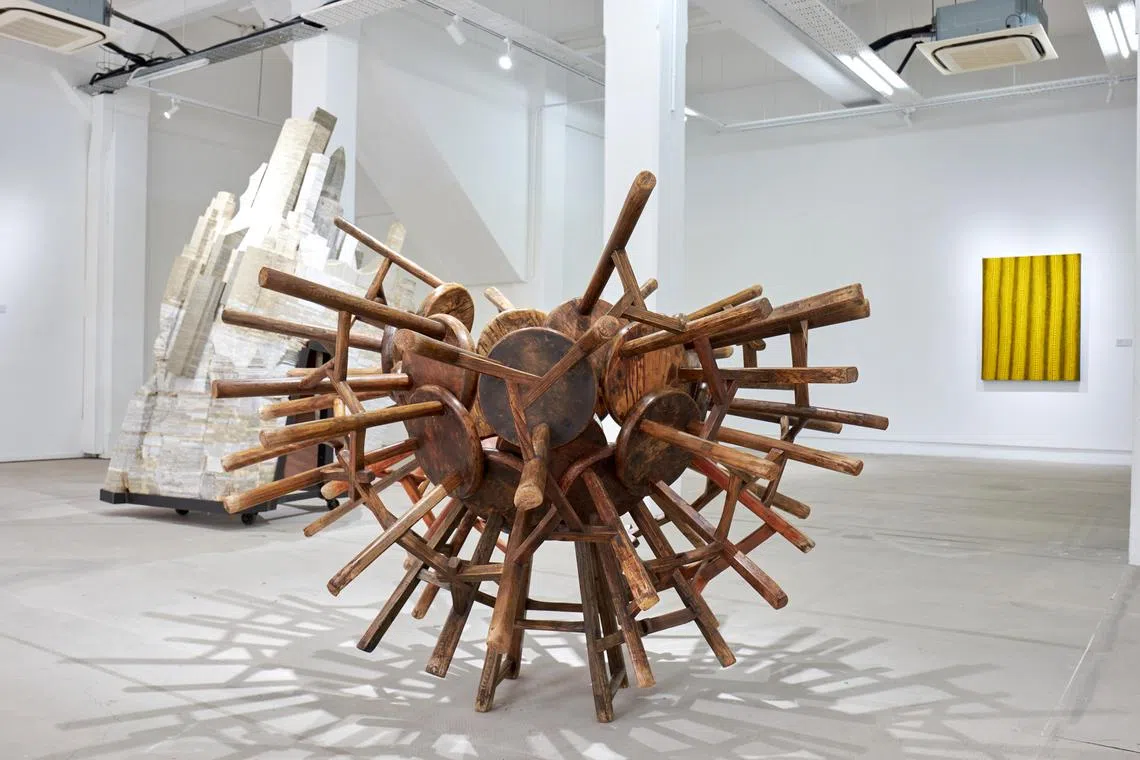
The art was beautifully displayed, and visitors were allowed to get close to the works and scrutinise them – something that is not always possible in museums. Many art aficionados hailed the show, titled The Pierre Lorinet Collection: From Western Minimalism To Asian Political Abstraction, as one of the most star-studded of the season.
Now, Lorinet is set to repeat the feat at SAW 2024 with Rough, a show celebrating works that bask in the aesthetics of the raw and unpolished. The blue-chip line-up includes Jannis Kounellis, Louise Nevelson, Rashid Johnson, Thomas Houseago, Rirkrit Tiravanija and Ibrahim Mahama. It will again be curated by Lorinet’s longtime art advisor Edward Mitterrand and organised by Art Outreach Singapore.
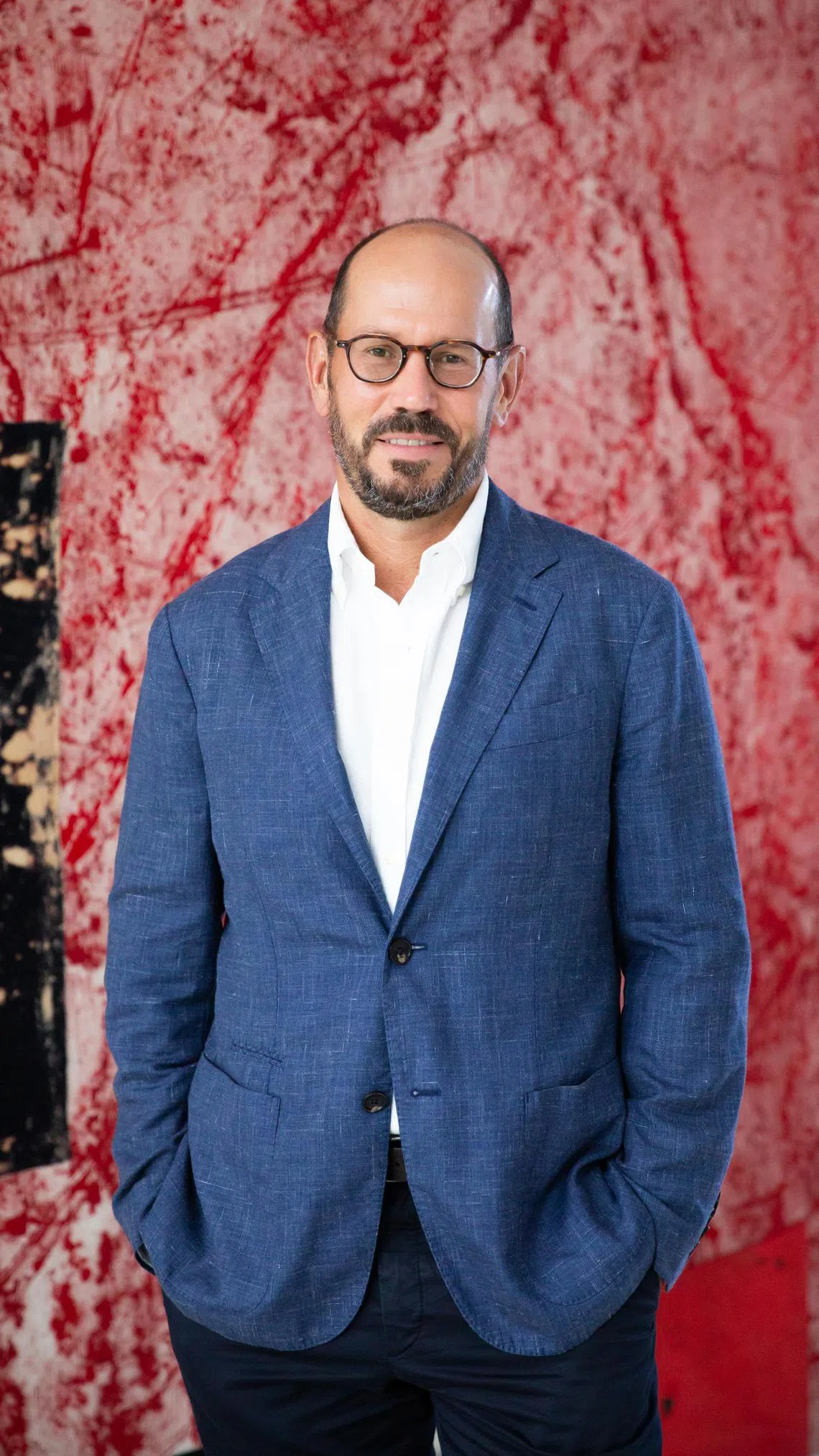
Lorinet has lived in Singapore with his wife and three children since 2012. The Frenchman says: “Eleven years (in Singapore) is the longest I’ve ever lived anywhere in my life. My parents used to move around a lot when I was a child… So, since I enjoy living here, it makes sense for me to contribute to the country. And since I love art, it feels natural to share my passion with others through these exhibitions.”
Lorinet was the chief financial officer of commodities trading giant Trafigura. In 2015, he stepped back from his career to do more philanthropy and advisory work. He is now a non-executive director at Trafigura and Olam Agri, and a board member of Enterprise Singapore. Notably, he chairs The Sustain The Arts Fund, launched in 2021 by the National Arts Council to boost private sector support of the arts. He also helps underserved communities in Mongolia through his Lorinet Foundation.
He says: “I grew up around a lot of art, and my own great-great-grandfather was a passionate and prolific painter whose canvases still hang in some of our family homes. When I started collecting art, it was with a more Western sensibility. I focused on minimalism because I liked the notion of going back to basics and simple concepts; of using shapes, materials, colours and light to occupy, divide or influence a space.
“But when I moved to Singapore and started experiencing Asia more, I began looking at references to minimalism in this part of the world, and expanding my collection to include more Asian artists. And now, with the increasing prominence of African or African-American artists, that’s also influenced my recent purchases.”
Lorinet looks forward to sharing these acquisitions with the public in the future. “My family and I see ourselves being in Singapore for the foreseeable future. This is home for us, and we want to help in the building of Singapore as an international city and space.”
Rough, an exhibition featuring works from the Lorinet Collection, runs from Jan 12-28, 2024, in Gillman Barracks.
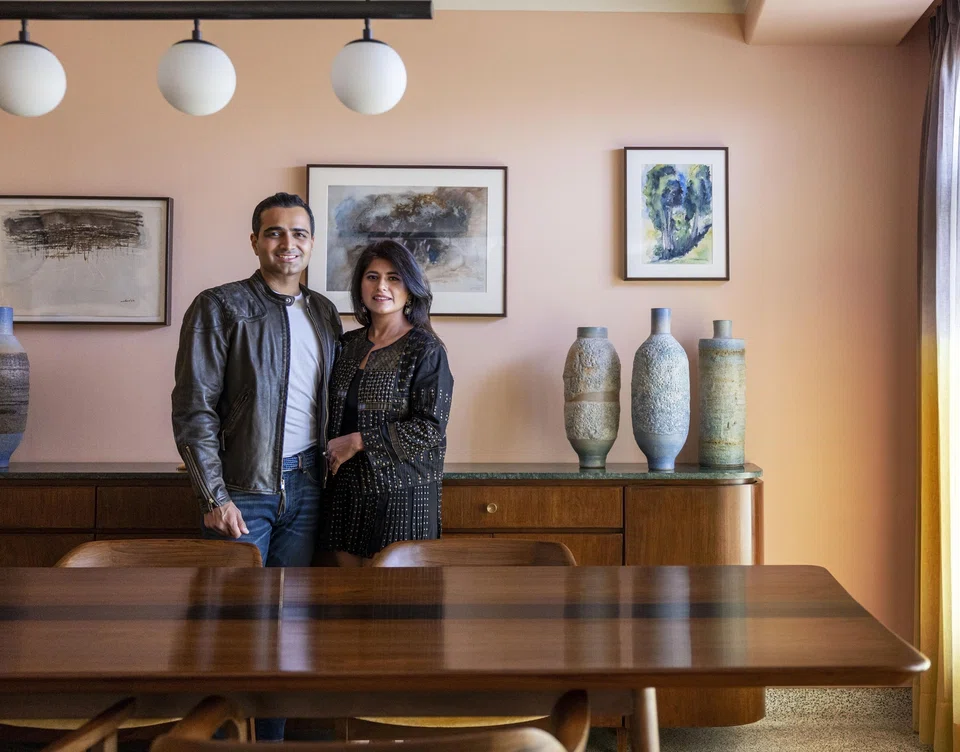
Vir and Simran Kotak
Growing up separately in India, Vir and Simran Kotak were often surrounded by art. Vir’s grandfather frequently took him to museums, while Simran’s family foregrounded the importance of aesthetics in daily life.
Now married to each other with two sons, the couple want to share their love of art by establishing The Eight Foundation, an institution supporting contemporary art through exhibitions and talks at a permanent space opening in 2024.
Vir founded and owns digital freight technology company Propelor, while Simran is behind the modern Indian restaurant Ahara on Keong Saik Road.
Simran believes that “art is a mirror to society everywhere and at all times – much more so than business, politics, or current affairs. The increased participation in contemporary art in Singapore and the broader region will result in a richer, more nuanced public conversation.”
Meanwhile, Vir says: “Singapore is a simply exciting place to be based in, especially as the movement around contemporary art has just begun to find its legs here.”
The couple collects art by mostly South Asian, South-east Asian and West Asian artists. They have a preference for artists who deal with the thorny issues of race, identity, history and/or politics, and these include Nikhil Chopra, Amitesh Shrivastava, Aditya Novali, Alvin Ong and Ramesh Mario Nithiyendran.
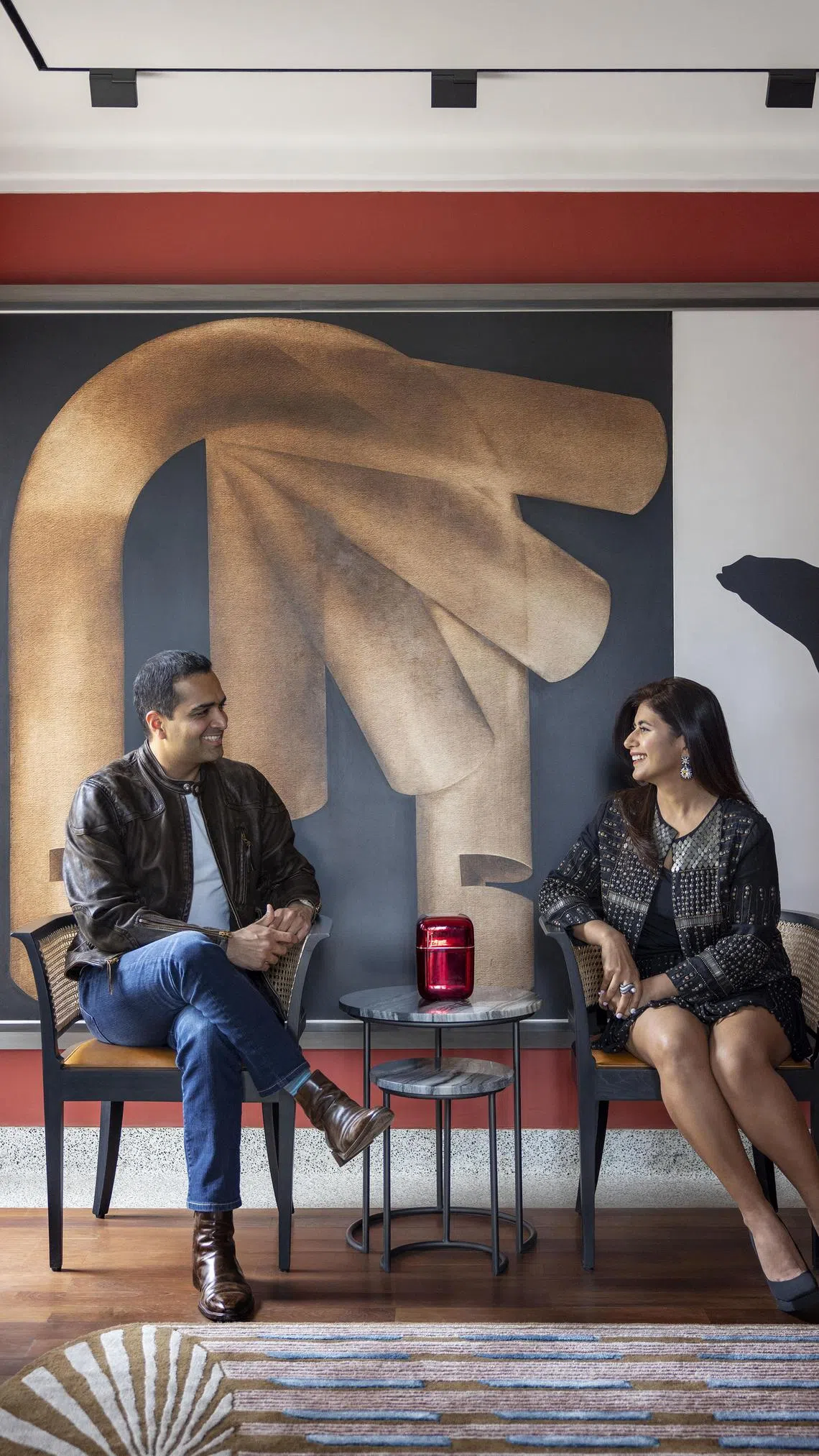
“We have lent several artworks to important institutions such as the Kiran Nadar Museum of Art,” Vir says. “We are also members of the South Asia Acquisition Committee of the Tate Modern for several years now, and it is gratifying to see works whose acquisition we have played a part in be displayed in the curations of the museum’s permanent collection.”
Believing that the world has become a “global ideas factory”, they envision their foundation as a platform for the cross-pollination of ideas between the worlds of design, architecture, food and beverage, the environment, politics and social sciences.
Their restaurant Ahara is one cornerstone of that exchange, with modern Indian fare being served within walls adorned with exceptional contemporary art. Their home also doubles up as a space for showcasing their favourite artists: “We change the curation of the art every year, and we’re always happy to open our doors and share with others what we’re fortunate to live with,” says Vir.
“In some of the cities,” Simran says, “it can feel like there is inadequate social engagement and support for the arts. You need all parties to work together for an art ecosystem to thrive. We hope to be a small part of the change by sharing our works with the public.”
Andreas Teoh
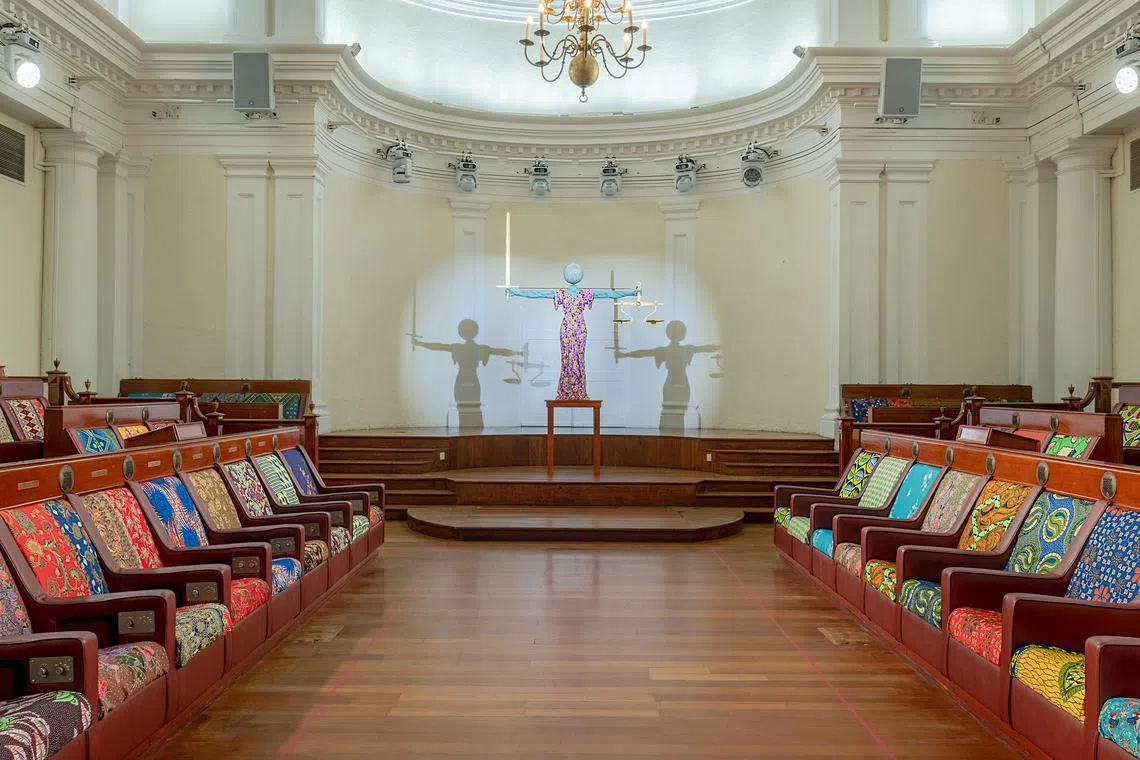
One of the most memorable events of SAW 2020 was the transformation of the chamber of The Arts House (or the Old Parliament House) into a stunning hall of African and Javanese batiks by celebrated artist Yinka Shonibare. The site-specific installation was the debut commission of The Institutum, a non-profit organisation started by Teoh and his late friend, Tan Boon Hui.
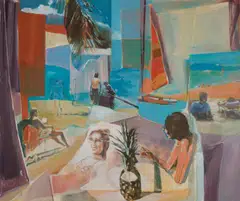
Since then, the Institutum has made ripples with other exhibitions such as a collaborative show between Jason Wee and his late mentor Lee Wen, a large showcase of ink paintings by pioneer Tang Da Wu, and the current showcase of works by Cheong See Min, Madhvi Subrahmanian and Marvin Tang in Gillman Barracks titled a seed, a shift and a lost pineapple. It also supports the development of emerging artists such as Singapore’s Kent Chan through residencies in London.
Teoh declines to say a lot about himself or share his photograph on the grounds that “the project… is more important than the personalities”. But he explains that the Institutum’s aim is to “support the art ecosystem through projects that make art accessible and enjoyable”. To this end, Teoh and his board of international patrons have formulated a sophisticated strategy to help develop and strengthen the skills, knowledge, resources and organisational structures of individuals, groups and institutions.
Among its notable achievements is the publication of SEA: Contemporary Art In Southeast Asia, one of the first books on South-east Asian art that tries to cater to the lay reader. It’s also set to make a splash again in January 2024 with Translations: Afro-Asian Poetics, a major exhibition featuring 100 renowned artists from the African and Asian continents and diasporas. This will be the first large-scale exhibition in South-east Asia dedicated to exploring the interconnected narratives of the two regions.
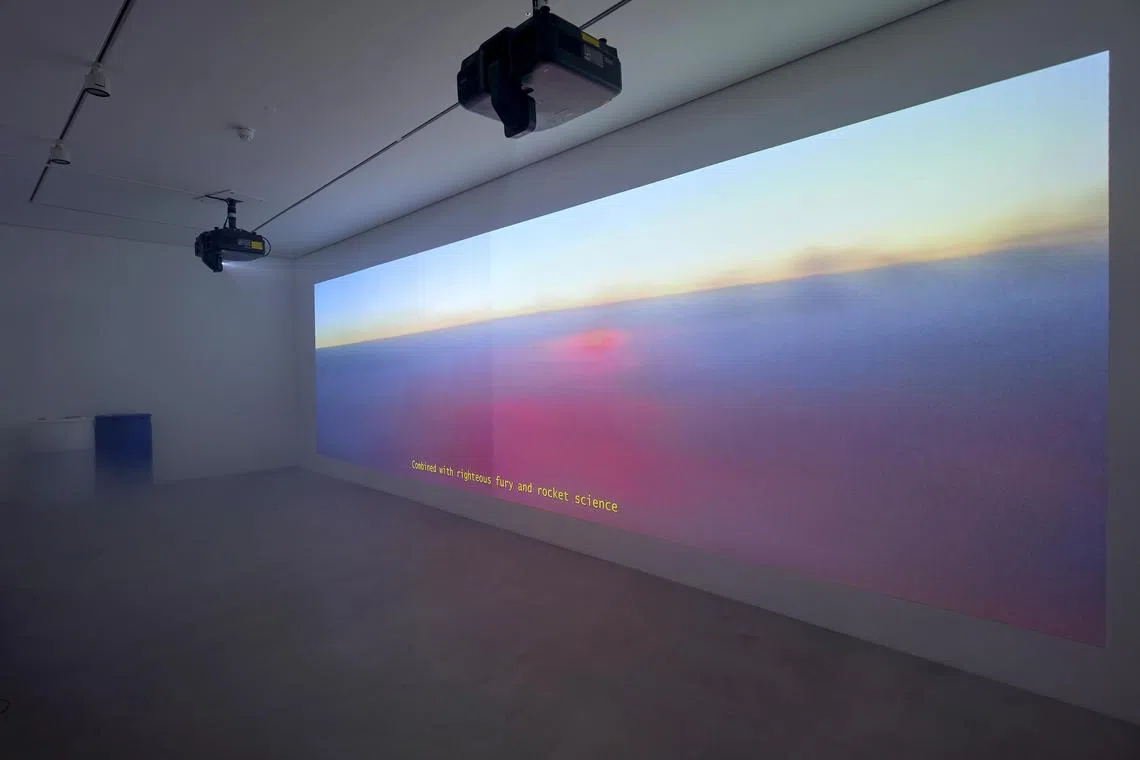
Teoh says: “We view Singapore as a gateway to the vibrant South-east Asian art scene and a critical port of call for any conversations on the global south. Singapore is unique in its government’s commitment to support arts and culture programming. The funding provided to support arts and culture is admirable when compared with other major art cities like New York and London, where private initiatives are the main drivers of the art ecosystem.”
“As the culture of arts philanthropy is still nascent in Singapore, funding from private initiatives in synergy with government funding will layer the ecosystem with diverse and rich content. This is the space we are exploring as we strive to demonstrate to the private sector that art is a necessary and rewarding initiative to support.”
Translations: Afro-Asian Poetics runs from Jan 18-30, 2024, in Gillman Barracks.
M Art Foundation
The M Art Foundation – “M” stands for “metamorphosis” – was founded in Shanghai in 2021 with the aim of engaging artists, curators and thinkers from around the world in dialogue, collaboration and artistic exchange. In less than three years, it has made a notable impact on the regional art scene, supporting works of Chinese and Chinese diasporic artists at the Venice Biennale 2022, as well as the Gwangju and Taipei Biennale in 2023. It also mounted a large installation work by Vietnamese-Danish star Danh Vo at the SEA Focus exhibition at SAW 2023.
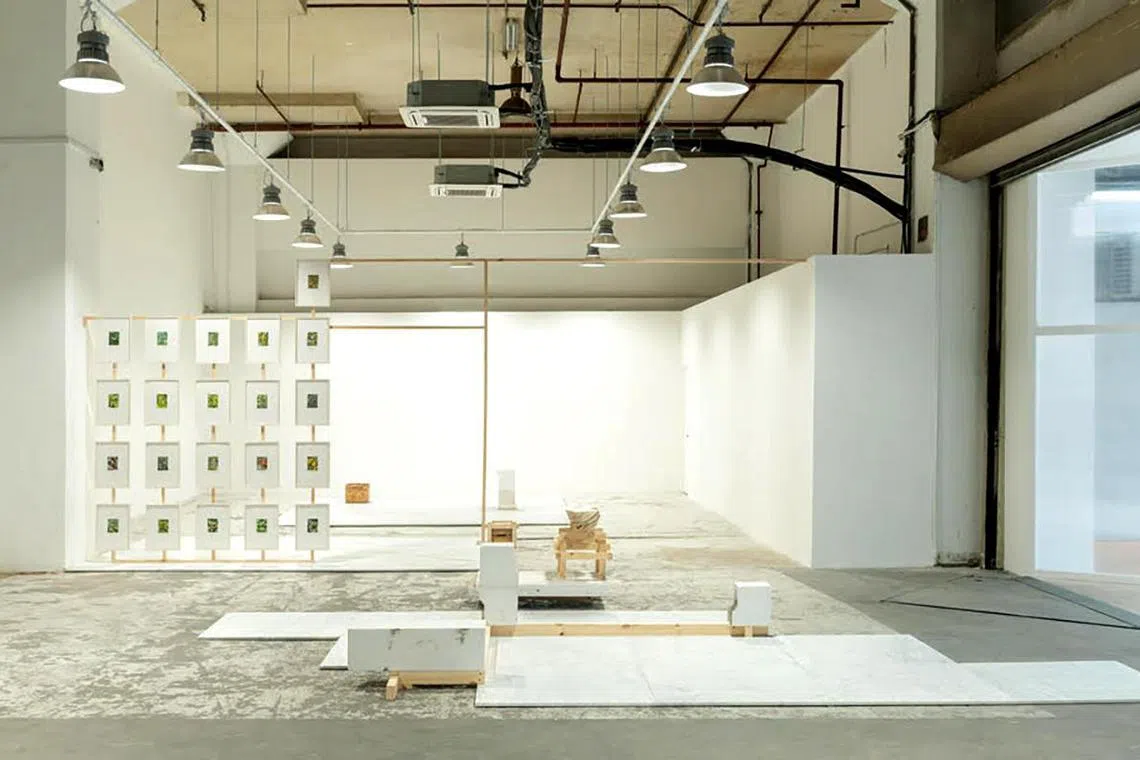
Since May 2022, the M Art Foundation director Zong Han has been based in Singapore to see how the foundation can create synergies between the art scenes of China, South-east Asia and the rest of the world. Zong says: “I see so much potential in Singapore. It’s very well-connected to just about every notable city. The airport and transportation systems are remarkably efficient. It’s easy to get around and get things done. So it’s natural for us to make Singapore a base for our activities.”
Observing the similarities and differences between Shanghai and Singapore, he says: “Shanghai has a strong collecting tradition. The middle class actively collects art, while some young people might spend as much as half of their salaries buying art. Going to museums is a popular weekend activity, and there are numerous private museums across the city to attract them.”
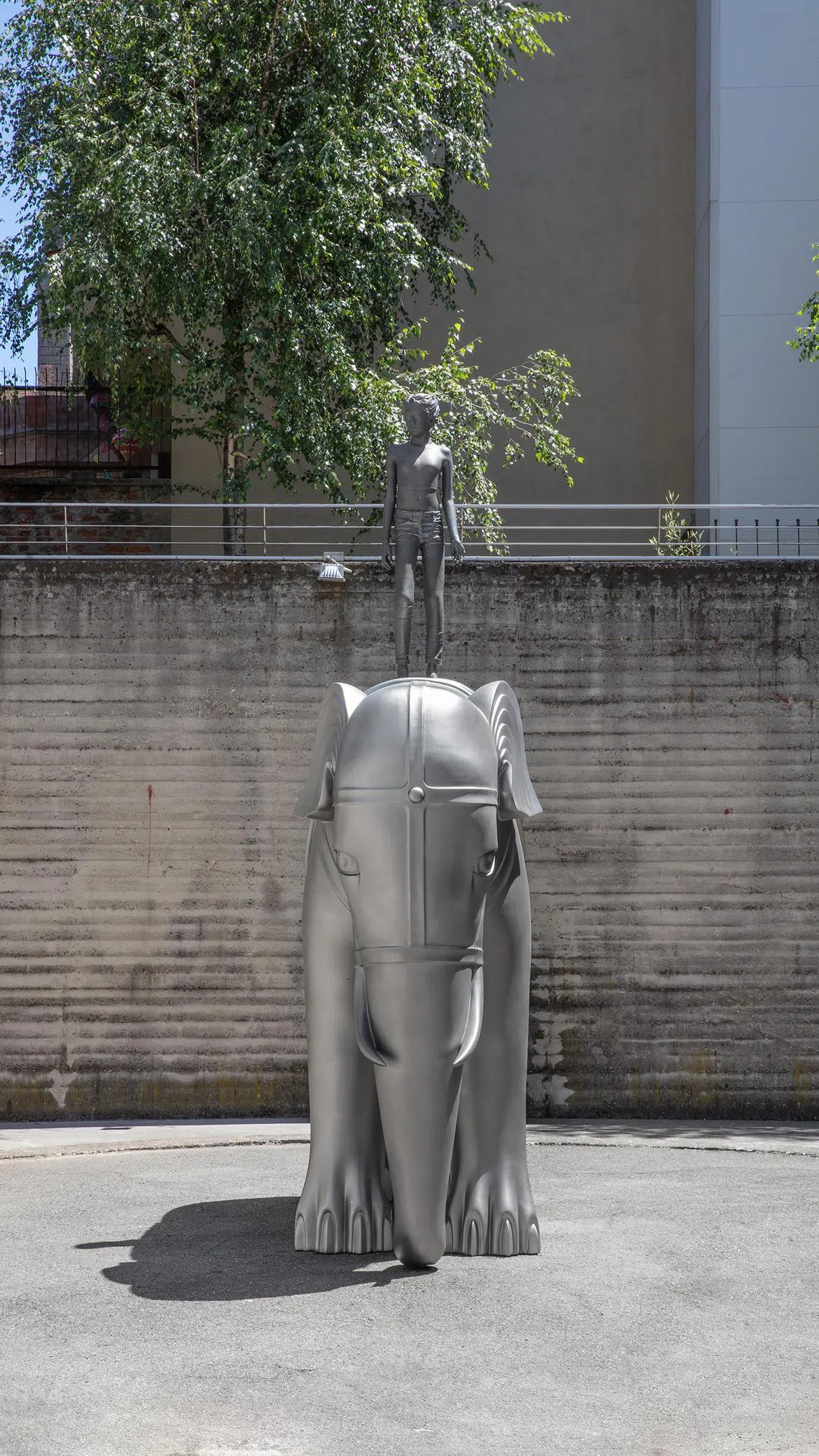
In comparison, Singaporeans’ engagement with art is not as ardent, he says. But that does not stop him from trying to move the needle slightly: Earlier this year, the foundation donated a sculptural work by Thai artist Tawatchai Puntusawasdi to the Singapore Art Museum.
In 2024, the foundation will commission a work by Singapore artist Heman Chong that will travel to China and the UK before coming to Singapore. It also supports the work of Singapore curator Wong Binghao, a former C-Map Asia Fellow at New York’s Museum of Modern Art.
To mark its three short but fruitful years, the foundation will launch a book about its art philanthropy at the upcoming Art SG art fair in January 2024, coupled with an exhibition of archival materials.
Zong says: “There are so many ways to expand the discourse on art in China, South-east Asia and the rest of the world. We want to see how we can work regionally and internationally to promote meaningful exchanges between artists, institutions and audiences to connect more transnational and intercultural narratives.”
Art SG runs at Marina Bay Sands from Jan 19-21, 2024.
Decoding Asia newsletter: your guide to navigating Asia in a new global order. Sign up here to get Decoding Asia newsletter. Delivered to your inbox. Free.
Copyright SPH Media. All rights reserved.
TRENDING NOW

First Resources blames El Nino, outside fires for Kalimantan hotspots amid haze scrutiny
High Court rules against Julius Baer’s Singapore trust arm in US$50 million family trust dispute
Singapore key exports jump by higher-than-expected 68.4% in September, led by non-electronics
MSCI proposes downgrading Indonesia to standalone market status

