

In a former Berlin Squat, slick photo shows and Martinis
 Add BT as a preferred source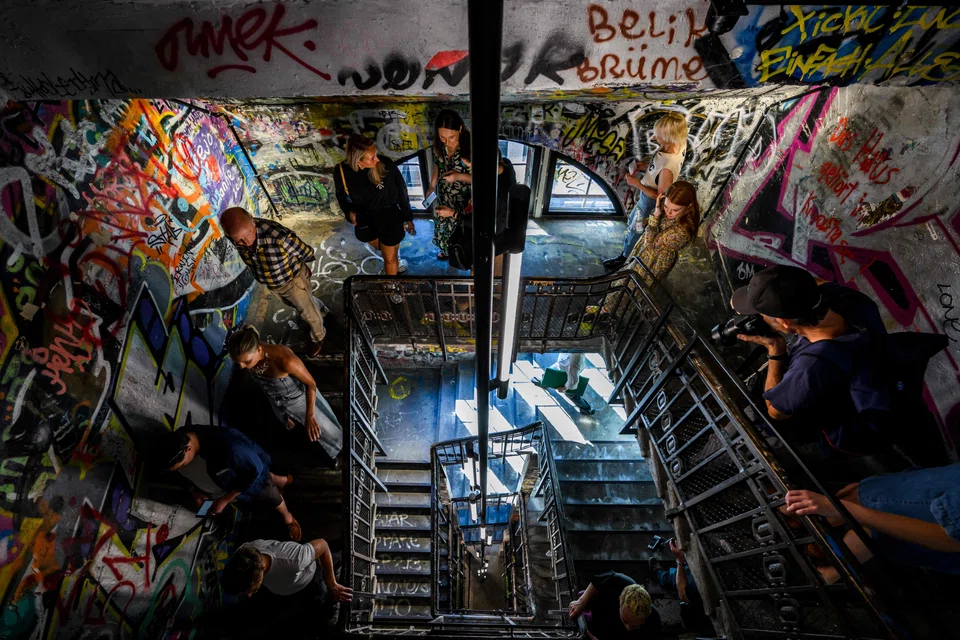
ON A cold, gray Berlin afternoon in February 1990, a few months after the wall came down, a group of young artists and anarchists from East Germany climbed through the window of an abandoned department store and began creating their own utopia.
The central Berlin building they occupied became the famous Tacheles squat. Open around the clock, with artist studios, a sculpture garden, movie theatre, bar and concert venue, the Tacheles was a tourist destination and symbol of post-reunification Berlin’s heady, underground culture. The Tacheles lasted 22 years, until the artists who worked there were evicted, in 2012, with a promise from the city to keep the site as a cultural space.
Now, after a lengthy redevelopment, the building is reopening and will be home to the Berlin branch of Fotografiska, a Stockholm-based centre for photography exhibitions that has outposts in Tallinn, Estonia, and on Park Avenue in New York, as well as plans for other international locations.
The new, extended complex also features luxury apartments, high-end office spaces and a shopping plaza designed by the architects Herzog and de Meuron. Its transformation from a gritty squat into a sleek, corporate development tracks with broader changes that are reordering Berlin.
Fotografiska will host exhibitions from international and local artists in a six-floor, 53,000 square-foot space that also includes a rooftop bar, cafe-bar, bakery and fine-dining restaurant. It is backed by private investors and will be run for profit.
“What’s happening in Berlin is, we had a great time drinking out of plastic cups,” said Yoram Roth, a Berlin-based entrepreneur who is the chair and majority shareholder of the Fotografiska group. “But we have an audience now that wants a nice glass of wine, a sensible meal, and to be part of the cultural landscape.”
Navigate Asia in
a new global order
Get the insights delivered to your inbox.
He said that he hoped the extended opening hours for Fotografiska shows – until 11 pm daily – would attract people who want to check out an exhibit after work. The bars will likely have their own draw. “In New York, we’ve become the No 1 place for Bumble dates,” Roth said, adding that he predicted that Fotografiska would become “Martini bar” in Berlin.
Fotografiska opens Thursday with a party featuring a performance by the singer Peaches, who had a studio at the Tacheles in the ’00s. The three inaugural shows deal with issues of gender, race and sexuality: a presentation of nudes by 30 female-identifying artists; Whiteface, a video installation by the South African artist Candice Breitz; and USSYPHILIA, a solo show devoted to the American visual artist and DJ Juliana Huxtable, who has been based between Berlin and New York since 2018.
In an interview, Huxtable said that she was “excited to do this show,” but had some reservations. “It’s probably not ideal for artists that there’s a new, really expensive development being built in what was formerly a squat,” she said. “I hope my name isn’t being used to promote a real estate cleansing. I don’t want to be part of a PR campaign.”
Jochen Sandig, a co-founder of the Tacheles squat who now runs two Berlin art spaces, said he had similar concerns about the project’s conflation of art and commerce. “Tacheles, the highest symbol of Berlin creativity, is now a shopping mall,” he said. “Even the Fotografiska, with its many bars and restaurants, is a shopping mall, buying fashionable artists for their image.”
He recalled that, when he arrived at the Tacheles in 1990, aged 22, the building was a bombed-out World War II wreck facing demolition. “The ideals are ruined, save the ruins,” was the slogan of the occupying artists, who Sandig said engaged in a “social experiment” for “anyone to join if they were active.”
Although their models might be different, there is some overlap between the Tacheles’ objectives and those of Fotografiska Berlin, which the centre’s executive director, Yousef Hammoudah, said in an interview were to “create a more conscious world,” and “to inspire new perspectives.”
“Yes, we’re for profit. Yes, we’ll generate revenue,” he said. “But at the same time, we’ll support artists in a way that no state-funded museum will.” There were gaps in the programming of Berlin’s existing photography museums, he added; Fotografiska would fill those by concentrating on “gender, identity, race, sexuality, queerness” when selecting the artists it works with.
Sandig said that, despite his doubts about Fotografiska, he was also optimistic about the building’s future. He said that he had told Hammoudah, “‘I hope you’re so successful at Fotografiska that you have to move out and get a bigger place.’” Then, Sandig added, the building could be given back to artists. “We’ll put it in a foundation, and let a new generation do their thing,” he said.
In the meantime, maybe Berlin will finally offer a decent Martini. NYTIMES
Decoding Asia newsletter: your guide to navigating Asia in a new global order. Sign up here to get Decoding Asia newsletter. Delivered to your inbox. Free.
Share with us your feedback on BT's products and services
TRENDING NOW

From hawker stall to Enterprise Award winner: How Han Keen Juan scaled the Old Chang Kee empire
Haidilao co-founder’s family buys second bungalow in Cluny Hill for S$85 million

Yeo’s, Tiger Beer and now Gardenia – flight of food manufacturing from Singapore might be just as planned

Ban on land sales, new launches for developers that deliver ‘defect-ridden’ projects

