

Fox fur prices fly as mink cull sparks shortage
 Add BT as a preferred source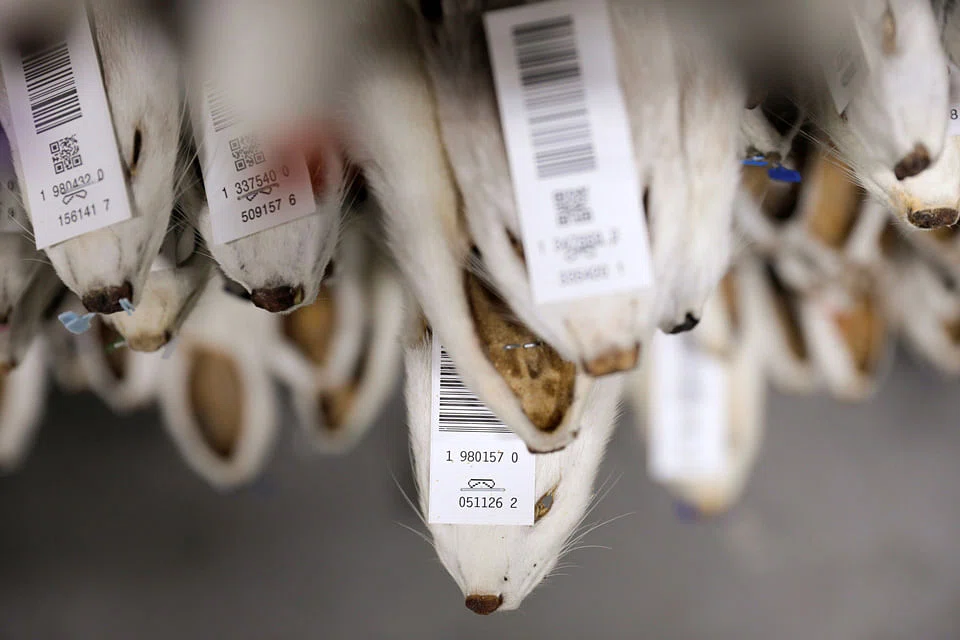
Copenhagen
DENMARK'S coronavirus-driven mink cull has put the fur business in a spin, with industry officials expecting fashion houses such as Louis Vuitton, Dior and Fendi to snap up fox and chinchilla to fill the gap.
The global fur trade, worth more than US$22 billion a year, is reeling from Denmark's decision to kill 17 million farmed mink after Covid-19 outbreaks at hundreds of farms led to the discovery of a new strain of coronavirus in the mammals.
Worries of a sudden shortage of slinky mink pelts, of which Denmark was the top exporter, have lifted prices by as much as 30 per cent in Asia, the International Fur Federation (IFF) says.
Now, all eyes are on Finland, where one million mink and 250,000 fox pelts will soon be up for grabs for buyers in Korea, China, the United States and elsewhere next week. Auction house Saga Furs plans to hold the international sale, the first since the Danish cull, via livestream from Dec 15.
A sales programme offers mink fur from both Europe and North America, such as "Pearl Velvet" and "Silverblue Velvet" mink, in addition to "Silver Fox", "White Finnraccoon" and Russian sable. Saga Furs, which last year took over its North American rival NAFA, expects to sell all the pelts, compared with a 55 per cent take-up so far in 2020 as a result of the coronavirus crisis.
Navigate Asia in
a new global order
Get the insights delivered to your inbox.
"The market will strengthen, an increase in prices will help our business in general," Saga Furs CEO Magnus Ljung said of the industry, which has seen years of falling prices. "We've already had more requests about foxes, if people see that there is a lack of mink, they could consider using something else," Mr Ljung said.
LVMH's head of sustainability, Helene Valade, said this week that the French luxury group obtains fur from Finland. The owner of Louis Vuitton, Dior and Fendi, which relies on brokers to bid, says it is using only 100 per cent certified mink, fox and finnraccoon.
Falling demand
Fur demand has been falling since the 1950s, except for a rise between 2000 and 2013 when it was popular on fashion runways and Chinese appetite for luxury pelts boomed, Lise Skov, an academic who researched the Danish fur industry, said.
A typical mink pelt sold for more than US$90 at auction in 2013, while last year skins fetched around $30. This was despite a fall in global production to just under 60 million pelts last year, from more than 80 million in 2014. Euromonitor predicts the value of fur and fur products, both real and faux, will fall by 2.6 per cent this year. A Danish breeder-owned cooperative that sold 25 million mink hides last year, or 40 per cent of the global total, is considering selling its brand and other assets after announcing that it would gradually shut down operations over the next 2-3 years.
Kopenhagen Fur CEO Jesper Lauge Christensen told Reuters he had received expressions of interest from Chinese customers to take over the auction house's brand, which he said could be valued at up to 1 billion Danish crowns (S$220 million).
It still plans to sell some 25 million pelts over the next two years, from Danish farms not infected by the virus, frozen stocks and foreign animals.
Animal activists hope the Danish debacle, which has had political repercussions in the country, will finish off the fur industry and demand for items such as US$1,700 fur trinkets, $16,000 fur vests and US$60,000 fur coats will disappear. Countries and states which have already banned fur farms or fur products include Britain, Austria, the Netherlands, France, Norway, Israel and California. PJ Smith, director of fashion policy at Humane Society International, says that brands still using real fur will ditch it soon, following Gucci, Prada, Armani and others.
But for now, Kopenhagen Fur's Christensen said fashion brands in Europe had expressed concern they will not be able to find a similar quality to the Danish mink furs. "One of the biggest challenges from the brand perspective is that the unique Danish qualities will be disappearing from the collection and you cannot source that product elsewhere."
"The real shortage could come from 2022, but by then we are hoping mink farmers in Canada, Poland, America and Greece will increase production to replace Danish output," said IFF head Mark Oaten.
Decoding Asia newsletter: your guide to navigating Asia in a new global order. Sign up here to get Decoding Asia newsletter. Delivered to your inbox. Free.
Share with us your feedback on BT's products and services
TRENDING NOW

US-China rivalry and the Kindleberger Trap: Why inaction – not escalation – is the biggest risk

Middle East-linked energy supply shocks put Asean Power Grid back in focus

Thai and Vietnamese farmers may stop planting rice because of the Iran war. Here’s why

Strengthening Asean’s economic resilience through RCEP’s 2027 review

