

France’s sacred food culture faces an existential reckoning
Wine, cheese and bread, the trinity that underpin French identity, now represent the biggest challenge as people cook differently, booze less and producers get squeezed
[PARIS] At the Marche International de Rungis, the giant wholesale food market known as “The belly of Paris”, cheese supplier Philippe Ammiche finds it increasingly difficult to navigate the endless stacks of boxes from Italy.
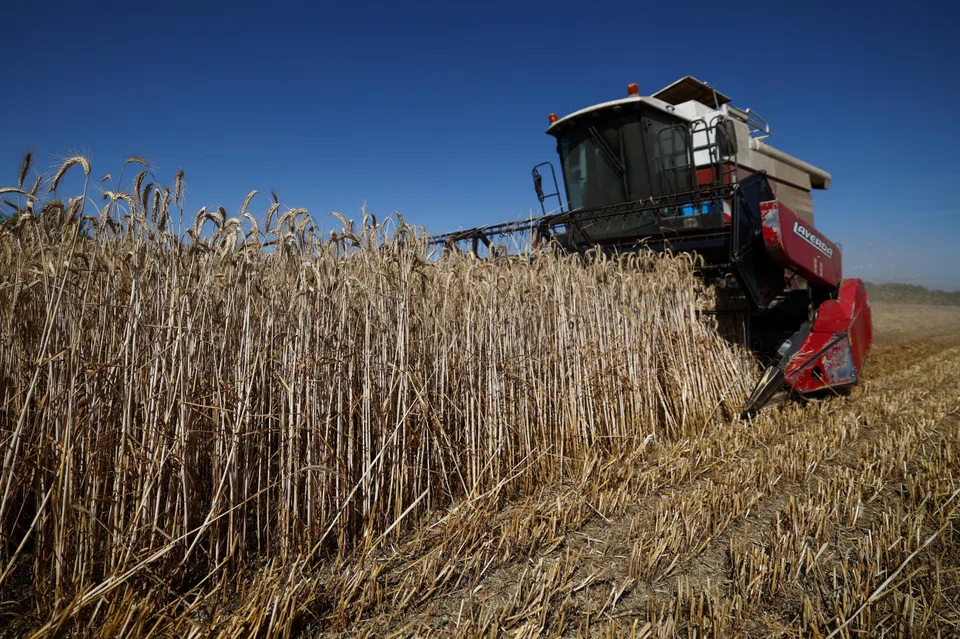
An hour’s drive away in Beauce, a region celebrated as the granary of France, wheat farmer Eric Thirouin is facing a fourth year of losses amid searing heat and questions over the future of his 500-year-old farm.
Further south in Languedoc, such existential concern is already playing out for winemaker Franck Saillan as he prepares to pull up vines and reduce output.
When it comes to eating and drinking, wine, cheese and bread are the trinity that underpin French identity. Yet they also now represent the biggest challenge to the country’s mantle as Europe’s pre-eminent food nation as people cook differently, booze less and producers get squeezed.
From the sugar industry shaped by Napoleon now witnessing factory closures to the wheat exports squeezed by lower-cost giants such as Russia, the decline is visible across the landscape of a country that over centuries conquered the world’s palate.
Exports of wine are at the lowest in more than 15 years. Mozzarella is competing with local cheese, and one in two chickens consumed on French soil arrives from abroad. Last year’s agrifood surplus tumbled to the lowest level in almost five decades. Spain looks on track to overtake France as Europe’s biggest producer in a few years and Italy and Poland might follow.
That all prompted President Emmanuel Macron’s government to declare an “agricultural war”. It fast-tracked an emergency law with measures ranging from giving priority to French products in schools to easing rules on expanding buildings for livestock, pesticides and vital irrigation projects, a constant gripe for many farmers. The law was adopted in August.
On Friday (Sep 4), Agriculture Minister Annie Genevard unveiled a package worth more than 1 billion euros (US$1.16 billion) to support farmers following significant losses from successive heat waves and wildfires this summer.
Warnings over the decline of French food have run for more than a century, from worries over a loss of culinary leadership to the Spanish to declining standards and a takeover by McDonald’s. French farmers have also never been shy about ringing the alarm bell over their livelihoods.
While the country remains a major global producer, la crise is now running deeper into the terroir, blunting France’s soft power and adding pressure from a vital political constituency ahead of next year’s presidential elections.
The reasons behind the shift are multifold. Farm output was hit by broader trends such as trade wars, economic slowdown and a string of animal diseases. This year’s Iran conflict increased fertiliser and fuel costs.
That’s on top of being whacked by climate change. This year is shaping up to be one of France’s most destructive wildfire seasons of recent years, the images broadcast around the world as flames headed toward Bordeaux during the summer. Almost 96,500 hectares (ha) have already been burned, more than two and a half times the area in all of 2025.
Some problems, though, have been self-inflicted. France, perhaps, has taken its distinction as a top producer for granted.
“Many of our strengths and certainties have been shaken,” said Sébastien Abis, an associate research fellow at the French Institute for International and Strategic Affairs, a Paris-based think tank. “The rest of the world has accelerated, while France has perhaps stood still. The question facing French agriculture and the food sector is whether we are willing to become ambitious again.”
In Carcassonne, vineyards ripple across the sun-drenched plains surrounding the city’s medieval fortress, where visitors linger in stone courtyards, savor local wines and order dishes like duck confit.
Winemakers in the region, about 700 km south of Paris, make Pays d’Oc wines. Home to some of France’s oldest vineyards, the area is known for its robust, fruity reds. Saillan’s family has been making wine for over 400 years in the village of Villemoustaussou.
He’s seen the Aude plains around Carcassonne go from severe droughts to repeated flooding in recent years. Last summer, the area was ravaged by wildfires that destroyed about half of the region’s wine yields.
“We’ve had a huge number of problems piling up,” said Saillan. “We experienced a cumulative effect of both drought and heatwaves. It was truly catastrophic.”
Wines and spirits are France’s top agrifood export, and sales abroad have continued to slide further in 2026 because of Donald Trump’s tariffs, weaker demand from China and people drinking less alcohol. Extreme weather, meanwhile, resulted in one of the smallest harvests in five decades last year.
Home to a 10th of the world’s vineyards, France has lost a third of the vine area in the past 50 years and it’s set for more cuts. As part of efforts to reduce capacity, improve quality and ultimately lift prices, the government is paying winemakers to uproot their vines.
Once this year’s campaign is done, they would have uprooted some 54,000 ha of vines at a cost of 217 million euros for the past two years, according to the agriculture ministry. Some wine will go into a hand disinfectant.
Saillan will get some 40,000 euros in compensation to remove 10 ha of his 58 ha of vines, which will then be used by his neighbour to grow grains. “Economically, it’s starting to become very difficult,” he said.
Food has been a tool of soft power for France since the 17th century when Louis XIV’s lavish banquets at Versailles projected wealth and prestige to dazzle royals who copied French etiquette and even French culinary language. France, however, only transformed into a global food exporter after severe shortages caused by World War II.
Mechanisation, fertilisers and farm consolidation put things in motion and under president Charles de Gaulle, a myriad of family farms would be part of the social foundation of the nation. The European Union’s Common Agricultural Policy came in 1962 with money for farmers.
As West Germany built Europe’s industrial powerhouse, France became one of the most productive in the world to dominate grains trading, wine and dairy. But over time, the narrative evolved into the production of exclusivity. France pioneered the protection of regional food and wine names and the Michelin star system for restaurants, setting the global standard for culinary excellence.
The government began to prioritise exports of premium products such as champagne, fine wines, foie gras and artisanal brie, somewhat “like the LVMH model exporting major French luxury textile brands”, said Yannick Fialip, president of the National Center for the Promotion of Agricultural and Food Products. “Over the long term, we can see that this was a mistake.”
French exports have been vulnerable to any economic slowdown or geopolitical retaliation in their buying countries, like when China curbed France’s Cognac imports or when Trump imposed huge tariffs on its wine bottles. In contrast, more widely accessible and affordable Italian produce has expanded. While French exports rose 2 per cent last year, Italian agrifood exports rose 5 per cent.
Earlier this year, farmers drove tractors and threw potatoes in Paris to protest against the EU trade deal with Mercosur while the French government sought to position itself as their defender against the deal with Latin American producers.
In 2024, they were among the most prominent in a wave of protests across Europe, prompting a review of EU green policies. France is still the top recipient of EU farm subsidies, receiving on average about 9 billion euros a year.
“French farmers have a very well deserved reputation for protesting,” said Venus Bivar, associate professor of environmental history at Oxford University. “They have a sense of entitlement when it comes to what they’re owed by the EU and the French state.”
But there are more profound forces beyond politics. The lockdowns during the Covid pandemic and the rising cost of living added to societal shifts – what and where people eat, how they cook and how much they drink.
While Brits or Americans headed out for a sandwich for lunch break at work, the French would traditionally head to a bistrot for a prix fixe (fixed price) set-menu. Covid changed that as employers adopted work-from-home policies, according to Fabrice Sommier, who heads France’s union of sommeliers.
“As a result, the restaurant sector and the broader economic fabric around it have suffered greatly,” he said.
The French also spend less time cooking, especially the under 35s. They are more likely than their elders to reach for ready-made meals and are fond of pizzas, gratins and salads. Culinary habits are changing through faster preparation, more convenient formats and increased snacking.
Then there’s the appeal of easier-to-cook Italian food and ingredients such as olive oil, tomato sauces, prosciutto, pasta and, of course, cheese.
Located on the southern outskirts of Paris, Rungis calls itself the world’s biggest fresh food market and feeds 18 million people every day. Some three million tons of seafood, meat, dairy and fruit and vegetable products pass through it each year, 40 per cent of it coming from abroad.
Cheese wholesaler Buisson is planning to move to a location at the market that’s twice as big to accommodate the endless stacks of Italian products that arrive, said Ammiche, the firm’s chief executive officer.
Buisson, which imports mozzarella di bufala, burrata, and parmigiano reggiano, had record sales for Italian cheeses in May, selling more than five tonnes a day, up from hardly two tonnes six years ago. Italian cheeses now represent about 40 per cent of the company’s sales, said Ammiche.
Indeed, Buisson’s head of Italian cheese, Marco Di Tommaso, reckons France – home to more than 1,200 cheeses – may consume more mozzarella than camembert nowadays.
“Without even realising it, everyone uses Italian products,” Ammiche explains, as he watches employees rushing in Buisson’s chilled halls at Rungis to fill an endless stream of refrigerated trucks with boxes of mozzarella. “In France, cheese is mostly eaten on its own, or at the end of a meal. In Italy, many cheeses are used as ingredients. It’s a completely different way of consuming cheese.”
At Procope, a Paris cafe dating back to 1686, tourists line up to taste French classics such as snails and coq-au-vin in the lavish historic rooms that hosted famous writers and enlightened revolutionaries like Voltaire, Jean-Jacques Rousseau and Benjamin Franklin. Today, you can order a three-course “Menu for the Revolutionaries” for 49.50 euros showing an invasion of Italian products: beef carpaccio with parmigiano, burrata from Puglia, and a tiramisu with mascarpone.
It’s not just an Italian invasion. Almost half of cheese imports come from Germany, the Netherlands, Belgium and the UK, countries that have invested in processing capacity for export. Supermarkets in Paris have fridges full of feta from Greece, halloumi from Cyprus or cheddars from the UK. Popular charcuterie come from Spain and Italy.
At 181 million euros, last year’s agrifood surplus was the lowest since the late 1970s, according to government data. Imports were driven by higher cocoa and coffee prices, outpacing a sluggish increase in exports. The surplus was 5 billion euros in 2024.
“We are the leading agricultural power, and we’re falling behind,” said wheat farmer Thirouin. “The problem is France. It’s in the process of being overtaken. France has to wake up, otherwise we’ll end up with a country that depends on others and is no longer sovereign at all.”
Thirouin’s family has been growing grains since at least 1540 in the heart of the Beauce, the fertile plains of farmlands between the Seine and Loire rivers. He cultivates 210 hectares of wheat, barley, corn and rapeseed. He was looking forward to passing the farm on to his son, but he’s got doubts.
“My son joined me at the farm in 2015, and I’m anxious about his future,” said Thirouin. “Now he tells me, ‘Maybe I should quit,’ and I don’t know what to say to him.”
Wheat farmers, who supply the core ingredient for France’s baguettes and croissants, are at the sharp end of the shift in France’s status as an agri-powerhouse.
The romantic tradition of small, family-owned farms passed down through centuries now struggles to compete against lower-cost rivals like Russia, and the industrial-scale operations of the US and Australia. Political tensions have seen top buyers like Algeria halt wheat purchases entirely.
“Ten years ago, we were selling to the Russians. With climate change, they are now producers – in fact, the leading exporters,” Macron said in February when visiting a farm in Haute-Saone, eastern France. “We need to adapt our strategy. We must not give up,” he told reporters.
The number of French farms has dropped 75 per cent since the 1970s to 390,000, even as agriculture kept much of its political status. In just four years, nearly half of France’s farmers will have retired, according to the Ministry for Agriculture.
The government has responded with measures to help young and new farmers enter the profession, making it easier to buy or take over farms and improving access to financing. It also plans to increase agricultural students by 30 per cent, agronomic engineers by 30 per cent and veterinarians trained in France by 75 per cent by 2030.
For Thirouin, the experience of recent years has brought his son to the point of wondering whether it’s worth taking over the family farm.
In 2023, he had to deal with an explosion in the price of fertilisers in the aftermath of Russia’s full-scale invasion of Ukraine. A year later, France experienced the worst harvest in four decades, so while wheat prices were more or less acceptable and costs had gone down, he didn’t have enough to sell. Last year, his farm had the wheat, but prices collapsed.
This year, rising fertiliser and fuel costs brought about by the Iran war have further pushed up farmer costs. Heat waves engulfed the country since May, hurting corn production and wheat yields.
“We’re right in the thick of it because we’re currently in harvest season, while dealing with extreme heat, and we’re watching the crops that are due to be harvested this autumn deteriorate completely,” said Thirouin. “Many French farmers are asking themselves: ‘Should I sow a fifth consecutive crop knowing I’ll lose money again?’”
There is hope that the adaptation that Macron wants is coming. Roquefort cheesemakers, for example, called on the public to stick the pungent cheese in anything from burgers to soups. Cognac producers are inventing new cocktails, like berry mojitos and coladas infused with the brandy.
In Carcassonne, Saillan is going the other way: less booze all together. Together with his wine merchants, he’s planning to join a growing number of vintners seeking to produce low-alcohol wines or even zero-alcohol wines, which are gaining in popularity.
The merchants and buyers have invested in de-alcoholisation and Saillan believes they could help introduce wine to younger consumers. The flagship Wine Paris expo in February now is preceded by three alcohol-free tasting events in Lyon, Marseille and Paris.
Producers like him need to move beyond tradition and figure out how to cater to new tastes and demands, said Saillan. “What we were doing 20, 30 or 50 years ago may now be outdated,” he said. “In France, wine is central to our culture, and perhaps we’ve become prisoners of our own convictions.” BLOOMBERG
Decoding Asia newsletter: your guide to navigating Asia in a new global order. Sign up here to get Decoding Asia newsletter. Delivered to your inbox. Free.
Share with us your feedback on BT's products and services
TRENDING NOW

Once staunchly pro-China, Malaysian Chinese businesses are now distancing themselves from Beijing

Looking beyond looming CEO succession, should UOB potentially pursue a transformative merger?

Could stablecoins be the future of money?

Grab CEO’s wife Chloe Tong on life with Anthony Tan and finding her purpose

