Frequent fliers are rethinking loyalty programmes and setting themselves free

Frustrated with changing airline rewards schemes, some travellers have stopped chasing status and adopted different strategies when booking flights and using credit cards
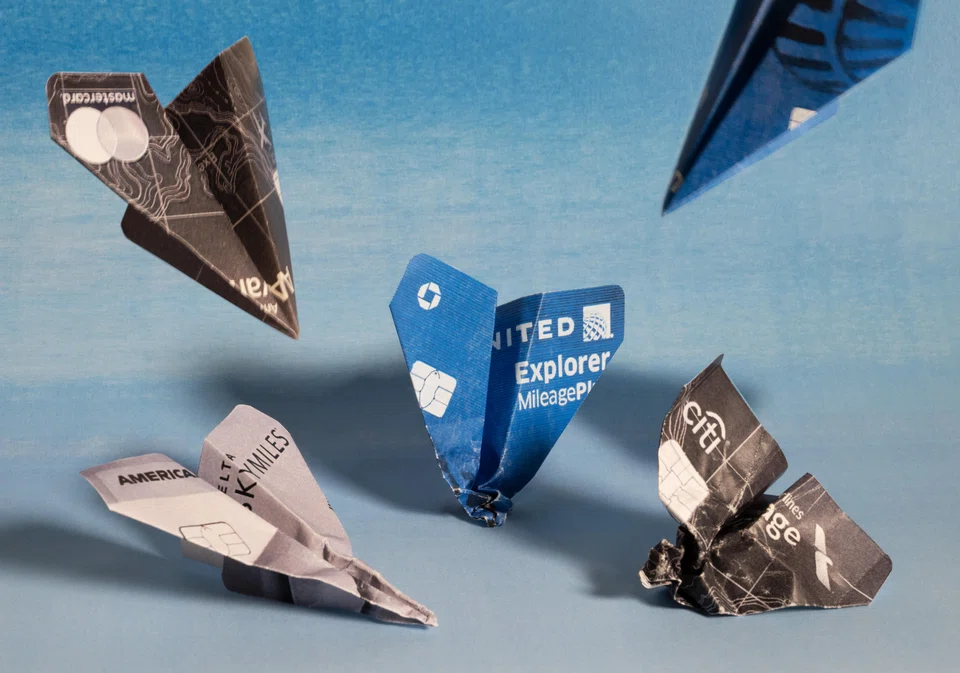
    • Some users are wondering whether maintaining airline loyalty status is worth it any more as they calculate how much they will need to spend and travel for the rest of the year in order to reach certain status levels next year.
    • Some users are wondering whether maintaining airline loyalty status is worth it any more as they calculate how much they will need to spend and travel for the rest of the year in order to reach certain status levels next year. PHOTO: NYTIMES
    Published Fri, Nov 29, 2024 · 03:00 PM

    WHEN SuzAnn Brantner moved to Indiana from Los Angeles during the Covid-19 pandemic, she had been a long-time Delta Air Lines frequent flier, achieving the highest loyalty status the airline offered: Diamond Medallion. The benefits included expedited security screenings, priority boarding and top preference for complimentary first-class upgrades.

    “I just always loved Delta,” the 50-year-old marketing executive said. She travelled every month because of her job and made sure to book all her flights with Delta – even if she had to make a connection and other airlines offered a direct flight. This made it easy to maintain her status.

    But last year, when Delta announced it would be making modifications to its frequent-flier programme, Brantner began to question her loyalty.

    She is hardly alone. On Reddit communities dedicated to three major domestic carriers – Delta, United Airlines and American Airlines – some users are wondering whether maintaining airline loyalty status is worth it any more as they calculate how much they will need to spend and travel for the rest of the year in order to reach certain status levels next year.

    After The New York Times asked readers how they felt about their loyalty programmes, more than 100 wrote in to say they were done chasing airline status. Some of the respondents said they were considering cancelling their airline credit cards, where banks team up with airlines to offer additional benefits like lounge access, and which offer more opportunities to earn status tied to spending.

    Many expressed disappointment at how they had spent years accruing points and miles with their chosen airlines only for them to become significantly devalued as airlines made changes to their programmes.

    Asean Intelligence

    Get insights into businesses across South-east Asia

    Get the free report

    Brantner recalled a time when she had to spend US$15,000 each year with Delta to reach the top-tier status. Now the company is asking customers to spend US$28,000 annually to earn Diamond status. She also learned that her American Express Delta Reserve credit card would be imposing restrictions on how many times she could use the airline’s Sky Club lounges – unless she spent at least US$75,000 on her card each year.

    Enough was enough. She has begun flying with American when she needs to go to Los Angeles because the airline offers more convenient direct flights from Indianapolis. When the Killers, her favourite band, performed in Las Vegas earlier this year, she flew direct on Southwest Airlines to see them.

    “I was like, ‘Why am I torturing myself doing these connections?’” she said. “I’m not going to go with just any airline. I’m just going to do what’s best for me.”

    She said she had called American Express to cancel her Delta Reserve card but was offered US$300 to hold on to it, so she’s keeping it for another year.

    What the airlines say

    Airlines often have good reasons for updating their rules and programmes, even if it means upsetting some long-time customers. In Delta’s case, its airport lounges were setting record highs for visits, leading to overcrowding. This year, the airline has been selling 88 per cent of its first-class seats, compared with just 14 per cent in 2011, making fewer upgrades available to its status holders.

    “We highly value the loyalty our SkyMiles and card members continue to show the Delta brand by engaging with us at record levels,” a Delta spokesperson said. At American Express, a spokesperson said the company continued to have “strong retention and engagement levels in the Delta co-brand card portfolio”.

    In a statement, United said its MileagePlus programme was growing at a record pace. The company recently announced new rules that required passengers to fly more and spend more to earn status. American, in contrast, updated its loyalty programme this year to offer new perks and kept its thresholds for earning status the same as in recent years.

    When airlines make it more difficult for fliers to meet certain thresholds for status, those who do face less competition for upgrade perks, making holding status feel more exclusive. Still, some frequent fliers like Dan Daley have decided the programmes are no longer worth it after years of elite status.

    Daley, a freelance journalist, has flown more than four million miles with American and has held Executive Platinum status – the airline’s most coveted tier – for 17 years. To maintain his status, he would often do what is known as a mileage run – for example, taking a day trip to Paris to have lunch with the sole purpose of accumulating frequent-flier miles.

    Having top-tier status made him recognisable to gate agents and other employees at American, and he said he was greeted as if he were family whenever he travelled. But over the years, watching the airline change its reward structure and seeing his accrued miles become devalued began to bother him.

    “I saw the game was becoming rigged,” Daley, 71, said.

    A few years ago, he decided to ditch his status and began employing a new strategy: Fly less and simply buy a first-class ticket on whichever airline offered him the best deal. He no longer had to hope that his status would give him an upgrade.

    “It’s been a much better ride ever since,” he said.

    When asked how the airline was trying to hold on to long-time customers who might be eyeing other carriers, a spokesperson for American said it had introduced more ways for travellers to use their miles and was now “providing rewards before and between status levels”.

    The alternatives

    One of Rachel Lipson’s oldest credit cards is a Delta SkyMiles card that she signed up for when she was in her 20s. She used to put all of her spending on the card to maintain status and accrue mileage, but has since stopped.

    “Once every couple of years, I would be able to get a free trip out of it,” Lipson, 43, said. “I thought it was so magical. Fast-forward to now, it’s not going to get you much.”

    She now runs a business, Brooklyn Family Travelers, that teaches families how to strategically book trips using the right credit cards and how to maximise rewards points from different programmes.

    “There’s an opportunity cost to putting all your spending on one airline card,” she said. “You’re married to that airline. So then if there’s a devaluation with the points or the miles, you’re really vulnerable to that devaluation.”

    She said certain credit cards could automatically give travellers hotel status or flight perks if they simply held the card and enrolled in programmes. Many also offer perks like Global Entry or Clear, which can help travellers move through airports more quickly.

    Daley’s American Express Platinum credit card is not tied to any airline, but it still helps get him lounge access when he’s at an airport, including the bank’s high-end Centurion lounges.

    This is appealing to travellers like Brantner, who said she did not have time to sit down and figure out how to maximise rewards points.

    “It’s too much work,” she said. “Just get me in the lounge, and I’m happy.” NYTIMES

    Decoding Asia newsletter: your guide to navigating Asia in a new global order. Sign up here to get Decoding Asia newsletter. Delivered to your inbox. Free.

    Share with us your feedback on BT's products and services