

In the ‘Garden of England’, loss-making orchards are cut down
 Add BT as a preferred source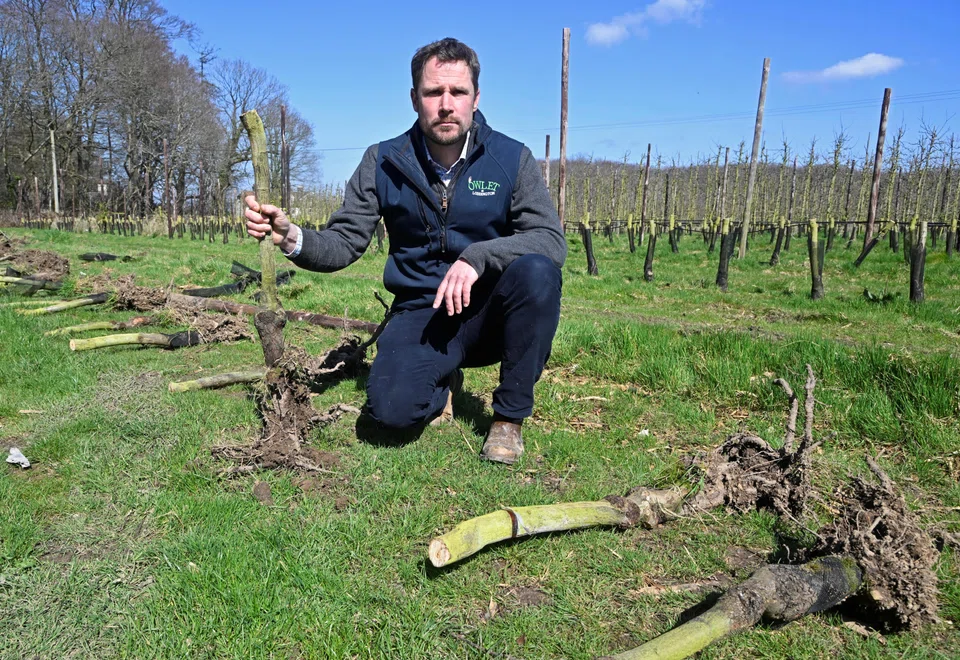
DeeperDive is a beta AI feature. Refer to full articles for the facts.
THE stumps of dozens of apple trees lie discarded along the side of a field. The fruit that helped give the “Garden of England” its name hundreds of years ago no longer makes money, so farmer James Smith is tearing down his orchards.
Shortages of tomatoes and cucumbers on Britain’s supermarket shelves earlier this year turned the spotlight onto the country’s food producers. For some of them, the ultra-competitive grocery market has gone too far.
“I don’t really want to get rid of all of my fruit, but I simply cannot see a way of overcoming all of the challenges,” said Smith, who is the managing director of Loddington Farm. His farm sits amid the rolling hills of Kent in south-east England, where his family has grown apples since 1882.
Turning a profit from selling red apples to supermarkets has been a struggle for years, said Smith. A more unpredictable climate has been compounded by the lack of labour to pick fruit in the years after Britain left the European Union. The surge in inflation over the last year brought the situation to a head.
For 2022’s crop to break even, Smith said he needed supermarkets to pay him 20 per cent more than the previous year for each giant wooden crate of apples. They offered 0.8 per cent more instead.
That was the final straw for him, after years of losses.
Navigate Asia in
a new global order
Get the insights delivered to your inbox.
“If I stop growing fruit I can make money,” he said, explaining his plans to diversify away from apples by turning to livestock, a vineyard and shop.
Britain’s fruit production has been in decline since 2015, according to government figures, and was down 12 per cent in 2021 from the previous year. The UK imports about 85 per cent of its fruit needs annually.
Supermarkets say they need to hold prices down for consumers, who are grappling with a cost-of-living crisis. Grocery price inflation stood at a record level of 17.5 per cent, the most recent industry data for March showed.
The British Retail Consortium (BRC), which represents supermarkets, said they source the majority of their food from the UK and know they need to pay farmers a sustainable price.
Problems for the future
Andrew Opie, director of food and sustainability at the BRC, said: “Given the pressure on British farmers at the moment, retailers are paying more for their produce.”
But Smith, who said he has supplied all the big supermarkets over the last decade, said supermarkets do not pay enough. His produce has most recently gone to Tesco and Aldi, via a partner group.
“Retailers are completely committed to making sure we can’t make any sensible profit, not even in the good years,” he added.
By squeezing domestic producers so hard, he believes retailers are storing up problems for the future.
If other farmers such as Smith stop producing at scale, Britain will be more reliant on imports and vulnerable to supply shocks. But for the farmers that stick it out, it will be a battle.
“Clearly, a grower with no margins hasn’t got the profits to invest back in the business,” said Richard Napier, professor of plant and agricultural biosciences at the University of Warwick.
In Kent, Smith is removing 80 per cent of his orchards. Last year, growing apples lost him £150,000 (S$248,136), a loss which would have been higher had it not been cushioned by other income streams from his land.
Last harvest’s Braeburn apples have not been sold. Wooden crates stacked eight high are loaded in a warehouse where they are kept at between 0.5 and 1 degree Celsius to keep them fresh and provide supply in any season.
That means big energy costs. Last October, Smith’s monthly energy cost per kilowatt hour was 450 per cent higher than the previous year. Labour costs were up 15 per cent; the price he paid for the wires and posts used to structure the orchards also rose 15 per cent.
Watching tree after tree being ripped out of the soil as most of his orchards are cleared, Smith said he had no time to be nostalgic as turning his back on commercial apple production was the best way to ensure his family’s farm survives.
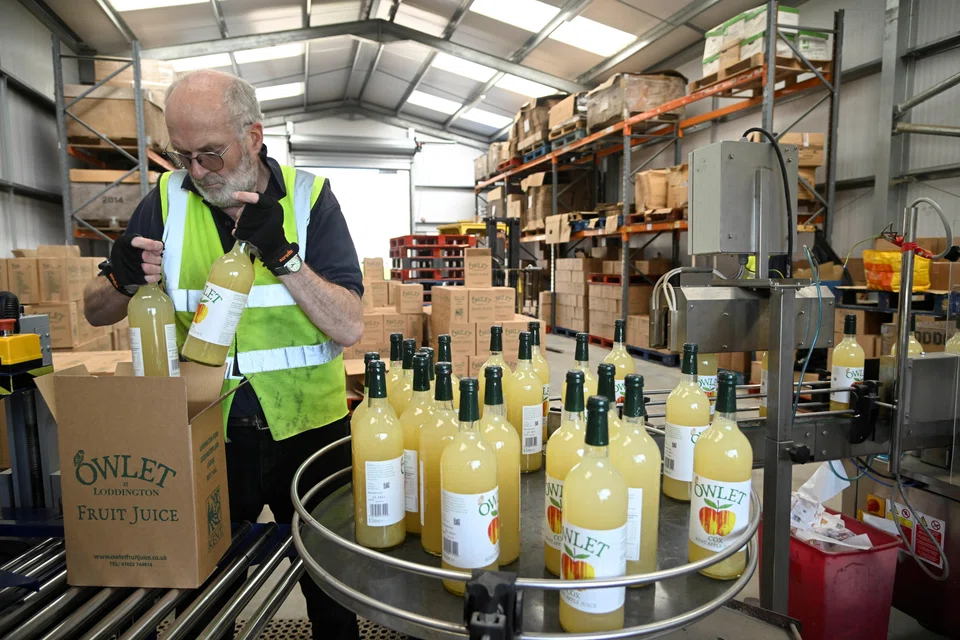
He has bought a juicing business, for which he will continue to grow a small amount of apples. Pigs and chickens will be brought in to graze on the former orchards, and there is a farm shop selling juice and other produce.
Smith is also planting a vineyard and is growing small amounts of cherries, the fruit which legend has it prompted King Henry VIII to first call Kent the “Garden of England”.
Under Smith’s plans, the garden lives on, but is producing less food than it once did. REUTERS
Decoding Asia newsletter: your guide to navigating Asia in a new global order. Sign up here to get Decoding Asia newsletter. Delivered to your inbox. Free.
Share with us your feedback on BT's products and services






