
George Clooney's next project: A public high school in Los Angeles
 Add BT as a preferred source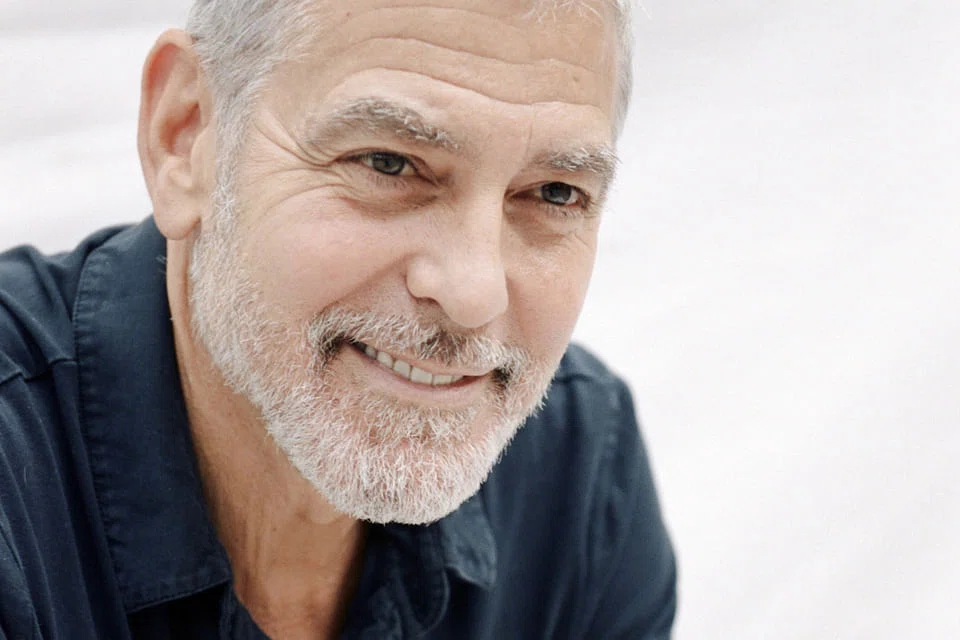
Los Angeles
FOR the entertainment industry in Los Angeles, the phrase "giving back to the schools" has often meant a cameo appearance on career day or, perhaps more typically, a fat cheque made out to your own child's elite private academy. But on Monday, the nation's second-largest district unveiled the latest in a string of star-studded collaborations: a new high school underwritten by, among others, George Clooney, Don Cheadle, Eva Longoria and principals at Creative Artists Agency (CAA).
The magnet school is intended to diversify the pipeline of cinematographers, engineers, visual effects artists and other technical workers in the city's signature job sector, and is one of at least three joint initiatives started in the past two months between the Los Angeles schools and entertainment industry benefactors.
Last week, music producers Dr Dre and Jimmy Iovine announced they were starting their own specialised high school in South Los Angeles. In May, a few hundred middle schoolers performed on free guitars with the pop artist H.E.R, signalling the expansion of a year-long partnership with the Fender Play Foundation. More high-profile initiatives involving robotics and music are in the works with major entertainment figures, district officials said.
The sudden involvement of Hollywood is in part a testament to the pull of the schools superintendent, Austin Beutner. A wealthy investor, he is leaving his job in two weeks after spending more than a year leveraging his personal connections for school-based pandemic relief.
Some education advocates are sceptical that his philanthropic approach will make much difference in a district of some 650,000 mostly low-income students, where eight in 10 students are Latino or Black. "Charity is no substitute for justice," said Linda Darling-Hammond, the president of the California State Board of Education. "It's great that people are making these investments, but we have a bigger job to do."
Navigate Asia in
a new global order
Get the insights delivered to your inbox.
The new focus on education in Los Angeles also reflects other worries, including a mounting alarm at growing income disparities and a need for the industry to find new ways to recruit workers in the #HollywoodSoWhite era. There is also a rising appreciation, post-pandemic, for keeping low-income students in school, despite financial pressure they may face to help support their families.
"Everyone is recognising that the industry needs to do better," said Clooney, speaking via Zoom from his Italian villa. "There's a moment in time where it gets easier to do things."
The challenges of the Los Angeles public schools have, for generations, been epic. The district sprawls across 1839 square kilometres and encompasses some 1,400 schools. Eighty per cent of the students live in poverty and nearly 100,000 are learning English.
As the Covid-19 pandemic ebbed, California schools were among the last in the nation to reopen. Only a small percentage of Los Angeles Unified School District students have returned in person, although Mr Beutner has said instruction will be fully face-to-face in the fall.
One ray of good news is that, at least for this year, school funding is ample. California, with a large state surplus, plans to spend a hefty US$96 billion next year on grade schools and community colleges, an investment of US$21,000 per pupil.
In the past three years, Mr Beutner said, per-pupil funding in the district has increased by 40 per cent, but still falls short of New York City's nearly US$30,000 per student. "We're coming off an era of disinvestment in public schools," said Dr Darling-Hammond. "People see that need and want to step into it." Programmes such as the proposed specialised schools "are a mixed bag", she said, often channelling precious resources into tangential priorities, and rising or falling with the attention spans of their backers.
Sarah Reckhow, an expert on education philanthropy at Michigan State University, said that while such philanthropy is common and doubtless born of good intentions, its prevalence reflects a fundamental inequality in the way children are schooled in the US. "It's very typical and very unequal and it often just compounds other inequalities." Hollywood's recent forays into Los Angeles public schools "are well within that norm".
Mr Beutner says career-linked magnet schools complement the district's traditional schools and help to engage students who are increasingly focused on the need for a pay cheque. And, he said, supporters like Clooney or Iovine can provide a "margin of excellence beyond what public funding can do". "It's making the instructional part of the day relevant," he said, "embedding those skills in the curriculum and connecting it to a job."
Iovine said he and Dr Dre, whose real name is Andre Young, approached Los Angeles Unified with their idea for a new high school after starting an academy in 2013 at the University of Southern California (USC) that focused on the intersection of creative work and business. "What we realised at the USC academy is that to be more effective, we have to get to these kids earlier," he said.
Clooney and his producing partner, Grant Heslov, said they had come to a similar conclusion as they sought to diversify hiring on their productions. "You want a more diverse crew," Heslov said, "but there's just not enough trained people out there." Two weeks ago, Clooney said, he mentioned the issue to Eric Fellner, the co-chair of Working Title Films. Fellner told him about becoming a co-founder in 2018 of a London school to address the same issue in the British film industry.
Clooney said he floated the idea to CAA co-chairman Bryan Lourd, whose talent agency had helped support Los Angeles Unified during the pandemic. Mr Beutner then introduced them to district officials running a small magnet programme at the Edward R Roybal Learning Center, which serves mostly low-income students. Eleven days later, they had agreed to open the Roybal School of Film and Television Production, built from the seed of that magnet programme, with an initial enrolment of 120 students and a curriculum that will be planned by district teachers and staff as well as industry professionals.
In addition to Clooney, Heslov, Cheadle, Lourd, Fellner and Longoria, the advisory board will include Nicole Avant, a producer and the wife of Netflix co-chief executive Ted Sarandos; Fellner's co-chair at Working Title Films, Tim Bevan; and actors Kerry Washington and Mindy Kaling. Lourd said the group was planning to involve a broad range of colleagues, craft guilds and entertainment companies.
Mr Beutner said the school would open inautumn 2022 with an initial budget of US$7 million, with the district covering about 80 per cent of costs and the board and other donors covering the balance. The plan, he said, is to develop curriculum at the magnet and then scale it throughout the district. Setting up intensive internships, the group said, will be a key focus.
Both Iovine and Clooney expressed surprise at how swiftly the partnerships came together. Los Angeles Unified has long been known for its soul-killing bureaucracy. "We thought this would be a lot longer process," Clooney said. "But we found we were pushing an open door." Both men acknowledged that sustaining the schools would be a challenge, but noted that those involved have long track records of community involvement. NYTIMES
Decoding Asia newsletter: your guide to navigating Asia in a new global order. Sign up here to get Decoding Asia newsletter. Delivered to your inbox. Free.
Share with us your feedback on BT's products and services

