

Global galleries return to an expanding London scene
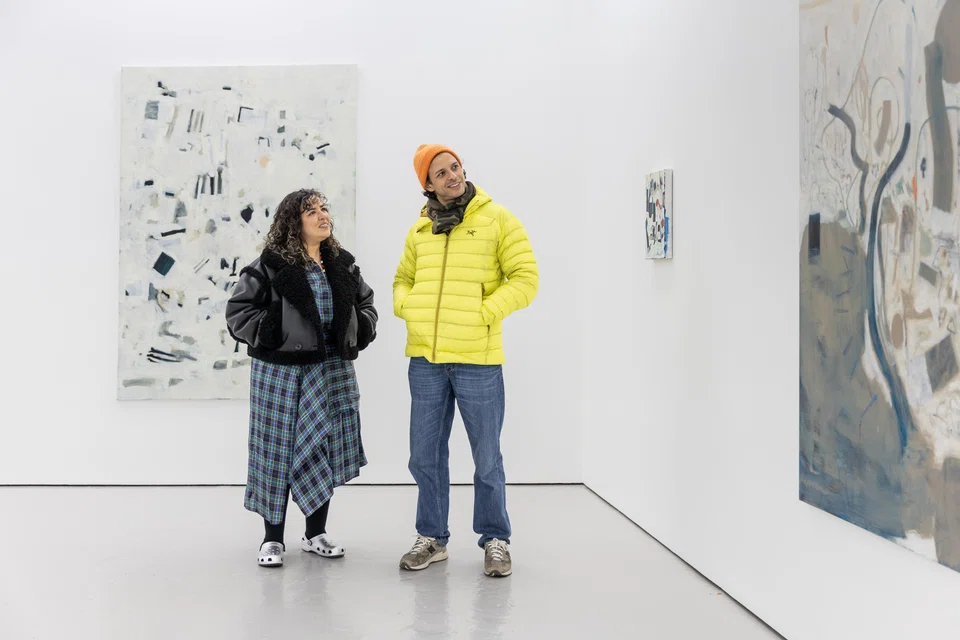
BRITAIN’S economy is stagnant, the international art market is in a downturn, and the wider world is weighed down with ongoing geopolitical crises in the Middle East, Ukraine and beyond.
Yet, perhaps counterintuitively, London’s contemporary art gallery scene is expanding.
This past weekend was the preview of the sixth edition of Condo London, a collaborative citywide exhibition featuring 27 invited international dealerships presenting exhibitions at 23 London contemporary galleries.
Host dealers can choose to give over their spaces to their visiting colleagues, or hold their own exhibitions alongside them. Most of the works at the event, which runs through Feb 17, are by emerging artists and are priced at under US$20,000.
Eight years on, change aplenty
Back in 2016, the inaugural edition of this innovative alternative to an international art fair featured just eight London dealerships. Since then, spinoff events have been held in Athens, Greece; Mexico City; New York; Sao Paulo; and Shanghai. This latest iteration is the first in London since 2020.
The four-year gap “was because of the pandemic”, says Vanessa Carlos, a co-founder of the Carlos/Ishikawa gallery in the East End and the creator of the Condo concept. “We wanted to wait for the moment when the most people could travel freely,” she adds.
Now, she says, “new things are happening in London”. The biggest challenge was keeping Condo London “small and intimate” at a time when the city’s re-energised gallery scene is growing, she says. “Scale is important. There are too many large, exhausting events,” she adds, pointing out that Condo was small enough for many visitors to see all of it.
“I feel this is a distinctly new phase, a reset,” says Phillida Reid, one of two Condo participants from the new cluster of galleries in the Bloomsbury district. Located near the British Museum, the neighbourhood was not previously associated with serious contemporary art. Reid opened her 2,500 square foot gallery there in 2022; four more dealers opened nearby last year.
During Condo, Reid is mounting Labour of Love, a solo exhibition of canvases by New Zealand-based artist Claudia Kogachi that affectionately depict the painter and her girlfriend. The gallery is also hosting paintings by Brazilian artist and transgender rights activist Lia D Castro, presented by Galeria Jaqueline Martins of Sao Paulo and Brussels. Reid says several of Castro’s paintings have been sold, priced at about US$6,500 each.

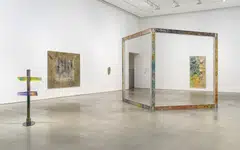
Just a few hundred yards away, the newly opened London branch of the Athens gallery Hot Wheels is hosting a joint show for Condo with Maxwell Graham gallery from New York.
“It’s competitive at an art fair. Condo is a collaboration,” says Guillaume Sultana, director of the Paris-based Sultana gallery, which is presenting photographs by young French artist Nantene Traore at Amanda Wilkinson gallery in Farringdon during the event.
These tender, of-the-moment studies of bodies in motion and transition are for sale in editions of three, priced between 1,200 euros (S$1,751) and 5,000 euros per image. Six of those sold during the preview, says Sultana, adding that there was a steady stream of visitors at Wilkinson’s gallery during the weekend. “London is such a big city. Anything you do, you have people.”
Smaller is sometimes better
In reality, unlike major “destination” fairs – such as Art Basel or Frieze – Condo, with its concentration on young galleries and emerging artists, isn’t the kind of event that attracts many international visitors, particularly in January.
But with the guest gallerists having to pay just US$950 to participate, dealers can take the sort of risks they can’t afford to take at a fair. And price points at Condo are often low enough to encourage sight-unseen online buying.
“It’s much more relaxed. I can bring much more experimental works, instead of spending US$20,000 to US$30,000 at an art fair and risking my business,” says Condo regular Alexander Shulan, director of the New York gallery Lomex.
Lomex is showing paintings by Berlin-based American artist David Flaugher, whose austere, deserted interiors are priced between US$9,000 and US$22,000 at Ginny on Frederick. Shulan says an American collector bought one at the preview.
Given Condo’s more relaxed format, the pace of sales isn’t like an art fair, either. But there were takers at the debut show of abstract paintings covered with enigmatic markings by Belgium-based Senegalese artist Libasse Ka at Carlos/Ishikawa.
The gallery’s star artist Oscar Murillo got to know Ka, 25, while the latter was working in a Brussels superstore. Murillo, impressed by Ka’s artworks, recommended him to Carlos/Ishikawa. Several of Ka’s 11 paintings had sold by Sunday (Jan 21) afternoon, priced between US$7,000 and US$38,000, Carlos says.
The Condo preview was also an opportunity for the London dealership Emalin to show off a new, second space in one of the oldest buildings in the Shoreditch neighbourhood. Dating back to the early 18th century, the building, called the Clerk’s House, now contains an elegant white-painted gallery displaying works by Alvaro Barrington, Matias Faldbakken and other artists from Emalin’s international stable.
Taking bold steps
Outside Condo’s programme, other London galleries have been showing signs of growth. Last Thursday, dealer Niru Ratnam opened a new 2,000 sq ft space in the Fitzrovia district with a show of contorted figure paintings by British artist Emma Cousin.
“It’s a risk opening a bigger gallery in a better location,” says Ratnam, who previously occupied a small, upstairs gallery near Carnaby Street. “But you do make more of a statement, and it enables our artists to make more ambitious shows.”
“It’s also a risk staying still in a challenging climate,” Ratnam adds. “You can simply fade away.”
Decoding Asia newsletter: your guide to navigating Asia in a new global order. Sign up here to get Decoding Asia newsletter. Delivered to your inbox. Free.
Share with us your feedback on BT's products and services
TRENDING NOW

Singapore identifies 7 firms responsible for haze fires, notices issued urging action: Grace Fu
DBS remains analysts’ pick ahead of Q3 earnings after Singapore banks’ share slump
High Court rules against Julius Baer’s Singapore trust arm in US$50 million family trust dispute

Could stablecoins be the future of money?

