

Global-mindedness has helped him to adapt
'Clinical and efficient' Singapore not love at first sight, but has grown slowly on private equity boss V Shankar
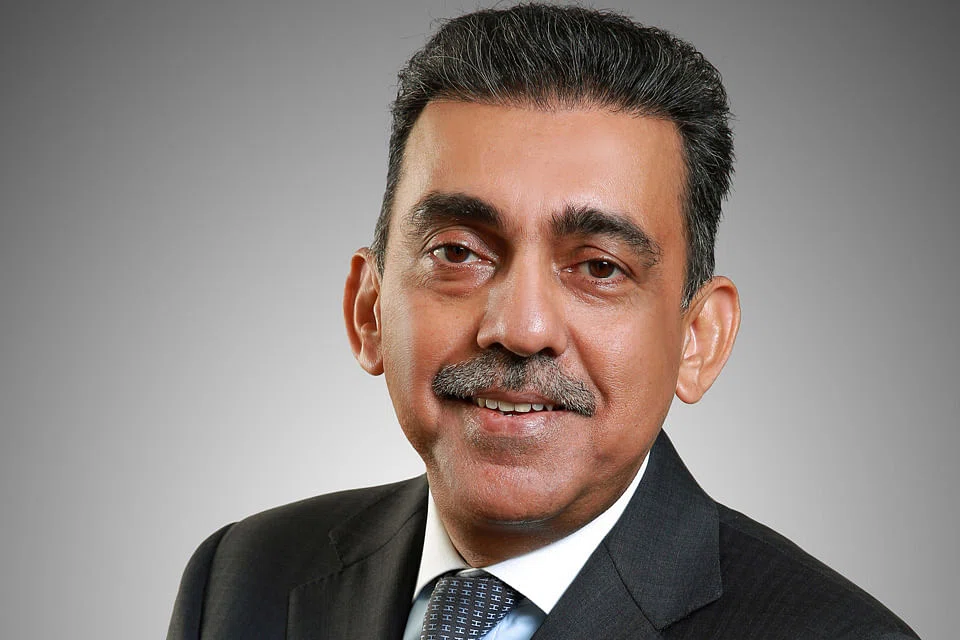
Singapore
As much a citizen of the world as he is a citizen of Singapore, former Standard Chartered group director V Shankar has always been extremely international in his outlook.
The current CEO of private equity startup Gateway Partners says that he got where he is today due to "consistently and continuously being prepared to get out of (his) comfort zone, uproot (himself), and move internationally". That eventually led him to Singapore.
He has lived and worked in many countries throughout the course of his life prior to attaining citizenship here. Mr Shankar was born in Tamil Nadu, India, and spent the early part of his career in Bank of America's India offices. He subsequently moved to its Hong Kong and Los Angeles locations before coming to Singapore when he joined Standard Chartered in 2001. He told The Business Times that both he and his wife became Singaporean citizens in 2006, but he has family living elsewhere.
In 2015, he left StanChart to found a startup private equity fund - Gateway Partners - with a few of his longstanding former colleagues. His work as the company's CEO sees him travelling between Singapore and Dubai frequently.
Despite life taking him to many different locations - spending about half the year on average overseas - Mr Shankar firmly believes that Singapore is home, and is proud to call himself a Singaporean.
"I have been travelling in and out of Singapore since the 1980s. At that stage in my life, I found it clinical and efficient but it definitely not 'love at first sight'. But Singapore grew on me over the 1990s, and when the opportunity came to relocate from Hong Kong to here with Standard Chartered in 2001 . . . I jumped at it, and have never looked back since."
When asked what attracted him to make the move to Singapore, he listed several key reasons.
The most prominent reason was that Singapore was a secular country where people of all races, religious denominations, and creeds have equal opportunities. Connected to this was Singapore's intrinsically multiracial nature. "An average Singaporean is comfortable eating Chinese, Indian, or Malay food. He or she also has friends and neighbours of multiple races. In how many countries would this be the case?" said Mr Shankar.
It is also a very safe place. "In how many cities in the world can you safely wander around alone at 3am, drink water straight from the tap, eat in any food court and not worry about getting sick, or go into clinic and not worry about getting fake drugs?" he said.
Next, Mr Shankar says, Singapore is an extremely dynamic place. The country's economic and geopolitical situation means that it "does not rest on its laurels". Without any natural resources that it can tap on, Singapore has to constantly re-invent itself in continually making itself relevant.
He added that Singapore is an extremely open place with no dearth of opportunities. "The Singapore success story has also been about doing the right thing for the long term and not letting short-term political considerations overwhelm good judgement . . . I hope that in Singapore we will never let bad politics trump good economics.
"History has shown that agility beats size. We should expect the pace of change in future to be even faster. As such, the future will belong even more so to those who are fleet of feet, agile of mind, and nimble of deposition. We have exhibited all those attributes in the past, and I am confident we will in the future."
READ MORE:
Share with us your feedback on BT's products and services
TRENDING NOW
Simba admits exceeding spectrum limits amid failed M1 deal; full-year profits surge 277%
Temasek’s Wan Chee Foong to helm PIL, Lars Kastrup to be board adviser

He built the Vingroup empire. Now South-east Asia’s richest man is handing some key roles to his sons
One-third of Singapore-listed firms at risk in severe AI downturn: MAS

