The good. The bad. The ugly. Inside Berlusconi’s art collection
AS HIS political fortunes sank, his legal and love life tangled, and his age caught up with him, Silvio Berlusconi stayed up late in his mansion outside Milan calling the hotlines of late-night art shopping television channels.
It didn’t really matter what the oil painting and antiques vendors hawked. Landscapes. Sculptures. Portraits. A fair share of nudes. Night after night, and then year after year, the octogenarian media mogul and former prime minister who wanted to have it all tried to buy it all, amassing an enormous collection of all the mail-order art he could lay his bleary eyes on.
“He had this project to build the largest collection in Italy,” said Giuseppe De Gregorio, a televendor near Naples who sold thousands of paintings to Berlusconi. “He didn’t want important paintings. He wanted paintings. It was enough if they were painted with oil on a canvas.”
Now, months after Berlusconi’s death at age 86, his heirs are figuring out who gets what in his sprawling empire. Despite the understanding among some of Berlusconi’s dealer friends that his heirs want to unload the artworks, his family members said in a statement that they are in no rush to divide up the estimated 25,000 paintings that one expert who saw the collection believes the mogul spent about US$20 million on.
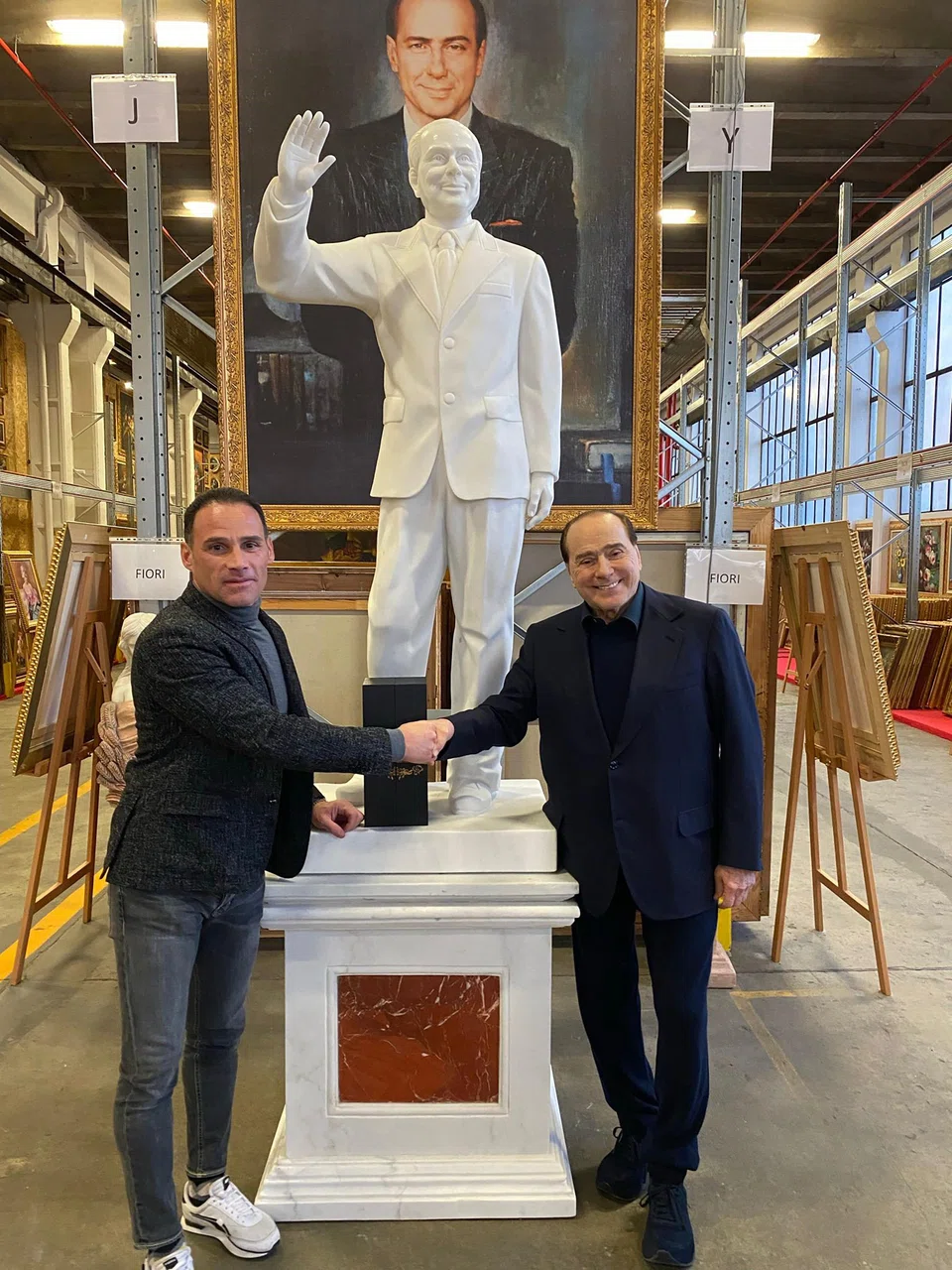
The paintings are now stashed in an enormous hangar that critics have characterised as a sort of Raiders of the Lousy Art warehouse. The family declined a request to visit the site.
Berlusconi had collected some masters over the years, including pieces by Titian and Parmigianino, and the villa he bought in the 1970s in Arcore, outside Milan, included a respectable art collection. But his recent acquisitions consisted of less notable works.
He emptied De Gregorio’s store of around 7,000 paintings and other pieces – ranging in cost from 100 euros (S$145) to 2,000 euros – mostly buying works on the lower end by living painters. There were street scenes of Paris and Venice, battles and fields of flowers, and lots of Madonnas.
“He loved Napoleon,” De Gregorio said, recalling that Berlusconi bought a painting of the French emperor reading a letter and showed him that he put the work in a room that President Vladimir Putin of Russia slept in when he stayed over. The former prime minister did not shy from a colourful palette or an excess of skin. A photo of the warehouse published in the Italian media showed a wall of modern-day nudes, like a giant calendar of oil-painted Playboy centrefolds.
“A compendium of different genres,” said Lucas Vianini, a televendor, art historian and subsequently reality television personality, whom Berlusconi eventually hired as a live-in curator of the collection.

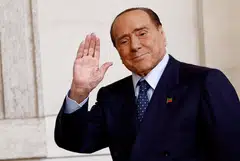
Some of Berlusconi’s paintings were carefully packaged and personally signed as gifts to friends, political allies, foes and frenemies, including Prime Minister Giorgia Meloni, who reportedly got an image of a mother with child.
But he left behind a vast enough collection of hotel-lobby schlock to attract mockery from critics, defence from family and musings from confidants about why on earth Berlusconi went on his Citizen Kane-like shopping spree.
“It is a mystery what goal he had to build this kind of amusement park,” said Vittorio Sgarbi, an art historian, deputy culture minister and a long-time friend, who said that “after the famous bunga bunga parties”, Berlusconi started “this sort of frenzy to collect on television”.
He said he had urged Berlusconi to rein it in, telling him he should buy a few good works instead. And he said he had warned the former prime minister’s eldest daughter, Marina – who Sgarbi said was “worried” – that her father needed to be stopped. “There was a real desire to accumulate,” Sgarbi said. “It’s inexplicable.”
Berlusconi first called in to De Gregorio’s late-night shopping hotline in 2019. The vendor recalled that he hung up on him three times. “I thought it was a joke,” he said.
When his identity was verified, “the entire studio froze”, he recounted. Berlusconi bought a bunch of paintings depicting Canadian mountains in the snow. “And from there began an adventure that lasted three years,” De Gregorio said.
De Gregorio hand-delivered the paintings, which Berlusconi told him were “even more beautiful in real life”.
He went to see Berlusconi often, getting a tour of the more refined picture gallery inside the Arcore mansion. Often, Marta Fascina, Berlusconi’s girlfriend and 50 years his junior, watched them unpack the goods. (Sgarbi, the art historian, said she supported her boyfriend’s hobby.) De Gregorio would spend the day with Berlusconi, he said, talking pictures and the art world, and eating lunch and dinner. “He also liked the company,” the televendor said.
Some televendors, including Alessandro Orlando, a veteran of the industry, said Berlusconi selected his paintings and antiques “like a surgeon”. He conducted at least 3,000 operations, spending about 2.5 million euros, over a couple of years, Orlando said, buying what he offered.
Orlando, too, spent time in Arcore. More than once, he said, Berlusconi told him, ‘Alessandro, come, I’ll show you the bunga bunga room’.” He said he declined.
At one point the collecting seemed to get out of hand even for Berlusconi. Once word had gotten out that the former prime minister was buying in bulk, art vendors, mostly from Naples, started sending trucks up to Arcore, and Orlando recalled seeing workers unload hundreds of paintings, including vibrant nudes, in the hope of a sale.
“‘Silvio, how much stuff have you bought?’” Orlando recalled asking Berlusconi.
Late in Berlusconi’s life, in his final run at politics, his paintings became presents to buy favour in a campaign for president of Italy that went nowhere. As he hid an ultimately fatal illness, the great collector “married” Fascina in a faux ceremony and settled for a peripheral role as a cantankerous junior partner in a new government.
De Gregorio attended his funeral in June and recalled a man who loved life and the pleasures that made it worth living, including buying an OK oil off the television after midnight.
“He had his own dedicated phone line,” said De Gregorio, adding, “he bought a lot”. NYTIMES
Decoding Asia newsletter: your guide to navigating Asia in a new global order. Sign up here to get Decoding Asia newsletter. Delivered to your inbox. Free.
Share with us your feedback on BT's products and services