Grab, Scatech, Wee Hur among those enabling legacy giving through donor-advised funds
Through the Community Foundation of Singapore, the families behind these firms have set up funds that allow long-term giving that is aligned with their values
[SINGAPORE] What do ride-hailing company Grab, construction firm Scatech Engineering and property developer Wee Hur have in common?
The families behind these companies have turned to donor-advised funds (DAFs), set up through government-affiliated non-profit Community Foundation of Singapore (CFS), to engage in structured legacy giving for generations to come.
DAFs allow donors to commit a minimum amount of S$200,000, and select causes to support. CFS helps them identify beneficiaries and programmes to support via its more than 400 charity partners – all of which have Institution of a Public Character status.
Dr Paul Tan, chief executive of CFS, said: “The giving can be structured over X number of years. This allows donors to think through more carefully, especially if they are not sure about how they want to give.”
CFS is among various organisations – such as Temasek Trust Foundation Advisors and Asia Community Foundation – that offer DAFs, and was the first to do so in 2008.
DAFs take three formats: flow-through, endowment, or investible flow-through.
For a flow-through fund, a specific amount is drawn down over the course of the selected number of years.
“Some donors prefer the option of having something that’s long-lasting and in perpetuity, so they might decide on an endowment fund. In this model, only the income goes into charitable causes,” Dr Tan added, noting that the minimum principal amount is S$1 million.
An investible flow-through fund is a mix of both – the principal amount can also be drawn down.
Although DAFs emerged as an alternative philanthropic vehicle in Singapore in 2008, the concept is not new in the West. Based on Inequality.org, almost two-thirds of the money donated to the top 20 charities in the US have gone towards DAFs as at March 2025.
DAFs have become more popular in the city-state over the past decade or so, and CFS is looking to close 2025 with a record number of new funds.
“We began seeing real traction from the mid-2010s as more families and professionals sought structured, long-term ways to give. To date, we have helped establish over 290 funds.
“It reflects the growing trust in CFS as more donors embrace strategic, flexible giving that aligns with their values and creates lasting community impact,” said Dr Tan.
As at November, CFS has raised more than S$363 million in donations and disbursed S$221 million in grants.
Passing down family values
Opening a DAF allows for intergenerational value transfer, shared Dr Tan, as the fund can be sustained for future generations to take over.
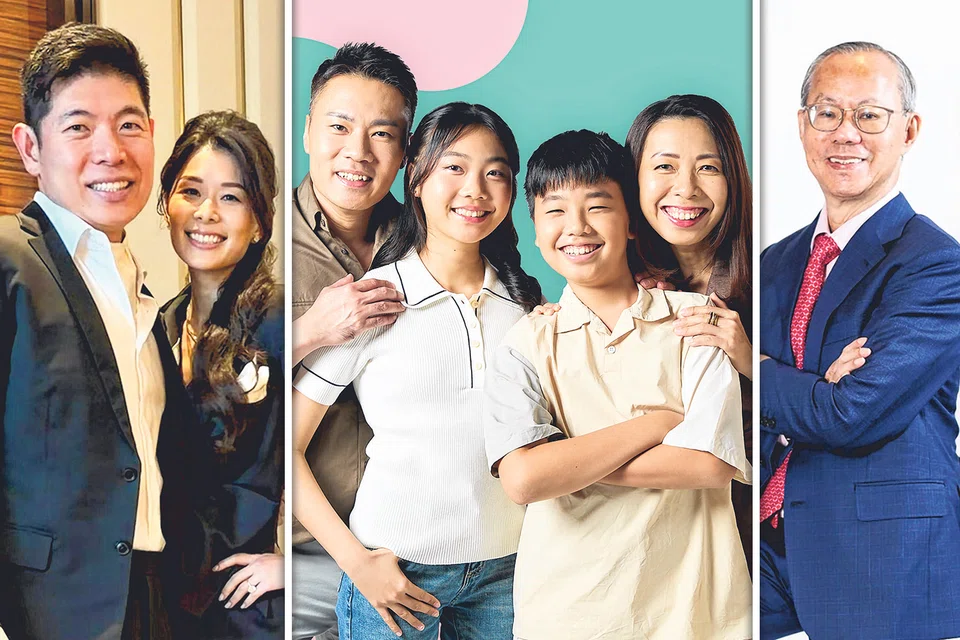
For example, Grab co-founder and group CEO Anthony Tan and his wife Chloe Tong started Ace Team Foundation via CFS in December 2021. It focuses on healthcare and community welfare.
In an interview with The Business Times, Tong said: “(We saw) what needs were not being met, got involved, looked at the hearts and people behind the causes, focused on the unseen in the community, and advocated for those who can’t advocate for themselves.”
Most recently, in November this year, the foundation collected S$5 million for St Andrew’s Autism Centre, with the funds going towards expanding residential spaces, supporting employment and long-term care programmes for adults with autism.
Tan and Tong’s children sat in on meetings for the fundraising gala, and currently accompany their parents when meeting charity partners.
“What was so special was watching our children see these needs that are not being met, even at such a young age, and they can just be there (for) support,” she said, adding that the benefit of having a family foundation is that it can work on initiatives that are long-lasting.
Tong noted that she hopes their five children will use the foundation to be reminded of their family value of inclusivity and continue to “serve others”.
“We never built a generational home or business. A foundation is what we thought about (when it came to) our kids’ future. We hope that this foundation gives them a place where our family values are put into action and have an impact on society,” she added.
Likewise, Scatech Engineering’s managing director Rachel Yang and her husband Bryan Chua started the Scatech Philanthropy Fund in December 2024, with the intention of eventually passing it down to their children.
They aim to continue Yang’s father and founder of Scatech Yeo Chor Seng’s legacy of kindness and compassion. He died in August 2023.
The fund focuses on education, art and migrant workers. Yang said that, since Scatech is involved in construction, the fund is a way for her to give back the “good work” workers have put into the business.
This year, it established the Scatech Philanthropy Fund Scholarship with the Singapore Institute of Technology, to offer financial support to undergraduates. The fund also works with Art Outreach Singapore to advocate for artists – the couple’s daughter is passionate about art.
“We try to involve our children as much as possible. Whenever something is introduced to us, we don’t make the decisions ourselves – although we make the ultimate decision,” noted Chua.
The couple added that they will continue contributing to the fund since it is a “long-term commitment”, and supporting programmes for migrant workers.
Meanwhile, Wee Hur Foundation, set up by family business Wee Hur in May 2024, focuses on education, youth and supporting underprivileged families.
In November 2025, the foundation raised more than S$350,000 at its charity golf event for three charities that are focused on children.
Goh Yeow Lian, executive chairman and managing director of Wee Hur, said that he hopes the younger staff at the company continue to be involved in the foundation.
Convenience and flexibility of a DAF
The founders of the three funds all noted the convenience and flexibility that a DAF provides, with CFS taking care of all administrative matters.
Tong noted: “We had full-time jobs, businesses, young kids, but we wanted to give back. CFS came in and made giving that much easier.”
In Scatech’s case, Chua and Yang had done charity work on an ad-hoc basis, but wanted it to be more structured.
“Every day, we’re so busy with our lives and running the business – we wanted something purposeful, long term and structured. CFS is government-affiliated, and has credibility, accountability and transparency,” said Chua.
Consulting CFS is also a good place to start for those who want to give back, but do not know how to.
Goh pointed out: “As a donor, sometimes we don’t know what or who to give to… CFS provides a very trusted and well-managed platform.”
Dr Tan of CFS added: “CFS helps donors figure out the charitable landscape and gives advice. We take our donors to visit charities, and organise events throughout the year to introduce donors to charities… We believe that this is all part of the long relationship we have with our donors.”
The organisation also regularly provides impact reports to donors, so they know where their funds went and how many beneficiaries they are helping. Many donors continually top up their DAF, enabling long-term impact.
With S$200,000 as the minimum amount to set up a DAF, many Singaporeans can afford to engage in more purposeful giving – and not just high-net-worth individuals, noted Dr Tan.
“If the entry point is S$200,000, a huge swathe of Singaporeans can afford it. A single person who’s living in a three-room flat could think about legacy.
“(The amount) S$200,000 is not that prohibitive a bar. Starting a fund can be more inclusive, and we encourage Singaporeans who have the means to think about legacy giving and estate planning.”
Decoding Asia newsletter: your guide to navigating Asia in a new global order. Sign up here to get Decoding Asia newsletter. Delivered to your inbox. Free.
Copyright SPH Media. All rights reserved.