

Green consumerism is fashioning growth in Asia's resale clothing market
Re-using quality clothes is gaining traction as people take more responsibility for the sustainability of their choices.
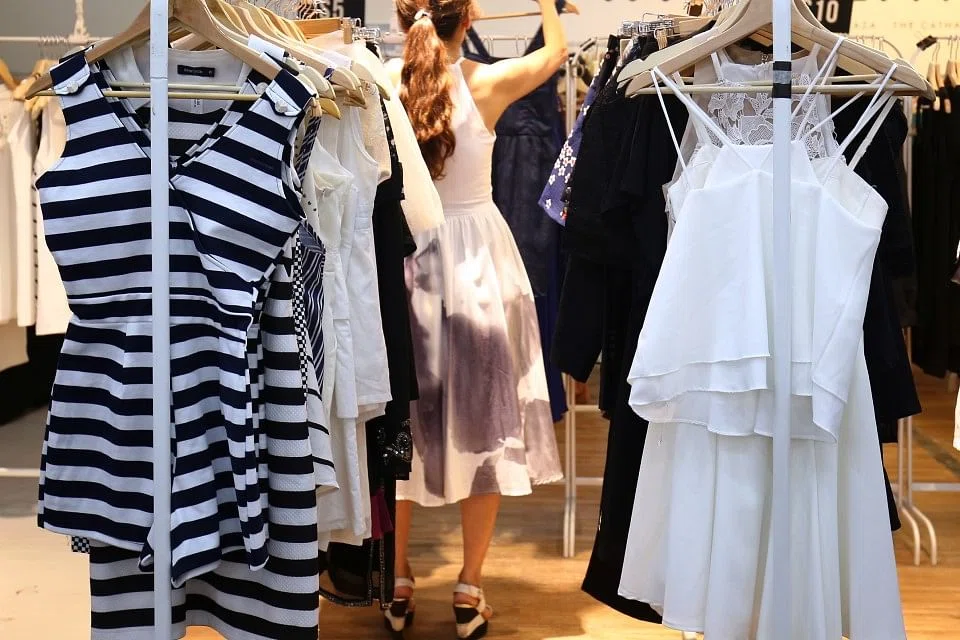
AFFLUENT Asian parents have always wanted to dress their kids in clothes from quality brands. That hasn't changed - but other attitudes are shifting. Motivated by environmental concerns more than the desire for a bargain, consumers in the region are starting to overcome a longstanding insistence on buying only new clothes and are purchasing resale clothes online.
The global resale clothing market is forecast to more than double to US$64 billion in sales by 2025. As the change in Asian consumer preferences that we are already seeing picks up momentum, so too will the mainstreaming of resale globally. That will hasten the end of fast fashion, bringing us one step closer to a circular economy for clothing.
As the mother of two young kids, I know how quickly children outgrow clothes. On average, a child speeds through seven sizes before they are three and more than seventeen hundred items of clothing before adulthood. That equates to a lot of shopping, a lot of spending and - often - a lot of clothes being thrown away after being worn only a few times. Sound familiar?
Buying resale clothes allows savvy shoppers to do the right thing by their bank balances as well as the environment - the average discount to new prices on our platform is 80 per cent. And when consumer behaviours change, investors take note.
In March, French resale consignment company Vestiaire Collective secured US$216 million of investment from US investors and luxury goods multinational Kering. This interest from the owner of iconic labels including Gucci was a turning point in the industry's move towards a more circular structure, in which clothes are resold, used for longer before they reach their end of lives and - one day - recycled.
Buoyed by greater climate change awareness and faced with shops closed by Covid-19, second-hand shoppers have boosted Vestiaire's business by more than 100 per cent in the past year. Elsewhere, California-based resale firm ThredUp raised US$168 million via a March IPO that gave the firm a "Unicorn" valuation of US$1.3 billion.
'%3e%3cpath%20d='M12.1475%2025.5262C13.7713%2025.4295%2014.94%2023.913%2014.94%2021.8832C14.94%2019.5359%2013.474%2018.093%2011.5917%2018.093C11.3745%2018.093%2010.9582%2018.093%2010.8393%2018.1413V25.2086L11.8891%2025.5745C11.8891%2025.5745%2012.207%2025.5262%2012.1475%2025.5262ZM11.4934%2017.6281C13.2567%2017.6281%2014.3843%2016.4292%2014.3843%2014.4501C14.3843%2012.372%2013.275%2011.2973%2011.4339%2011.2973H10.8393V17.6305H11.4934V17.6281ZM6.66078%2025.6482L7.39265%2025.5492C8.02617%2025.4502%208.26403%2025.3053%208.26403%2025.1097V11.6149C8.26403%2011.4193%208.1451%2011.3709%207.23484%2011.249L6.68137%2011.173L6.6219%2010.7588H11.9508C15.7153%2010.7588%2017.0624%2012.0797%2017.0624%2014.1578C17.0624%2015.9666%2015.7748%2017.1909%2013.4969%2017.6305V17.7041C16.111%2017.948%2017.6571%2019.5382%2017.6571%2021.7636C17.6571%2024.3318%2015.8937%2026.0417%2012.1109%2026.0417H6.60132L6.66078%2025.6482Z'%20fill='%232B2B2B'/%3e%3cpath%20d='M20.6287%2025.6505L21.5596%2025.5515C22.1725%2025.4779%2022.4104%2025.3076%2022.4104%2025.112V11.249H21.9346C20.073%2011.3479%2018.982%2013.0095%2018.408%2014.6227L18.1907%2015.5018H17.6555L18.1701%2010.7588H29.3837L29.6421%2015.4787H29.1664L28.9491%2014.6227C28.3728%2012.8645%2027.3047%2011.2743%2025.5002%2011.249H24.9856V25.1856C24.9856%2025.3812%2025.1251%2025.4548%2025.9965%2025.5515L26.7695%2025.6505L26.829%2026.0417H20.5693L20.6287%2025.6505Z'%20fill='%232B2B2B'/%3e%3c/g%3e%3cdefs%3e%3cclipPath%20id='clip0_5242_21648'%3e%3crect%20width='24'%20height='16.8'%20fill='white'%20transform='translate(6%2010)'/%3e%3c/clipPath%3e%3c/defs%3e%3c/svg%3e)
Social validation
Despite increasing investment and signs of changing consumer behaviour, resale market penetration remains low. In Asia, we estimate that fewer than 5 per cent of consumers have bought clothing on an online resale platform.
At the same time, landfills across the region are filling up with clothes. Hong Kong, where we started out, sends an average of 392 tonnes of textile waste to landfill each day, with about half of that estimated to be clothing, according to Redress, an NGO. Singapore generated 168,000 tonnes of textile and leather waste in 2019, of which only 4 per cent was recycled. Globally, fashion accounts for around 10 per cent of greenhouse gas emissions from human activity.
One of the biggest barriers to mass resale adoption in Asia is that strong cultural preference for the new - and the associated stigmatisation of secondhand items. But we are seeing attitudes changing, principally driven by people taking more responsibility for the sustainability of their choices as consumers. Our customer surveys show that the number one motivation behind consumers shopping with us isn't access to brands at bargain prices, but protecting the environment.
Scaling up
Operational scalability is the biggest challenge confronting the resale market, though. Online consignment platforms handle every item of clothing, photographing each item, some of which may only sell for US$6. Peer-to-peer platforms like eBay operate at a lower cost and faster, simply because users manage their own sale. Many Chinese consumers won't buy peer-to-peer because they don't trust the authenticity and quality of goods. The growth of reputable resale platforms is critical to establishing trust in the system and the mass adoption of secondhand clothing.
But trust and changing attitudes alone aren't enough to scale resale in Asia. Without investment in the right infrastructure, resale platforms aren't an attractive proposition for most single brands because they are so hard and expensive to scale up. For firms such as Eileen Fisher and Patagonia, secondhand selling and circularity are part of their ethos. For others, it's part of their approach to their environmental, social and governance (ESG) goals.
There is more potential in brands partnering with resale platforms to take advantage of their infrastructure. Brands that do so would be able to build a longer-term connection with their customers and get a share of the resale price. For example, brands could say to customers that, when their child outgrows an item, it can be listed with the brand's resale partner. Within five years, I expect that most brands will collaborate with or operate a resale programme to address their responsibility for their products beyond the initial purchaser.
Endgame
The sustainability endgame for the fashion industry is to achieve complete circularity - as well as to reduce the environmental impact of producing new clothes. Innovative techniques are helping the industry make progress with recycling, although the widespread recycling of clothes remains years away.
But that doesn't mean we shouldn't make progress towards more sustainable fashion in the meantime. Re-using quality clothes is viable right now and gaining traction here and across the world. In the years ahead, I expect this trend to reach a tipping point and I believe that Asia will be at the cutting edge of this new dynamic in consumer tastes.
- The writer is is the founder of Retykle, a children's designer clothing resale platform.
Decoding Asia newsletter: your guide to navigating Asia in a new global order. Sign up here to get Decoding Asia newsletter. Delivered to your inbox. Free.
Share with us your feedback on BT's products and services
TRENDING NOW

Two Singapore-listed palm oil firms named in Greenpeace report on Indonesian plantation fires
Singapore Airlines flight returns to San Francisco after ‘unruly’ passenger incident

Singapore looking into which companies responsible for haze-causing fires: PM Wong
Deluge IPO 3.86 times subscribed ahead of SGX debut

