

Gunning for glory at 24 Hours Le Mans
Sportscar makers' obsession with this 93-year-old race in rural France stems from pride and profit
New York
THE 24 Hours of Le Mans started in 1923 in a tiny town in the French countryside 130 miles (209 km) from Paris. The storied endurance race pits some old European brands - Peugeot, Renault, and Matra, among others - against the likes of Audi and Porsche, in cars piloted by relatively unknown drivers. It lasts for more than 3,000 miles around a single track, and it doesn't draw celebrities like the more glamorous European Formula 1 races.
And yet, the 24 Hours of Le Mans is the most prestigious, and most important, race of its kind.
"Every kind of racing has its Kentucky Derby, like the Monaco Grand Prix for Formula 1," said John Paolo Canton, head of communications for McLaren in North America. "Le Mans is that for sports cars. If you look at all the great sports car brands, they became all the great brands because of their wins at Le Mans. Porsche wouldn't be Porsche if it weren't for Le Mans."
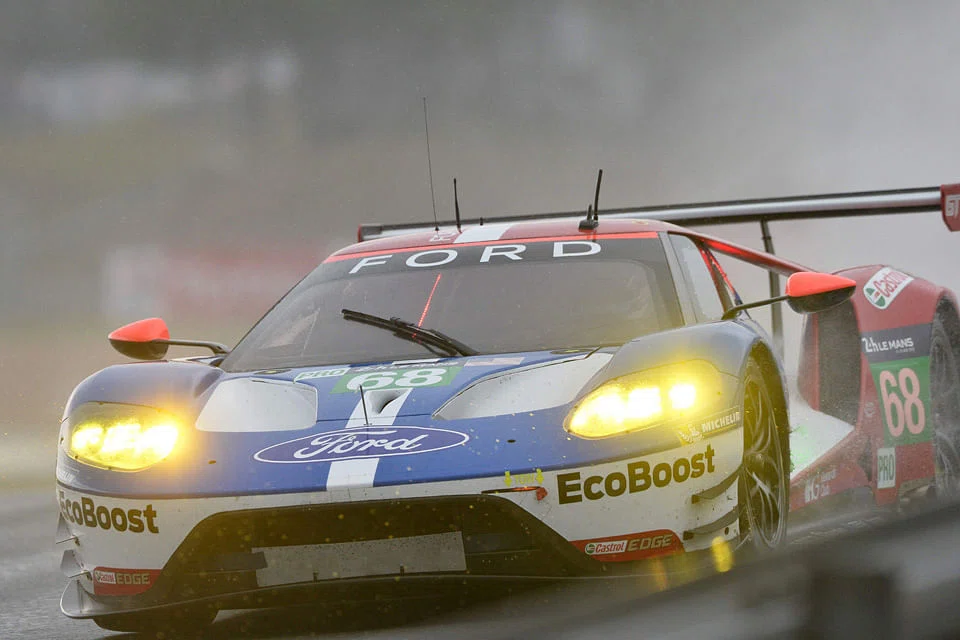
A top finish at Le Mans boosts company branding, plays a key role in research and development, and translates into sales for the carmaker that wins. This year is especially interesting for American viewers since Ford will run the 2016 GT supercar it raced at the Rolex 24 Hours of Daytona in January. (It finished a disappointing No 31 overall in that race; hopes are higher for the race in France.)
"Le Mans has been the gold standard, because if you win Le Mans you are the best," explains Ted Gushue, editor of car enthusiast website Petrolicious. "So many things have to go right for that race to even work."

The race starts at 3pm on Saturday, June 18, and runs straight through - with no stops - until the same time on Sunday.
This year's run evokes a famous rivalry in the 1960s between Ford and Ferrari, in which Ford brought the original GT40 to Le Mans and became the first American car to win the overall title and beat Ferrari on what was virtually its home turf. These were the days when car-racing success was synonymous with patriotism and national pride. A win meant Ford proved Americans could compete and even beat the European carmakers in making relevant, fresh, exciting sports cars. Now, five decades later, Ford is hoping its modern GT can repeat the performance.
"Even to the layman back then, winning Le Mans was a source of national pride," Mr Gushue said. It's been 50 years since the Ford wins during the 1960s. "This year, Ford's return with the GT is in many ways the successor to that pride. We had all rallied around that plucky team back then. This is a perfect storm of so many things that need to come back together for us."
Ford not your brand? There are plenty of other reasons to watch the Le Mans race - and to be knowledgeable enough to talk about it and impress your friends. Most crucially, such carmakers as Jaguar, Ferrari, and Mercedes-Benz use the extreme conditions of the race - the blistering heat from the engines and brakes, the oppressive G forces around corners, the frequent rain and wind - as a de facto, live, real-time research lab.
The race works by number of laps: The car in each category that completes the most laps from start to finish wins. So the fewer pit stops it makes (efficiency, reliability) and the more seconds it can shave off lap times (aerodynamics, body styles, lightweight materials), the better. Which is where the research comes in.
Innovations such as supercharging and turbocharging (in cars as early as 1929 and 1974), disc brakes (Jaguar C Type in 1953), the air brake (Mercedes 300SLR in 1955), and smooth bodies and spoilers (the Porsche 908 Langheck in the late 1960s and early 1970s) were all introduced, tested or refined during Le Mans racing.
New engine variants such as the hybrid technology Porsche introduced years ago now power the 918 Spyder, and the diesel technology that Audi puts in its own cars was also tested on that fabled course. Of course, it's not all science and technology at Le Mans. There's a reason why Audi, Corvette, Ford, and Aston Martin, for instance, want (need) to do well there: A top finish at Le Mans adds a halo of success and very real racing credentials to the brand that wins.
Carmakers spend tens of millions on developing racing teams - an "absolute fortune", said McLaren's Mr Canton, though he declined to say how much McLaren has devoted in previous years. Bloomberg
Share with us your feedback on BT's products and services
TRENDING NOW
Ex-Nvidia CEO Jensen Huang carried a secret for more than a year. It led to his downfall

South-east Asia has lost Nvidia’s best salesman

Demand, tech capabilities position Apac and AI as Skyscanner’s next growth frontiers: CEO Bryan Batista

Jensen Huang discusses comeback as Nvidia CEO with allies: report

