

Happy 100th birthday, 16-mm film
The format was initially a boon to amateurs. Now, with moviemaking gone digital, it’s the choice of auteurs like Darren Aronofsky and Kelly Reichardt.
 Add BT as a preferred source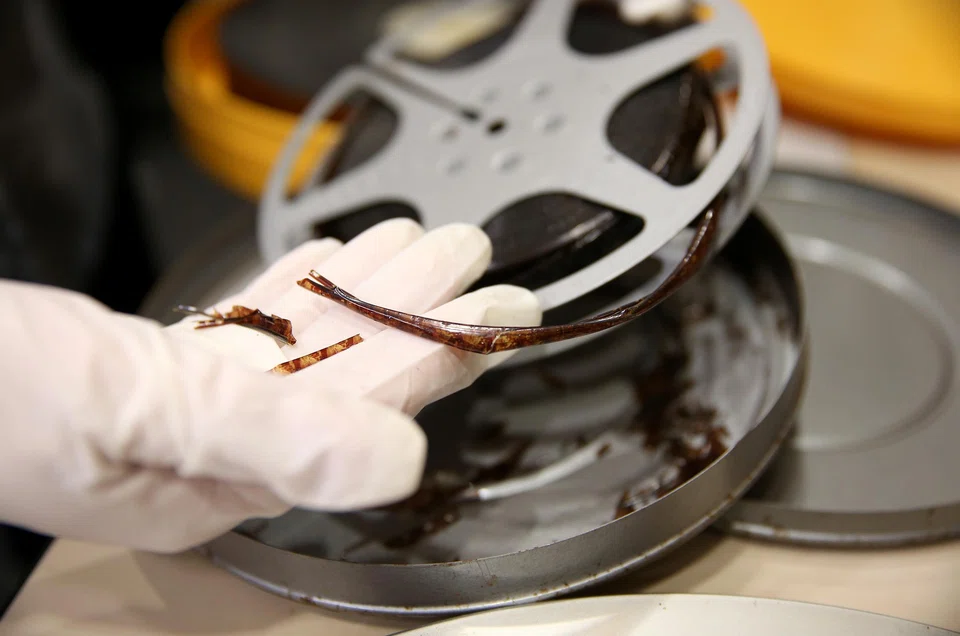
ONE hundred years ago, the Eastman Kodak Co introduced a shiny new camera that promised to revolutionise moviemaking. The company had been selling filming devices for more than two decades by then, but this novel contraption – the Cine-Kodak camera, sold with the Kodascope projector – offered a new thrill: the ability to make and screen movies at home, with no special expertise.
The technical marvel, however, wasn’t just the camera but also the film inside. Until 1923, the film used most commonly in motion pictures was 35 millimetres wide. That year, Kodak produced a new format that was only 16 mm. The image wasn’t as sharp when you blew it up on the big screen, but it allowed for smaller, cheaper and more portable cameras.
16 mm ushered in a new era of movies made outside the Hollywood system. Regular folks could now record their own lives, journalists and soldiers could film in the midst of war, and activists could shoot political documentaries in the street. Until digital video arrived in the late 1990s, 16-mm film was the mainstay of the amateur or independent filmmaker, requiring neither the investment nor the know-how of commercial cinema.
Last week, at the New York Public Library for the Performing Arts, which holds thousands of 16-mm reels in its collection, the film archivist Elena Rossi-Snook projected some shorts for a group of undergraduates from Marymount Manhattan College. As the projector whirred, a beam of light cut through the darkened room, painting the screen with scenes from the 1946 animated Boundary Lines, a stirring movie by Philip Stapp about social integrity in the wake of World War II. That was followed by The End, an anti-war stoner comedy directed by a teenager, Alfonso Sanchez, in 1968. The third film, Black Faces from 1970, was an ebullient, one-minute montage of portraits of Harlem residents.
These productions, precious documents of the lives and concerns of ordinary Americans, have endured, Rossi-Snook explained, because their makers had relatively cheap and convenient access to film, a medium that can last hundreds of years if stored properly.
Today, 16 mm is no longer optimal for the amateur filmmaker. Analogue film is increasingly expensive, fewer and fewer labs can process it, and the format doesn’t allow the nearly unlimited shooting and instant playback that video does. But even as it turns 100, 16 mm still has a unique look that neither 35-mm film nor video can rival.
When projected on the screen, analogue film has a three-dimensional, pointillist texture called “grain”, a product of its synthetic makeup. There is more grain in 16 mm than in 35 mm, resulting in a fuzzier, flickering picture. In the 20th century, that was a drawback for professional filmmakers seeking crisp, theatrical images. But today, as high-definition media saturate our lives, some directors choose 16 mm precisely for its rougher look. It reminds us that what we’re watching is not the world as is, but filtered and transformed, with great creativity, through a chemical process.
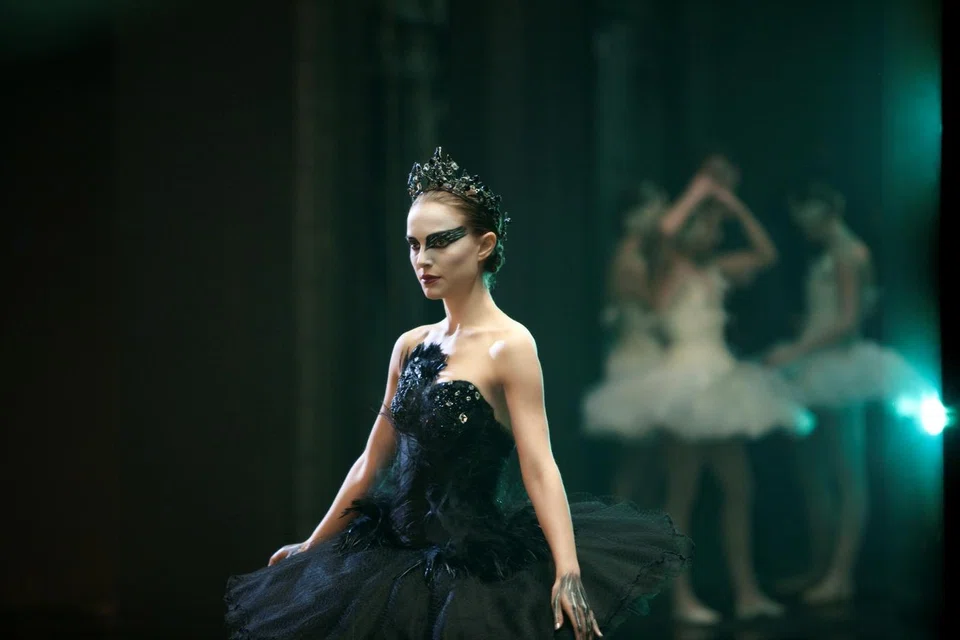
Filmmaker Darren Aronofsky has shot several movies on 16-mm film, including The Wrestler (2008), Black Swan (2010) and Mother! (2017). But when he was making his debut feature, Pi (1998), 16 mm was a necessity, not a choice. The resolution of available digital cameras wasn’t good enough for feature filmmaking at the time, and Aronofsky couldn’t afford 35 mm. But he and his cinematographer, Matthew Libatique, soon realised that 16 mm – especially the high-contrast stock they used called reversal film – emphasised the hallucinatory style of Pi, a black-and-white psychological thriller that delves into the obsessions of a paranoid number theorist.
“We decided to really lean into 16 mm,” Aronofsky said in an interview. “I wanted the big grain and the contrast-y look. It’s funny, because we just had the 25th anniversary of the film, and we blew it up for Imax. And the Imax people were nervous because of how grainy it was. They wanted to know if I wanted to clear out some of the grain with computer technology. And we said, absolutely not. We loved the look of it.”
Several TV shows from the late 90s and early 2000s, including The OC and Sex and the City, used Super 16, a variation of 16 mm with a larger picture area that gave them a sense of real-time immediacy. The first 10 seasons of The Walking Dead were also largely shot on 16 mm to capture the grimy, crumbling feel of classic horror cinema.
Cinematographer John Inwood, who filmed 150 episodes of the comedy Scrubs, recalled that 16-mm cameras, which are smaller and lighter than their 35-mm counterparts (and even many contemporary professional video cameras), were crucial in developing the series’ frenetic mockumentary style. “It was good for Scrubs because we moved the cameras a lot, and we were sometimes in tight spaces,” he told me. “We shot in an actual hospital, the former North Hollywood hospital, and we shot in every square inch of it, even down to the morgue.”
As digital cameras have become sharper and more versatile, many filmmakers have turned to 16 mm to evoke the analogue past and the blurry, precarious nature of memory. In an interview with Gold Derby, Newton Thomas Sigel, who filmed Spike Lee’s Da 5 Bloods (2020), said the director had insisted to Netflix that they use 16-mm reversal film for the sequences set amid the Vietnam War, despite the costs and logistical challenges. The film had to be shipped from Vietnam to an American lab for processing, and by the time the crew members could see what they had shot, Chadwick Boseman’s acting schedule had already ended. But Lee was adamant that the scenes look authentic, like archival newsreels filmed in the field in the 1970s.
Veteran cinematographer Ed Lachman used Super 16 on two of his collaborations with director Todd Haynes, both of them period dramas: the miniseries Mildred Pierce (2011), and Carol (2015), which garnered him an Academy Award nomination.
Filmmaker Kelly Reichardt recalled that when she started shooting her 2016 feature, Certain Women, she didn’t have the budget for 16 mm. But when she and her cameraman, Christopher Blauvelt, did test shoots in Montana, where the film is set, Reichardt was horrified at how “flat” the snow looked on video.
A grant ultimately allowed Reichardt to shoot Certain Women on 16 mm. It made the production more laborious, but the results – soft, textured images of wide roads, snowy mountains and grassy plains, all shimmering with light, dust and shadow – made it worth it.
“I guess it’s about beauty, in a way,” Reichardt said. “I remember on 30 Rock they did a little thing where Lemon walks in front of the HD camera, and it’s like, she’s a skeleton hag. You know? You see every single thing. It’s very unforgiving. For nature, too.” NYTIMES
This is an abridged version of the NYT piece.
Decoding Asia newsletter: your guide to navigating Asia in a new global order. Sign up here to get Decoding Asia newsletter. Delivered to your inbox. Free.
Share with us your feedback on BT's products and services
TRENDING NOW

‘I felt like dying’: Thai Singha beer scion speaks up after disclosure of alleged sexual abuse

CDL, Hong Realty outbid 3 other bidders with S$542.4 million offer at S$1,865 psf ppr for Peck Hay plot

Private equity giant Carlyle can grow bigger but needs to stay on its toes: co-founder David Rubenstein

Evergrande’s liquidation prompts some PwC partners to shield assets, contemplate divorce

