

Haruki Murakami isn’t afraid of the dark
The famed author, who brought Japanese literature into the global mainstream, grapples with ageing and his place in the world of letters
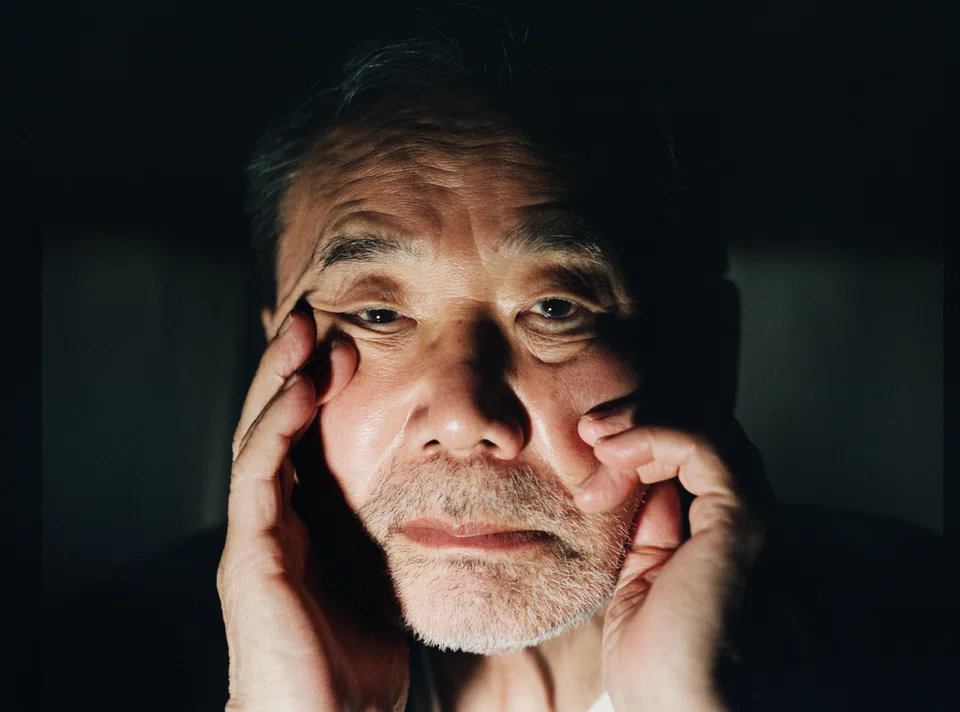
WHEN Haruki Murakami sits down to write, he has no idea what’s going to happen.
This seems like an astonishing admission for a seasoned novelist, particularly for a global literary icon who has written more than 40 books and sold tens of millions of copies in dozens of languages. But nearly half a century into his career, Murakami’s creative process remains a mystery, even to him.
“I don’t have any plan. I’m just writing, and while I’m writing, strange things happen very naturally, very automatically,” Murakami said during an interview in New York in December.
“Every time I write fiction, I go into another world – maybe you can call it subconsciousness – and anything can happen in that world,” he continued. “I see so many things there, then I come back to this real world and I write it down.”
Murakami doesn’t regard himself as a masterly prose stylist or a brilliant storyteller. In his telling, his one unique skill is his ability to travel between worlds and report back. “I don’t think I’m an artist, exactly. I think I’m an ordinary guy,” he said. “I’m not a genius, and I’m not that intelligent, but I can do that – I can go down to that world.”
We met in a cavernous underground cocktail lounge in a Manhattan hotel, a setting that felt oddly appropriate, given his affinity for caves and tunnels, a recurring motif in his work. At 10 in the morning, the place was eerily empty. Geometric patterns of light played on the wall.
Dressed casually in a hooded sweatshirt and sneakers, Murakami seemed at home in the near darkness. He sat almost perfectly still and spoke slowly and deliberately, delivering answers mostly in English.
Murakami doesn’t enjoy public appearances and doesn’t seem to relish speaking about himself or the meaning of his work. He avoids going on TV, though he’s been captured on video unwittingly. But in December, he reluctantly made two public speeches in New York City in front of large, rapt audiences.
“I’m not good at socialisation, and so I don’t like to attend parties or give speeches, but sometimes I have to do that,” he noted. “The rest of the year I’m at home, just working. I’m kind of a workaholic.”

During an event at Town Hall on Dec. 11, Murakami spoke to a packed house about the globalisation of Japanese literature and culture – a shift he helped bring about. Earlier that week, he gave brief remarks while accepting a lifetime achievement award from the Center for Fiction, which was presented to him by musician and writer Patti Smith.
Murakami thanked his wife of more than 50 years, who he said is his first reader and often his toughest editor. And he recalled how, when he gave his first book signing in the United States decades ago, only a handful of people showed up. “I remember sitting with a pen in my hand and nothing to do,” he told the audience. “It was one of the longest hours of my life.”
Such a tepid reception would be unthinkable now. Murakami is the rare writer with a towering literary reputation who is also immensely popular with readers worldwide. His new novels are celebrated with midnight release parties, where superfans gather at bookstores to buy copies the minute they go on sale. Fans have created playlists of music he’s referenced and published cookbooks based on the food in his novels. There’s even an account on the social platform X dedicated entirely to mentions of spaghetti in his work.
In the US, where his books have sold more than six million copies, Murakami has a string of upcoming releases. This autumn, Knopf will publish Abandoning a Cat, a short, haunting work about Murakami’s relationship with his father. Next year, the imprint plans to release a book about his classical music record collection. The publisher is also repackaging his older books, which remain in high demand, with new covers.
At 77, Murakami is still remarkably prolific. He recently finished a new novel, which will be published in Japan this summer and is being translated into English.
Murakami wrote much of the novel last year after recovering from a serious illness, which he didn’t want to elaborate on, that left him hospitalised for a month and caused him to lose around 18 kilogrammes. Being sick was a disorienting experience for Murakami, who usually runs for an hour a day but found himself struggling to walk. When his illness was acute, he had no desire to write. Once he recovered, he was relieved to find that the urge hadn’t left him.
“It’s kind of a resurrection,” he said of writing his new novel. “I came back.”
The story that came to him felt different from his previous work, more optimistic, he said. It is also new territory for him, as his first novel written primarily from a woman’s perspective. Murakami, who has been criticised by some who see his female characters as one-dimensional, marginal and overly sexualised, said that writing from a young woman’s point of view felt different but surprisingly natural. “I became her,” he added.
Murakami didn’t feel destined to be a writer. Growing up in the suburbs around Kobe and Osaka, the only child of two teachers, he wanted to be a musician but couldn’t bring himself to practise. He was a mediocre, indifferent student, especially when it came to Japanese literature.
“Honestly, I didn’t read any Japanese literature when I was in my teens because my parents were teaching Japanese literature, so I hated it,” Murakami remembered. Instead, he read works by American writers such as Ernest Hemingway, Truman Capote and F Scott Fitzgerald, and Russian classics like Fyodor Dostoyevsky’s Crime and Punishment and The Brothers Karamazov.
He credits his love of music – he has eclectic taste and an extensive vinyl record collection – for shaping his writing even more than the books he’s read: “I’ve learned so many things from good music: steady rhythm, beautiful melody and harmony, free improvisation from jazz.”
When he was in his 20s, he opened a jazz club called Peter Cat in western Tokyo. He had been running the club for several years when he decided to write a novel on a whim one day while he was at a baseball game. When he sat down and found himself struggling to write, he tried writing in English first, then translating it back into Japanese. Composing sentences in English stopped his thoughts from swirling and helped him develop his spare, unadorned style.
Murakami submitted his only typed copy of the novel, Hear the Wind Sing, to a literary prize for new writers. He won, and the novel was published in Japan in 1979, when he was 30 years old.
Murakami’s international reputation grew quickly in the early 1980s, when A Wild Sheep Chase, a surreal novel about a Tokyo advertising executive who’s searching for a mythical sheep, was translated into English and drew raves in the US.
In his homeland, though, Murakami was treated as a literary pariah early in his career, even as readers flocked to his books. Reviewers slammed him for being too influenced by Western literature, and dismissed his fantastical plots and simple prose style as juvenile. The critiques stung, and he moved abroad for several years, living in Europe and the US, to write what he wanted away from the din of criticism.
“I was a kind of black sheep. They had an idea that there is a main road in literature, and I’m not on that road – it’s kind of a sideshow, they thought.”
These days, Murakami no longer feels like such an outsider at home. “I got older, and people respect old men,” he pointed out.
Lately, Murakami has been happily enmeshed in his usual routine, waking up early to write, doing chores like washing dishes and ironing, and running.
“I don’t know how many more novels I can write,” he added. “I’m feeling I’ll be able to do more, because writing fiction is so wonderful, it’s just like exploring myself. Even when I got old, there’s still space to explore.” NYTIMES
Decoding Asia newsletter: your guide to navigating Asia in a new global order. Sign up here to get Decoding Asia newsletter. Delivered to your inbox. Free.
Share with us your feedback on BT's products and services
TRENDING NOW

Once staunchly pro-China, Malaysian Chinese businesses are now distancing themselves from Beijing

Looking beyond looming CEO succession, should UOB potentially pursue a transformative merger?

Could stablecoins be the future of money?

Grab CEO’s wife Chloe Tong on life with Anthony Tan and finding her purpose

