

A hat trick for Singapore Art Museum
SAM opens three sterling contemporary art shows in one go

Helmi Yusof
FOLLOWING the conclusion of the Singapore Biennale, the Singapore Art Museum (SAM) has been seeking ways to re-engage its audience. Its solution comes in the form of three new exhibitions opening simultaneously at Tanjong Pagar Distripark, featuring the talent of both esteemed established artists and a group of emerging creatives.
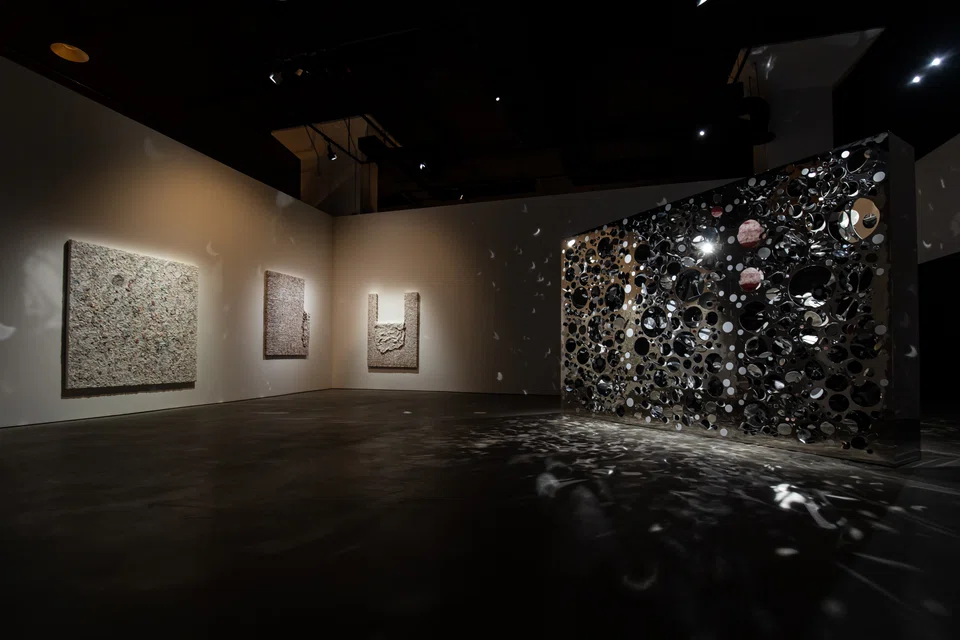
The biggest local headliner here is abstract painter Jane Lee. At the age of 59, she makes her debut in a solo museum exhibition, delivering an impressive showcase. Continually dismantling the conventional notion of painting, Lee dissects its elements – the canvas, stretcher, frame, brushes, oil and acrylic paint – and reconstructs them into distinct works. Her museum debut, however, grants her the freedom to envision on a grander scale, surpassing the limitations of her typical commercial gallery displays.
Upon entering, visitors find themselves in a well-lit white room, featuring nothing but a small black slab of a painting. It bears the appearance of having been punctured, with white paint oozing from its centre like the cream of an eclair. Adjacent to it, a series of doors beckons one to venture into a passageway that leads to a dimly lit room. Within, a massive replica of the aforementioned small painting stands before you, imposing and large enough to imagine oneself being enveloped within its creamy white centre.
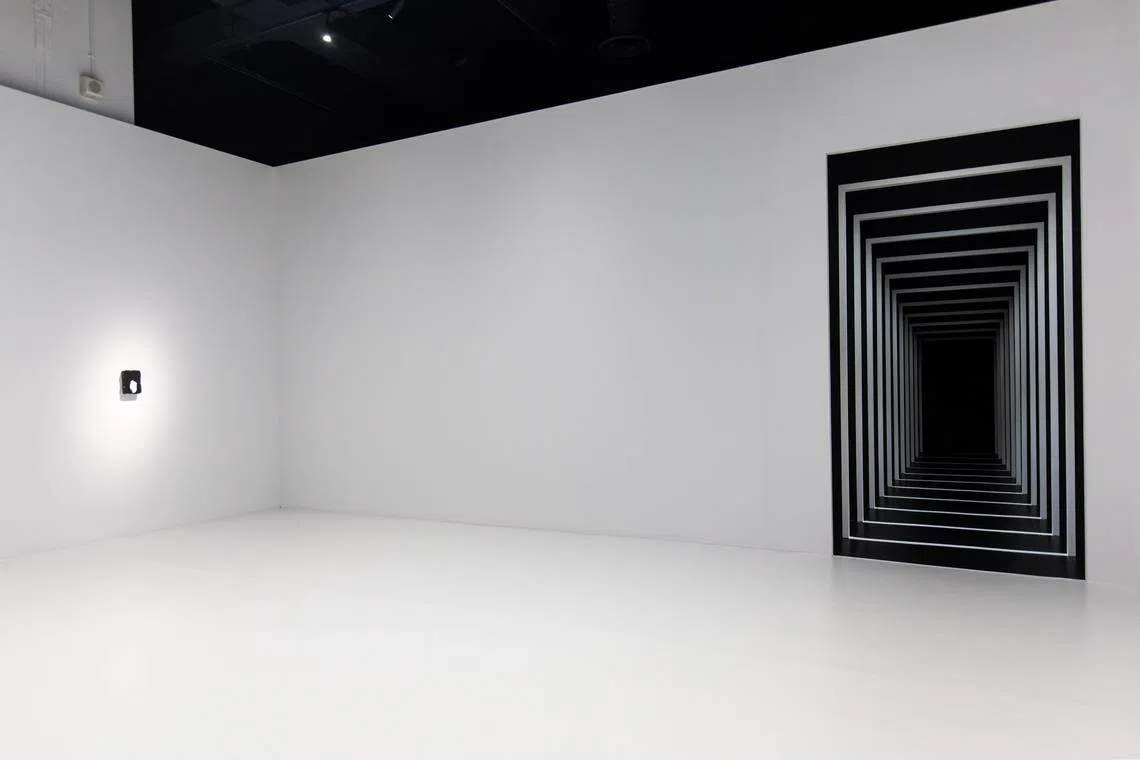
Lee skillfully manipulates scale, space, light, texture, reflection and shadows, prompting viewers to reassess their understanding of what constitutes a painting and how it captivates the mind and imagination through its use of colour and materiality.
The entire exhibition creates a remarkably immersive and playful experience, dramatically shifting one’s perception and encounter as they observe the “same” painting twice, but in different sizes and lighting conditions. This compels visitors to frequently shuttle between the two rooms, meticulously examining the details of each iteration.
In proximity, additional works continue to challenge preconceived notions of painting. A red artwork, devoid of canvas backing, appears as if it has “fallen off” the wall, draping the ground like a carpet. A long black painting, composed of rolled-up canvas strips and clusters of black paint, exudes wondrous beauty within a darkened space. And a large metallic box, featuring countless circular cut-outs, reflects light from every angle, resembling an oversized diamond.
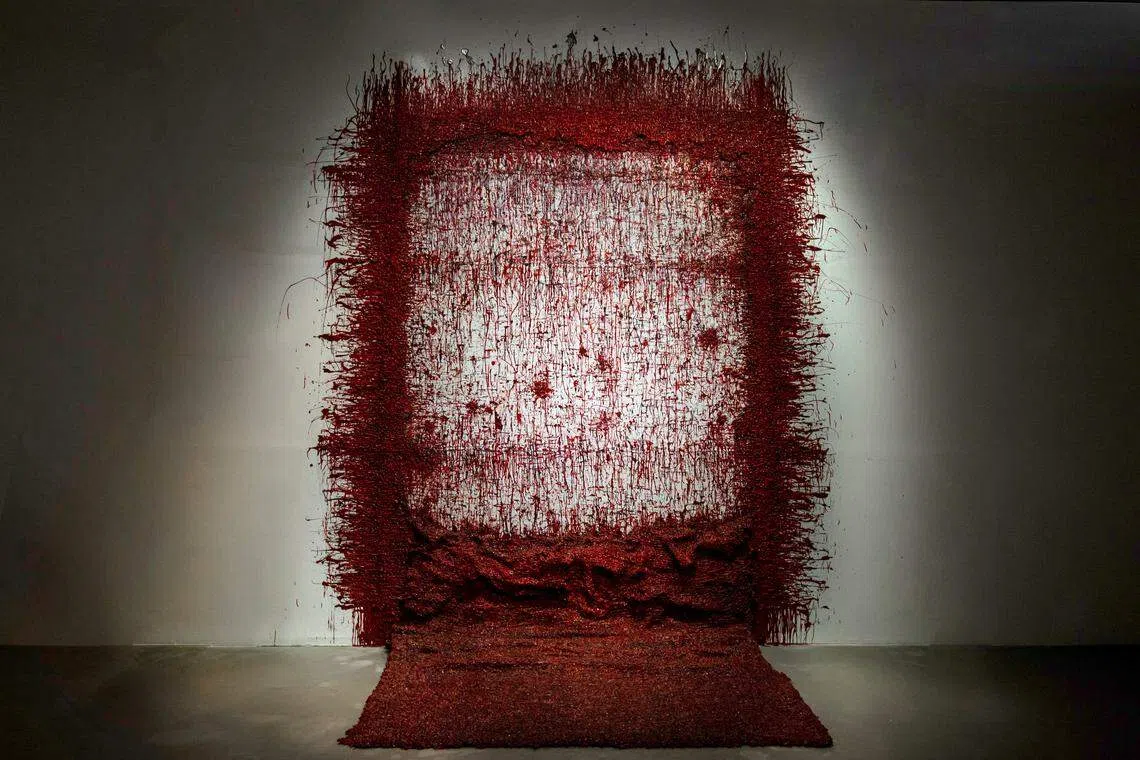
The aesthetic acumen and formal precision displayed in these artworks distinguish Lee as an abstract artist of few peers.
Profuse and prophetic
The second exhibition, titled Residues And Remixes, revolves around six Singaporean artists who delve into the significance of historical narratives and their enduring influence on the present. Anthony Chin’s work entails the creation of 11 military swords arranged meticulously to mirror the geographical locations of Malayan iron ore companies, once owned by Imperial Japan and utilised for weapon production during the early 20th century.
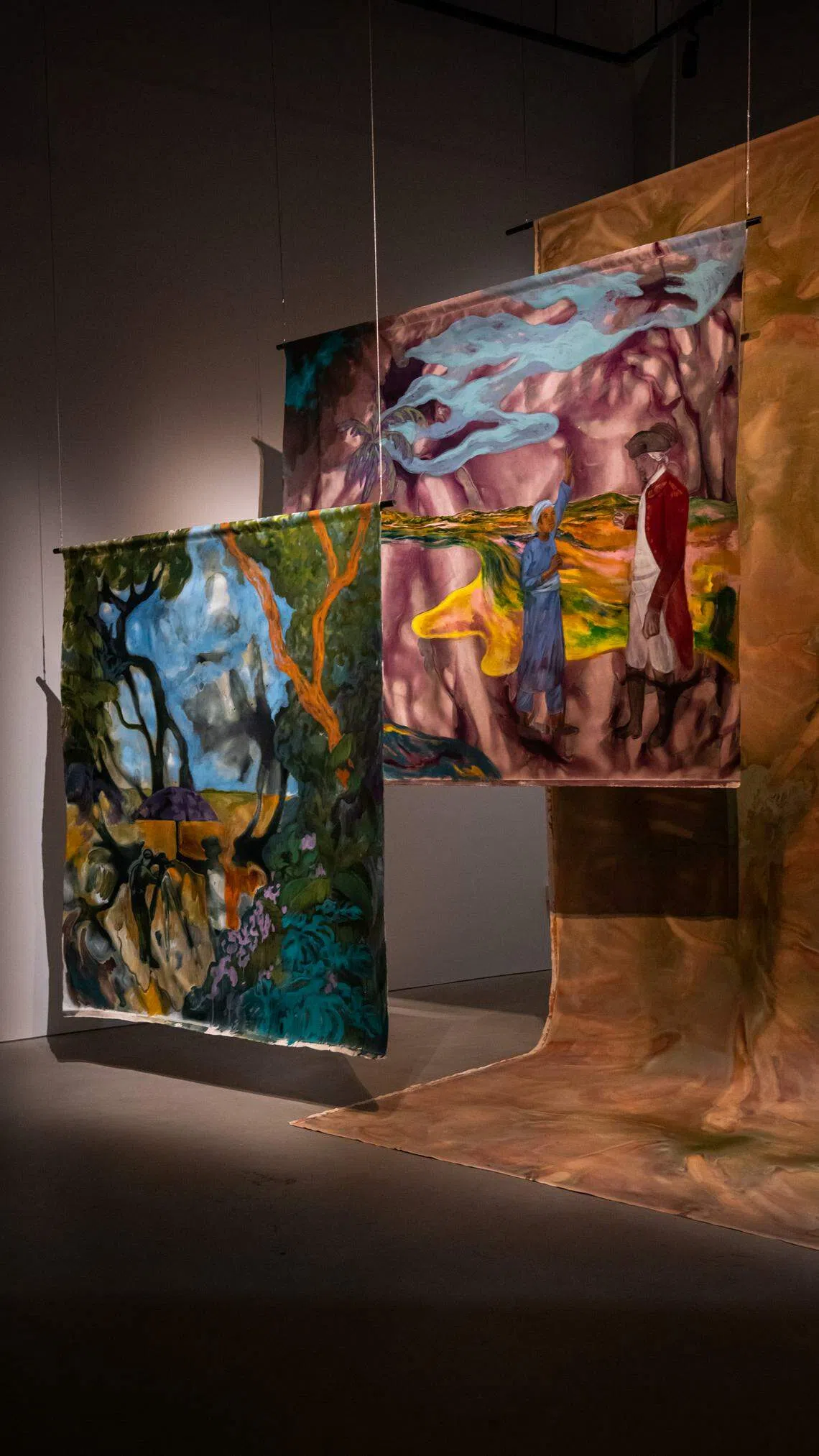
Priyageetha Dia pays homage to the indentured plantation labourers of British Malaya in an installation that employs lenticulars, sculptures and video works. Khairulddin Wahab, on the other hand, examines the historical exploitation of land in Singapore through a series of gorgeous paintings.
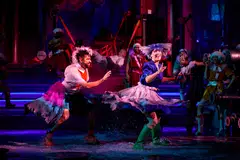
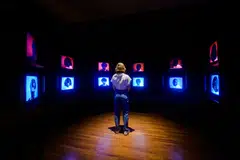
Moving closer to contemporary times, Fyerool Darma draws inspiration from literature, popular trends and Internet culture to forge new visual expressions. Yeyoon Avis Ann, meanwhile, analogises the unpredictability of everyday encounters through an installation featuring common objects such as cups, saucepans and chairs colliding and rebounding, inviting contemplation and reflection.
Moses Tan’s extensive installation of peculiar objects stands out as the most profuse and industrious piece in this section. Within the space, one can find an array of flesh-coloured items, intermingled with musical instruments, weighing machines, vitrines, scientific equipment and various other items.
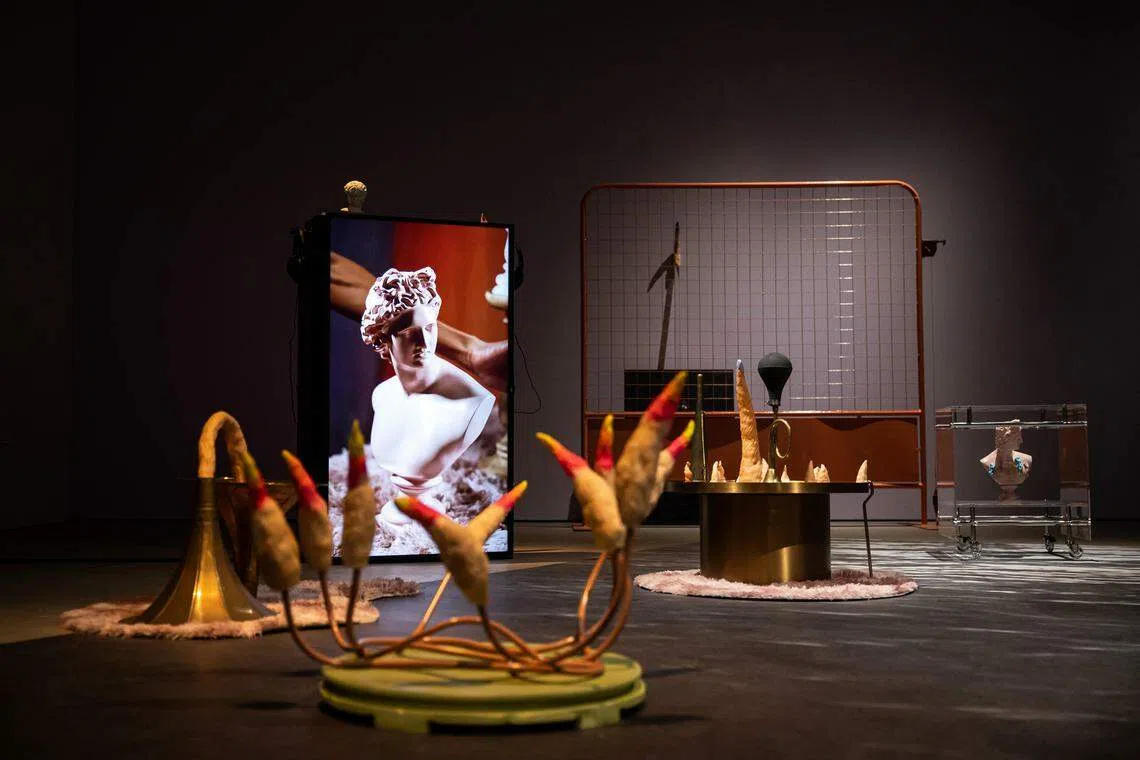
These objects possess an intriguing duality, evoking both allure and disgust, while also bearing significant allusions to the rich tapestry of queer culture. References range from Oscar Wilde’s green carnations, symbolising homosexuality, to the mythological legend of the nine-tailed fox, symbolising seductive allure and transformative metamorphosis.
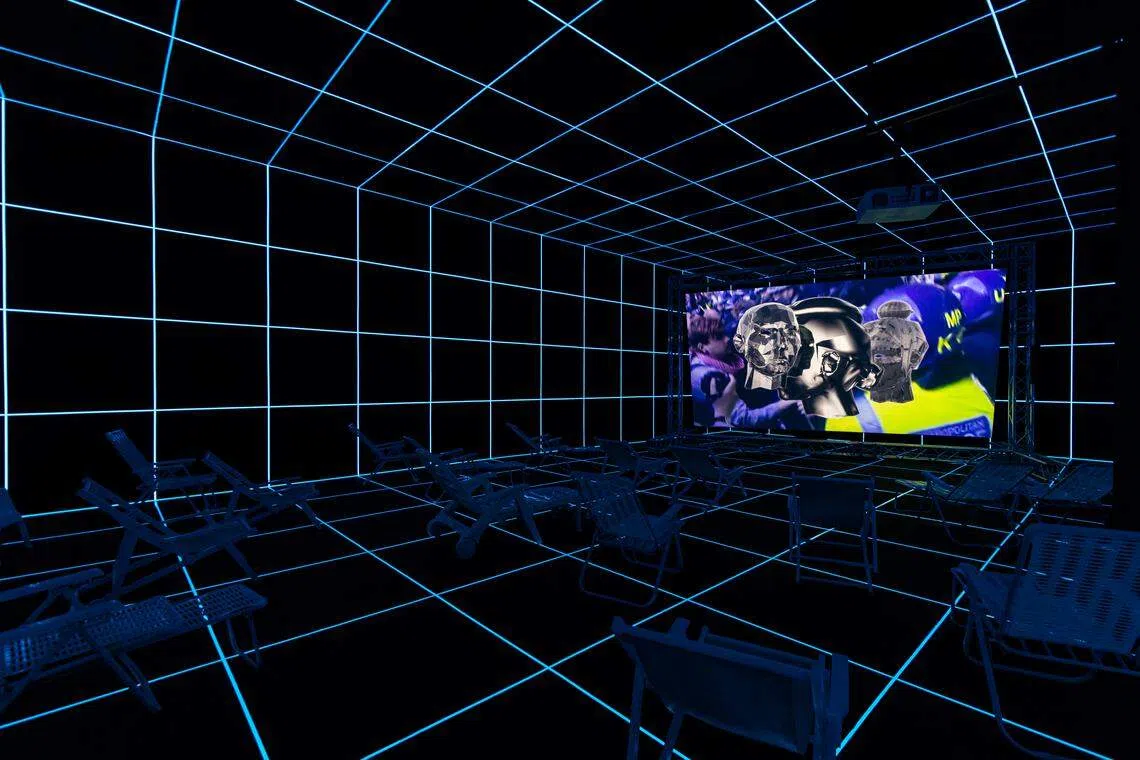
The third and final exhibition features the captivating video work titled Factory Of The Sun by renowned German artist Hito Steyerl. Originally unveiled at the German Pavilion during the 2015 Venice Biennale, this piece has since gained a devoted following due to its prophetic exploration of fake news and alternate realities.
Through a skillful blend of YouTube videos, fabricated news clips, video games and digitally altered images, Steyerl paints a compelling vision of a world where the distinction between truth and fiction are blurred but ignored by the mainstream, giving rise to wider misinformation, stereotyping and prejudice.
The exhibitions run from now till September at Singapore Art Museum at Tanjong Pagar Distripark.
Decoding Asia newsletter: your guide to navigating Asia in a new global order. Sign up here to get Decoding Asia newsletter. Delivered to your inbox. Free.
Copyright SPH Media. All rights reserved.
TRENDING NOW

Grab CEO’s wife Chloe Tong on life with Anthony Tan and finding her purpose

Canada is upping oil flows to Asia, but South-east Asia’s refineries aren’t ready to handle them yet
TRX and Labuan IBFC join forces to boost Malaysia’s regional financial ambitions

Crystal Jade Fine Dining faces charge for failing to file income tax return on time

