

What to do when you have chest pain
See your doctor as soon as possible to discuss tests that are most suitable to evaluate your condition
 Add BT as a preferred source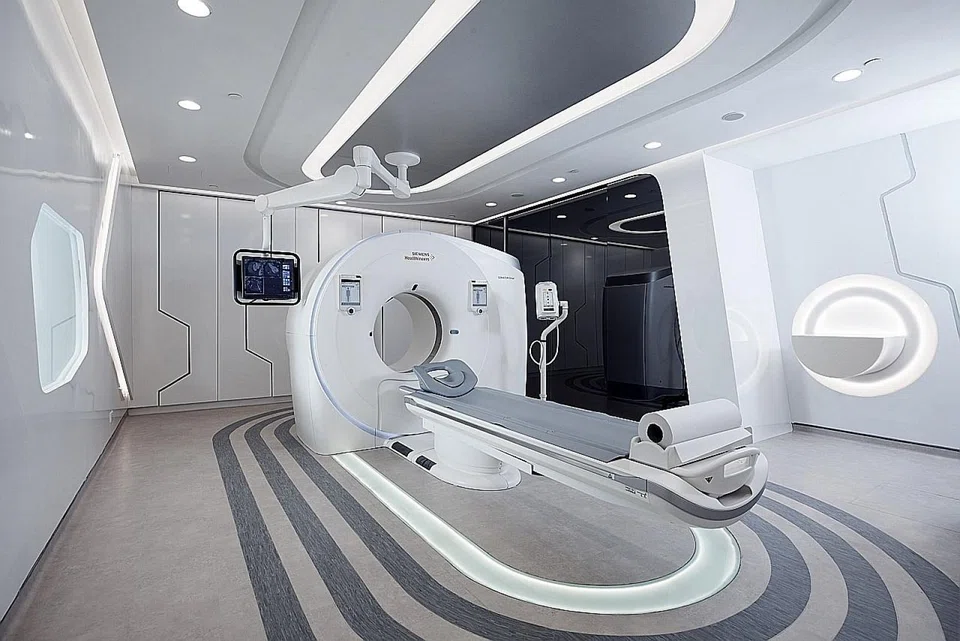

THOSE who have risk factors for heart disease should promptly consult their doctors on the most appropriate treatment if they have chest pain.The characteristics of typical angina (chest pain due to significant heart artery disease) are:
* chest pain behind the breastbone;
* chest pain which is aggravated by physical exertion or emotional stress;
* chest pain relieved by rest or sublingual nitroglycerin.
Atypical angina is defined as having two out of the three characteristics described above. Non-anginal chest pain is defined as having one or none of the characteristics of typical angina.
Likelihood of heart disease
Navigate Asia in
a new global order
Get the insights delivered to your inbox.
Based on data published in the American Heart Association (AHA) guidelines, the likelihood of finding significant narrowing of the heart arteries (also known as coronary artery disease or CAD) for men with typical angina can range from as low as 30 per cent in those 30 years of age to almost 100 per cent in those who are 65 years of age.
There is more than a 50 per cent likelihood that there is underlying significant CAD for:
* males aged 45 years or more with typical angina;
* males aged 55 years or more with atypical angina;
* males aged 65 years or more with non-anginal chest pain.
For women, the likelihood of CAD can vary widely in those with typical angina symptoms. However, the likelihood of CAD in those with non-anginal chest symptoms is less than 30 per cent.
Hence, a male aged 45 years and above who has multiple risk factors (such as high cholesterol, high blood pressure, smoking, diabetes or a family history of CAD), and recurrent exertional chest pain should seek medical advice. For post-menopausal women with multiple risk factors and typical angina, medical advice should similarly be sought.
Accuracy, safety and radiation
Based on the current AHA guidelines for pre-menopausal women suspected of having CAD, the recommended initial test is an exercise treadmill test. However, if the patient is unable to exercise, or the electrical recording of the heart (electrocardiogram or ECG) cannot definitely exclude the presence of CAD, whether male or female, other tests should be considered. Which test is then the most appropriate for those with suspected CAD?
The latest internationally recognised criterion for appropriate use of computed tomography (CT) of the heart arteries, which is supported by major cardiology organisations, considers the use of CT for assessment of CAD for those with chest pain if there are risk factors.
If the ECG is not diagnostic or if the patient cannot exercise, it is also considered appropriate to use CT for assessment of chest pain even if the risk for CAD is considered low. Advances in CT technology has made it possible to obtain three dimensional images of the heart arteries in a safe manner within seconds with radiation doses of less than three millisieverts. The latest generation of CT scanners for heart arteries can complete the scan with X-ray radiation doses of less than 3 millisieverts. One chest X-ray results in a radiation exposure of about 0.1 millisievert.
Stress nuclear perfusion scans (technetium sestamibi, technetium tetrofosmin, thallium), are functional tests which involve the injection of radioactive isotopes into the body, result in radiation doses of 9 to 40 millisieverts.
Unlike CT where the radiation is a single exposure and limited to the part of the body being scanned, in a nuclear perfusion scan, the radioactive isotope passes through the blood circulation exposing the entire body to radiation and the radiation remains as long as the radioactive isotope is in the body. These scans provide functional information and show areas of the heart muscle which receive insufficient blood flow as a result of a significant narrowing. It will show up as having a lower concentration of isotope as compared to areas which have normal blood flow.
As the scan does not allow visualisation of the heart arteries, what it also means is that even if there is severe narrowing of the artery, as long as the affected area of heart muscle receives sufficient collateral flow (cross flow via additional vessels) from other heart arteries, the nuclear perfusion scan result can be normal.
Ultrasound scan of the heart (echocardiography) after exercise or while being stimulated with intravenous drugs is a functional test which provides functional information of the heart muscle wall. Areas of the heart muscle which receive insufficient blood flow will show new changes in the heart muscle wherein the affected muscle wall will have reduced contractility compared to normal muscle segments. While it is safe and does not result in any X-ray exposure, the accuracy varies according to the experience of the centre.
In making a decision on the choice of tests to evaluate chest pain, from a scientific viewpoint, accuracy and radiation exposure are the most important factors. From an accuracy standpoint, among all the non-invasive tests, CT scan is the most accurate as it is the only non-invasive test other than a magnetic resonance imaging (MRI) scan of the heart arteries that allows direct visualisation of the heart arteries.
From a radiation exposure perspective, treadmill testing, stress echocardiography and MRI do not involve any X-ray radiation. Among the tests that involve exposure to radiation, CT scan of the heart arteries performed in an experienced centre using newer generation scanners results in the lowest radiation exposure.
Risk of heart attack and death
If you have had your heart assessed and have been told by your doctor that you have blockage of your heart arteries , what is the implication for you? Based on AHA data, the likelihood of death within five years if there is narrowing of 50 per cent or more in one, two or three heart arteries is 7 per cent, 12 per cent and 21 per cent respectively. In those with single artery narrowing of 95 per cent or more, if the artery involved is the main central heart artery (left anterior descending artery or LAD), the risk of death doubles to 17 per cent.
In those with significant narrowing of all three arteries, if the LAD has a 75 per cent narrowing at the point of diagnosis, there is a one in three chance of death within five years. If the LAD narrowing is 95 per cent or more, then the risk increases to 40 per cent.
In summary, one must remember the following.
* Do not ignore chest pain if you have risk factors for heart disease.
* If your treadmill test is negative but you still have exertional chest pain, you should discuss with your doctor as to whether you need to do a more accurate test to evaluate the chest pain.
* Discuss with your physician regarding tests that are most appropriate, keeping in mind that the tests are divided into those that allow visualisation of the heart arteries (MRI and CT) and those that assess functional status (treadmill, echocardiography and nuclear scans).
* If there is significant narrowing of the LAD, you must have a discussion with your physician about the pros and cons of all options before making a decision, and be aware that the guidelines favour procedural treatment over medication.
* If you have angina and have severe narrowing (more than 70 per cent) of all three major heart arteries, you are considered to be at high risk of heart attack and sudden death and should not delay in seeking definitive treatment.
- This article is produced in collaboration with Royal Healthcare Heart, Stroke & Cancer Centre
Decoding Asia newsletter: your guide to navigating Asia in a new global order. Sign up here to get Decoding Asia newsletter. Delivered to your inbox. Free.
Share with us your feedback on BT's products and services
TRENDING NOW

Yeo’s, Tiger Beer and now Gardenia – flight of food manufacturing from Singapore might be just as planned

Apex court rejects resulting trust claim in 99-1 condo dispute

Xi Jinping has just rewritten the rules of US-China rivalry

Singtel seeks clarity on participating in telco consolidation after M1-Simba fallout; weighs Reit IPO

