

Helmut Lang and Ralph Lauren kick off New York Fashion Week
 Add BT as a preferred source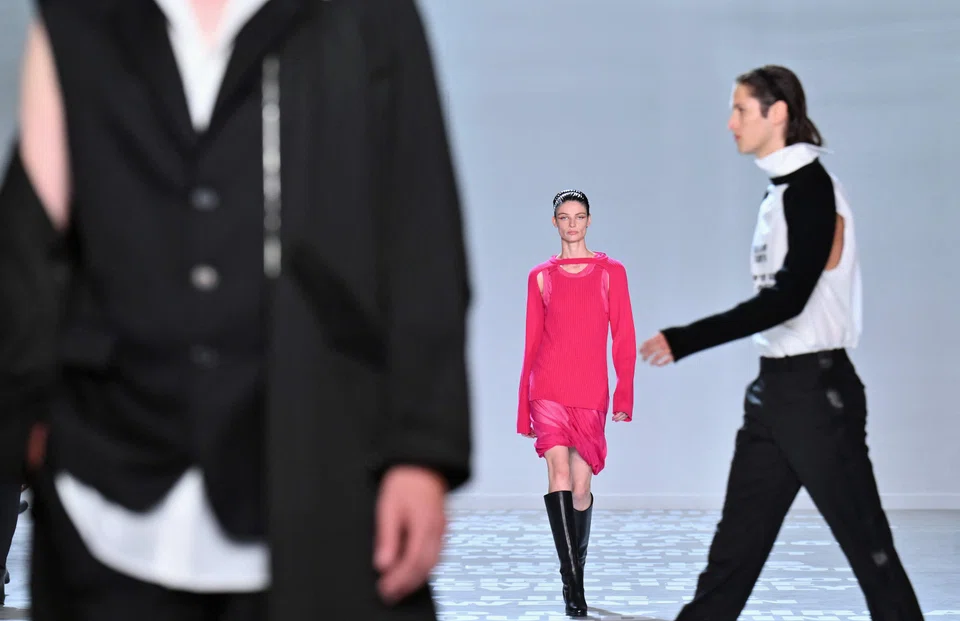
DeeperDive is a beta AI feature. Refer to full articles for the facts.
YELLOW cabs and urban looks at Helmut Lang, rustic woodwork and a ranch atmosphere at the Ralph Lauren show: New York Fashion Week has kicked off in an atmosphere of stark opposites, which is what makes it so diverse.
With a dozen shows a day until at least Wednesday (Sep 13), New York opens the spring-summer 2024 fashion weeks, before London, then the more sought-after Milan and Paris.
The official programme features a flurry of young talents and emerging brands, alongside established names and a handful of heavyweights, including Ralph Lauren, Michael Kors, 3.1 Phillip Lim, Altuzarra, Gabriela Hearst, Carolina Herrera and Tory Burch.
The grand diversity allows New York to remain “a cornerstone” of fashion, according to Steven Kolb, CEO of the Council of Fashion Designers of America (CFDA).
In the muggy heat, fashionistas began lining up in the early afternoon at the foot of a glass building on Manhattan’s Lower East Side for Helmut Lang’s return to the calendar.
The brand was the talk of New York Fashion Week in the 1990s and 2000s, thanks to the minimalist, and at the time innovative, aesthetic of its founder, the Austrian designer who gave the brand its name and retired from fashion in 2005.
Navigate Asia in
a new global order
Get the insights delivered to your inbox.
Today, Helmut Lang is part of Japanese fashion giant Fast Retailing, which also owns Uniqlo.
The collection, concocted by one of the young talents on the New York scene, Vietnamese-born designer Peter Do, 32, slipped into the founder’s legacy.
Black jacket-trouser ensembles are worn comfortably, but crossed by near-fluorescent pink or gold-coloured stripes down the legs, on the belt and the shoulder strap.

The designer reinterprets the fundamentals, as in a denim jumpsuit with rolled-up sleeves and an open collar.
And a nod to New York’s yellow cabs, on whose neon lights Helmut Lang placed his name in advertising in the late 90s – a first for a fashion designer.
“I really want to anchor and dress New York,” stressed Do, summing up the show with two words often associated with the city: “chaotic and energetic”.
At Ralph Lauren, a symbol of preppy style and the epitome of American ready-to-wear, the atmosphere was much more intimate, with a rustic barn decor reminiscent of his Colorado ranch.
For Lauren, too, denim is a trademark. This time, it was reinvented as “romantic evening wear”, embellished with beads and embroidered feathers, or as a full skirt ending in a floral train.
With brightly coloured, elegant and sophisticated outfits, the Bronx-born designer wanted to celebrate “a woman who is timeless and modern, bold and romantic, sophisticated and vibrant”, according to his collection note.
With model Christy Turlington on the catwalk and actresses Robin Wright and Amanda Seyfried looking on, the show ended with golden dresses, including one with bangs that took “over 800 hours of work by15 specialised embroiderers”, according to Lauren.
This season, Fashion Week is taking place against the backdrop of a double strike by Hollywood writers and actors for better pay.
The strike has reduced the number of red carpets used for previews to a bare minimum, which means that brands have lost the opportunity to dress the stars and let the world know about it.
But that does not worry the director of the CFDA.
“Certainly red carpet is a way to speak to audience,” Kolb said. But the runway shows and the content distributed by the brands on social networks will “contribute to a very loud, very visible Fashion Week”, he added. AFP
Decoding Asia newsletter: your guide to navigating Asia in a new global order. Sign up here to get Decoding Asia newsletter. Delivered to your inbox. Free.
Share with us your feedback on BT's products and services
TRENDING NOW

From 1MDB to ‘corporate mafia’: Is Malaysia facing a new governance test?
Higher costs, lower returns: Why are Singaporeans still betting on real estate?
South-east Asian markets account for 8.8% of global capital inflows from 2021 to 2024: report

Richard Eu on how core values, customers keep Singapore’s TCM chain Eu Yan Sang relevant

