History in the digital age
Even museums - places that honour history and culture - are not immune to tech disruption
LAST week, I had the pleasure of touring the National Museum of Singapore (NM) on a work-day afternoon. Though the visit was quick, it was a welcome respite to be in the Civic District, a most charming area around City Hall comprising parks, memorials and of course, museums.
Museums have always been my thing. It started when I was a 17-year-old student guide at the Asian Civilisations Museum. Since then, I've been enthralled by these faithful keepers of memories - repositories of old artefacts and calming smells, often housed amid stately architecture. But today, even history is yielding to modern forces. Digital technologies are increasingly infiltrating museums, at times entirely replacing real objects!
As one who grew up believing that the best museums are those with the largest and most authentic collections, and is today an enthusiastic tech advocate, I have grappled with the idea of "digital" in cultural spaces.
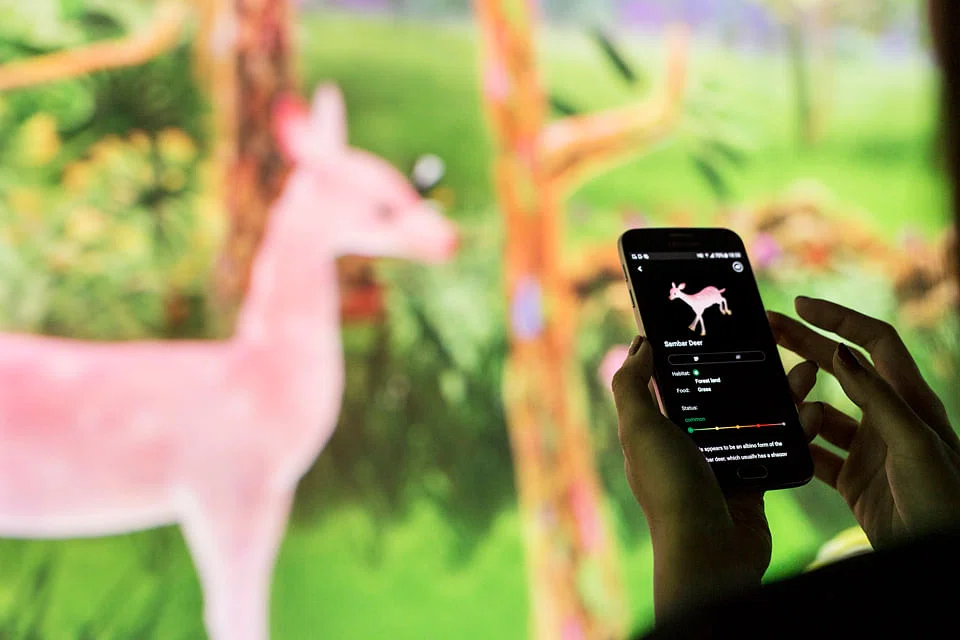
So it was with ambivalence that I checked out Story of the Forest, an all-digital exhibition in the NM that stylises and brings to life 69 drawings from the esteemed William Farquhar Collection of Natural History Drawings. These are paintings of animals and plants found in Malacca and Singapore, commissioned in the 1800s by Col Farquhar, the first British Resident and Commandant of Singapore from 1819 to 1823.
Surprisingly, I wound up enjoying the exhibition, even though it featured no actual artefacts.
If anything, it felt like a ramble through a whimsical digital safari. Animated flora and fauna (inspired by the very drawings) greeted me from behind a panel display; a few critters even reacted to my movement, turning their heads or keeping their gaze on me as I wandered past them.
Having downloaded the Story of the Forest app, I could also hunt and "capture" animals using my smartphone's camera - just like in Pokémon GO - and learn about them through the app.
My whole experience was made even more immersive by the ever-present ambient sounds of the forest, and a distinct drop in temperature in the gallery as it started to "rain" in the woodland.
To me, these were more than just gimmicks. They pointed to new, powerful ways to engage the current generation of museum-goers, who want to feel like they are part of a museum experience, rather than mere onlookers. While learning about the past, they wish also to be entertained, inspired and be filled with wonder about the future.
To do that, museums across the world are turning to digital technologies to design profound, interactive experiences. They can teleport one, as it were, to remote cultural sites, or recreate monuments that have been destroyed. Museums, especially the smaller ones, can lean on technology also to create digital collections, giving access to artefacts that they don't have the space to display; it is well known that only a fraction of most museum collections are on display to the public at any one time.
I used to think that digitalisation would compromise authenticity in a museum. But Sarah Kenderdine, an art and design professor at the University of New South Wales, said: "Digital objects create a proliferation of aura complementing the real objects, adding both layers of information and context to the real thing, rather than taking away its authenticity."
She added: "It's important to bear in mind that when an object is taken out of the world and put in a museum, it is without its originating context. The purpose of the museum is to rehabilitate the aura of this object through interpretation, and the digital can help us do that."
One day, our histories may no longer be told through objects. Already, Singapore's collecting culture is fading; people are holding on to fewer physical items than before. Who still keeps heirlooms, for one thing?
Our memories today are mostly in the cloud, where they belong to someone else. Museums and collecting houses may want to think about the way they uncover and present history.
Share with us your feedback on BT's products and services