

House of a Singapore pioneer
A shophouse once owned by prominent Hainanese immigrant Wee Cheow Keng has undergone a complete makeover by his descendants
 Add BT as a preferred source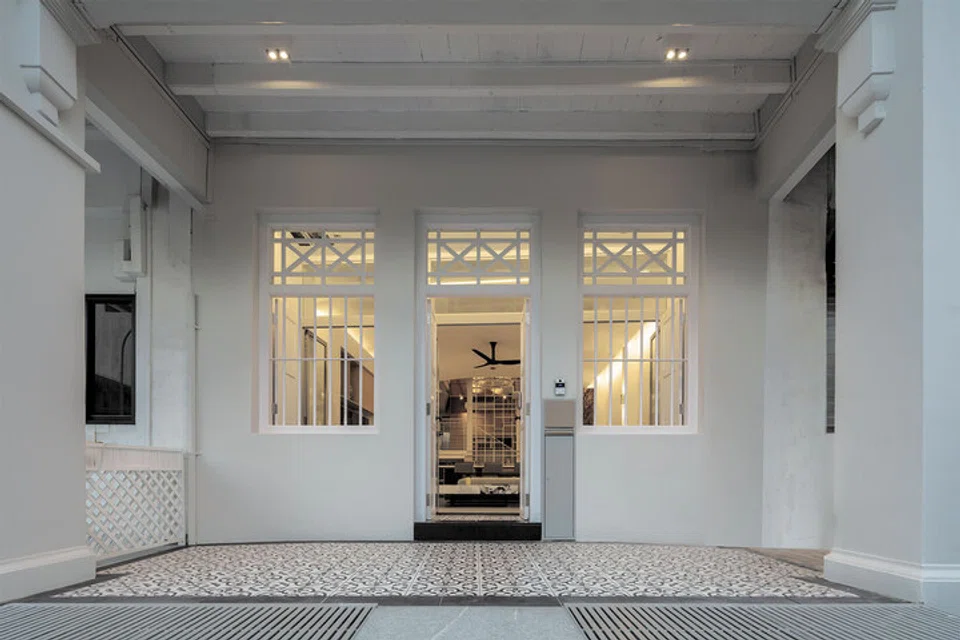
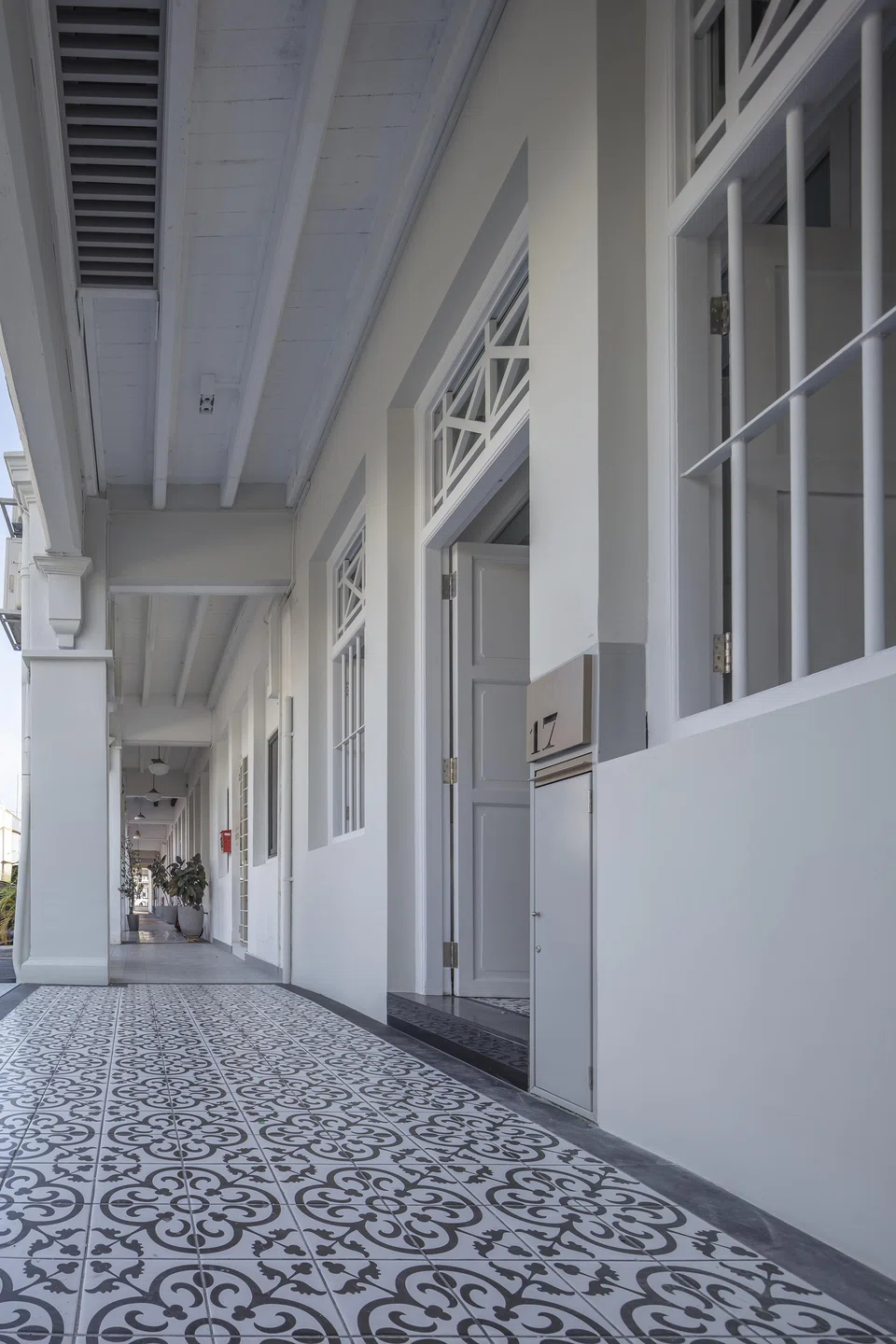
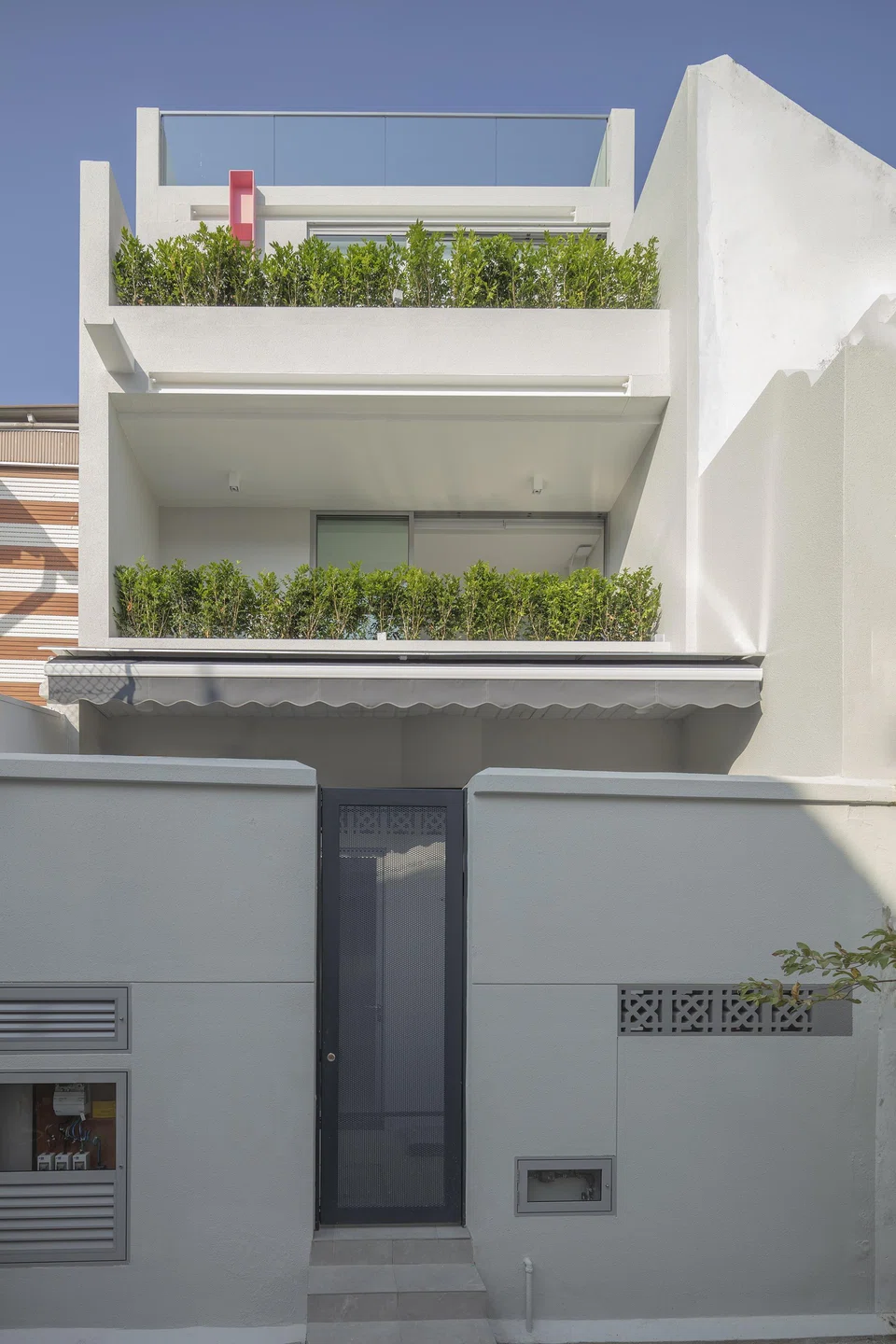
NOT many can say they live on their grandfather’s road, but Yvonne Wee-Doo can. The banker, who grew up, and now resides, in this shophouse with her husband John Doo and their three daughters, is the descendant of Wee Cheow Keng (1860-1939) for whom the street is named.
One of Singapore’s prominent pioneers, Wee came to Singapore from China’s Hainan province in 1884 as a poor immigrant who became an itinerant hawker. “I fondly remember childhood stories about him, where he lived life in an unimaginably prudent manner; his dinners would consist of porridge and a mere dip of soya sauce with a single chopstick,” Wee-Doo says.
Various business ventures, especially in banking and commodities in Singapore, Johor and Indonesia brought Wee wealth. He rose to become a prominent member of Singapore’s Hainanese community and a council member of the Singapore Chinese Chamber of Commerce. An astute real estate investor, Wee bought over almost every shop in Tan Quee Lan Street in Bugis, alongside other properties in Bencoolen Street and Middle Road.
In Katong, he built the rows of shophouses along Cheow Keng Road and Tembeling Road (including the stretch along the current Santa Grand Hotel) for his descendants. Many of Wee-Doo’s relatives have emigrated and tenanted out their shophouses; only three now have his direct descendants living in them.
Wee-Doo has fond memories of living here. “We have been privileged to grow our future generations in the location of such great legacy and authenticity,” she says. “My daughters grew up playing badminton and hopscotch in the middle alley of both stretches of houses, making this a cosy, kampung-like neighbourhood. During festivities such as Halloween and the mid-autumn festival, Cheow Keng Road would be a delight for young and old alike.”
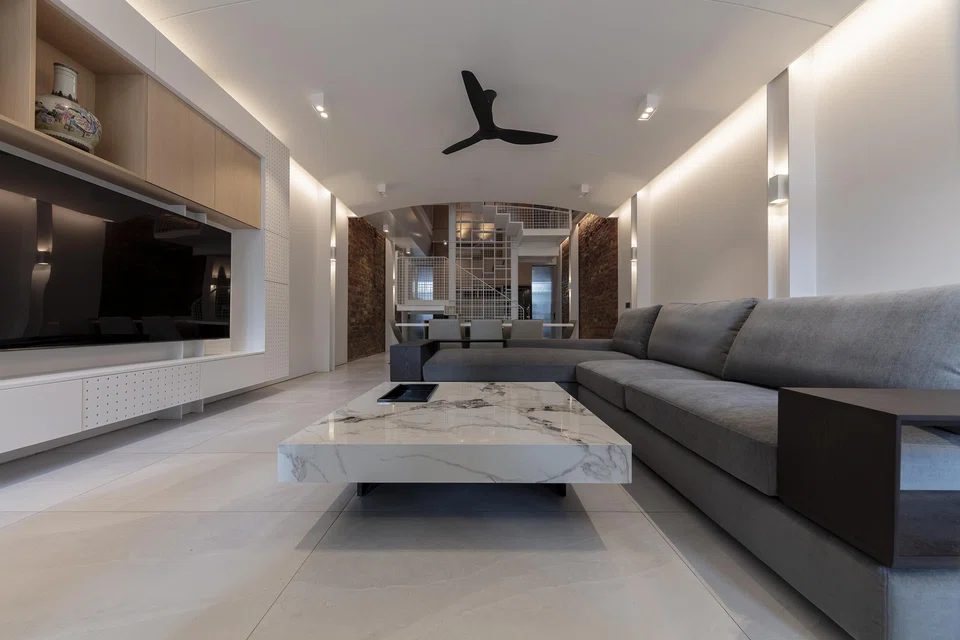
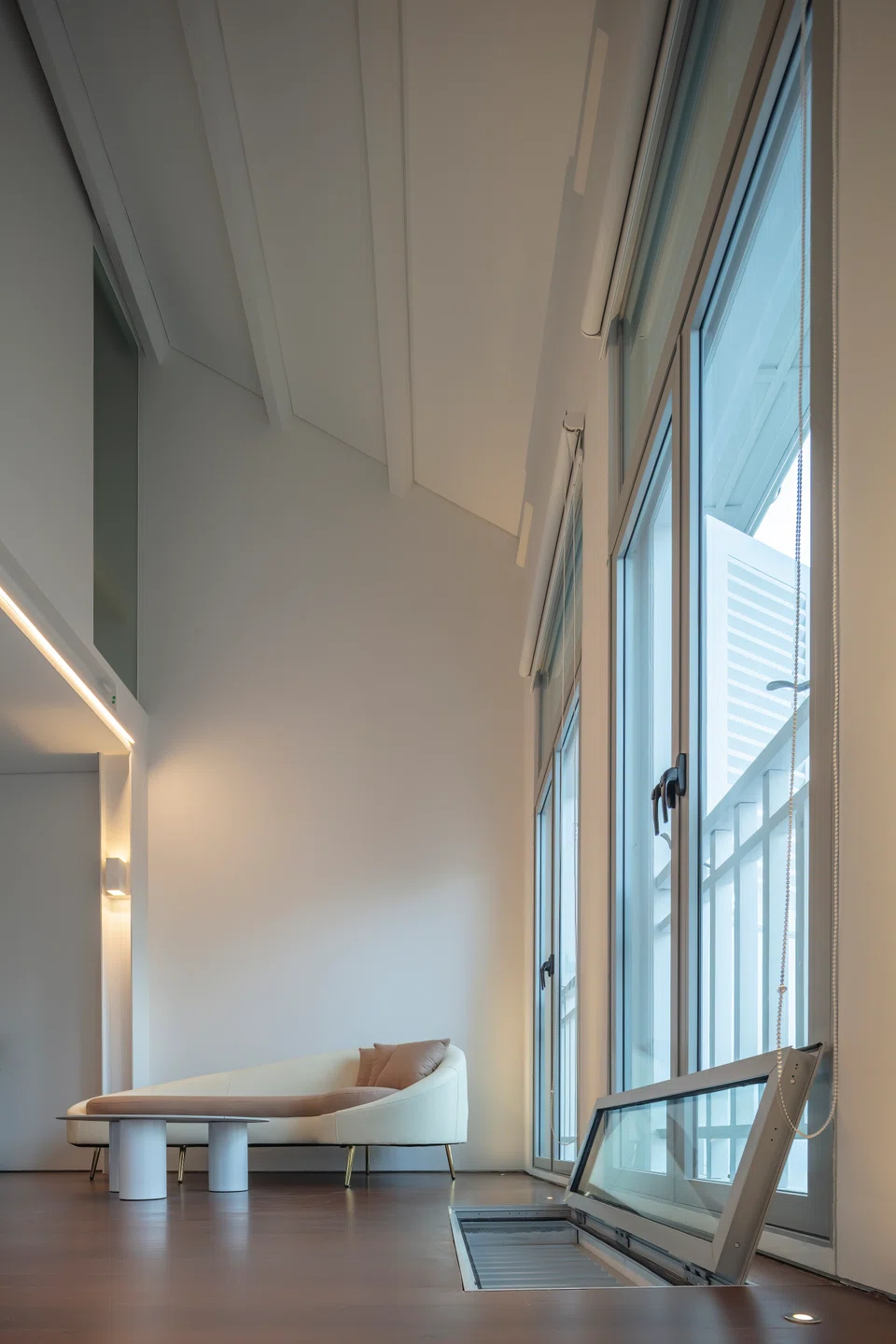
She had often thought about re-doing her home, and the Covid-19 pandemic was the catalyst as the family, including her late mother, had to stay at home most of the time. Apart from the dearth of light and sufficient space, there were features the family wanted to highlight, including the high ceilings typical of a shophouse.
Wee-Doo’s late father Wee Soon King – also a prominent businessman in the Hainanese community – had shared with her how her late grandfather liked to be involved in every single detail of construction, to the extent of selecting single bricks and wooden planks for the shophouses himself. She wanted to reinforce and beautify these elements.
RT+Q Architects was engaged for its award-winning work on conservation houses. The architecture firm, helmed by TK Quek and Rene Tan, responded with a sensitive blending of new elements into the old structure without losing the shophouse’s original idiosyncrasies.
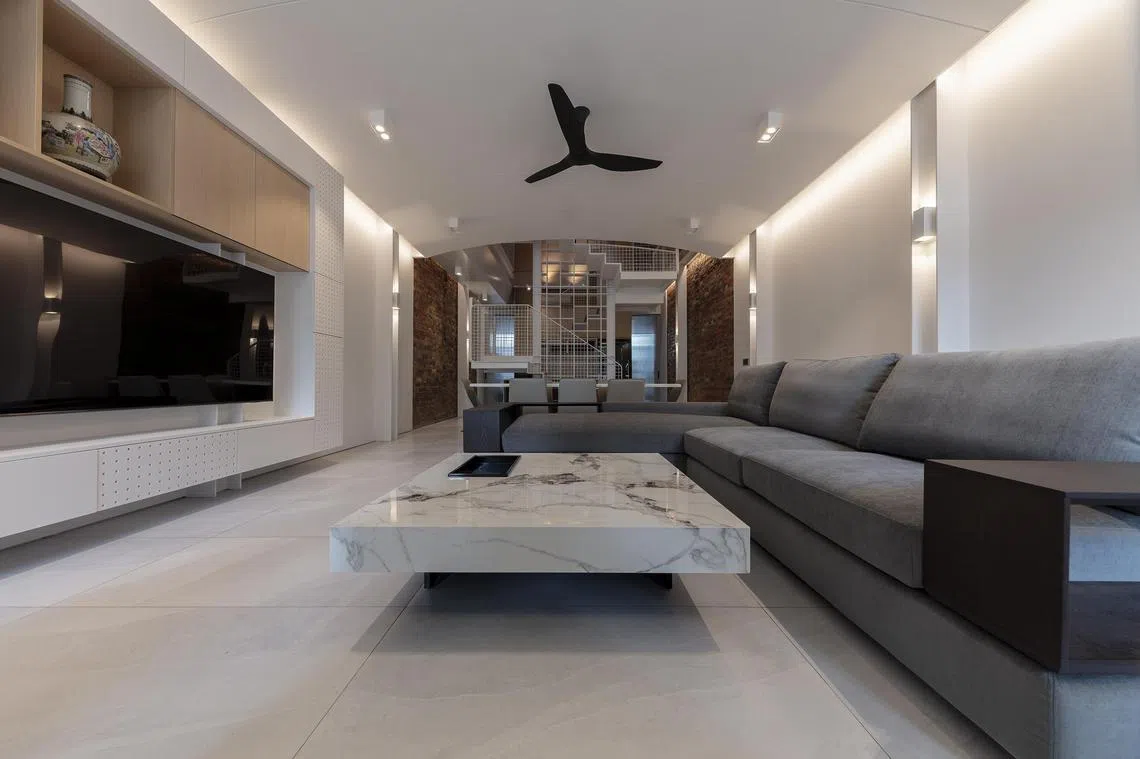
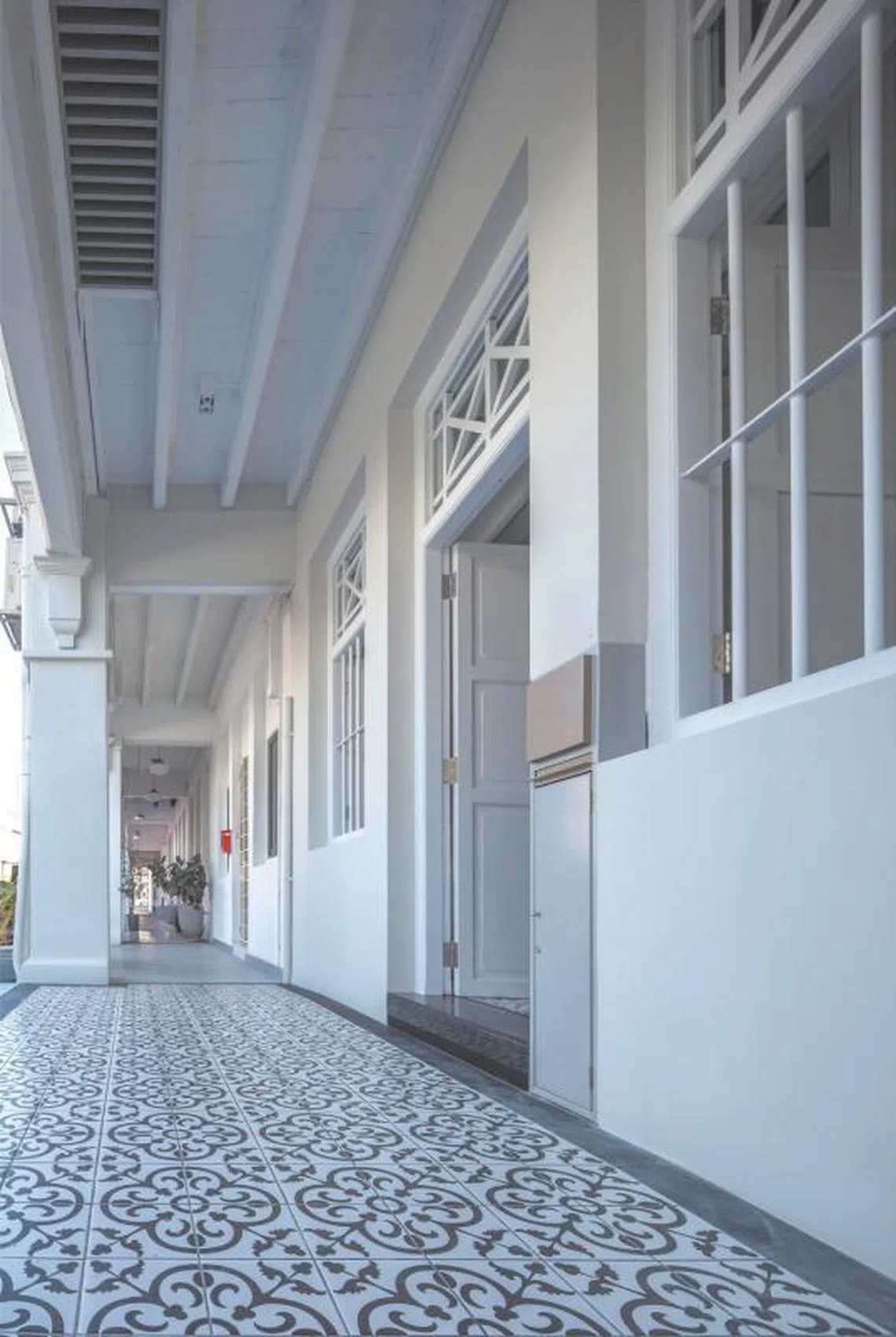
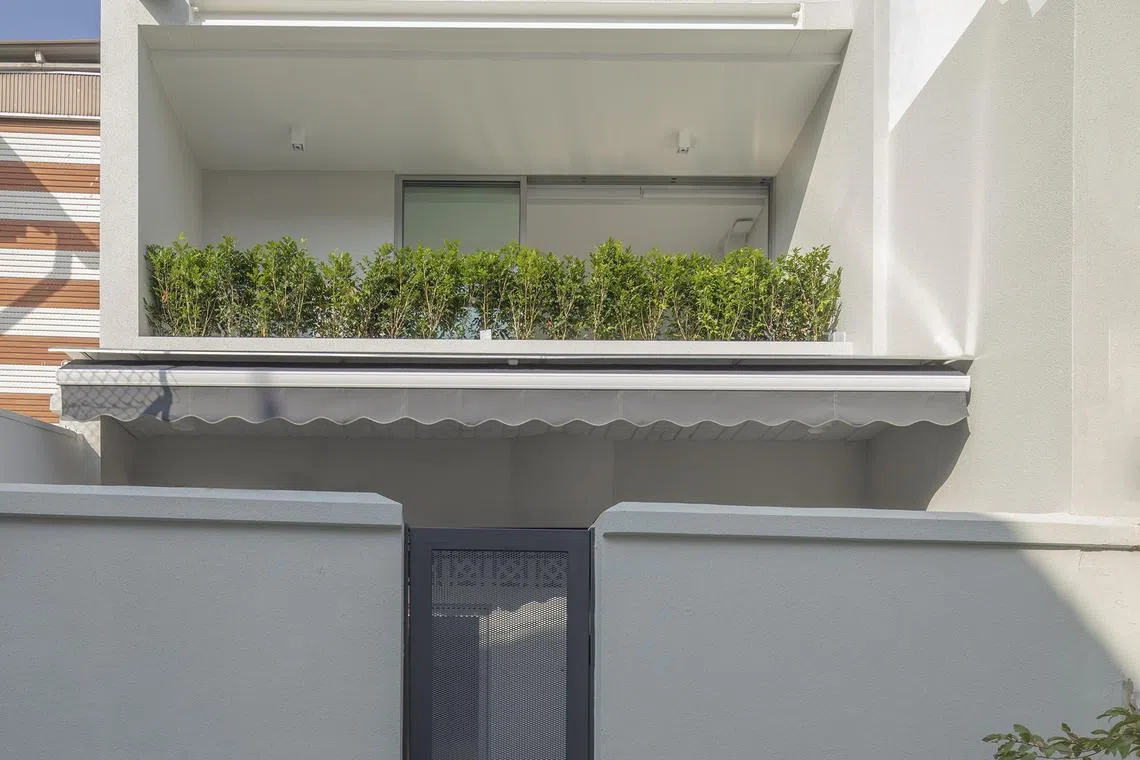
A leitmotif of layered spaces informs the new scheme. Beyond the five-foot-way and original conserved front facade, a new wall with operable glass windows creates a buffer space housing shoe cabinetry between the living room and the street.
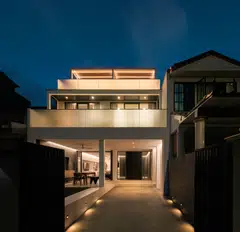
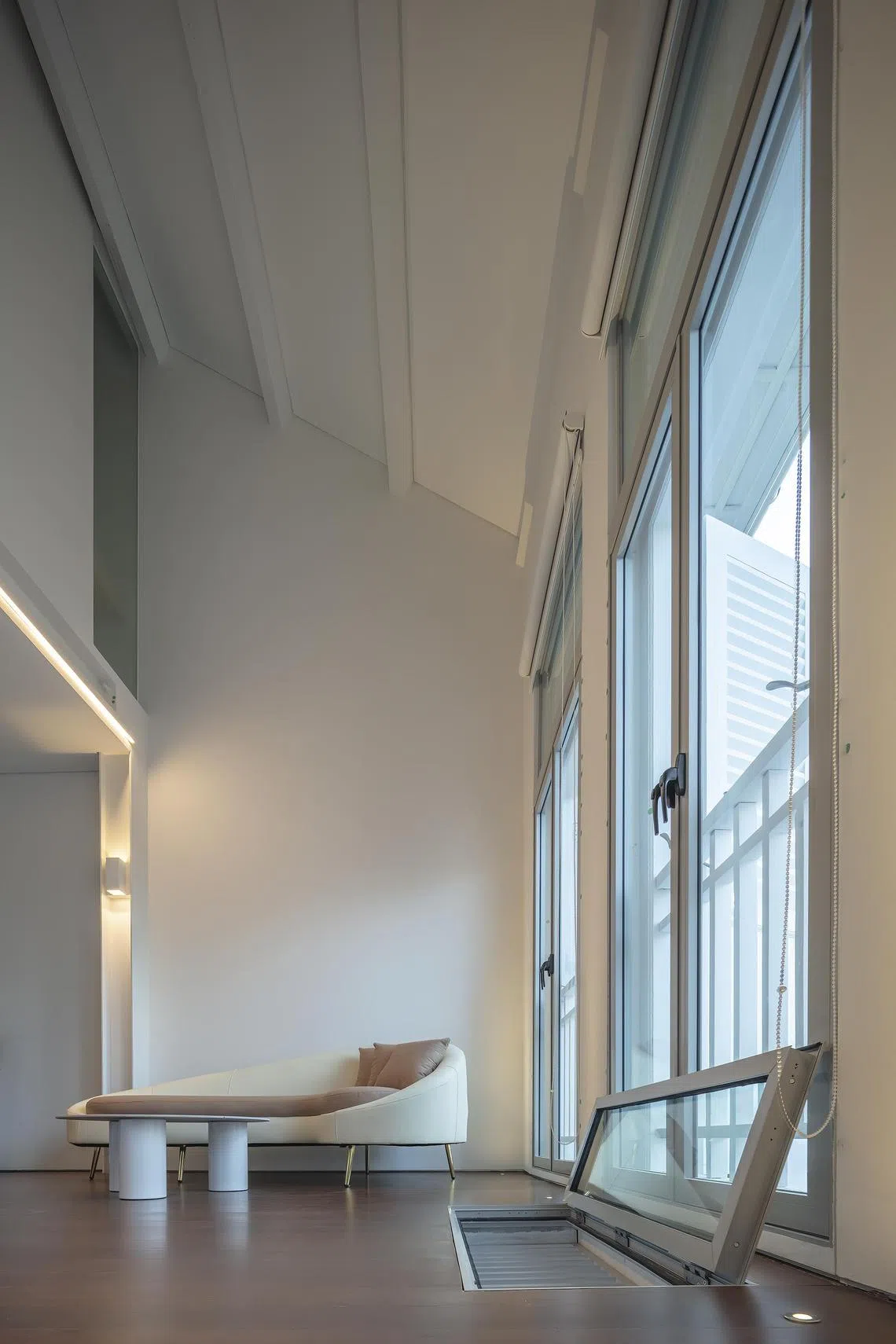
In the master bedroom, a monsoon window enhances natural ventilation. This space also enjoys a double volume from the setting back of the attic floor above. A new extension at the shophouse’s rear, stitched seamlessly into the front historic structure, extends the house’s original footprint.
“The biggest challenge was the house’s structural design,” says Jaslyn Lee, RT+Q’s project architect. “There were space limitations and being a conservation project, we needed to add a new steel structure and strengthen existing ones. That itself required surgical-level care as the new structure had to be inserted within the existing brickwork of the house.”
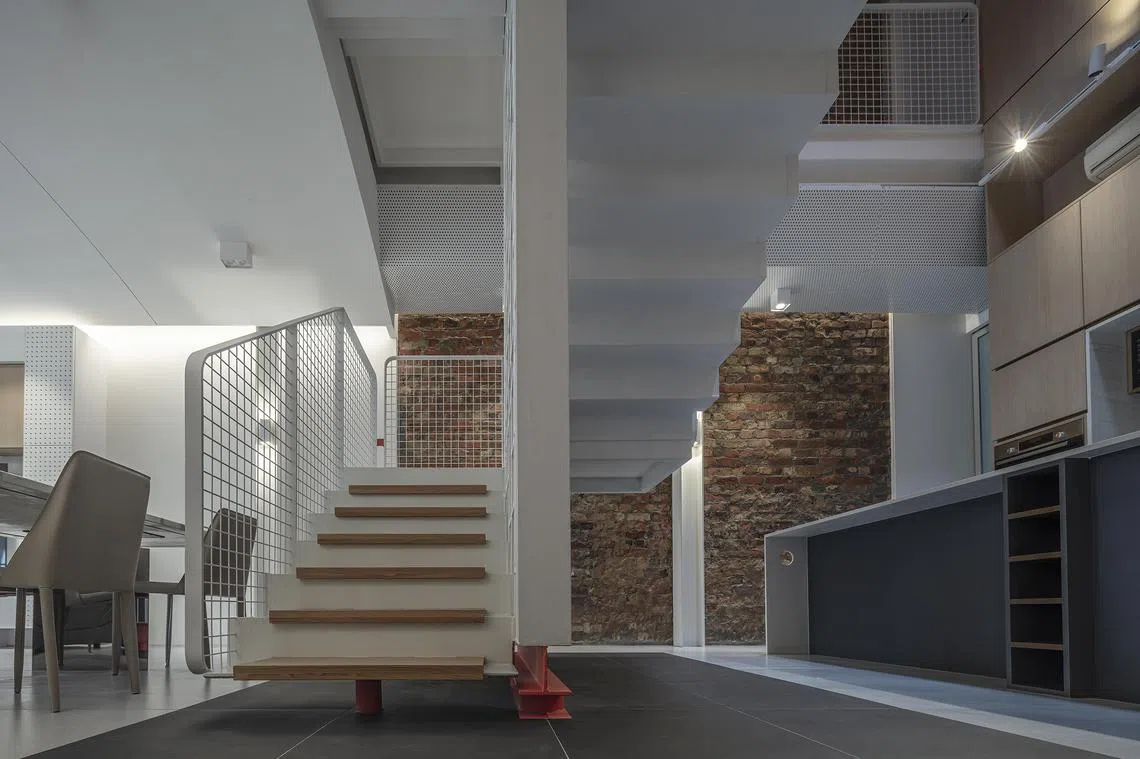
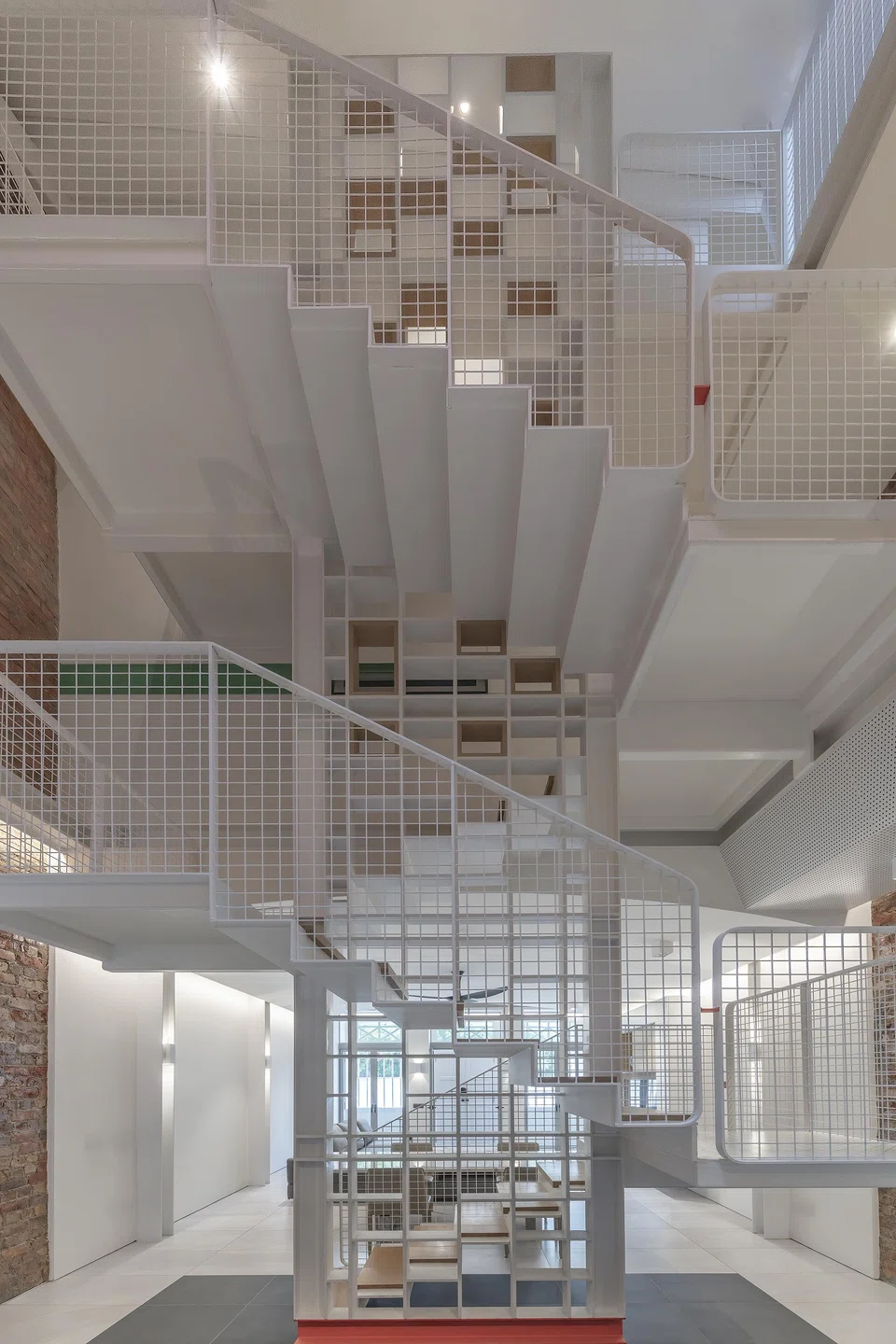
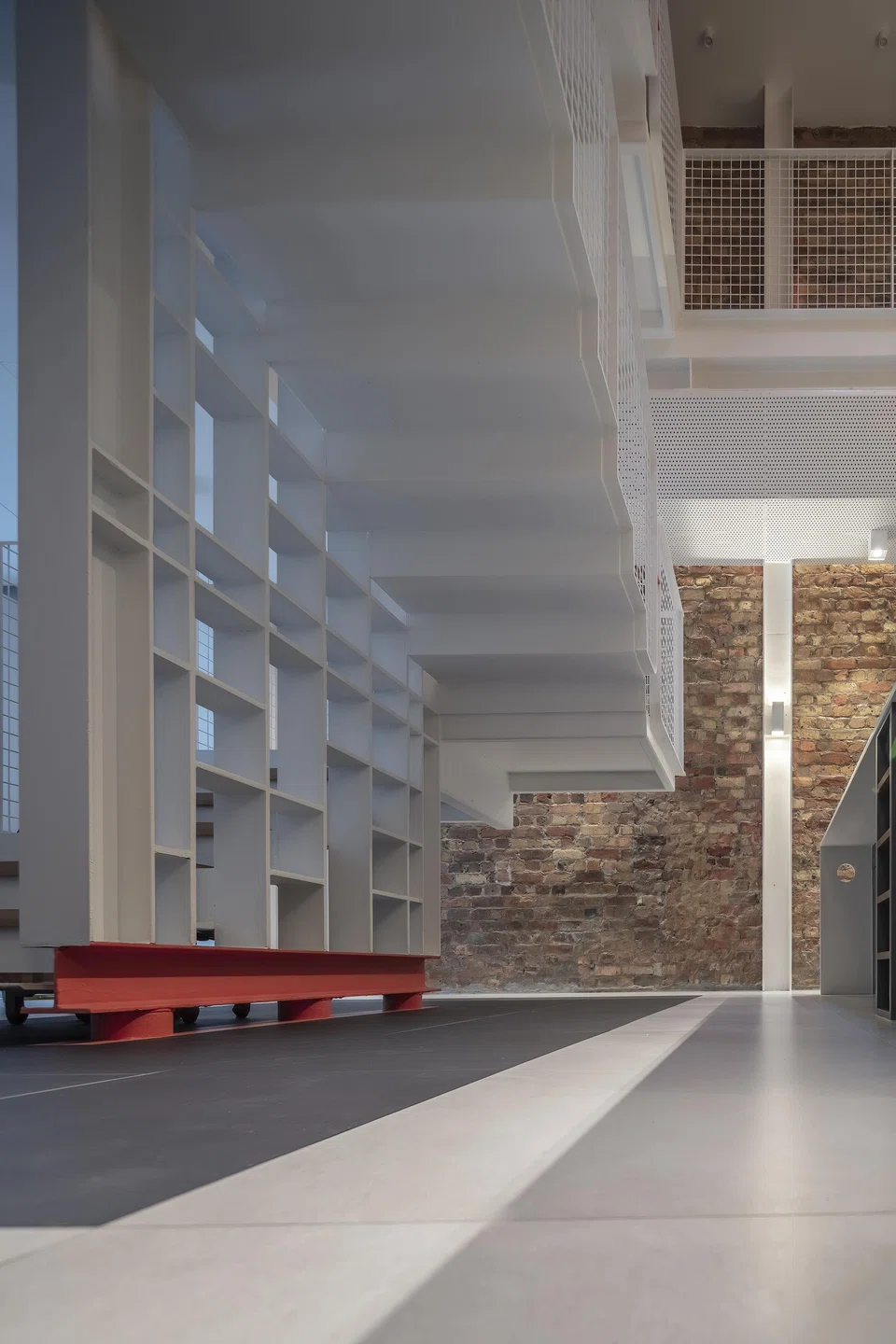
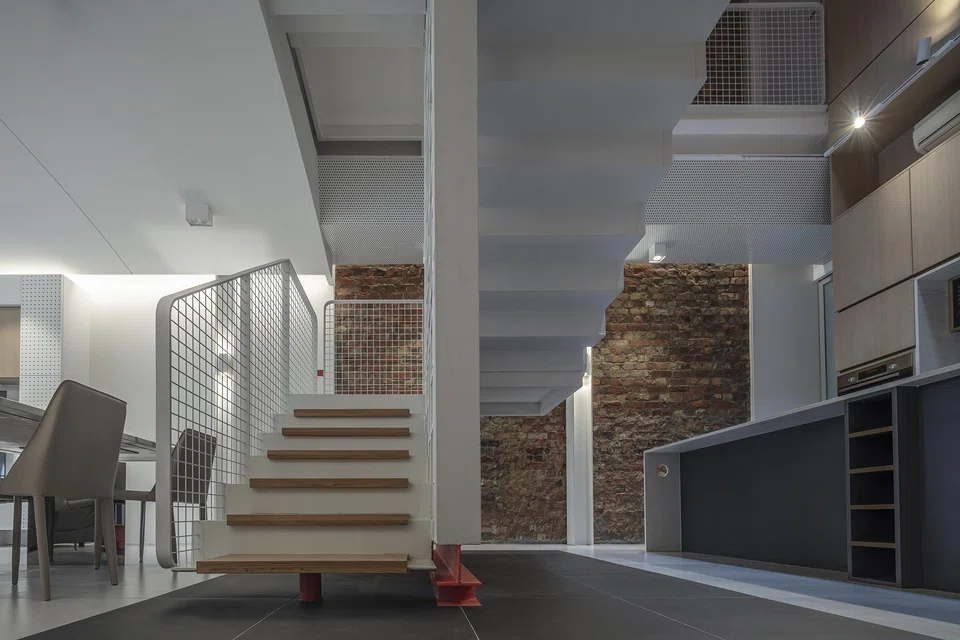
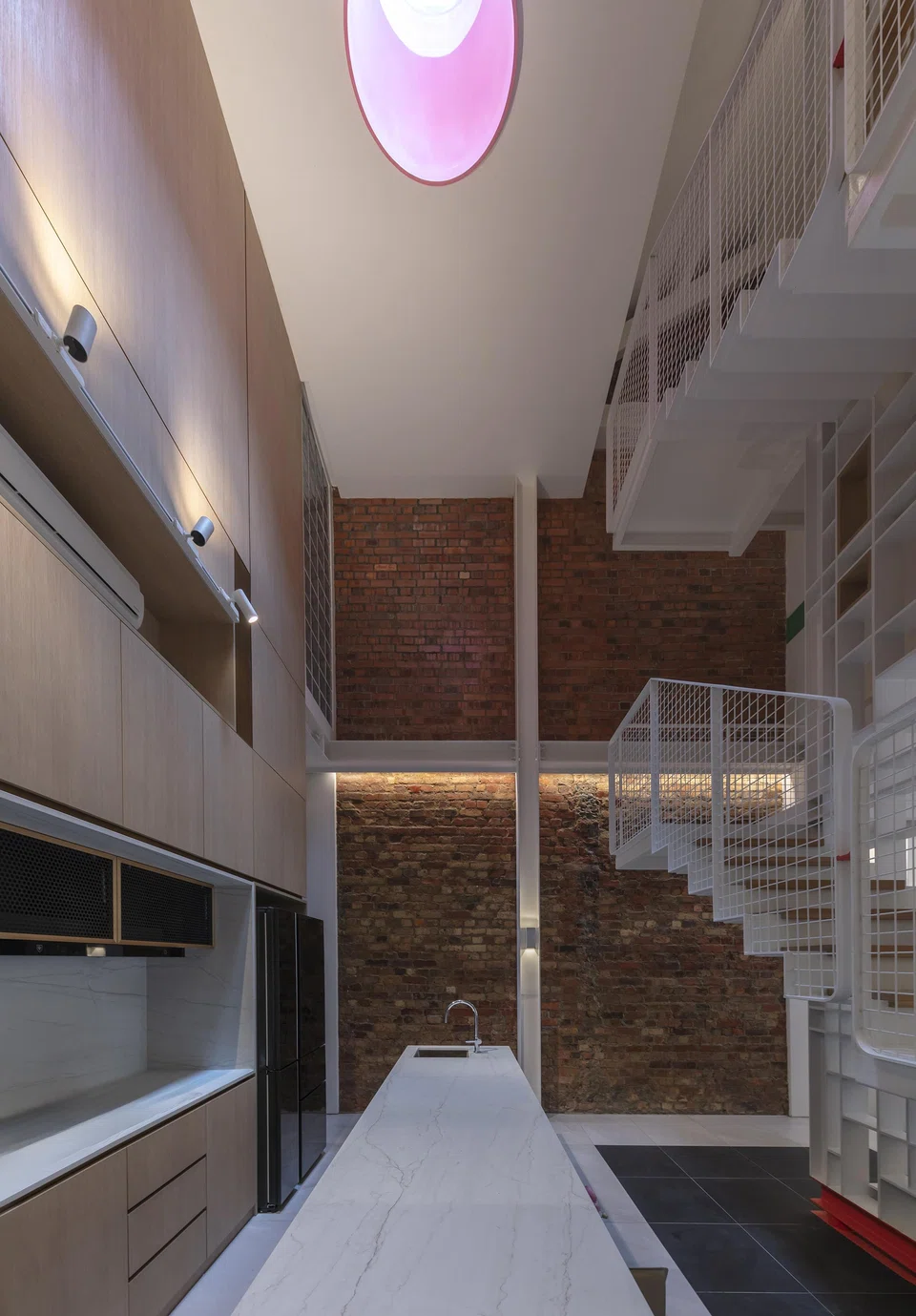
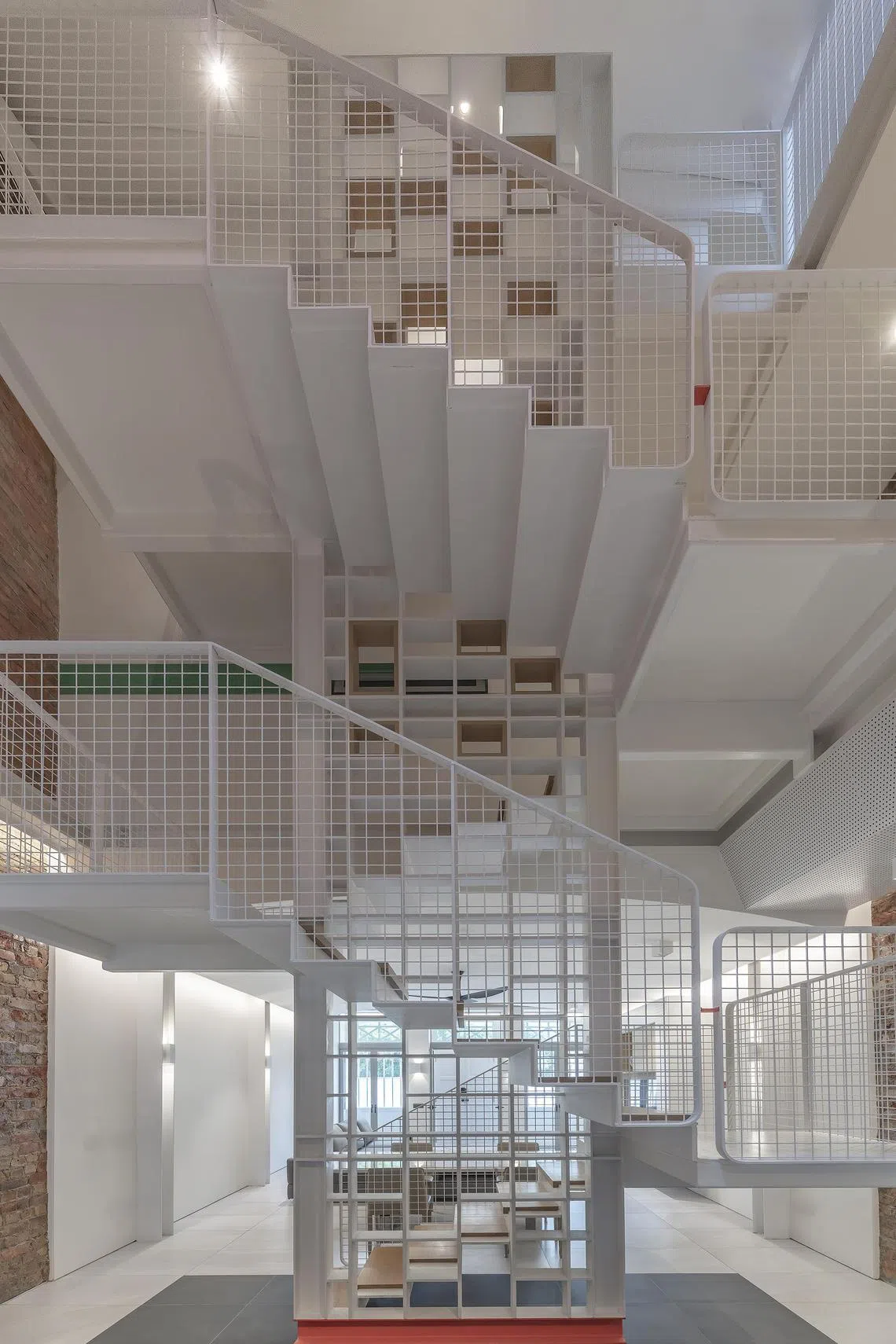
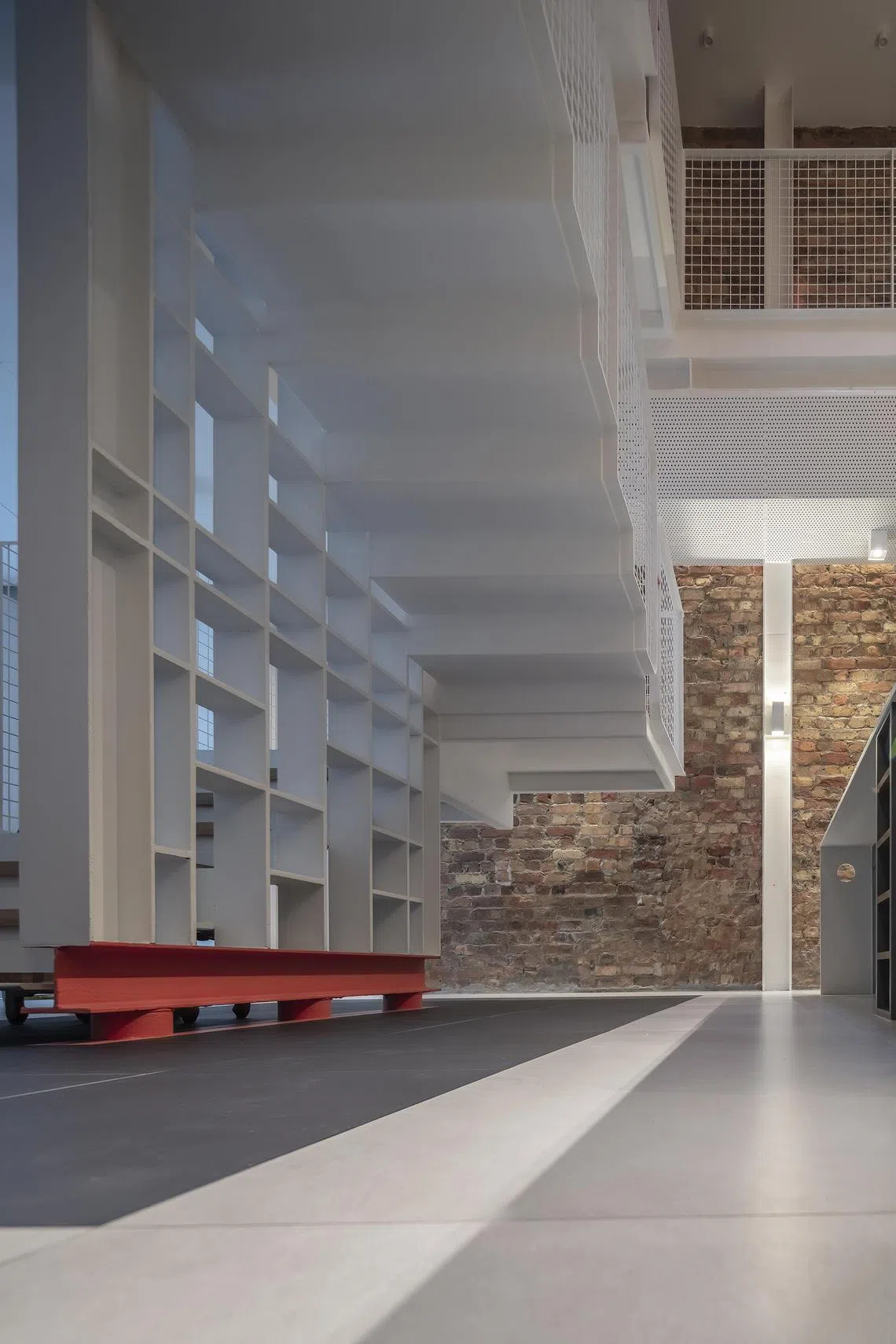
They exposed the original brickwork at the dry kitchen area to preserve the spirit of the shophouse, and reveal the existing shophouse material used and chosen by Wee-Doo’s great-grandfather. The original staircase running up the side of the house was demolished, and a new steel staircase now rises up the house’s centre.
“It was intended to activate spaces around it – from the kitchen, dining, living to the rooms upstairs,” says Lee. A round skylight caps the triple-storey dry kitchen area, amplifying daytime illumination. Within the historic shell are surprising, whimsical moments, such as the fuchsia-rounded skylight and the steel staircase’s vermilion-coloured base.
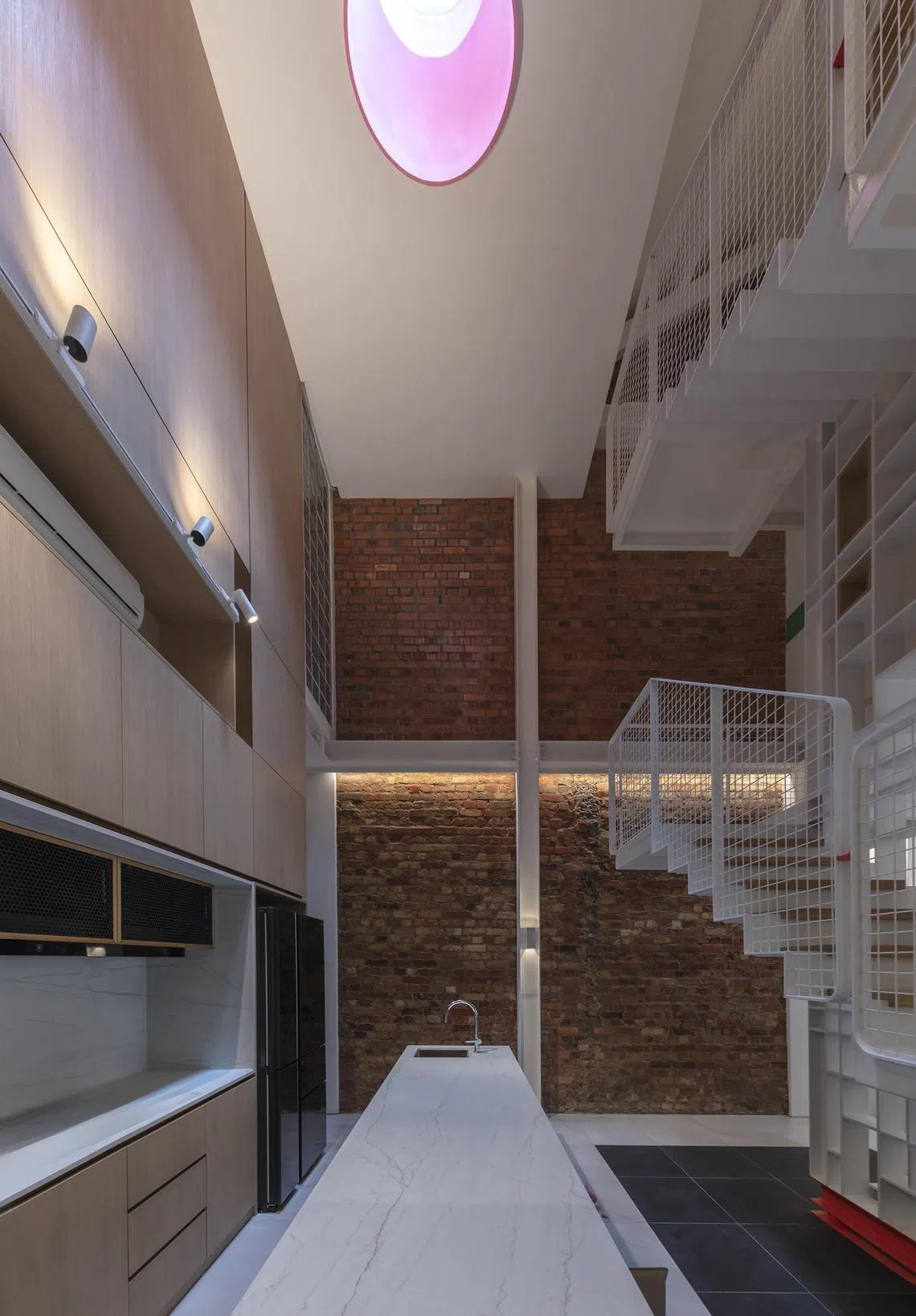
The family gets many compliments on the pink skylight. “It adds a touch of femininity to the project,” Wee-Doo says. A roof terrace in the rear block is a favourite spot for its splendid views, while her daughters love their own rooms that were designed for comfort and have special circular motifs and cool marble floors.
Her husband, John, who is an amateur cook who is “good with Chinese food”, spends a lot of time in the wet kitchen to do the heavy cooking. “Having ventured into Indonesian cooking, he now spends time in the dry kitchen trying to figure out the combination of spices,” says Wee-Doo.
Her youngest daughter, who loves cooking and baking, is also found here often. Her Italian dishes and burnt cheesecake are all-time favourites, says her mother.
Wee-Doo is grateful for how harmonious the renovated home is, and how the family members are able to engage with one another through the layered spaces. Meanwhile, the kampung spirit continues and extends inwards as many friends, family and neighbours have gathered here after the renovation.
She says: “This house is an amalgamation of tradition, legacy and modernity. We can’t wait for it to grow with our future generations.”
Decoding Asia newsletter: your guide to navigating Asia in a new global order. Sign up here to get Decoding Asia newsletter. Delivered to your inbox. Free.
Share with us your feedback on BT's products and services
TRENDING NOW

Johor property old hand KSL readies family handover amid market boom

Seatrium eyes S$28 billion in project opportunities amid global race for energy security

China targets offshore billions in biggest crackdown in decades

Trek 2000 shares jump 41.5% after Osim founder Ron Sim drops claims, sells 7.3% stake to Azure Capital

