

How to choose the perfect Porsche
LEOW JU-LEN
If you’re feeling adventurous at a fine Japanese restaurant, you need just one word at your disposal: “omakase”. Assuming you’re in the right sort of place, the rest is down to sitting back in anticipation of a good time while the chef does whatever he fancies, working with whatever in the kitchen that was swimming in the ocean most recently.
Minus the fish part, there’s a similar idea at Porsche, where the letters “GTS” have evolved into a shortcut to making sure you get the best from what can be a bewildering number of options on the typical Porsche menu.
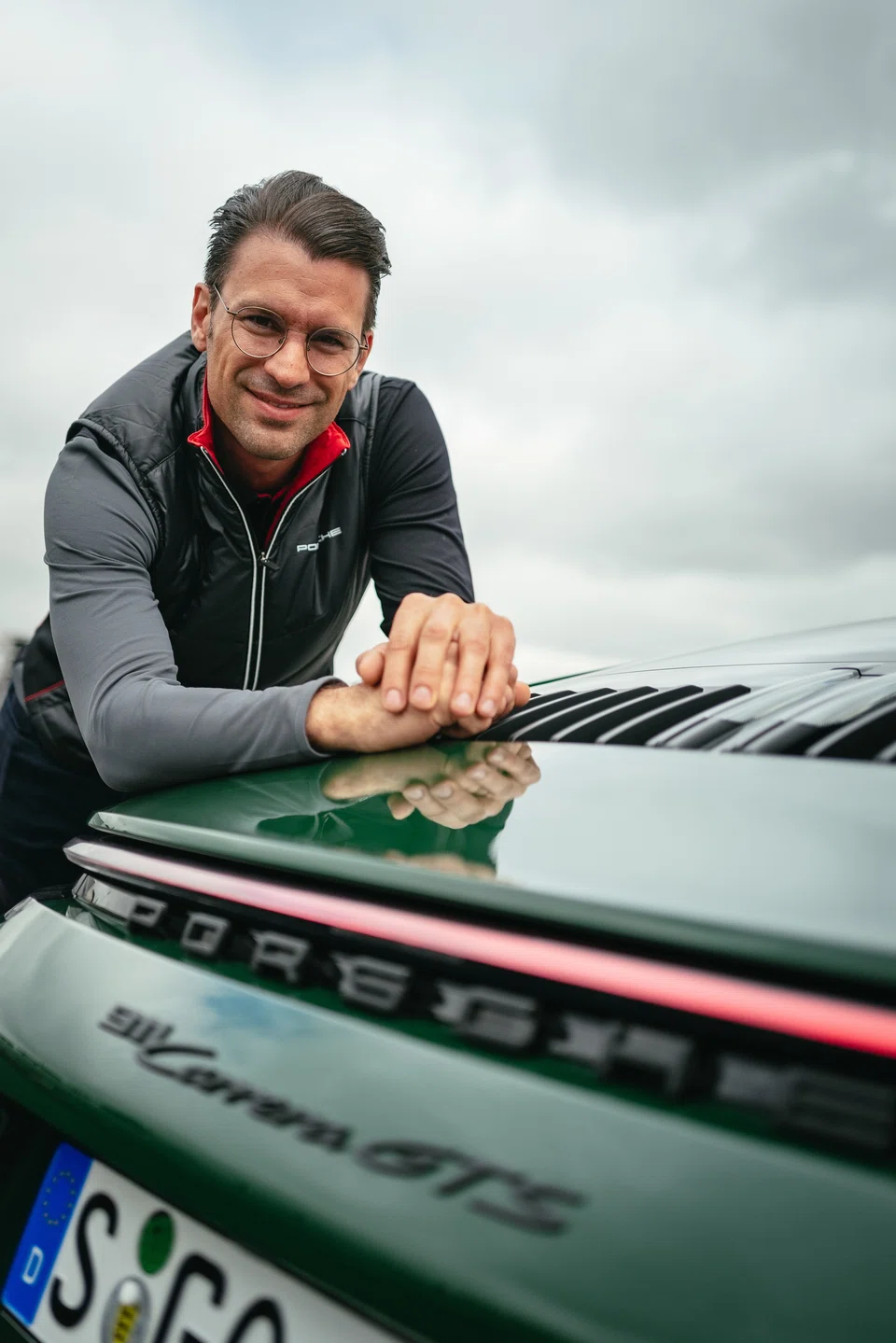
Take the 911 Carrera 4 GTS that Porsche handed me the keys to at the Autodromo Vallelunga, a 4 kilometre-long circuit with a lovely mix of fast and slow bends, some of them with disturbingly sudden crests and long downhill stretches.
With 480 horsepower, the 911 Carrera 4 GTS is slightly more powerful than the everyday Carrera S, but a full 100 hp short of what the Herculean 911 Turbo has under its engine cover. Only a true hedonist would find its ability to hit 100 km/h in just 3.3 second inadequate.
More to the point, the GTS was a hoot to drive at Vallelunga, borrowing bits from the 911 Turbo (the active shock absorbers and rear suspension, for instance) to screech around corners with breathtaking speed. The brakes, also raided from the Turbo’s parts bin, dared us all to hit the anchors impossibly late, and the omission of some sound insulation in the GTS rewarded every blast down the straights with the heavy metal soundtrack of the 911’s signature “boxer” 6 cylinder engine, turned up to 11.
It turns out I was a good 6 seconds a lap slower in the same car than Joerg Bergmeister, a Porsche Carrera Cup and endurance racing champion, but I had a blast just the same. Would I have been a second or 2 quicker in a 911 Turbo? Almost certainly. But there’s more to the GTS idea than raw speed.
There is now a GTS version of every Porsche model out there, and just like with an omakase dinner, the label includes an element of value for money. In Singapore the basic Porsche 911 now starts at S$501,188 without certificate of entitlement or options. The GTS version costs S$644,888, which sounds more like a jump than a stretch, but then the gap to a 911 Turbo is large enough to make anyone else think twice: it starts at S$842,388, which is the sort of money where a buyer might start to look sideways to see what Aston Martin or Ferrari have to offer instead.
The GTS idea also involves some styling features that aren’t always available in the options catalogues (every GTS car has smoky, tinted headlights and taillamps, for instance), plus features curated for a given model. “The most important thing is the spirit of the car,” says Simon Lohre, the product manager in charge of the Porsche 911. “If you have a luxury car it’s not that important to have a sport exhaust system, but when we have a sporty car, you need the performance ingredients.”
As with many things Porsche, the GTS label was born in racing. 1964’s 904 Carrera GTS, an irresistibly pretty lightweight competition coupe, was the first car to wear the badge. These days, Porsche gives the GTS treatment to models that have been on sale for a few years, as a way to keep buyers interested.
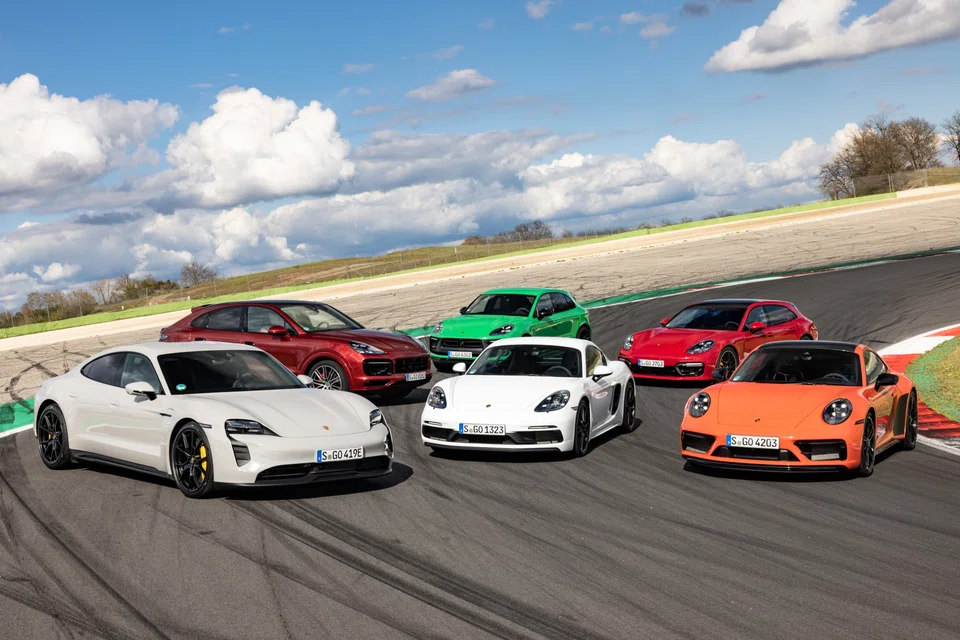
The company rolled out no fewer than 5 GTS versions of the 911, more than 2 years after the model itself made its debut, for example. Whether they helped to drive the model's sale to a record 38,464 units last year is anyone’s guess (Porsche doesn’t give variant-by-variant sales breakdowns), but it’s hard to see how they would have hurt.
Porsche newest GTS models suggest that the idea isn’t about to die with the combustion engine. 6 months ago the brand showed off GTS versions of its Taycan range, a family of pure electric cars.
Driving a Taycan GTS on a racing circuit at speed was a unique experience, at least. The car’s heavy batteries sit so low down that they impart a feeling of unshakeable stability, so the electric Porsche feels both neck straining fast, yet stuck to the tarmac. There’s an eerie lack of noise — the 911 sounds like a banshee in comparison — that masks the sensation of speed, so it’s just as well that the brakes work with stupendous power. It’s so fast and benign that it’s easy to imagine that the average driver would be quicker around a track in a Taycan GTS than in one of Porsche’s sportscars, which demand a firm hand and stout heart to give their best.
In the electric world, the GTS label brings the expected cosmetic upgrades and a step up in acceleration from the Taycan S, but the sound system also pipes a slightly more evocative whirr into the cabin, and the batteries offer more range than in any other Taycan. That’s the sort of performance that counts in an electric car.
“The GTS strategy means power, performance and emotion, and therefore it fits, I guess, quite well with the Taycan, as well,” Lohre muses. He told The Business Times that the GTS label will continue even as Porsche shifts towards electric power, meaning the brand will sooner give up on combustion engines before it kills a label that has come to represent, in many ways, its cars in their most well-rounded form. Like Japanese chefs, engineers must love showing off their best moves.
Decoding Asia newsletter: your guide to navigating Asia in a new global order. Sign up here to get Decoding Asia newsletter. Delivered to your inbox. Free.
Share with us your feedback on BT's products and services
TRENDING NOW

Once staunchly pro-China, Malaysian Chinese businesses are now distancing themselves from Beijing

New launch or resale unit? Here’s a guide for homebuyers
The lesser-known prospects in the Asian chipmaking supply chain

Cliff Tan has 7 million followers and a 4-month waitlist. Why won’t he expand his business?

