

How sand became golf’s most valuable amenity
It has become a selling point for exclusive clubs with tight membership caps and six-figure initiation fees
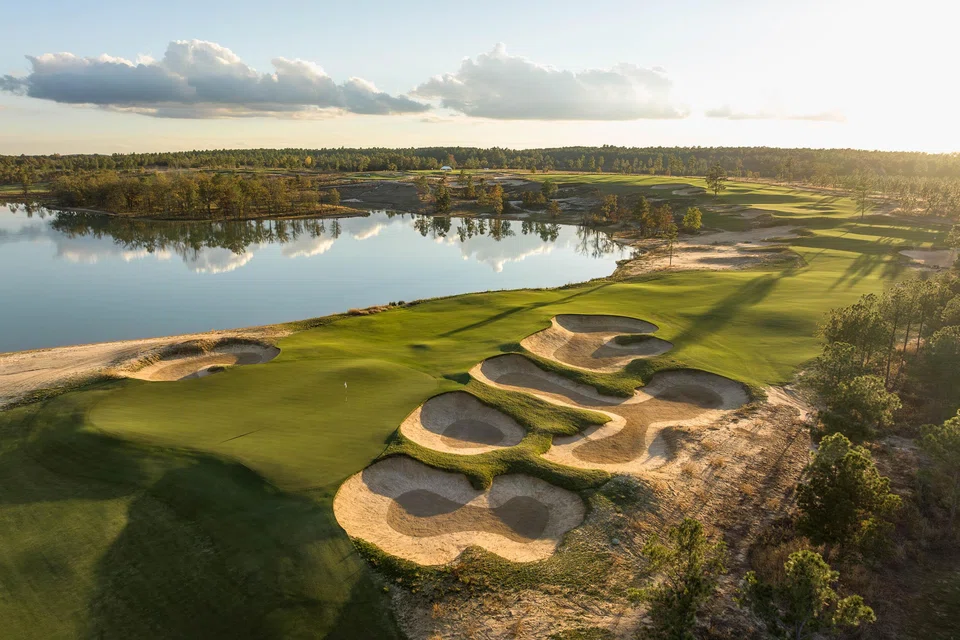
WHEN most people think of golf, their mind goes immediately to grass. If they picture sand at all, they think of the place they don’t want their shot to land.
But to a small subset of wealthy golfers and course designers, sand is everything.
Courses built on sandy soil tend to require less landscaping, which makes them feel more natural, less engineered. This soil allows for faster drainage on rainy days and firm, bouncy turf year-round.
Combining this turf with gentle slopes in the fairways can lead to fortuitous bounces of the ball – or penalising breaks – creating an extra layer of tension.
“That’s what makes a great course play like a great course,” said Bert Guy, a golf course consultant from Tuscaloosa, Alabama. “You cannot replicate it. You can truck in sand and cap a clay site, and it’ll play OK, but it’ll never play like land that’s sand all the way down.”
This geology also allows for a sport closer to what the first golfers played centuries ago.
Surges in wealth and the game’s popularity have created more players than there are slots to play at upscale US courses, developers say.
In response, some are building their own elite, exclusive clubs with tight membership caps and six-figure initiation fees, with sand and solitude as central selling points.
For them, profit is often a bonus, not an outright goal.



On the lookout
It has become a topographical treasure hunt. To get exactly the courses they want, hopeful developers are poring over maps from the US Geological Survey’s website and choosing unglamorous spots miles from any financial hubs – or oceans.
They are scanning rural areas in Texas, Florida and Georgia, aiming to find bands of ancient beaches to serve as the foundation for the next great round of golf.
Ben Cowan-Dewar, who operates Cabot, a suite of high-end golf resorts stretching from Norway to Nova Scotia to Florida, said that the appeal of these sandy sites is simple.
“I’ve been to some courses that are forgettable, that have amazing food or have the coolest bar, and I’ve never gone back to them. But when I’ve been to a place that stirred my soul, I found my way back.”
Sand is the trademark of golf’s most famous venue. Set on ancient Scottish dunes, the Old Course at St Andrews has tempted and teased players since the 15th century.
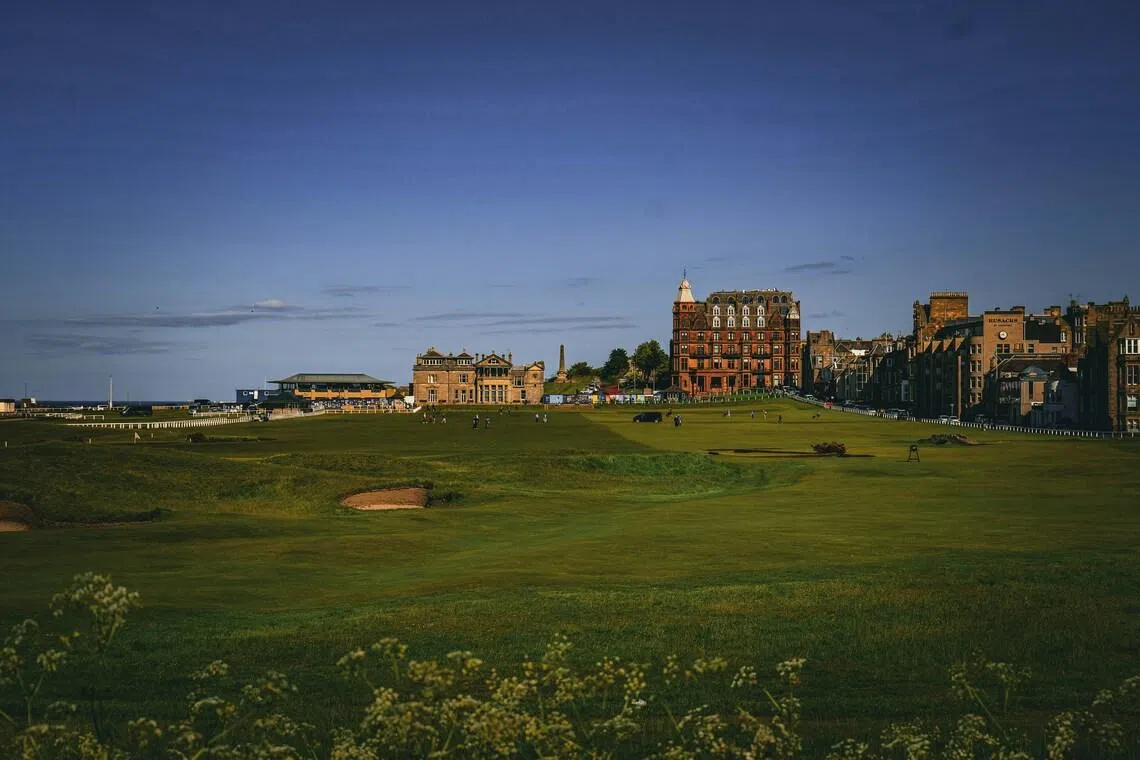
Its design features, including rumpled fairways and deep bunkers formed where animals burrowed, have always functioned as the platonic ideal of golf design.
The game hewed close to that ideal until the early 20th century, when heavy machinery began to allow developers to move silt or clay wherever they wanted. Instead of designing courses built into their surroundings – say, rolling hills near a beach – builders could alter the terrain more drastically.
This led to the construction of more courses in more locations, creating heavily landscaped spaces and requiring maintenance similar to that at English gardens. But these more manicured environments created more of a distance between players and the natural surroundings.
“Sand just gives you a better chance to let the land speak,” said Guy, the consultant.
He would know. He has played a central role in three of the most high-profile destination-golf openings in recent years: The Fall Line, Childress Hall in Texas and High Grove in Florida. All three have sandy soil.
Today’s new, high-end courses in remote locales have reverted to older aesthetic choices. They feature sand-scraped exposures where strips and dots of green mark fairways and putting surfaces. This sandy soil is rarer than clay or silt.
But golf course architect Bill Coore said that if you can find a workable parcel, it’s far simpler, faster and cheaper to move land around to deliver a course whose curves and depressions recall St Andrews.
The work that Coore and Ben Crenshaw did at Sand Hills Golf Club in 1994 was proof of concept. Given 8,000 acres on which to create the course, they needed to move only 4,000 cubic yards of dirt on the naturally sandy site.
A typical clay-soil course might require moving 30 times that amount during construction, course designers say.
Regularly ranked among the top 10 US golf venues, Sand Hills demonstrated that big spenders would travel for exceptional golf no matter how far off the beaten path.
It sits in Mullen, Nebraska, which has a population of 500. To reach it, you need to drive almost five hours from Denver or Omaha. The most efficient way is to do what other guests do: fly private.
In 1999, Bandon Dunes opened on the southern coast of Oregon and supercharged the quest for perfect sand in destination golf.
The resort has become so popular that anyone wanting to stay on site and play one of its five 18-hole courses and two short courses will find it’s booked into 2027. And to get a spot, you must win a lottery.
At the end of a long journey to reach the club, visitors are rewarded with the kinds of gorgeous, rolling courses that at one time only the Scots and Irish played on.
Gaining ground
Golf has exploded in popularity this decade. The National Golf Foundation reported that 12 million Americans travel annually to play the sport, up 49 per cent in 2025 from pre-Covid-19 levels.
This surge has paralleled the massive wealth generation for the top 10 per cent of earners since the Great Recession. Guy attributed destination golf’s rise to three factors: “wealth creation, the rediscovery of outdoor recreation and the shift from possessions to experiences”.
All of this comes at a steep price.
In and around Palm Beach, Florida, several clubs in the past four years have opened with initiation fees starting at US$500,000 and climbing because of demand. More are coming.
Mike Collins, CEO of IMI Worldwide Properties, oversees residential sales at new private luxury golf communities in places including Texas and the Bahamas. He said that initiation fees exceeding half a million dollars are no hurdle for ultra-high-net-worth individuals populating and building these clubs.
Golfers also feel an urgency to commit to a membership because of how strictly such clubs limit their rosters.
“There’s a fear of loss that ‘if I don’t do this, I’m not going to be there’,” Collins said. “And then greed takes over, and when greed takes over, people will pay whatever.”
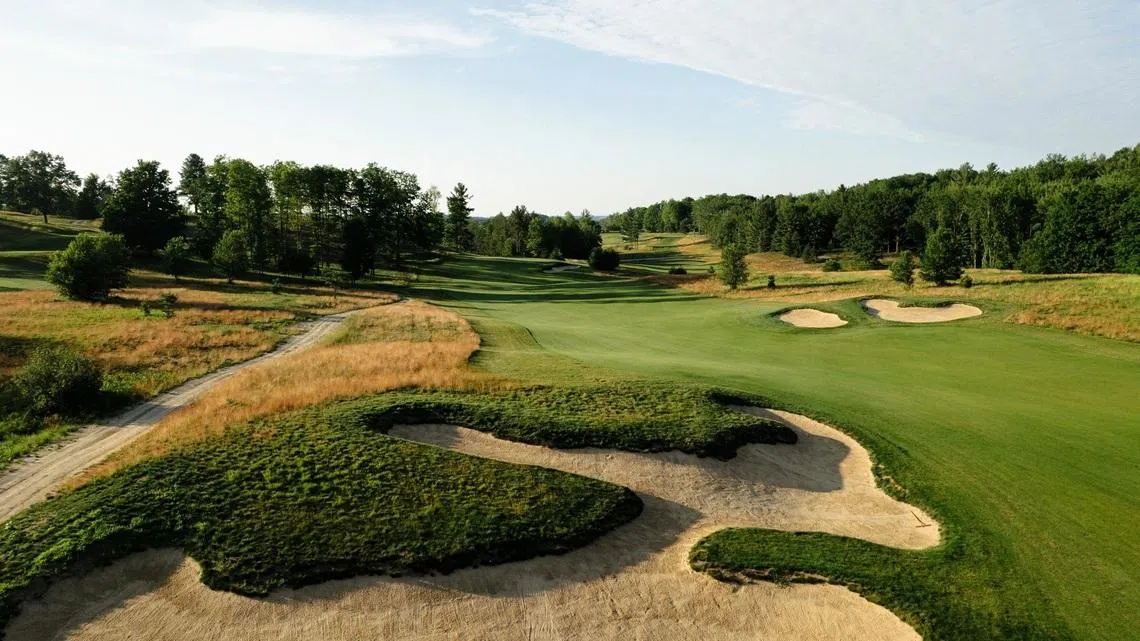
High Pointe Golf Club, in Williamsburg, Michigan, had its first full season in 2025.
Founder Rod Trump (no relation to the US president) said that he’d planned for a US$24 million capital outlay, but when all vertical construction is done, he will have spent “well over US$30 million”.
The low cost of building in sand – about half of what a clay-based course might cost – let him expand his budget and create more on-site lodging than originally planned. The invitation-only club exceeded its target head count ahead of schedule and now has 195 members.
A trip to the Fall Line
In April, I travelled to Mauk, Georgia, to visit the Fall Line to see how it compares with the other great sand venues in the US that require a true trek.
The golf is marvellous. The West Course recalls Australia’s famous Royal Melbourne, featuring large swaths of sand at its edges and bunkers that spread out like sand-filled amoebas. Its wide fairways don’t require precision off the tee.
But its fast, springy turf often leads balls into bunkers. I watched good drives end up there, leaving me with uphill shots to greens whose edges led right into more bunkers.
The heathland East Course offers panoramic views of the property, with more swaying land movement both left and right and up and down. It’s like a hilly meadow ready to be cut for hay, with holes carved into it and turf peeled back to reveal sand underneath.
It plays a bit easier than the West, but its green complexes – the putting surface and surrounds – feature wildly thrilling swales and slopes like some of Sol LeWitt’s wall drawings.
Each course is a testament to the power of building in sandy terrain.
The Fall Line’s amenities go well beyond country-club nice. A spacious clubhouse, still under construction, will sit on the driving range and include two bars and two stories of seating and outside dining.
The dinner menu the day I visited offered lobster risotto, followed by a main of wagyu rib cap. Among the three amuse-bouches: caviar on puff pastry.
You can fish or hunt or sport shoot here. You can also traverse the property on all-terrain vehicles, and the lodging feels more White Lotus than rustic cabin – think high-thread-count sheets, gas fireplaces and heated bathroom floors.
On the low-down
Overnight fees for members and their guests at these ritzy, rural clubs can easily top US$2,000 a night, covering all golf, all food and drink (including three meals and alcohol), plus lodging. You swipe your credit card at check-in and use your room number for anything you may want to buy in the pro shop.
You won’t find many social media posts about the Fall Line, which eschews publicity. The only visitor willing to speak to me on the record about his experience there was Andy Katz, who runs a venture fund.
He loved the differences between the courses, calling the East “more expansive and rugged” and praising how the West “rewards precision”.
“The food is excellent, but what really stands out is how immersive the property feels,” the 51-year-old Atlanta resident said. “The Polaris vehicles they give you when you get on site let you explore the entire estate at your own pace, adding an element of adventure to the experience. It makes the Fall Line feel less like a golf club and more like a private luxury playground for golfers.”
The operating thesis at the Fall Line – as well as similar clubs such as Childress Hall and High Grove – is exclusivity and scarcity.
The courses don’t have tee times stacked all day long. Invitation-only memberships are capped in the low triple digits. Players from farther away do a mix of flying privately to nearby Butler or taking a commercial flight to Atlanta and driving two hours, like I did.
The Fall Line’s East Course won Golf Digest’s award for best new private course in 2025.
The Upper Course at Childress Hall, four hours from Dallas, premiered at No 73 on Golf Magazine’s top 100 list in 2025, and its Lower is expected to make a splash as well.
The more awards these courses win, the higher the stakes get in the chase for sand in unexpected places, and the more pressure falls on high-end courses everywhere to compete.
“The remoteness, in a way, is the product,” Guy said. “The whole point of going is that you’ve left. You’re not running into your neighbour at the grill. You’re not getting pinged by your office. You’re somewhere where the cell signal is unreliable, and that’s a feature.”
All that’s left to do is take a breath and swing easy. And empty the sand from your shoes at the end of the round. BLOOMBERG
Decoding Asia newsletter: your guide to navigating Asia in a new global order. Sign up here to get Decoding Asia newsletter. Delivered to your inbox. Free.
Share with us your feedback on BT's products and services
TRENDING NOW

Government to bring forward raising of retirement age, give employers more financial support to create flexi-load jobs

Former minister Maliki Osman, Revolut chairman join Asia Gulf Holdings advisory board

Is Manila Asia’s new dining hot spot?

Simba at risk of losing operating licence over spectrum misuse

