

Humanoid robot sales tally hit 7,000 globally last year
The relatively small number contrasts with forecasts for a boom in the coming years

[AMSTERDAM] Around 7,000 humanoid robots were sold worldwide last year for industrial and professional service use, figures compiled by the International Federation of Robotics (IFR) showed.
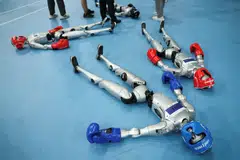
The relatively small number contrasts with forecasts for a boom in the coming years, particularly in China, the world’s largest market for industrial robots, which last month showcased humanoid running and boxing at its robot games.
To qualify as humanoid under the IFR’s criteria, a robot must have a human-like appearance and operate autonomously in an environment designed for humans. Legs are not required.
The IFR data, reviewed by Reuters ahead of publication, offer one of the first industry-wide measures of a technology that is attracting billions of dollars in investments and producing impressive demonstrations.
However, the numbers of humanoids remain “a fraction” of the overall robot population globally, Susanne Bieller, secretary general of Frankfurt-based IFR, told Reuters.
This compares with around 542,000 regular industrial robots installed in 2024 and another estimated 199,000 service robots sold that year for use in transport, hospitality and cleaning. The 2025 data for industrial and service robots will be published on Sep 24.
Bieller said that among humanoids sold in 2025, many were not doing productive work but were bought by research institutions or companies using them to generate data for improving AI models.
Carmakers, key early adopters, are running pilots with “single-digit or sometimes double-digit numbers of robots in their plants,” Bieller noted.
IFR has compiled robotics statistics for three decades, and has begun collecting humanoid data alongside its much larger industrial robot and service robot figures for the first time.
Bank of America Global Research estimates that 90,000 humanoid robots will be shipped this year and 1.2 million by 2030.
The IFR’s tally is based on supplier and national industry association data, and excludes consumer and military humanoid robots, while medical robots are classified separately. REUTERS
Decoding Asia newsletter: your guide to navigating Asia in a new global order. Sign up here to get Decoding Asia newsletter. Delivered to your inbox. Free.
Share with us your feedback on BT's products and services
TRENDING NOW

DBS, OCBC, UOB rout lops billions off STI as inflation, rate concerns spook investors

Grab CEO’s wife Chloe Tong on life with Anthony Tan and finding her purpose

OCBC sheds S$8 billion in value as shares close nearly 6% down; analysts cautious on banks

Deal between tycoon friends sparks scrutiny of Philippine power sector

