

If remote work empties downtowns, can theatres fill their seats?
 Add BT as a preferred source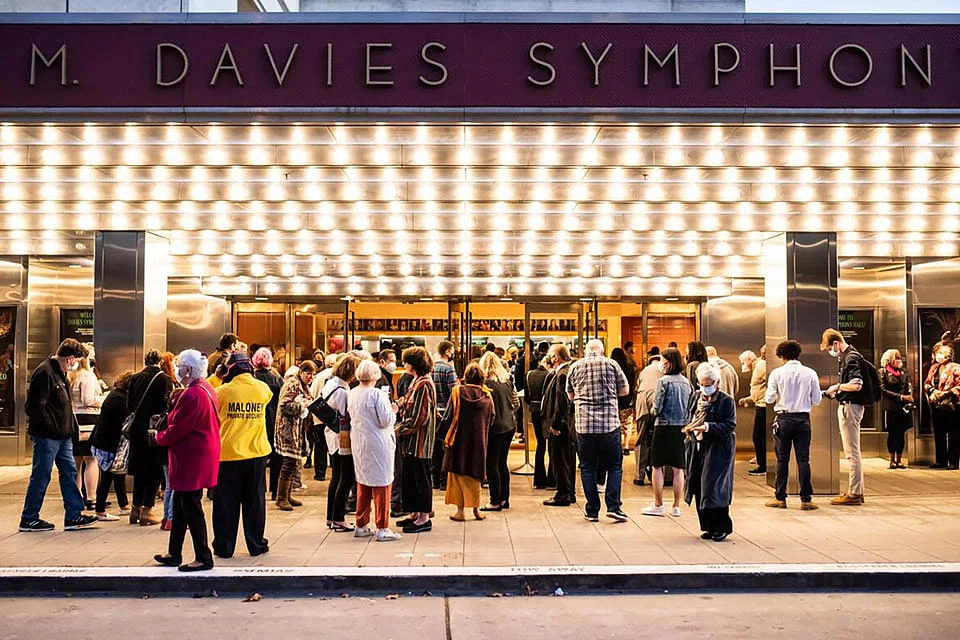
San Francisco
AS LIVE performances finally return after the pandemic shutdown, cultural institutions are confronting a long list of unknowns.
Will audiences feel safe returning to crowded theatres? Have people grown so accustomed to watching screens in their living rooms that they will not get back into the habit of attending live events? And how will the advent of work-from-home policies, which have emptied blocks of downtowns and business districts, affect weekday attendance at theatres and concert halls?
Nowhere is that last question more urgent than in San Francisco, where tech companies have led the way in embracing work-from-home policies and flexible schedules more than in almost any other city in the nation. Going to a weeknight show is no longer a matter of leaving the office and swinging by the War Memorial Opera House or Louise M. Davies Symphony Hall.
"As people work from home, it is going to change our demographics," said Matthew Shilvock, general director of the San Francisco Opera. "It's something that could be a threat. We're all trying to wait and see whether there's a surge of interest in live activity again or is there a continuation of just being at home, not coming into the city from the suburbs."
Arts groups are trying to gauge what the embrace of more flexible work-from-home policies will mean for their ability to draw audiences in a city whose housing crunch has already driven many people to settle far from downtown. Close to 70 per cent of the audiences at the San Francisco Opera and the San Francisco Symphony - two nationally recognised symbols of this city's vibrant network of performing arts institutions - live outside the city, according to data collected by the two organisations.
Navigate Asia in
a new global order
Get the insights delivered to your inbox.
Some economists see the trend of remote work persisting. "It's likely we are going to have more people working from home than other places," said Ted Egan, chief economist for the city and county of San Francisco. "The tech industry seems to be the most generous for work-from-home policy, and employees are expecting that."
Egan said the trend might pose more of a problem for the city's bars and restaurants than for its performing arts institutions. "My suspicion is that performing arts are going to be less sensitive to working from home than other sectors," he said. "It's not the kind of purchase you do after work on a whim, like going for happy hour."
Attendance has been spotty as San Francisco's art scene climbs back. Just 50 per cent of the seats were filled the other night for a performance of The Displaced, a "gentrification horror play" by Isaac Gómez, at the Crowded Fire Theater.
"We had sold-out houses on Friday, Saturday and Sunday and much lower participation on Wednesday and Thursday night," said artistic director Mina Morita. "It's hard to tell if this is the new normal."
There were some patches of empty seats across Louise M. Davies Symphony Hall when the San Francisco Symphony presented the US premiere of a violin concerto by Bryce Dessner, even though it was the third week of the long-delayed (and long-anticipated) first season for Esa-Pekka Salonen, its new music director. The concerto, with an energetic performance by Finnish violinist Pekka Kuusisto, was greeted by repeated standing ovations and glowing reviews.
Attendance in October was down 11 per cent compared with before the pandemic, but the symphony said advance sales were strong, suggesting that normal audiences might return in spring.
"The audience is back," Salonen said in an interview before he took the stage. "Not what it was, but they are back... Our worst fears have been dispelled."
Even before the pandemic, cultural organisations were dealing with challenges that threatened to discourage patrons, including a stressed public transportation system, traffic, parking constraints and the highly visible epidemic of homelessness. And many institutions were struggling to make inroads in attracting audiences and patrons from the tech industry, which now accounts for 19 per cent of the private workforce.
Now, facing an uncertain future as they try to emerge from the pandemic shutdown, arts organisations are embracing a variety of tactics to fill seats.
Hope Mohr, co-director of Hope Mohr Dance, said her organisation was spending US$1,400 per night to livestream performances so that audiences could choose between coming into San Francisco and watching from their living rooms. "A hybrid experience: I have to do that from now on," she said.
Advance sales for The Nutcracker at the San Francisco Ballet, with one-third of the tickets going for just US$19 a seat to help bring in new patrons (the average ticket price is US$136), have been moving briskly.
And the 145-seat Magic Theatre in Fort Mason, just beyond Fisherman's Wharf, has been experimenting with different kinds of programming, such as a poetry reading and pay-what-you-can seats to lure patrons who live - and now work - far from the theatre. NYTIMES
Decoding Asia newsletter: your guide to navigating Asia in a new global order. Sign up here to get Decoding Asia newsletter. Delivered to your inbox. Free.
Share with us your feedback on BT's products and services
TRENDING NOW

Thai and Vietnamese farmers may stop planting rice because of the Iran war. Here’s why

As more Asean states turn to Russia for fuel, will Moscow boost its influence in the region?
Middle East-linked energy supply shocks put Asean Power Grid back in focus

Meet the women who run one of Singapore’s most trusted hotel brands

