

In world of sports, the rules are there for a reason
F1 race director's actions at the Abu Dhabi Grand Prix on Dec 12 suggest at best, rushed thinking or imprudence, and at worst, that a single person could be above a sport and its rules.
 Add BT as a preferred source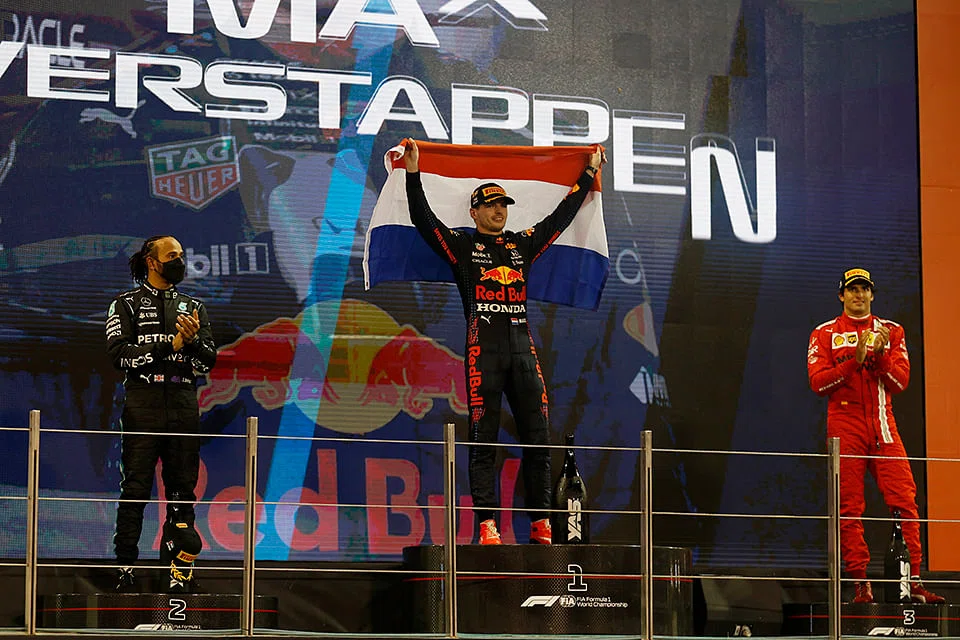
DeeperDive is a beta AI feature. Refer to full articles for the facts.
IF there is something the past 2 years have taught us, it's that adaptation is key to survival.
In a pandemic-ridden world where situations and regulations are actively unfolding, we have come to learn and accept that rules are simultaneously evolving and we must be prepared to adapt.
But in some cases, the rules are set, and we must also recognise that. A classic instance is in sports.
Rules in sports exist to provide an agreement of understanding of the form of competition involved (be it racing, combat or ball games), and apply across every athlete and team.
These regulations matter because they ensure fair play and respect, which are values that make sports inspirational to people.
This, however, was not the picture at Formula One (F1)'s champion-deciding race at the Abu Dhabi Grand Prix on Dec 12.
Navigate Asia in
a new global order
Get the insights delivered to your inbox.
F1 race director Michael Masi introduced a concocted ruling in the middle of the race that muddled the competition and ultimately cost British driver Lewis Hamilton the chance to secure his eighth world championship.
For those who missed the race (or are curious about the sudden online chatter around F1's controversial end to its 2021 season), this is what happened.
Forget what transpired in the first 57 laps of that 58-lap race.
Everything unravelled at the start of the final lap when all the drivers were driving relatively slowly behind a safety car towards the finish line, because a crash had just occurred and it was deemed unsafe for anyone to race at full speed.
Notably, Hamilton was in first place behind the safety car, while his Dutch rival Max Verstappen was behind him with 5 cars in between them.
It seemed like Hamilton would go on to win the race behind the safety car, which some would have described as a slow, uninspiring and even unsatisfactory end to the season.
But at least it would have been a fair outcome, going by normal sporting protocol.
However, Masi decided at the last minute that the race should end in a flourish.
He devised a set of rules to declare that the safety car must immediately leave the track and that only the cars between Hamilton and Verstappen must drive away.
Essentially, Masi orchestrated a final lap of full-speed racing between the 2 title contenders, and in the process, enabled Verstappen to start the lap right behind Hamilton.
This erased all the lead that Hamilton had built up, and gave Verstappen - racing on fresher tyres at that point - a decisive advantage.
Masi's actions suggest at best, rushed thinking or imprudence, and at worst, that a single person could be above a sport and its rules.
Yet, sports - unlike movies or TV shows - cannot be staged, produced or edited. Masi's responsibility as race director is not to entertain, but to enforce the rules.
Rules are what uphold the spirit, passion and competitiveness in sports, the very things that make athletes train hard and better themselves every day, and attract fans from all over the world because of the values they impart - fair play, respect for others, teamwork and doing one's best.
In the case of F1, its rules have progressively improved in the last 7 decades since the first race in 1950.
Take fireproof overalls, which became a mandatory attire for drivers from the 1980s.
It's unthinkable that in the 1950s, F1's dress code aimed for comfort and elegance, which meant drivers raced in flammable polo shirts and cloth trousers!
Today, F1's rulebook is a robust set of regulations that not only champions overall safety, but also embraces the competitiveness of racing drivers and empowers innovation, a win for both the motor and tech industries.
Meanwhile, F1 has installed a commission to thoroughly analyse what happened in Abu Dhabi.
With the investigation underway, it's a worthy reminder that as some rules will continuously evolve and we must adapt to them, there are also rules that are ingrained and should always be honoured - for very good reasons.
Decoding Asia newsletter: your guide to navigating Asia in a new global order. Sign up here to get Decoding Asia newsletter. Delivered to your inbox. Free.
Copyright SPH Media. All rights reserved.
TRENDING NOW

From 1MDB to ‘corporate mafia’: Is Malaysia facing a new governance test?

Higher costs, lower returns: Why are Singaporeans still betting on real estate?

South-east Asian markets account for 8.8% of global capital inflows from 2021 to 2024: report

Richard Eu on how core values, customers keep Singapore’s TCM chain Eu Yan Sang relevant

