

Informal caregiving for seniors valued at S$1.28 billion annually: Duke-NUS study
This amount is equivalent to about 11% of government’s expenditure on healthcare

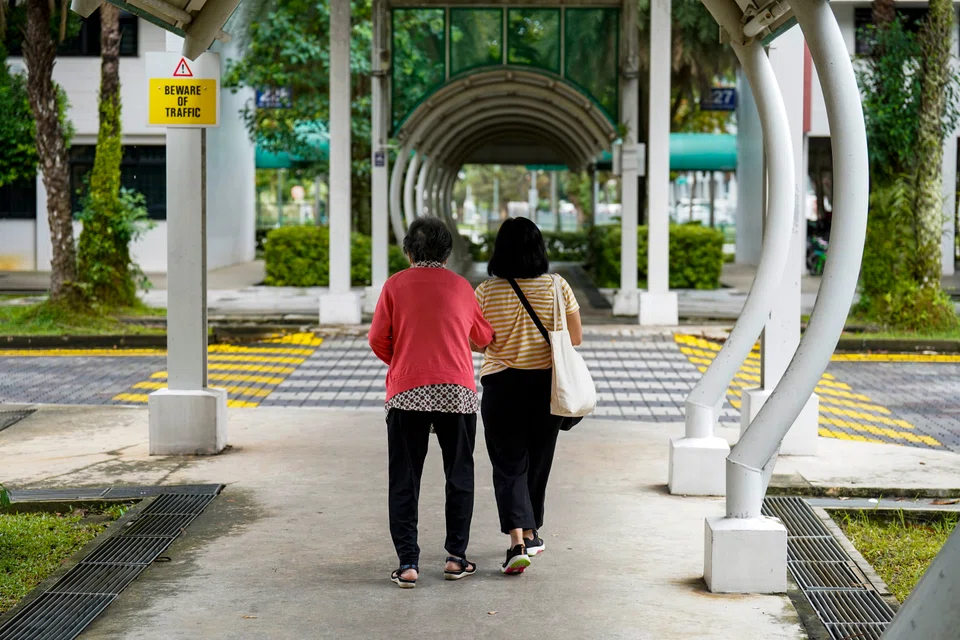
ALEX Lee (not his real name) spends about three hours a week caring for his elderly mum despite living apart and having a full-time job. The 40-year-old’s roles involve ferrying the 76-year-old to the hospital for regular checks and ensuring that her daily needs – which include the medicines – are prepared. This routine for Lee, a civil servant, has been ongoing for at least five years.
The monetary value of the time that such informal caregivers in Singapore spend looking after seniors aged 75 years and above comes to around S$1.28 billion annually. This amount is equivalent to about 11 per cent of the government’s expenditure on healthcare, according to a Duke-NUS Medical School study.
The report, released on Friday (Aug 16), is the first that estimates the value of informal caregiving in the context of seniors requiring daily care.
Researchers collected data in the Caregiving Transitions among Family Caregivers of Elderly Singaporeans (TraCE) study conducted from 2019 to 2020.
It surveyed 278 pairs of primary or main informal caregivers and senior care recipients. Primary informal caregivers are defined as family members or friends aged 21 and older who provide unpaid help to seniors for at least two out of three types of caregiving tasks: (i) providing care directly; (ii) ensuring provision of care, for example, by supervising a migrant domestic worker; and (iii) making care and treatment decisions.
The findings aim to provide insights for policies to better support caregivers.
Associate Professor Rahul Malhotra, deputy director of Duke-NUS’ CARE, an academic research centre, and principal investigator of the TraCE study, said: “Our estimates on the monetary value of informal caregiving time can inform economic evaluations of care models for seniors and policies for supporting caregivers, particularly in societies like Singapore that rely heavily on informal care.”
The country is rapidly ageing – the proportion of residents aged 65 years and above has increased from 7.2 per cent in 2000 to 16 per cent in 2021. By 2030, around one in four citizens, or 23.8 per cent, will be aged 65 and above. The role of informal caregivers will become even more critical then.
Despite the significant time commitment, the monetary value of informal caregiving is often overlooked in eldercare cost estimates, with most studies focusing on direct healthcare costs only.
Professor Patrick Tan, senior vice-dean for Research at Duke-NUS, said: “It is important to acknowledge that without informal caregivers, formal care services would face a significantly higher burden of care, straining social services and healthcare budgets. We hope that more efforts can be made to encourage and empower informal caregivers with practical tools and supportive communities.”
Christina Tiong, CEO of Home Nursing Foundation, said that besides finances and time issues, caregivers face the challenge of setting aside time for themselves and maintaining their identity and social support, so that they are not excluded from their usual social circles because of their duties.
“Organisations and the society need to normalise caregiving and understand the time, effort and resource required by the caregiver. Support (is also needed) by giving caregiving leave… or having work friendly timings,” she said.
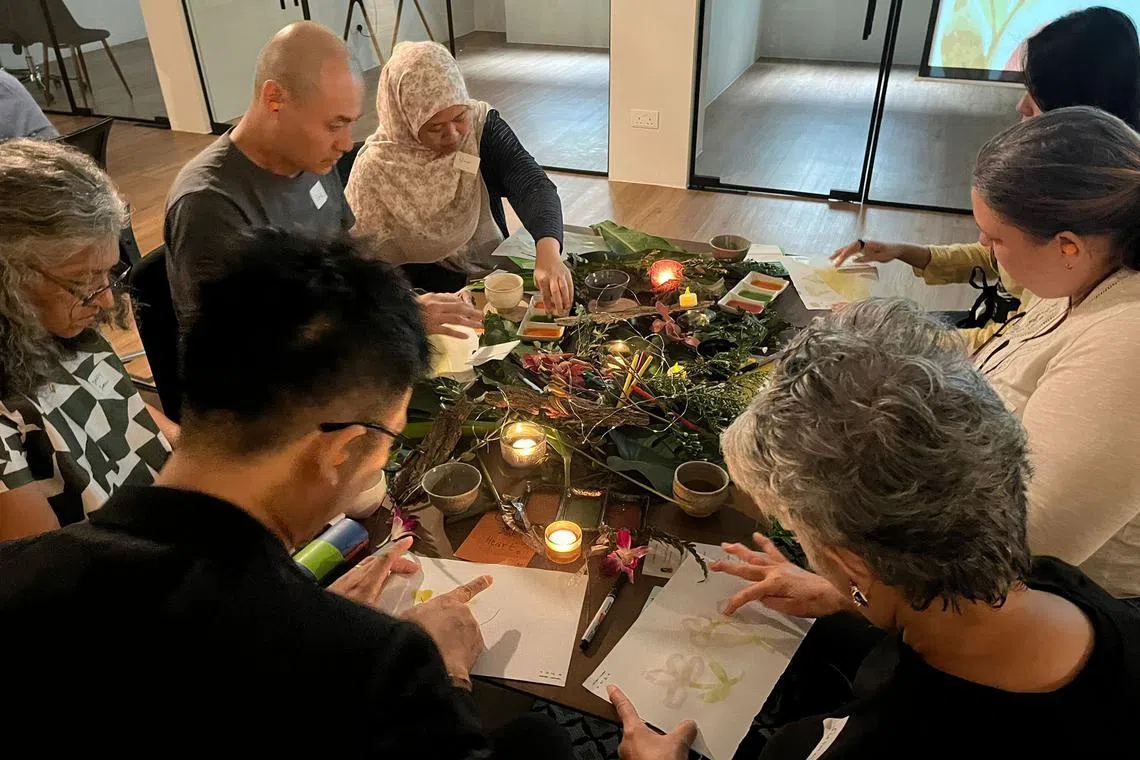
Hush TeaBar, a social movement that conducts well-being tea experiences through the deaf community, and Intellect, a mental health firm, recently announced their first joint event to acknowledge caregivers’ efforts. Among the workshops conducted was one to guide caregivers to prioritise their well-being.
The event took place on Friday at Intellect’s office at Tanjong Pagar, and it featured a pay-it-forward initiative. For every five tickets sold, a frontliner such as a doctor, nurse, or security guard, was invited to attend the event for free.
Anthea Ong, founder of HUSH TeaBar, said: “Our workshops, led by individuals who are deaf and those in mental health recovery, blend the tranquility of tea with sign language to promote emotional well-being.”
Cassandra Loh, vice-president of partnerships and solutions at Intellect, added: “This programme aligns with Intellect’s mission to redefine global mental health and ensure mental health accessibility across various groups in our society.”
Decoding Asia newsletter: your guide to navigating Asia in a new global order. Sign up here to get Decoding Asia newsletter. Delivered to your inbox. Free.
Copyright SPH Media. All rights reserved.
TRENDING NOW

Britain’s mansion tax shows the difficulty of targeting wealth

Once staunchly pro-China, Malaysian Chinese businesses are now distancing themselves from Beijing

The only common thing in S-E Asia is that we all eat rice: Cisco’s Asean president

Singapore data centre operator DayOne opts for US IPO at likely US$20 billion valuation

