

Instead of buying NFTs, Metakovan now commissions them

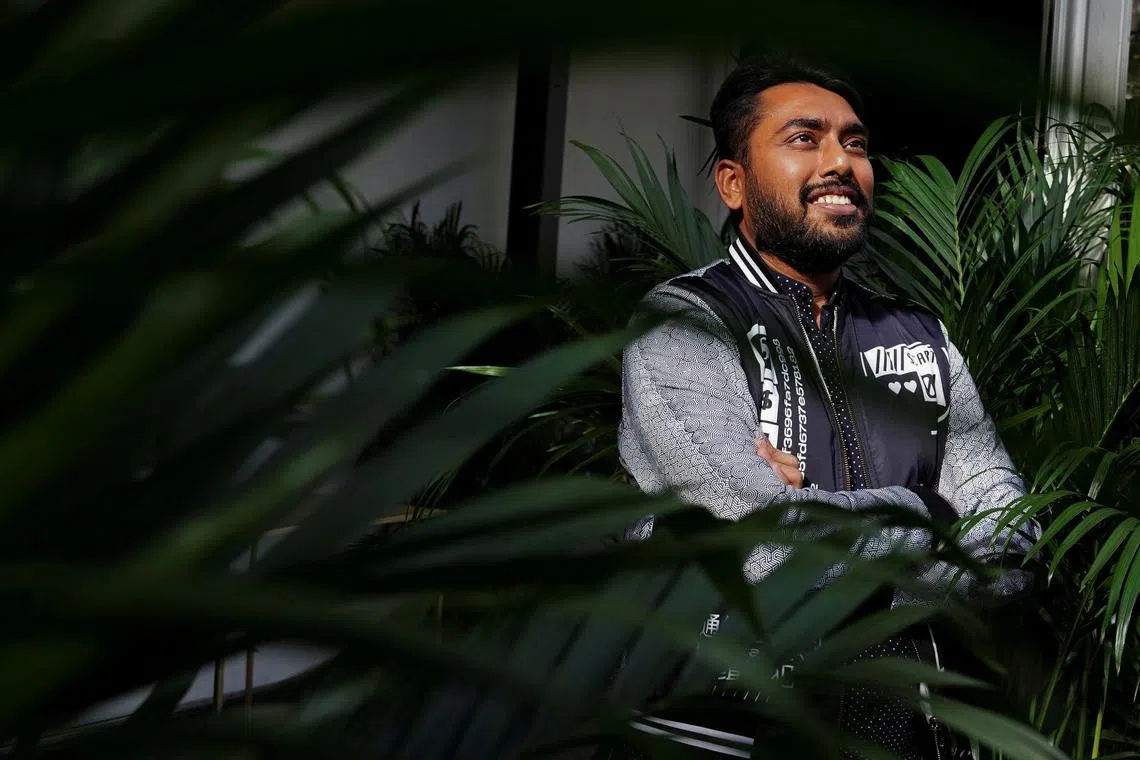
Technopreneur Vignesh Sundaresan, better known by his metaverse moniker Metakovan. PHOTO: Reuters
THE man who changed the world with a single eye-watering purchase of a non-fungible token (NFT) artwork now declares he's moved away from simply buying them.
Technopreneur Vignesh Sundaresan, better known by his metaverse moniker Metakovan, has started commissioning and collaborating with artists to create innovative NFTs that could see him changing the game - again.
Making a virtual appearance at a recent live panel discussion at National Gallery Singapore, Metakovan says: "I'm changing my method. Instead of acquiring NFTs, I've been primarily focused on commissioning them. After the event last year that so profoundly changed my life and my understanding of the traditional art world, I've had great experiences talking to gallerists from around the world. And I feel like I've become more in tune with the industry.
"So I think commissioning - but still keeping to the medium of NFTs, virtual art and the metaverse - could be the unique combination I bring to the table again."
Collaborating with artists
Metakovan made history in March 2021 with his US$69 million purchase of an NFT artwork by the artist Beeple titled Everydays: The First 5,000 Days at a Christie's auction.
Since then, the world has witnessed an explosion of NFT popularity. According to blockchain data company Chainalysis, NFTs grew to a US$41 billion market in 2021, a figure that almost matches the total size of the global fine art market.
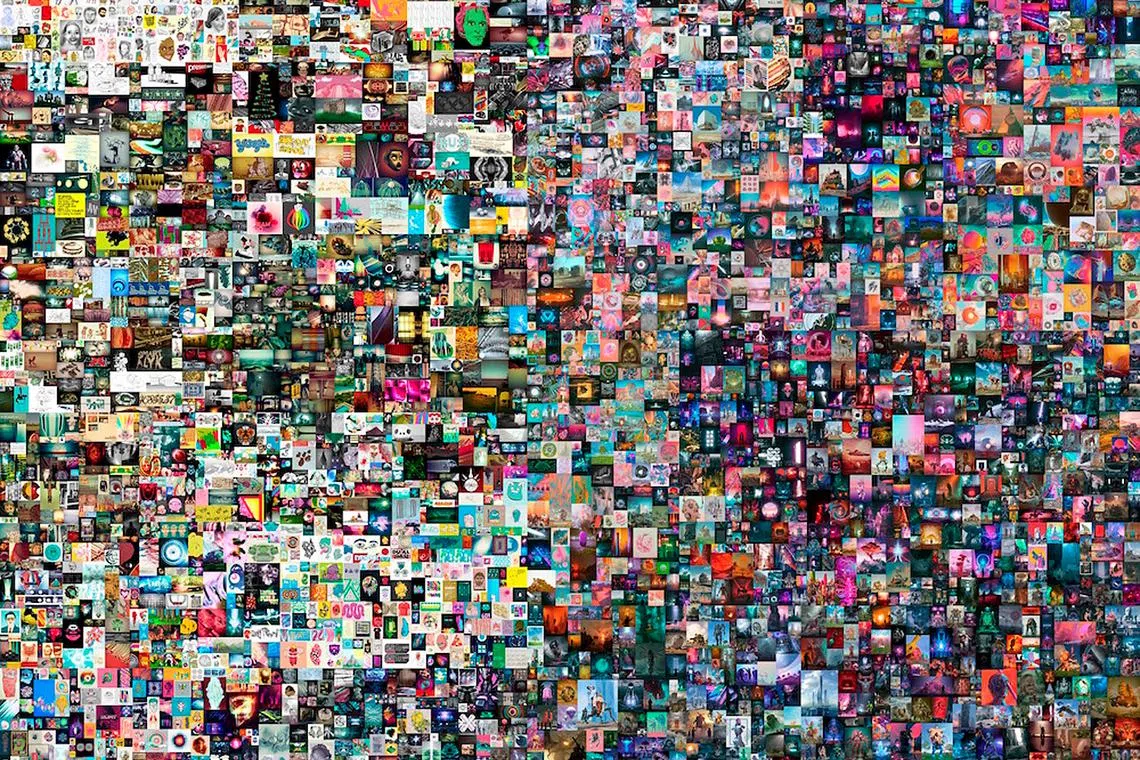
Beeple's Everydays: The First 5,000 Days purchased by Metakovan for US$69 million.
Metakovan, a mechanical engineer by training, says: "I get to talk to a lot of contemporary artists who want to understand NFTs. And, in a way, I had to become the person who has to explain its mechanics to them.
"There are so many blockchains out there, and if you're an artist who wants to create an NFT, which blockchain do you choose? It's a big question that's not easy to answer for someone who is just now coming into it.
"That's why I've moved away from just buying NFTs, which I did last year . . . Today, if you want to move the needle and bring in more contemporary artists, someone has to do the job (of guiding them through the NFT space). And I feel that my commissioning work has become that. For me, it's not just giving the money and asking for an output, but spending time with the artist (on its creation).
"I've spent about 6 months now on an NFT, working with an artist, and it's not out there yet."
Moderated by broadcast journalist Michelle Martin, the panel also comprised artist Ho Tzu Nyen, academic Audrey Yue, gallerist Khairuddin Hori and art psychotherapist Dian Handayani.
Movable feast
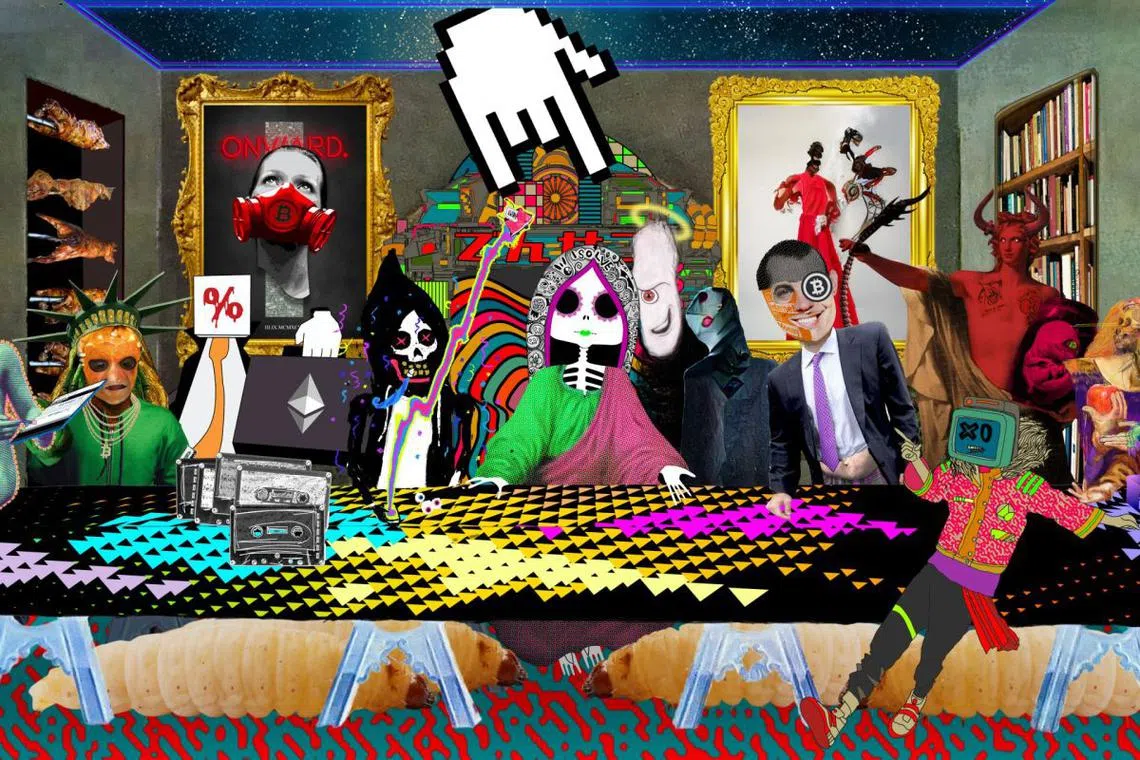
When asked to pick his favourite artwork, the Indian-born technopreneur did not pick the Beeple work - surprise, surprise - but what he calls one of the "crown jewels" of his NFT collection: an artwork titled First Supper (above) created by 13 artists in 2020.
The digital work is made up of several NFT components that are owned by different people. Ownership implies the ability to change certain elements of the artwork's image according to "layers" provided by the artists. Besides that, the image is also programmed to change by drawing data from the outside world.
Metakovan says: "It is such a dynamic artwork. If you see it now, you will see one image. But one week from now, someone could have changed one of the layers and made it look different. So I just want to look at it every day and see if there's any differences to the picture.
"All these would not have been possible if the work did not exist on blockchain. Here, all the changes are recorded, so you can go back in history to see how the changes evolve - like a movie. This is a work that fully utilises blockchain."
Future solutions
Dr Yue pointed out that blockchains consume an inordinate amount of energy: the minting of a single NFT could use as much as 340 kilowatt hours of energy - the equivalent of 1 month's electricity supply for a 3-room Housing Development Board flat.
Metakovan, however, came to NFTs' defence: "Yes, it consumes a lot of energy. But what we should not forget is that it is a technology - just like the car. There are cars that are really bad and polluting, but that only led to better cars. And today we have the electric car.
"In a way, blockchains are also like that. There are different blockchains with improved technology where the carbon footprint is more controlled."
Decoding Asia newsletter: your guide to navigating Asia in a new global order. Sign up here to get Decoding Asia newsletter. Delivered to your inbox. Free.
Copyright SPH Media. All rights reserved.
TRENDING NOW

Once staunchly pro-China, Malaysian Chinese businesses are now distancing themselves from Beijing
Stocks to watch: HPL, Aims Apac Reit, Zico, Advanced Systems Automation, ComfortDelGro
‘How many will survive?’: Bubble fears arise as China’s humanoid robotics face reality check
Smaller board lots can’t fix a market run by three banks

