

Istanbul, city of great art despite restrictions
Iron-fist president Erdogan is back in power, but creativity still thrives in this country of contradictions
Helmi Yusof
CAN a city have too much history?
Istanbul feels that way sometimes, being at the crossroads of civilisations, where the outer edges of Europe meet the outer edges of Asia. As the former capital of three empires – Roman, Byzantine and Ottoman – it has majestic centuries-old churches and mosques all within walking distances of each other. They are surrounded by markets so large that one needs a few days to cover them all.
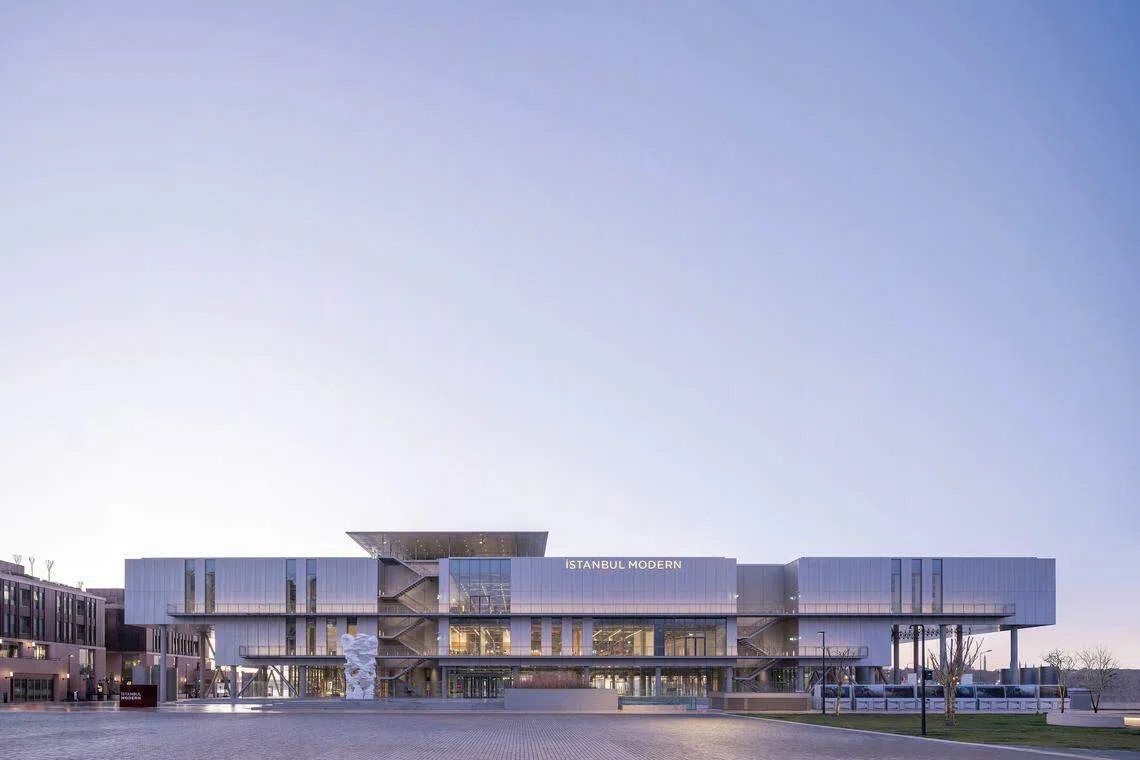
It comes as a surprise, then, that the new Istanbul Modern museum building looks flat, grey and boxy from a distance. Designed by the company of Pritzker Prize-winning architect Renzo Piano, it betrays almost nothing of the city’s storied past, and instead exudes a cold and detached air that appears almost as a rebuke to Istanbul’s opulent attractions.
But up close, the five-storey building has a facade clad in a sequence of 3D-formed aluminium panels. It gleams in the sunlight and changes colour throughout the day. It reflects the shimmering waters of the Bosphorus Strait flowing before it, a waterway so geographically advantageous that centuries of invaders and conquerors have fought for it.
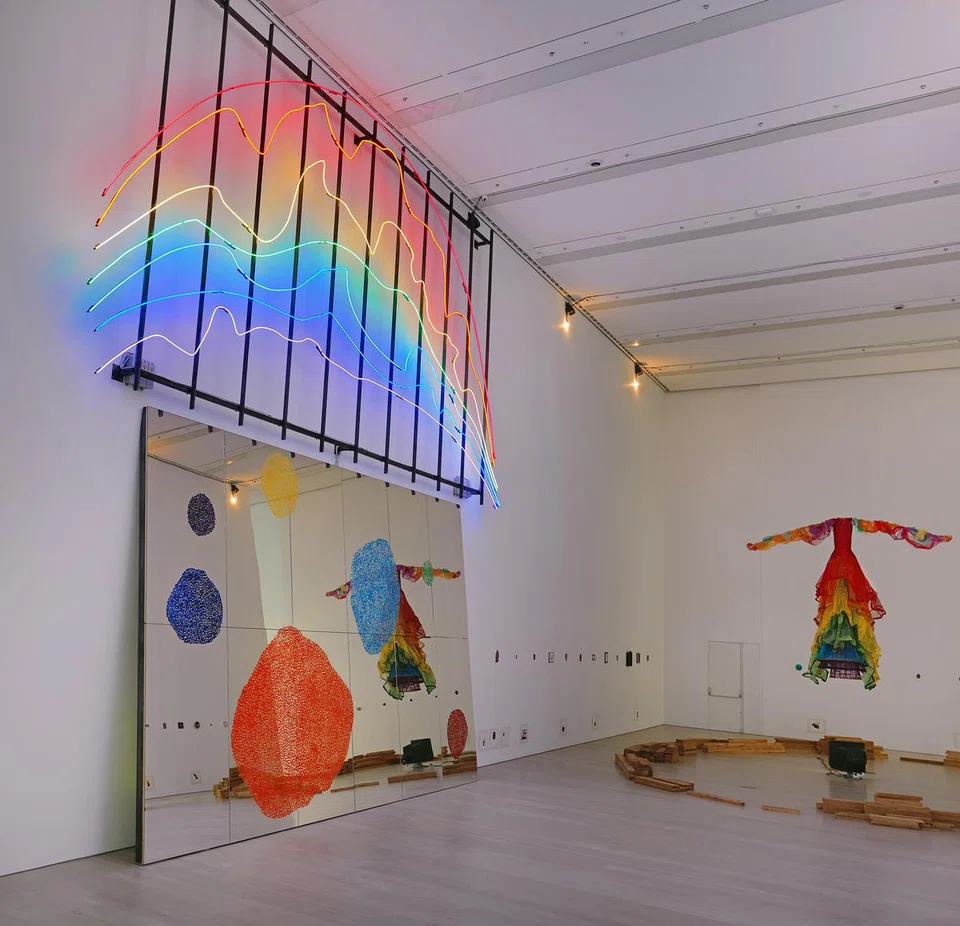
Inside the 10,500-square-metre building are cavernous galleries housing a spectacular collection of art from 1945 to the present. Its permanent exhibition features Turkey’s modern and contemporary giants, such as Sarkis, Fahrelnissa Zeid, Halil Altindere, Ayse Erkmen, Taner Ceylan, Nuri Kuzucan and Inci Eviner.
While some names are unfamiliar to the contemporary art lover, it’s not hard to appreciate their works almost instantly. They share pride of place with international stars such as Tony Cragg, Haegue Yang, Mark Bradford, Camille Henrot, Daniel Buren, Laure Provost, Anselm Reyle, Georg Baselitz, Lee Bul and Richard Deacon.
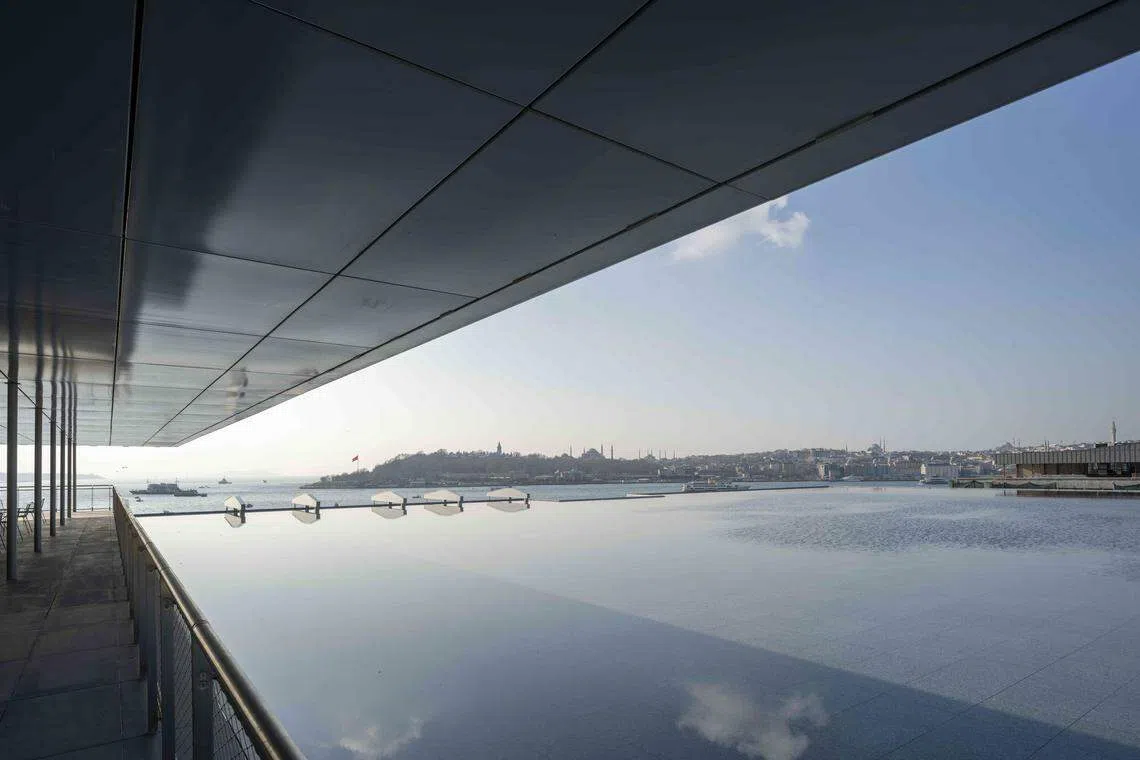
On the rooftop terrace, there is a large reflecting pool that acts as an extension of the Bosphorus. One also gets a 360-degree view of the city that was once called Byzantium in classical antiquity, and then Constantinople in late antiquity.
Among the predominantly Ottoman buildings are visible Roman, Genoese and Christian influences, a delight for history and architecture geeks.
Cultural beacon
Istanbul Modern is the latest feather in the cap for a city that wants to prove that it’s “Europe’s coolest city”, a self-proclaimed title that’s been bandied about for years but never quite caught on.
The recent election put President Recep Tayyip Erdogan firmly back in power after two decades of strongman tactics to suppress dissent and erode the power of the judiciary. The economy is in distress: Next to the Singapore dollar, the Turkish lira has plummeted to approximately one-eighteenth of what it was worth in 2007.
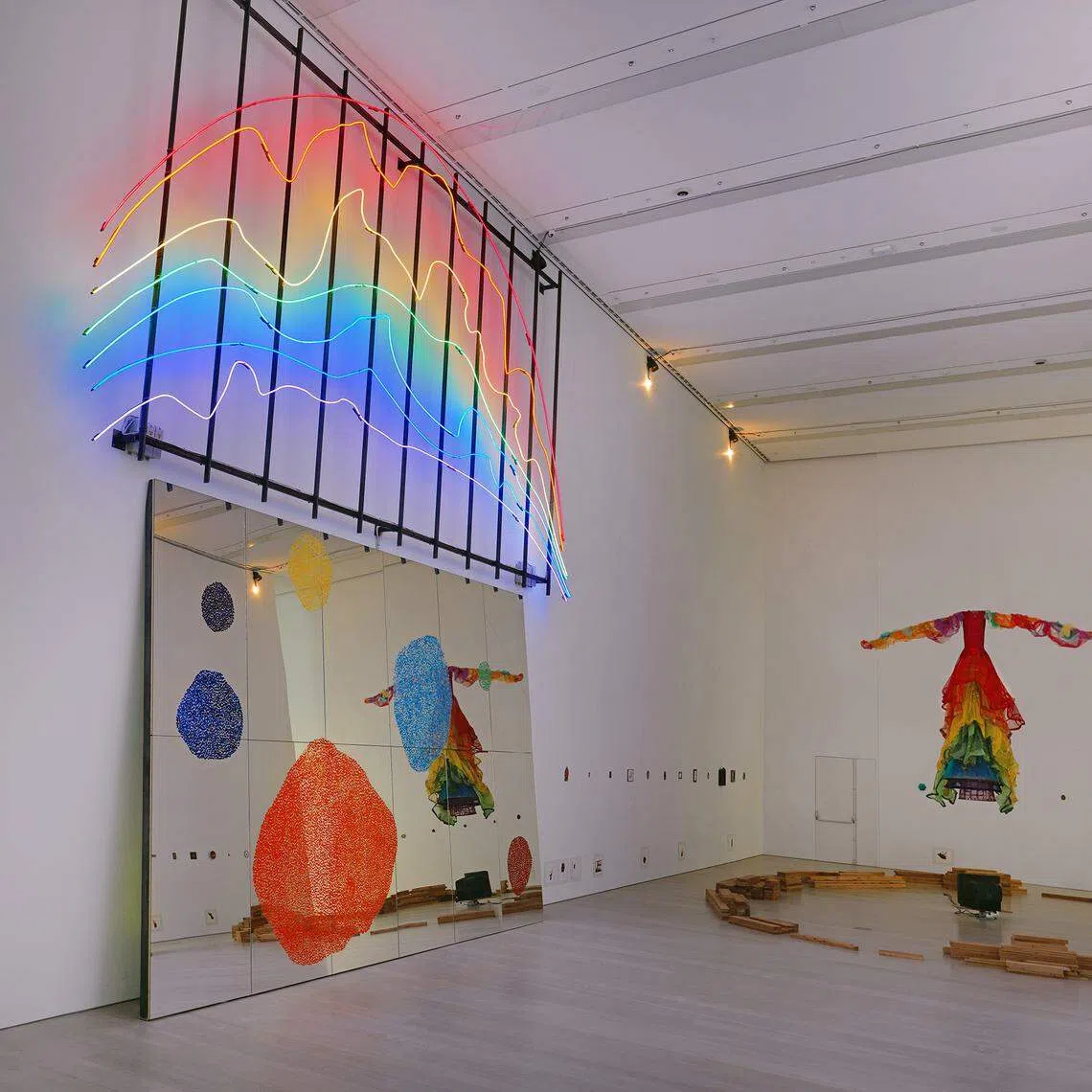
But within the same two decades of Erdogan’s rule, the city’s biggest benefactors, such as banks, businesses and universities, have constructed and endowed an array of cultural institutions.
These have nurtured a new generation of Turkish artists eager to engage with the global scene, even as the country’s economic and political troubles weighed heavily on the people.
Arter is one such museum founded by Vehbi Koc Foundation, one of Turkey’s major non-governmental charity institutions. Like Istanbul Modern, Arter is housed in a boxy postmodern building designed by Grimshaw Architects that would not look out of place in the cultural hubs of Europe.
Inside, the museum’s programme is unapologetically avant-garde. Its current highlight is Sarkis’ solo show featuring large-scale sensory installations dealing with time, transience and memory. Some of these works debuted at the Turkish Pavilion at the 2015 Venice Biennale.
There are also Cengiz Cekil’s conceptual works that recontextualise daily objects as symbols of political history and violence, and Eva Kotatkova’s sensitive exploration of how institutional structures shape our behaviour, movement and thoughts.
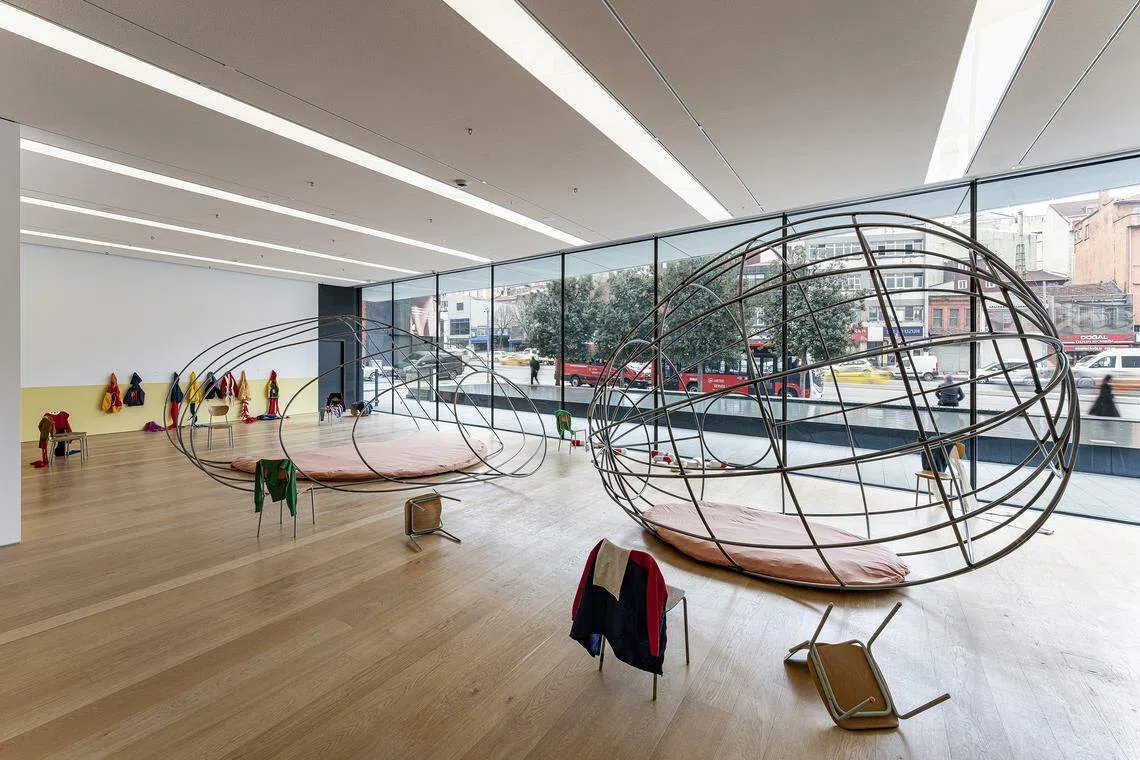
Other notable contemporary art institutions such as SALT Galata, Borusan Contemporary and Pera Museum, as well as commercial galleries such as Galeri Nev and Zilberman, have all helped put Istanbul squarely on the art lover’s map.
Books and cinema
But Turkey’s artistic credentials go beyond contemporary visual art.
In cinema, Turkish-born writer-directors Fatih Akin (Head-On, In The Fade), Nuri Bilge Ceylan (Distant, Winter Sleep, About Dry Grasses) and Ferzan Ozpetek (Hamam, Facing Windows, Saturn In Opposition) have been garlanded at various film festivals for candid and intimate films that don’t always square with the image that the religious segments of the populace want to project of their country.
In literature, books by contemporary novelists such as Orhan Pamuk (Snow, My Name Is Red) and Elif Shafak (The Forty Rules Of Love, The Bastard Of Istanbul) are global bestsellers that sometimes deal with taboo topics such as honour killing, premarital sex and LGBTQ+ issues.
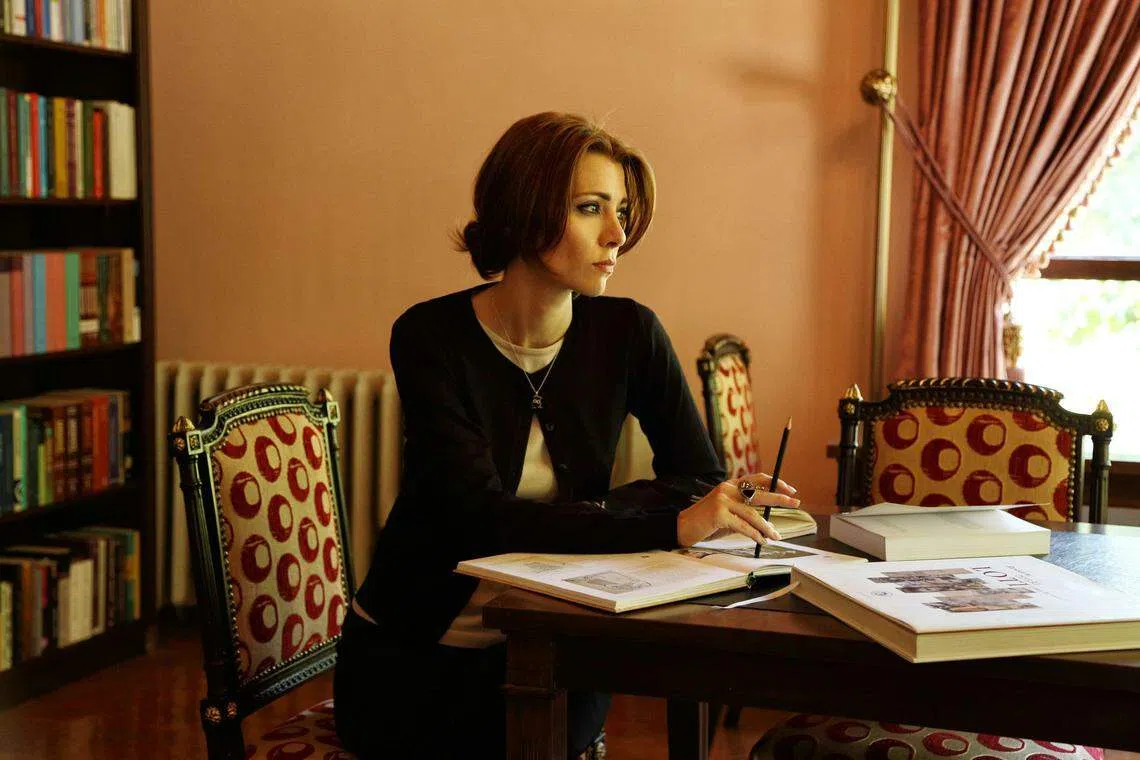
In the mid-2000s, both were charged with “insulting Turkishness” under Article 301 for mentioning their country’s brutal treatment of Armenians and Kurds in 1915. The charges were eventually dropped.
In 2021, Pamuk was again accused of insulting his country in his novel Nights of Plague, which purportedly depicted Turkey’s founding father Ataturk in less than flattering terms.
Some of these artists don’t live in Turkey, which speaks to the repressive climate artists have to operate under. According to PEN America, 15 writers were jailed in 2022 by the Turkish government, making it one of the top 10 jailers of writers globally after countries such as China, Iran, Saudi Arabia, Myanmar and Vietnam.
Refuge for the broken-hearted
Still, art continues to flower in big and small ways. Pamuk, for instance, in 2012 opened a small conceptual museum called The Museum of Innocence.
Over the years, this self-funded museum has become something of a refuge for the forlorn and broken-hearted from all corners of the world. They come to seek solace amid objects that symbolise one man’s undying affection for a woman he cannot have.
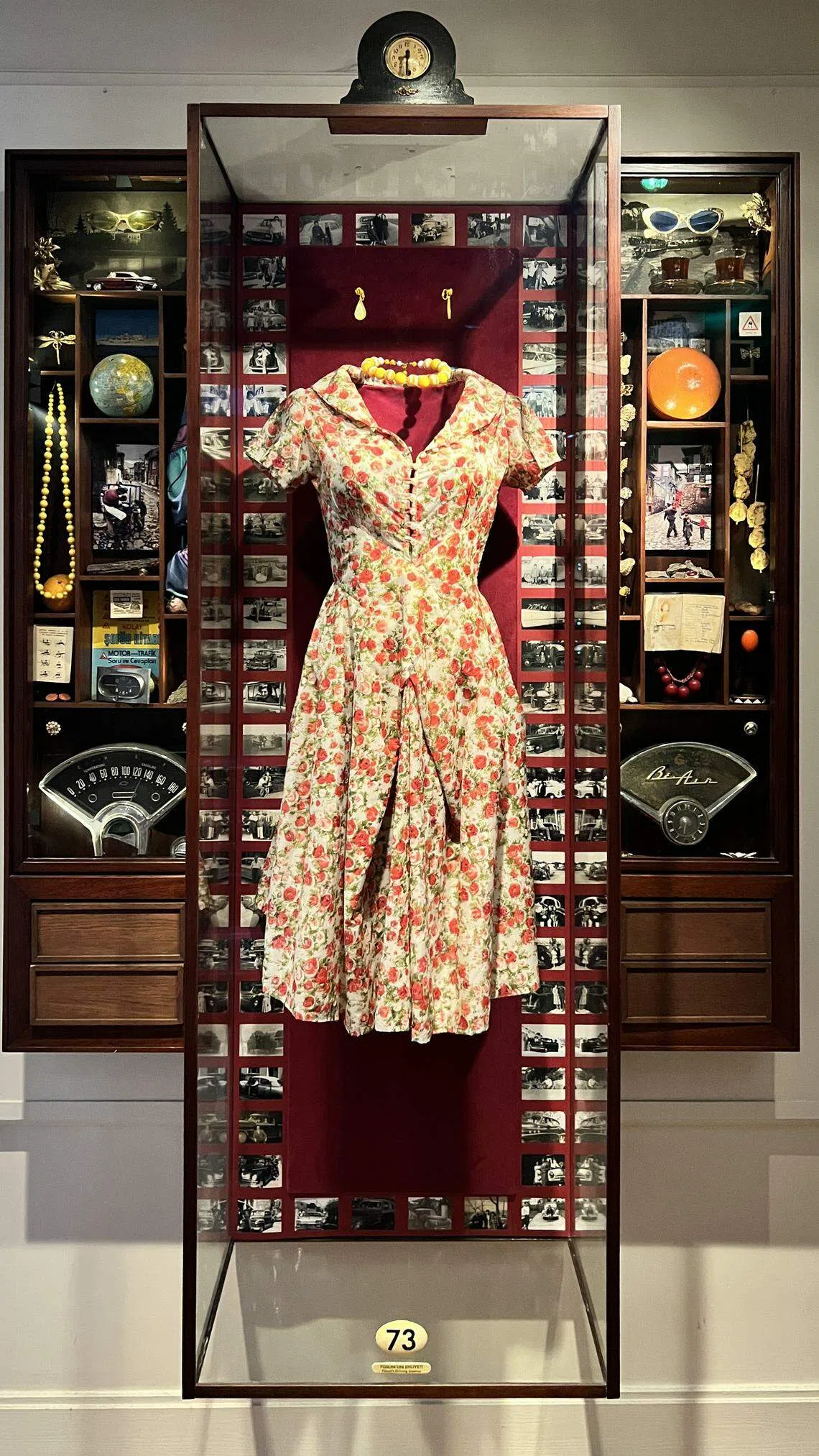
Pamuk had conceived the museum as a companion piece to his 2008 novel, also called The Museum Of Innocence.
The novel tells the story of businessman Kemal who falls in love with shopgirl Fusun – only to have the relationship thwarted by circumstance. In his grief, Kemal opens a museum of innocence that features hundreds of objects and paraphernalia relating to her.
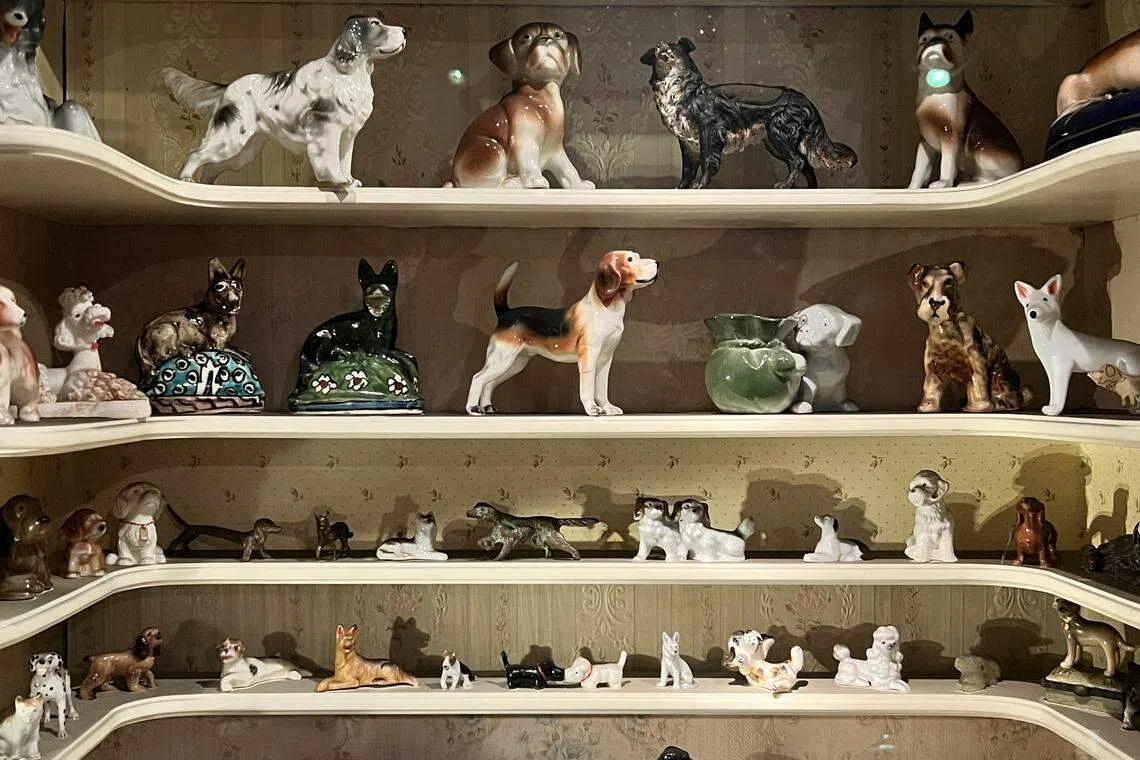
Wandering through the real-life museum in Cukurcuma, one becomes suffused with a sense of longing and melancholy. The beautifully-renovated 19th-century building features glass displays of various memorabilia such as maps, shoes, cigarette butts, ceramic dogs and movie posters – all corresponding to the chapters of the novel. The museum’s audio guide offers excerpts from the novel alongside Pamuk’s personal insights on love, memory and time.
As Pamuk explains his intention for creating the museum, in a statement near the entrance: “Big, state-sponsored museums present the story of the nation as being far more important than the stories of individuals. This is unfortunate because the stories of individuals are much better suited to displaying the depths of our humanity.”
Hence, he says, “it is imperative that museums become smaller, more individualistic and cheaper. This is the only way that they will ever tell stories on a human scale.”
Istanbul is a city rife with conflict throughout history, which continues till today under Erdogan’s iron-fisted rule. But it is also a place for the flowering of original thought and sumptuous culture, as evidenced by its opulent historical sites and top-notch art institutions.
Here, art finds a way to thrive, in spite of the country’s political and economic struggles.
Decoding Asia newsletter: your guide to navigating Asia in a new global order. Sign up here to get Decoding Asia newsletter. Delivered to your inbox. Free.
Copyright SPH Media. All rights reserved.






