It’s Christmastime in the cosmos
 Add BT as a preferred source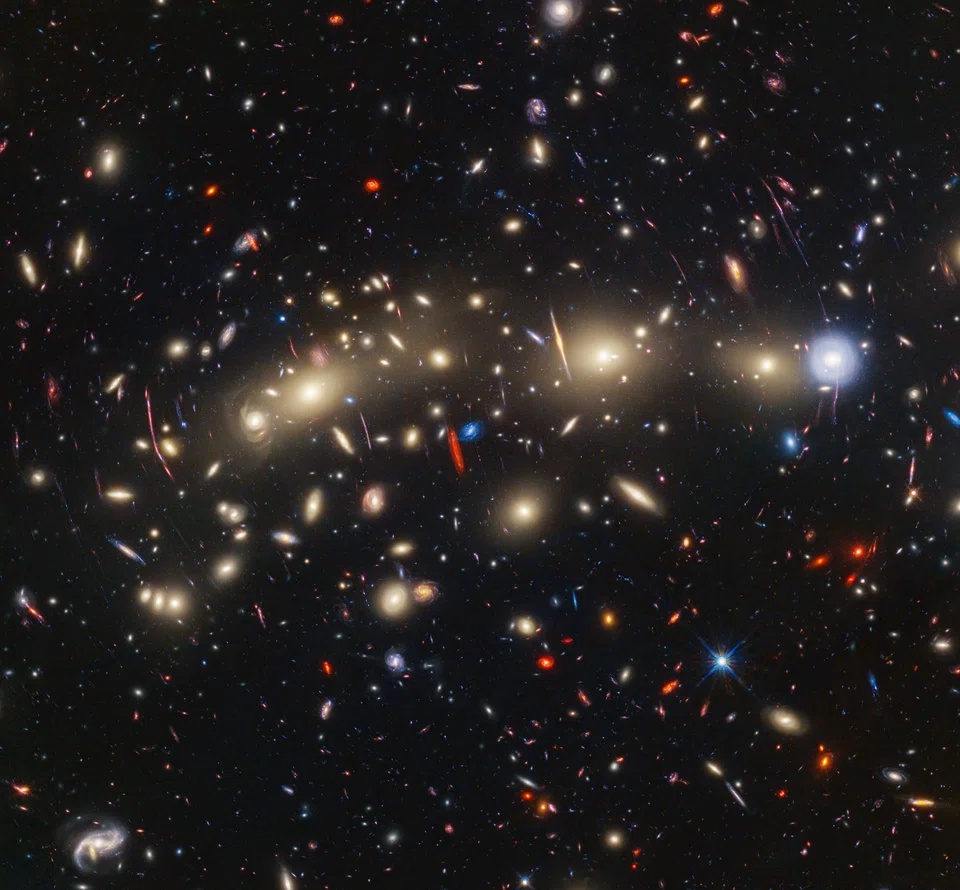
DeeperDive is a beta AI feature. Refer to full articles for the facts.
FOR astronomers peering into the depths of the universe, Christmas came a little early this year.
Using data from the James Webb Space Telescope, the National Aeronautics and Space Administration (Nasa) released an image last month of a Christmas Tree Galaxy Cluster, a winking collection of galaxies 4.3 billion light years from Earth.
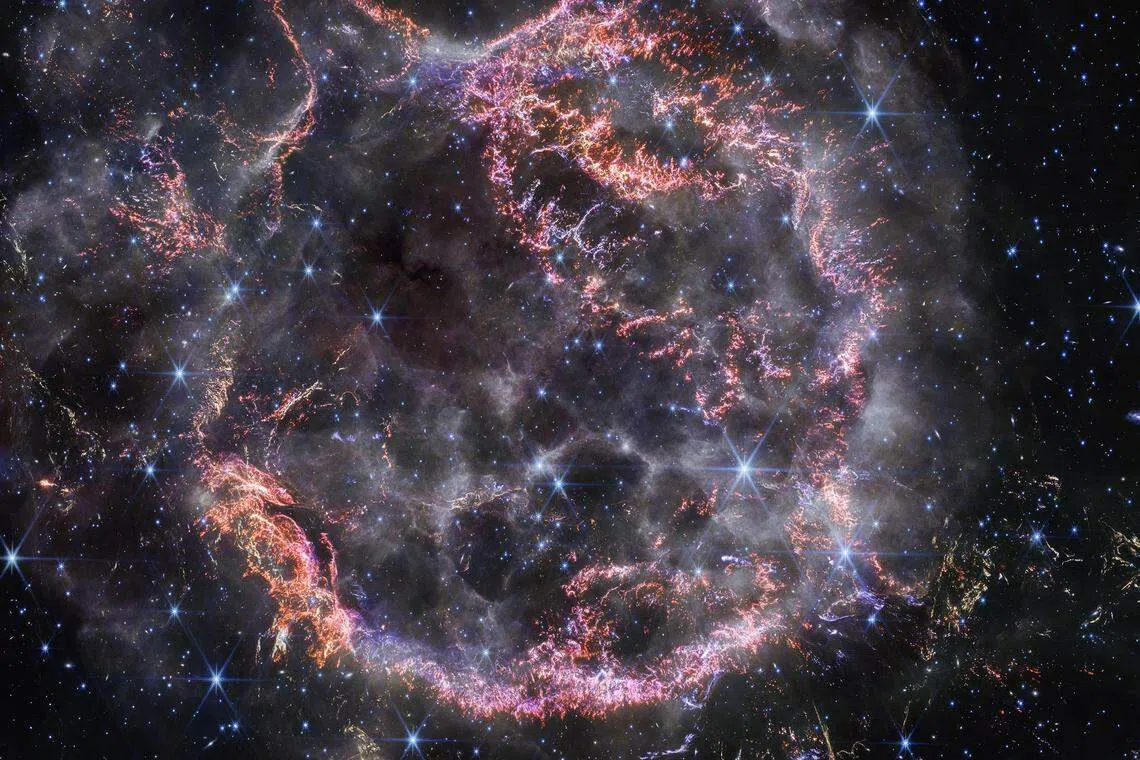
And last week, an image of Cassiopeia A, the remains of a star that exploded 340 years ago, was also unveiled by US First Lady Jill Biden, as part of a new White House advent calendar.
These images and others follow a tradition of astronomers and other stargazers connecting the season of light with cosmic phenomena occurring light years from Earth. But there is scientific wonder involved in some of these observations.
Underlying the Christmas Tree Galaxy Cluster was a detection by astronomers of 14 stars that flicker over days or months – like the lights on a Christmas tree.
“Seeing an individual star in a faraway galaxy is a big deal,” said Yan Haojing, an astronomer at the University of Missouri who led the study. “Almost like a miracle.”
Navigate Asia in
a new global order
Get the insights delivered to your inbox.
Detecting distant stars used to be a rare treat. “With Webb, this has become routine,” said Rogier Windhorst, an astronomer at Arizona State University who was involved in the discovery.
The observations are possible because of layers of gravitational lensing, an effect by which the gravity of structures in the universe distorts and magnifies the light of objects in the background, making them visible to astronomers. The flickering of the stars is a result of those “lenses” moving in and out of focus.
Windhorst notes that the Earth and Sun are about as old as the light arriving from this twinkling cluster, which, at the time that light was emitted, was already nine billion years old. Data about such distant stars helps astronomers compare the make-up of ancient galactic neighbourhoods with those that are nearer to us, and how our solar system fits into what Windhorst calls the cosmic circle of life.
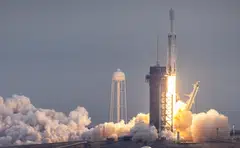
Compared with the Christmas Tree Galaxy Cluster, Cassiopeia A is a lot closer to home. Scientists have long studied the violent stellar explosion and others like it to figure out their role in cosmic evolution.
“They help galaxies grow,” Danny Milisavljevic, an astrophysicist at Purdue University who studies Cassiopeia A, wrote in an e-mail. Supernova remnants also create the elements needed to sustain life, such as “the oxygen we breathe, the iron in our blood, the calcium in our bones”, he added.
At 11,000 light years from Earth, Cassiopeia A has been observed by a variety of space telescopes in visible, X-ray and infrared wavelengths. But the Webb’s new infrared vision affords a better view.
In April, Nasa released an image of the supernova remnant using the telescope’s mid-infrared instrument. The latest snapshot makes use of the Webb’s near-infrared camera, which captured gas, dust and molecules radiating at warmer temperatures.
The pink and orange structures, enveloped in smoky material against a glittering backdrop of stars, resemble an ornament hanging from a tree branch.
“Two years ago, Webb launched flawlessly on Christmas morning,” Milisavljevic said. “At the time, I thought it was the best Christmas gift ever.” But the telescope, he added, is “the gift that keeps giving”.
Long before the Webb launched, astronomers often found seasonal spirit in space.
In 2008, the European Southern Observatory shared an image of a cluster of stars resembling the sparkling trinkets one might put on a Christmas tree. Captured by La Silla Observatory in Chile, the cluster is scattered among crimson clouds of gas. At the bottom of the image is the aptly named Cone Nebula, a star-forming region about 2,500 light years from Earth.
The Hubble Space Telescope from Nasa has also spread the holiday cheer. In 2010, the space agency released an image of a red bubble that looked like an ornament floating amid the stars.
That bubble is gas blasted away at millions of miles an hour by a supernova. Astronomers think the explosion was triggered by a white dwarf – the core of a star that has run out of fuel – gorging on material from a neighbouring star.
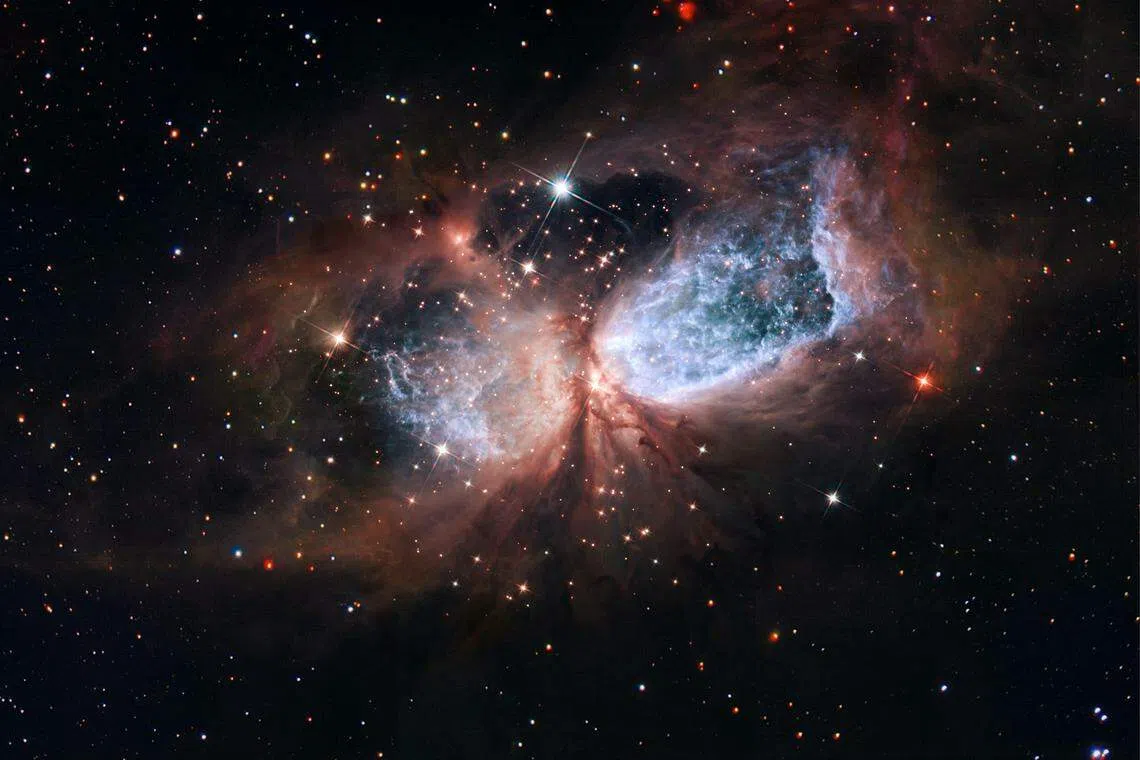
One year later, the Hubble dropped a breathtaking image of a cosmic snow angel: a star in our galaxy flanked by wispy blue “wings” of hot gas.
Even the cosmos is wishing you happy holidays.
Decoding Asia newsletter: your guide to navigating Asia in a new global order. Sign up here to get Decoding Asia newsletter. Delivered to your inbox. Free.
Share with us your feedback on BT's products and services