

With its future at stake, the Academy tries to fix the Oscars (again)
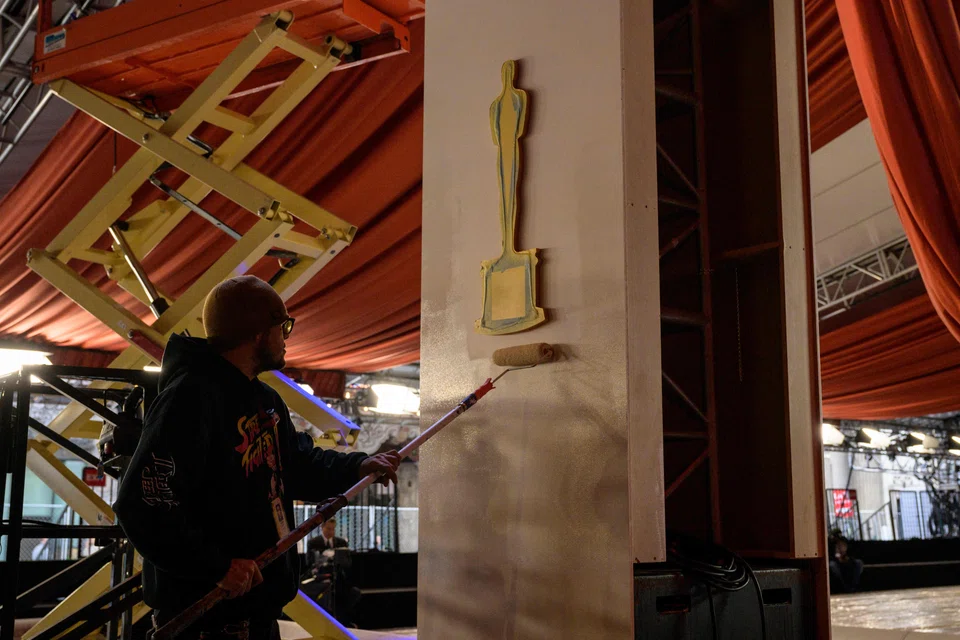
THE stage design for the 95th Academy Awards on Sunday (Mar 12) is more Doctor Strange-modern and less Dowager Countess-musty. That means plentiful video screens, including ones that cover the sides of the theatre, with nary a Swarovski crystal curtain – the old standby – to be seen.
Unlike last year, when eight categories were awarded during a non-televised portion, all of the Oscars will be handed out live on air. To make the telecast interactive and help viewers better understand crafts categories, such as sound mixing and art direction, QR codes will appear before commercial breaks to direct viewers to Internet vignettes about the nominees and behind-the-scenes footage and photos.
To reinvigorate the red carpet preshow, Oscars organisers hired members of the Met Gala creative team. Expect much more star power, specialised lighting (to make a process that happens in daylight seem more like evening) and better integration with the theatre’s entrance.
But some of the most important changes – part of an urgent effort to help make the Academy Awards more relevant to young people and draw a broader international audience – involve things that most viewers won’t notice.
The Academy of Motion Picture Arts and Sciences will post videos of acceptance speeches in the six biggest categories in near real-time on TikTok and Facebook, and all speeches will quickly be posted on Twitter. In a first, Disney+ will stream the Oscars show live in parts of Europe.
The academy has also sought out new marketing partners like Letterboxd, a social media site for movie fans – 8.4 million members, most of them aged 18 to 34 – in a sad-but-true admission that it must convince people that they should care about the Oscars.
“We didn’t have to before,” Janet Yang, the academy’s president, said in an interview at the organisation’s Beverly Hills offices. “We could rest on our laurels and just let it carry itself.”
One might respond with exasperation: You’re only now figuring that out? Perhaps the time to pull out all the stops to keep the Oscars vibrant was five years ago, when the telecast, for the first time, attracted less than 30 million people, a 20 per cent decline from the previous year.
Since then, the number of viewers for the Academy Awards has dropped another 37 per cent, according to Nielsen’s data. About 16.6 million people watched Coda win the Oscar for best picture at the most recent ceremony, with viewership swelling after Will Smith slapped Chris Rock onstage late in the show.

But Yang can’t be held responsible. She was elected president only in August. The academy also has a new chief executive for the first time in 11 years; Bill Kramer, the former director of the Academy Museum of Motion Pictures, was appointed to that role in June.
Together, Yang and Kramer have brought a blast of fresh air to the stuffy organisation, working to improve transparency, calm a membership revolt over last year’s removal of several categories from the live Oscars telecast, and shore up the academy’s wobbly finances.
In the past, Yang said, “a lot of cultural institutions felt like they should be sitting on a hill, a little bit more protected, almost untouchable”. She added that the academy itself felt “ivory tower-ish”, but that it was now “a different time” and “a different culture”.
ABC has exclusive rights to broadcast the Oscars ceremony until 2028 and provides the academy with about 80 per cent of its annual revenue. Last year, Oscar-related revenue was US$137.1 million, according to financial disclosures. Awards-related expenses totalled US$56.8 million.
The TV network generated an estimated US$139 million across 70 commercials during last year’s show, according to Vivvix, which tracks ad spending. (To compare, ABC pulled in about US$129 million across 56 ads in 2020.) A red-carpet preshow brought in an additional US$16 million in advertising revenue.
To secure a distribution contract of similar value when its deal with ABC expires, the academy must reverse viewership declines. A less lucrative deal could imperil some of the organisation’s year-round activities, including film restoration. “This is so important to the livelihood and future of the organisation that we better confront it,” Yang said.
Linda Ong, the chief executive of Cultique, a consulting firm in Los Angeles that advises companies on changing cultural norms, said that people were still interested in the award show’s winners and the things they had to say. The problem for the academy, she said, is that “people don’t feel the need to watch the show to be part of the conversation”.
“They just watch some clips on social,” she added.
Ong noted that, in a once-unthinkable move that speaks to the Oscars’ fading relevancy, the season finale of HBO’s hugely popular post-apocalyptic drama, The Last of Us, will broadcast head-to-head against the ceremony. “That’s a big cultural tell,” she said.
The academy is hopeful that Nielsen’s ratings meters for the Oscars will tick upwards on Sunday. Big musical stars, including Rihanna, are scheduled to perform their nominated songs; Lenny Kravitz will perform during the In Memoriam segment. Lady Gaga will be absent, though, with Oscars producers saying on Wednesday that she was too busy filming a movie to perform her nominated song from Top Gun: Maverick.
The nominee pool for best picture has never before included more than one billion-dollar ticket seller, according to box office databases, and this year there are two. Top Gun: Maverick collected US$1.5 billion, and Avatar: The Way of Water took in US$2.3 billion. The front-runner for best picture, Everything Everywhere All at Once, generated US$104 million in ticket sales. (Viewership tends to increase when popular films are nominated.)
If nothing else, the academy is hoping for a smooth show on Sunday. In the past, the academy started to plan for the Oscars as late as November. This time, planning started in June.
“It should be about unity and celebrating this industry,” Kramer said. “People are still consuming movies. People love movies. Perhaps they’re doing it on streaming more than they did a few years ago. But our art form is as relevant as ever.” NYTIMES
Decoding Asia newsletter: your guide to navigating Asia in a new global order. Sign up here to get Decoding Asia newsletter. Delivered to your inbox. Free.
Share with us your feedback on BT's products and services
TRENDING NOW

Once staunchly pro-China, Malaysian Chinese businesses are now distancing themselves from Beijing

‘How many will survive?’: Bubble fears arise as China’s humanoid robotics face reality check

Philippine power giant First Gen rebuffs foreign offers, plans up to US$2.6 billion in expansion
Indonesia imposes US$116 million in fines over manipulation of Sinar Mas, Prajogo-linked stocks

