

Jabeur and Vondrousova finesse their way to Wimbledon final
After the exit of the Big Three, the women’s game produces another unpredictable championship showdown
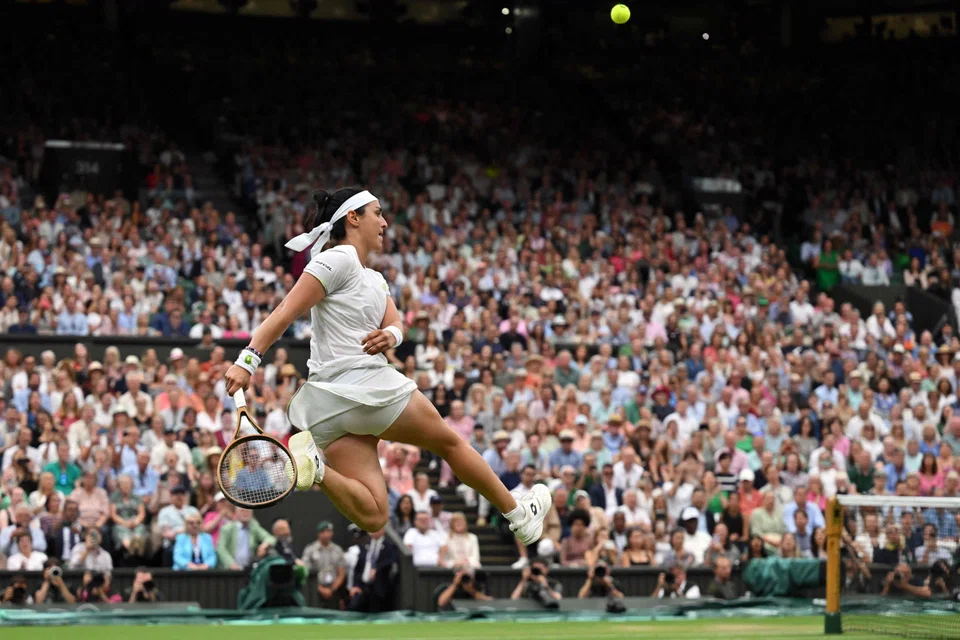
ON THURSDAY, the Wimbledon women’s singles final held the possibility of featuring a new mother from Ukraine taking on a player seeking to become the first woman from an Arab country to win a Grand Slam singles title, or her facing a Belarusian in a match that would overflow with wartime tension.
By the end of the day, Elina Svitolina of Ukraine was out of the tournament, but Ons Jabeur’s dream was still alive after a stirring comeback win over Aryna Sabalenka of Belarus.
Sabalenka would have become the new world No 1 player with a win on a hostile Centre Court, but instead it was Jabeur, the crafty and athletic Tunisian, who showcased her skills and plenty of grit in a three-set victory.
Jabeur has a date in Saturday’s final (9pm, Singapore time) against Marketa Vondrousova of the Czech Republic, who earlier in the day ended Svitolina’s improbable run in straight sets.
Vondrousova has a deceptively slim resume but a penchant for ruining sentimental narratives. At the Tokyo Olympics in 2021, Vondrousova eliminated Naomi Osaka, the national hero and international star who lit the Olympic cauldron at the opening ceremony, en route to winning a silver medal.
Against Svitolina, she displayed all of the best skills that make up her varied game – wristy, rolling forehands; drop shots; and a thirst to move towards the net to finish points at every opportunity.
Being left-handed also helped. It generally forces opponents to adjust to different spins than they normally face and to switch the direction of their attack in their efforts to get the ball onto her backhand.
Not many considered Vondrousova a potential finalist when Wimbledon began a fortnight ago. At last year’s tournament, she was in a cast, recovering from wrist surgery and watching her friend and doubles partner Miriam Kolodziejova in the singles qualifying tournament before spending a week as a tourist in London.
Vondrousova, 24, had never made it past the second round at Wimbledon in four tries. She has never fancied herself as much of a grass-court player, though her game, which has some pop when she needs it but doesn’t rely on power, bears a striking similarity to that of Jabeur, who also made last year’s final.


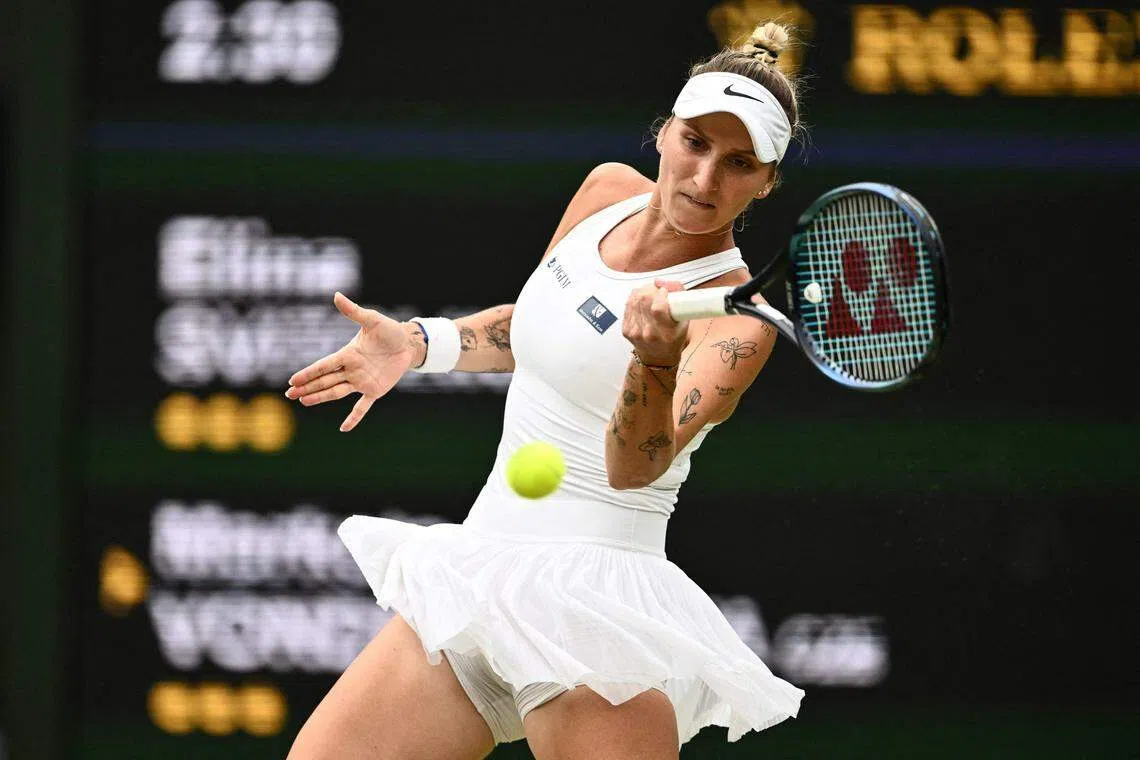
“I feel like we’re the same in some things,” Vondrousova said of Jabeur. “We’re playing drop shots. We’re playing slice.”
When Wimbledon started, there was plenty of chatter about the women’s game having a new “Big Three” in Sabalenka, Elena Rybakina and Iga Swiatek, the winners of the last four Grand Slams. All three are tall and powerful, and they often blow their opponents off the court.
The last two women standing, though, are Vondrousova and Jabeur, who beat Rybakina on Wednesday before toppling Sabalenka. Jabeur turned Thursday’s match late in the second set with two breaks of Sabalenka’s serve when she desperately needed them.
On set point to even the match, Jabeur banged a backhand down the line off Sabalenka’s second serve and jogged to her chair with her finger to her ear, as if the crowd could scream any louder for her. Then she took that finger and wagged it in the air as Sabalenka walked closer to her.
Jabeur, 28, came within a set of winning this tournament last year, and she received a hero’s welcome at the airport when she returned to Tunisia. She’s the highest-ranked African or Arab player, male or female, in tennis history, and it’s no secret that a Wimbledon title is her dream.
Last year, a photograph of the women’s singles trophy was the background of her phone display. She has said there is a trophy on that screen again this year, but she has not publicly said which one.
Jabeur, whose nickname is the “Minister of Happiness” because her almost always cheery demeanour and optimistic outlook can feel unique in an era when so many players struggle with their mental health, said looking at a trophy works for her.
“I like to know exactly what I want,” she said. “I know if I want that thing so bad, I will get it.”
That, giving her all and playing with much emotion and joy, she said, is what keeps her motivated.
“It comes with pressure, yes, I understand that, but it’s something that I want so bad,” she said of the trophy picture. “I believe that I can do it as long as I’m giving everything that I can, as long as I know where I’m going. I think it will help me a lot.”
She has knocked off four Grand Slam winners on the way to the final, surviving one of the toughest draws in the tournament and three three-set matches.
Now she will try to win one more match and the most important title in the sport against a player who has beaten her twice this year.
“I’m going for my revenge,” she said with a smile. NYTIMES
Decoding Asia newsletter: your guide to navigating Asia in a new global order. Sign up here to get Decoding Asia newsletter. Delivered to your inbox. Free.
Share with us your feedback on BT's products and services
TRENDING NOW

Fed hike throws Singapore banks a margin lifeline; UOB most likely to feel impact

He built the Vingroup empire. Now South-east Asia’s richest man is handing some key roles to his sons

Real-estate veteran Desmond Sim quits from CEO roles at Realion, ETC
Chagee, Mixue and Luckin won the market. Sustaining their edge is the harder part

