

Japan's decade-long wait for sumo champion ends with Kotoshogiku
Tokyo
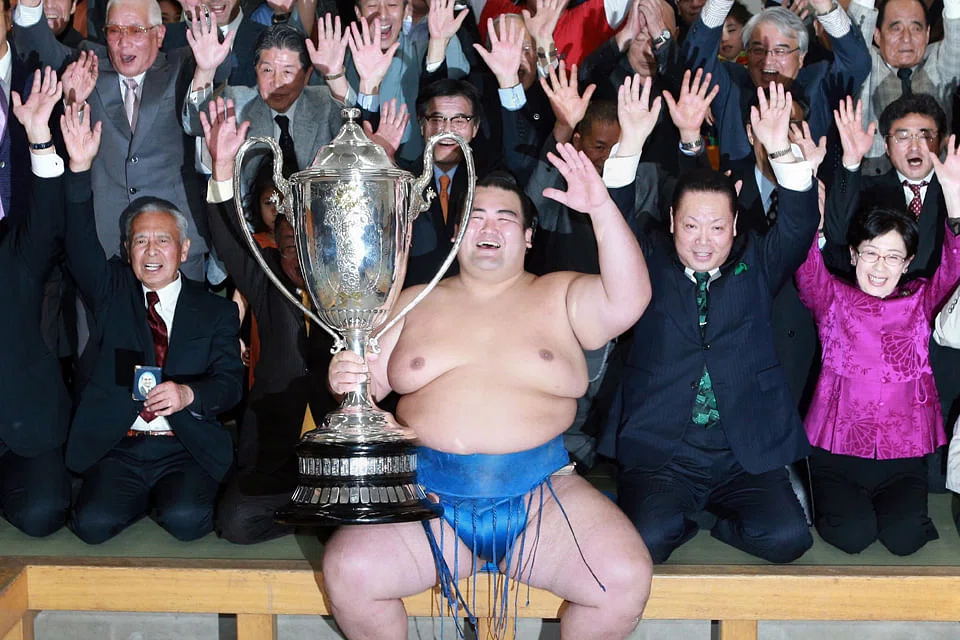
IN Tokyo last weekend, sumo wrestler Kotoshogiku won the first of the year's six top-level tournaments. The result was big news because of his nationality: Japanese.
Since the 1990s, foreigners have come to dominate the top level of sumo, Japan's national sport. Though there are six two-week top-tier tournaments, or honbasho, every year, Kotoshogiku's victory on Sunday was the first for a Japanese wrestler in 10 years. Over the past decade, tournaments have been won by a host of Mongolians, but also a Bulgarian and an Estonian - creating an identity crisis among fans and officials of the sport, which has roots that date back centuries.
A sport that seems to embody Japan got its first foreign-born champion in 1972 when Jesse Kuhaulua, a Hawaiian known by the sumo name Takamiyama, won the Nagoya event.
The first true foreign-born superstar was Chad Rowan, a Hawaiian known as Akebono. Rowan - 2m tall and weighing 204kg - was the first foreigner to be named yokozuna, the sport's highest rank. Yokozuna cannot be demoted, and only a handful of wrestlers hold the title at the same time. So being appointed one by sumo's council of elders is considered a high honour as well as a ticket to fame and riches.
Akebono's rivalry with the Japanese brothers Takanohana and Wakanohana, two other yokozuna, sparked the sport in the 1990s.

But when the wave of stars from Mongolia - which has its own rich wrestling tradition - came into the sport around the turn of the century, there were few Japanese who could challenge them.
The first great Mongolian, Asashoryu, won 25 top-level tournaments, but ruffled feathers in Japan, as several of the foreigners have, for behaviour seen as not in keeping with sumo tradition. Celebrating excessively (or indeed at all), for example, is considered a violation of the sport's strict decorum.
Despite this code, the sport has recently had its share of scandals, including allegations of match fixing.
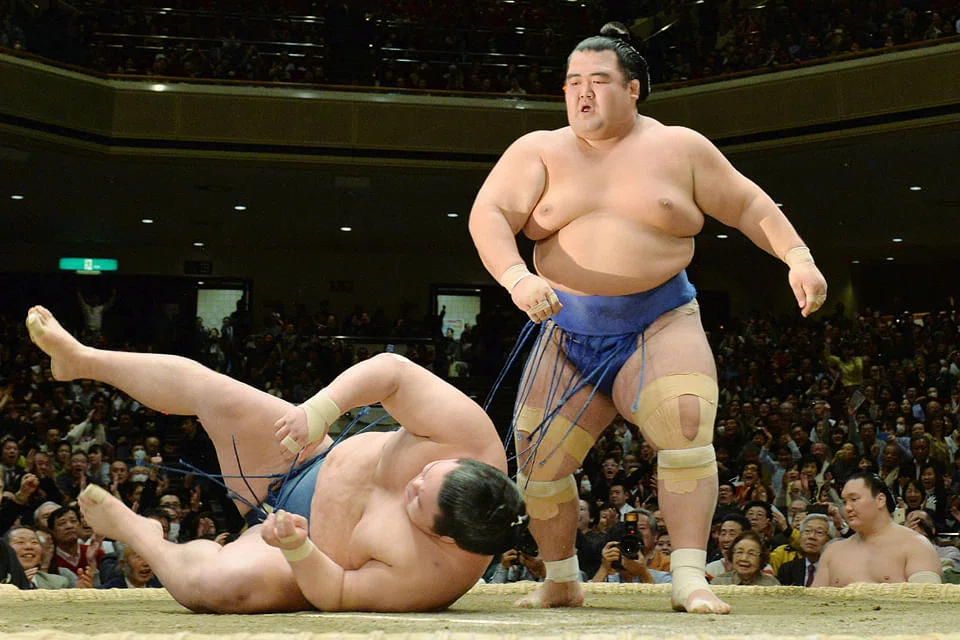
The current Michael Jordan of sumo is Hakuho, a Mongolian who has won 35 tournaments over the past 10 years, breaking the record of the 1960s Japanese great Taiho. A honbasho consists of 15 matches, and both Hakuho and Kotoshogiku were 10-0 going into their 11th bouts on Wednesday last week. After the ritual purification of the ring with salt, the much-anticipated match, like most sumo bouts, was over in seconds. Kotoshogiku seized the initiative, pushing Hakuho back and out of the ring.
Kotoshogiku finished the tournament 14-1 to win the title, while Hakuho wound up 12-3 and tied for second with another Mongolian star, Harumafuji.
The rising popularity of other sports with the younger generation, who see sumo as old-fashioned, has been blamed for the dearth of Japanese sumo stars. Soccer, for instance, has grown in popularity, while television ratings for baseball and sumo have slumped.
The drought is reminiscent of those at other nationally iconic events like the Tour de France (no French winner since 1985) and Wimbledon (no British women's winner since 1977, and just one British men's winner since 1936).
Was Kotoshogiku's victory a passing of the torch to a new generation of Japanese stars? Perhaps not. Kotoshogiku celebrated his first top-level win on Sunday at age 31, while Hakuho, with his 34 wins, is still only 30. There are five more tournaments this year, and a nation of sumo fans will be hoping Kotoshogiku is not a one-hit wonder. NYT
Share with us your feedback on BT's products and services
TRENDING NOW

Nvidia reinstates Jensen Huang as CEO; Trump says move poses no national security risk

Beyond the greenback, Vietnam’s big borrowers turn to Asian-currency bonds

Indonesia’s coal tycoon Low Tuck Kwong replaced as Bayan Resources president-director

Six workers file employment claims against Crystal Jade Food Manufacturing

