

Keep calm and invest away
With the second edition of The Value Investors, Ronald Chan highlights the need to get informed


THE stock market has often seemed incomprehensible in the past year. In January, video game retailer GameStop's shares rose by almost 2,000 per cent in the span of a month as netizens on the WallStreetBets Reddit thread, determined to make institutional short-sellers hurt, flocked to the stock.
Meanwhile, electric-vehicle maker Tesla saw its market capitalisation grow to become larger than the combined valuation of the nine largest car companies globally in December last year, despite only making up 1 per cent of total vehicle sales last year.
Zooming out further, even the S&P 500 index has been incredibly bullish in the past year. Although Covid-19 continues to ravage many countries around the world and some parts of the US where vaccination rates are low, the index rebounded by more than 90 per cent since its crash in March last year.
Amid this euphoria, there seem to be two types of investor in the market: The optimist who sees opportunity everywhere, and the pessimist who believes that the party will have to end at some point.
If you have stared into this scene of euphoria and tightened your purse strings even further, then you may find comfort that you are in good company. Many other successful value investors would, perhaps, feel the same way that you do.
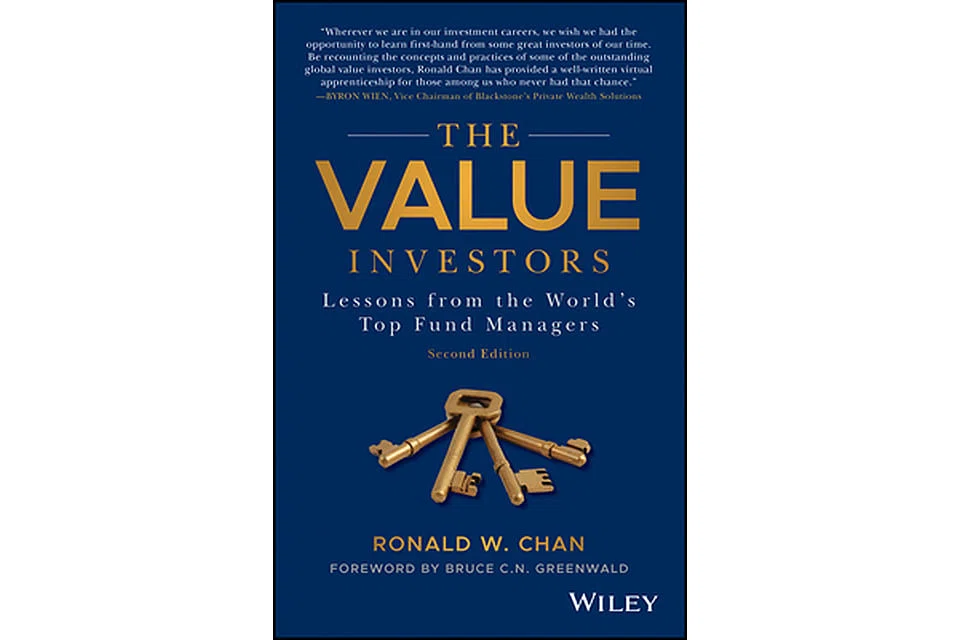
In the second edition of The Value Investors: Lessons from the World's Top Fund Managers, Ronald W Chan brings the world of value investing back into focus at a time when the concept of value seems to have been thrown to the back of everyone's minds.
Each profile in the book begins with a small caricature of the investor as well as a couple of paragraphs describing their investment achievements. As you begin to pore over its pages, certain similarities begin to emerge - of course, one of which is that these investors' funds have all outperformed their corresponding benchmark stock indices.
Aside from their success, value investors maintain discipline in the face of wild gyrations in the market. This confidence stems from their ability to understand market sentiment and identify where they are within market cycles. They are contrarians by default, seeking value in bearish periods and taking profit in bullish periods.
In order to beat the market, you have to leave herd mentality behind too. Value investors further seek to differentiate themselves by being curious about their investments and the world around them. They prefer to calmly draw their own conclusions from speaking to company management or their own insight and experience over the sweaty advice of analysts chasing market sentiment.
Another commonality lies in their frugality, whether inculcated through an investor's upbringing or through their experiences later on in life. It is clear that the value investor is one who avoids losing money as much as possible.
This may seem obvious, but many people who dabble in stock markets do not seem to do much to buffer themselves against such losses. As most of those featured in the book have a fiduciary duty to take great care for the wealth of those they invest for, their aversion to loss leads them to find "margins of security". This means that they also pay a lot more attention to a company's downside too - a trait that could be somewhat lacking in the bull market of today.
But that's where the similarities end. To build these margins of security, different investors find value in different places. Older investors such as Walter Schloss find these margins in "net-net" stocks, or stocks trading at below their working capital per share. More recent players such as Shuhei Abe have taken to the long-short strategy to outperform the market.
Even the type of instruments with which one chooses to invest matters. While most people look to stocks for opportunities, others such as Howard Marks and Kin Chan thrive in credit as an asset class, as they believe that they have found what makes more sense to them.
The art of thinking for ourselves
Yet, Chan also takes care to show that value investing is more art than science. Even the best in the field cannot predict how well their investment ideas will perform against each other, so they diversify. Others have even made basic mistakes like the rest of us, such as caving to friends' advice instead of acting of their own volition.
Perhaps the book's main takeaway is that however you invest your hard-earned money, you should be accountable for your own actions. In a world where TikTok influencers use one-minute clips to shape the investment decisions of many, we ought to think for ourselves and decide where our money can work hardest, for us.
There is a certain joy in finding the right stocks to invest in as well, something that can be easily robbed by clinical dollar-cost averaging into your bank's robo-fund or an exchange-traded fund that tracks the Straits Times Index or S&P 500. Many value investors feel like they have stumbled on treasure others have missed when they find they have hit the jackpot.
More importantly, taking part in capital markets directly gives us a stake in the companies that shape the world around us. Value investors do take note of governance factors to ensure that a company's value can be unlocked with good judgement from management in the future. After all, why would you want to own a stake in a poorly-run business?
Realistically, few of us would ever become ace investors. But more should aim to go on our own informed personal finance journeys. You will gain a better appreciation for how the world works and a sense of peace that you have done right by yourself.
Ronald W Chan's The Value Investors: Lessons From the World's Top Fund Managers (Available at amazon.sg for S$36.80)
Decoding Asia newsletter: your guide to navigating Asia in a new global order. Sign up here to get Decoding Asia newsletter. Delivered to your inbox. Free.
Copyright SPH Media. All rights reserved.






