KGB Museum closes; lipstick gun and other spy relics go on sale
 Add BT as a preferred source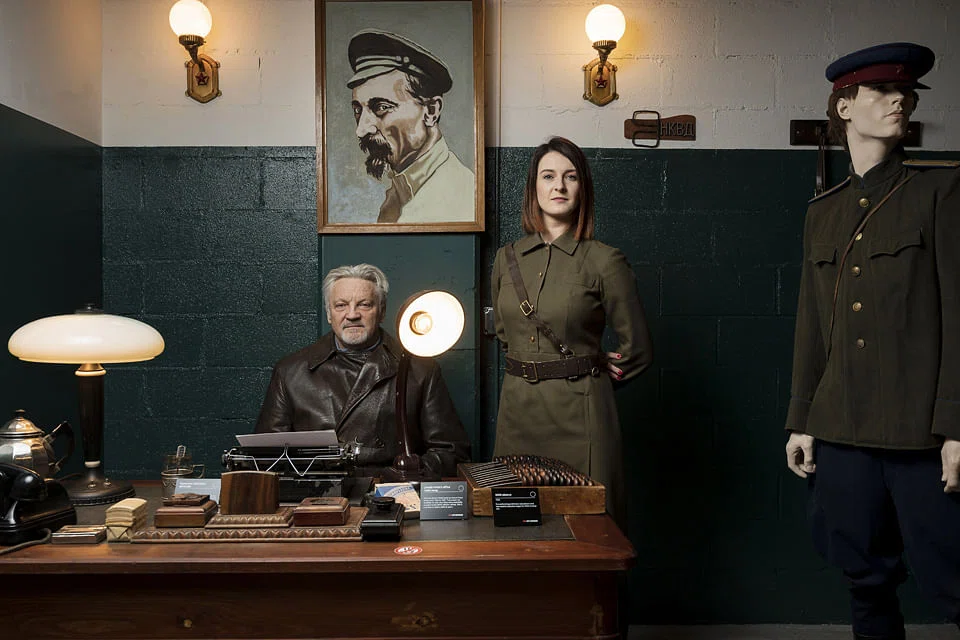
DeeperDive is a beta AI feature. Refer to full articles for the facts.
New York
JULIUS Urbaitis had a grand plan: Take his collection of KGB memorabilia, acquired over three decades, and create a museum in downtown Manhattan. People would come from all over the world to admire Cold War relics like a gun masquerading as a tube of lipstick, a replica of an umbrella with a hidden poison needle and a bronze desk lamp that supposedly sat in Josef Stalin's villa.
The 57-year-old Lithuanian collector filled a warehouselike space in Chelsea with more than 3,500 artifacts related to the KGB, the Soviet Union's intelligence agency and secret police. "My daughter and I have invested a lot of work, energy, heart and many years of collecting artifacts," Mr Urbaitis wrote in an email.
But now that dream is dashed.
Mr Urbaitis said that the KGB Espionage Museum, which opened less than two years ago, is closing permanently and putting up for auction almost its entire collection - billed as the world's largest - after the pandemic made its operations unsustainable. The museum has been shut since March. "It was a difficult decision," he said.
Mr Urbaitis filled the museum, which was a for-profit institution, with items from his personal collection, like a listening device used by Adolf Hitler, and artifacts and replicas acquired specifically for the museum. He enlisted his daughter, Agne Urbaityte, 30, to serve as co-curator. (The father-daughter duo do not own the museum; the owners have chosen to remain anonymous.) The museum included interactive exhibits like a model of a chair used for interrogations and a re-creation of an officer's workspace. It also included original artifacts, like the doors from a KGB prison. Exhibits explained how Soviet intelligence agents pulled off their surveillance, from embedding recording devices in rings, cuff links and dishes to hiding cameras in belt buckles.
Navigate Asia in
a new global order
Get the insights delivered to your inbox.
Mr Urbaitis said he initially feared the museum would not be understood and embraced by visitors. To him, the museum's mission was educational: It intended to show the history of the Cold War era and KGB technologies. "From the first day of the museum's operation, we have had a huge sign that we are apolitical," he added.
He need not have worried, he said: By his measure, the institution was "very successful" in attracting visitors who paid US$25 to enter.
But it never gained the level of recognition as other Manhattan museums, and it attracted criticism for its hands-off political stance. "The genocidal history of the Soviet regime that undergirds the history of it all can easily get lost in the whole Spy vs Spy, Get Smart, 'Moose and Squirrel' vibe," a Smithsonian Magazine writer wrote shortly after it opened.
And there was a dust-up with the International Spy Museum in Washington, DC, which sued the New York institution in January 2019 after it used a similar colour scheme and temporarily listed the phone number of the Washington museum on its website. The International Spy Museum also objected to the KGB museum's use of a ".org" web address even though it is a for-profit institution. (The lawsuit was settled in March 2019; the terms were not disclosed.) Martin Nolan, executive director at Julien's Auctions, which is conducting the sale in Beverly Hills, California, in February, said the museum's collection includes more than 300 lots estimated to fetch anywhere from a few hundred dollars to US$12,000. That high estimate is for a Soviet Fialka code cipher machine, which is capable of producing around 590 quadrillion possible combinations.
Mr Nolan said he anticipates the auction will attract both Russians interested in Soviet history and James Bond fans. "There's a lot of curiosity and fascination around espionage items right now," he said. "Especially with the talk about Russian interference in the election." Still, he thinks the collection from the New York museum will end up in good hands. "The exhibits will go to the museums of the world and to the hands of serious, authoritative and rich collectors," he said. NYTIMES
Decoding Asia newsletter: your guide to navigating Asia in a new global order. Sign up here to get Decoding Asia newsletter. Delivered to your inbox. Free.
Share with us your feedback on BT's products and services