

Kueh Sera Sera
A new book celebrates Singapore's heritage desserts.

Tay Suan Chiang
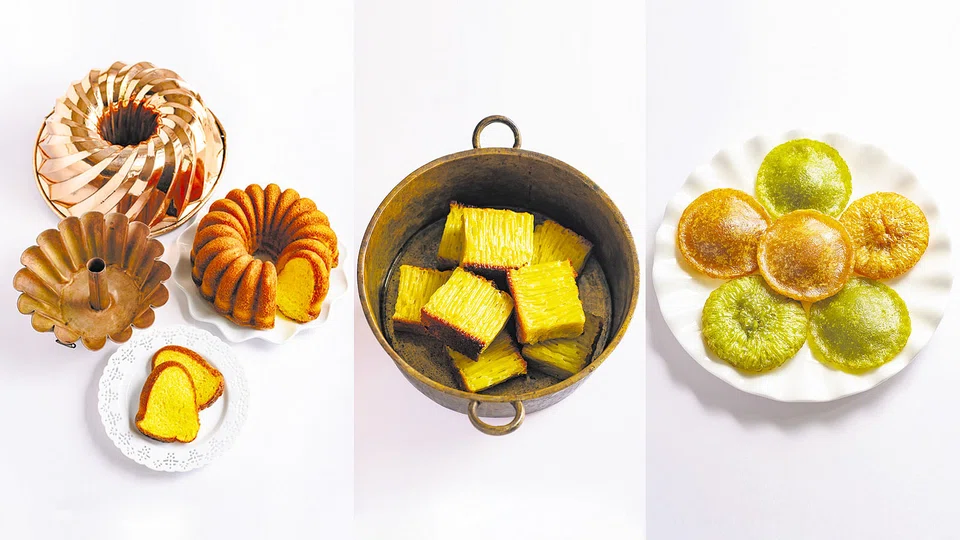
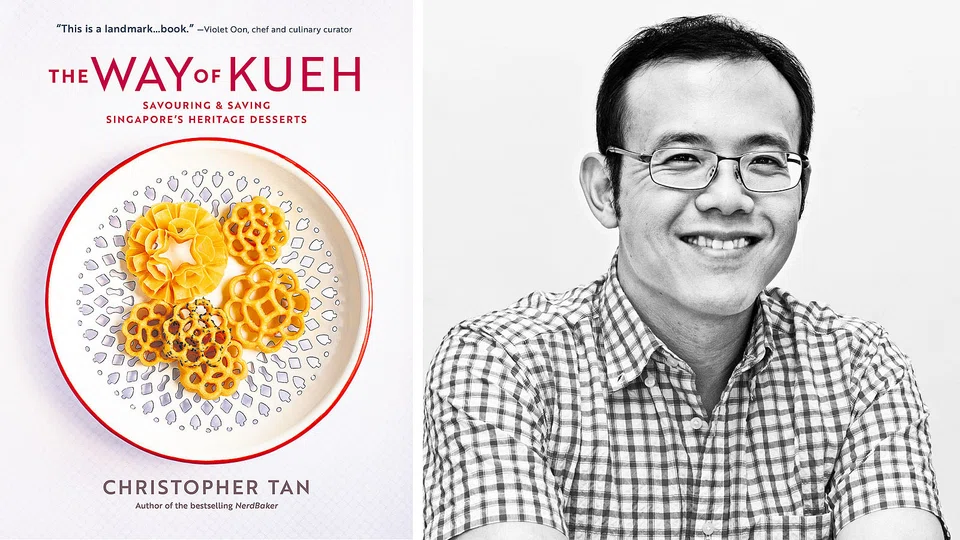
CHRISTOPHER TAN MAY be better known as a nerd baker but he's also a kueh maker with a deep affinity for some of the most esoteric Asian snacks otherwise lost in the black hole of long forgotten childhoods (more your parents' or grandparents' than your own). Now, he's brought them back to life in a modern, millennial-friendly format that proves there's more to the world of kueh than Kueh Lapis Kukus, Chwee Kueh or Kueh Bangkit.
His new book, The Way of Kueh, is a love letter to a lineup of almost extinct kueh such as Kueh Cucur, a spongy pancake-like treat traditional to both Malays and Peranakans; Bluder, a moist and buttery Eurasian specialty with Dutch roots; Qin Beh Kueh, a homey Hokkien kueh made from leftover rice congee; and Bak Kueh, a savoury mungbean-stuffed Teochew-Peranakan creation.
"It is imperative that we record, preserve and continue to cook our traditional kueh recipes, or we may risk losing them for good, along with the rich culture surrounding them," says the award-winning cookbook author, cooking instructor and photographer.
The book also pays tribute to the often unsung veteran kueh-makers who have kept their traditions alive.
He adds, "It is my mission to encourage readers to keep up or revive the practice of making kueh as a group activity for special occasions and festivals, as it really brings us together."
Mr Tan grew up in a Peranakan family, and helping his grandmother to make kueh sealed his emotional connection with the tradition. His drive to research and explore kueh culture started in 2015 and in 2017, he was awarded a Heritage Project Grant by the National Heritage Board, which allowed him to work on the book full time.

Through his research, he discovered how deep and wide the kueh connections run between Singapore and its neighbours. For example, Kueh Cucur is made in the same form in Singapore, Indonesia, Malaysia, Thailand and even South India.
The challenge was in hunting down recipes, as skills were learned through practical instruction, not written notes. He had to scour physical and online archives, some dating back to the 1800s, speaking to 40 veteran kueh artisans and literally figuring things out in the kitchen by praxis.
The book is filled with essays on history, regional connections and colonial influences, as well as 98 recipes for traditional Malay, Chinese, Peranakan and Eurasian kueh, researched and forged from scratch by him.
People may think that kueh-making is difficult and not worth the hassle. But, "Many of them are not particularly hard to prepare," he says. "Home-made kueh can be so much more amazing than ready-made ones that they are absolutely worth the effort."
That's why he's taken great pains with his recipes, which include step-by-step pictures documenting key methods such as leaf-wrapping, dough-shaping and frying, to make it easier to replicate the recipes at home.
"Our food scene is very dynamic, and Singaporeans are always voracious for new things to try, so our attention is constantly being diverted by the latest this and that. But we also need to regularly stop, take a breath and remember who we are," says Mr Tan.
The Way of Kueh, S$51.25 is available at all major bookstores.
Copyright SPH Media. All rights reserved.






