A landmark of black cinema, restored for a new age
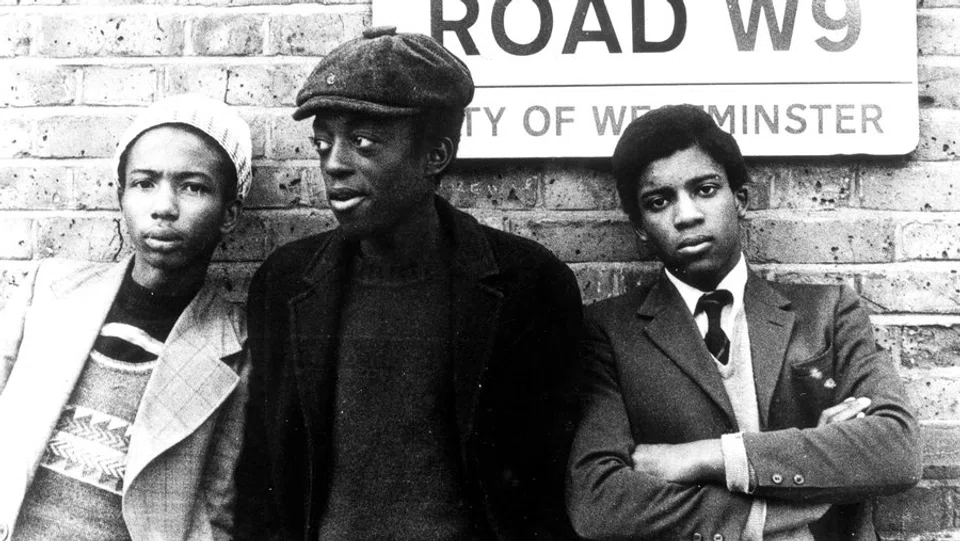
ON A recent rainy evening in London, movie fans gathered at the British Film Institute theatre for a much-anticipated premiere, though the film was made nearly 50 years ago: Horace Ové’s newly restored Pressure, considered the first feature by a Black British director.
Ové died last month, just weeks before his film was set to be celebrated internationally with screenings at both the London and New York film festivals. Herbert Norville, who starred in Pressure when he was 15, said in a speech at the London screening that he hoped the audience saw “what it was like being Black, being British and growing up in an era where racism was rife.”
A roiling social-realist drama shot in 1974, Pressure follows Tony, a young Black Londoner looking for a job and a sense of belonging. He is pulled in several directions: by his activist older brother, by his pious West Indian mother and by white British society, which refuses to embrace him.
Gradually radicalised by encounters with potential employers, a friend’s landlord and the police, Tony reaches a boiling point. In an interview after the screening, Norville, who played Tony, described the film as “pulling no punches” in its depiction of the reality of Black life in London in the ’70s. In an earlier Q&A with the audience, he had noted that the film’s themes of “institutional racism and police brutality” were still relevant in Britain today.
In recent years, mainstream cultural institutions including the Tate museums and the BBC have been giving work made about Black British, and specifically Caribbean, lives more attention. The restoration of Pressure is accompanied by a major British Film Institute retrospective, Power to the People: Horace Ove’s Radical Vision, though in prior decades, the director struggled for recognition from the establishment.
The journey to get Pressure made was fraught. In 1972, Robert Buckler, who produced the film, was working as a script editor for the BBC, looking for stories about “the struggle for ordinary people,” he said in a recent interview. Buckler, who is white, spent part of his youth in the racially mixed London neighbourhood of Peckham, and felt that the BBC’s programming wasn’t “reflecting fully the way our society was changing around us,” he said.
In Britain in the 1970s, the Caribbean Artists Movement was thriving and Black British artists, poets, playwrights and theater directors were making work – just not for mainstream film or TV. Buckler said he approached Ové, a documentarian and photojournalist from Trinidad, to develop a script, but was unable to persuade the BBC to fund a film “about a Black Englishman.” He recalled executives asking, “‘Well, who on earth would be in it?’”
Instead, the British film Institute, or BFI, eventually financed Pressure in 1974. Ové cast a mix of professional and non-professional actors, and the movie debuted at the London Film Festival the following year.
But Pressure did not receive a theatrical release until 1978. “Banned is technically the wrong word,” said Arike Oke, a BFI executive responsible for the organisation’s archive; the delay in reaching movie theatres was more to do with “bureaucratic cul-de-sacs.” But the BFI didn’t “proactively champion the film” at the time, Oke conceded.
Its themes, however, were prescient. In “Pressure,” Tony is beaten by police and arrested after attending Black Power meetings and marches; in 1976, a riot erupted following Notting Hill Carnival in west London, and as Buckler put it, “a sort of warfare between the youth and the police” broke out.
In the same way that New York Magazine would later argue there could be “violent reactions” to Spike Lee’s 1989 film “Do the Right Thing” from Black audiences, Buckler said he wondered if the theatrical release of “Pressure” was delayed because of concerns it would heighten racial tensions.
The British movie industry remained tentative about investing in Black talent for decades after the “Pressure” release, and filmmakers who followed Ové, including John Akomfrah and Isaac Julien, worked mostly in gallery spaces, while Ové worked prolifically in TV. He made only one other theatrically released movie, the 1986 comedy “Playing Away.”
Zak Ové, the filmmaker’s son, said “Pressure” showed “exactly where we’ve come from and the kind of determination that was necessary.” He added that his father’s “honest depiction of a gritty reality” was a part of history at risk of disappearing if it was not honoured.
If it wasn’t for Ové, said Ashley Clark, curatorial director at the Criterion Collection, that history “may not have been captured” at all. The director carved out a space “for Black people to speak for ourselves, in a landscape where a lot of those conversations were being had for us,” he said.
Clark, who is British, but lives in the United States, has championed “Pressure” for several years. He said Criterion plans to release a Blu-ray edition of the movie, and recalled programming screenings at the Brooklyn Academy of Music in New York City, where the film played from “a rickety 16-millimeter print.” With the movie’s cerebral Black Power advocates campaigning for Black rights, Caribbean immigrants striving for middle-class security and disenfranchised Black British youths driven to crime by a lack of opportunity, “Pressure” offers “a meeting of different ideas and forms and embodiments of Blackness,” Clark said.
At the New York screenings of the film, he said, there were “young, trendy Brooklyn people from across the diaspora” asking: Where has this been all my life? NYTIMES
Decoding Asia newsletter: your guide to navigating Asia in a new global order. Sign up here to get Decoding Asia newsletter. Delivered to your inbox. Free.
Share with us your feedback on BT's products and services