Lim Tze Peng: Chronicling Singapore’s evolution – and his own – through Chinese ink
A curated selection traces the progression of his artistic style as well as that of his country, from rustic kampungs to a bustling city

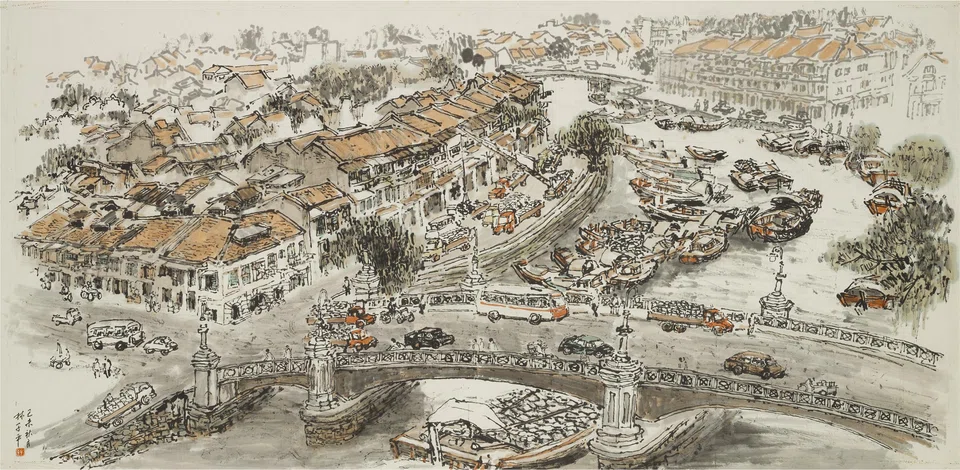
AT 103 years of age, the still-active artist Lim Tze Peng has created a body of work that’s possibly larger than that of any other Singaporean artist – with one estimate putting his output at around 20,000 pieces. Opening this week, his first solo exhibition at National Gallery Singapore has only about 50 works dated from 1946 to 2023. It is thus a small sampling of an extensive oeuvre that has outlived multiple eras of Singapore’s transformation, from its pre-independence days to its rise as a wealthy metropolis.
Lim’s art chronicles this remarkable journey. His early Chinese ink paintings capture the rustic charm of old Singapore – the kampungs, the Singapore River and bustling street markets – before the rapid urbanisation that followed. As Singapore evolved, so did his artistic expression, moving from detailed representational works to more abstract and expressive forms, particularly in his calligraphy. His brushstrokes, once depicting scenes of daily life, now embody a deep, almost spiritual reflection on change, memory and identity.
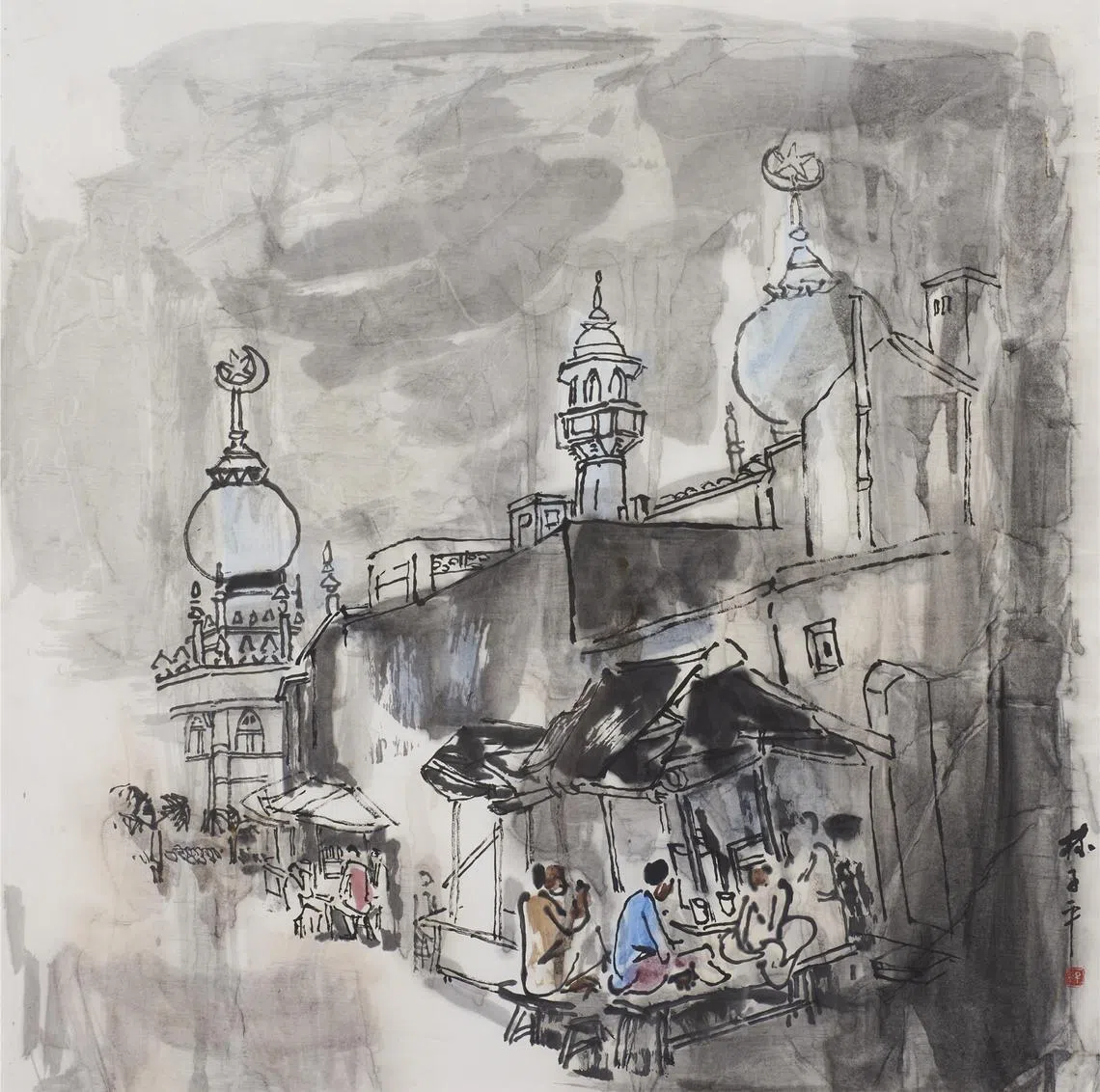
Titled Becoming Lim Tze Peng, the exhibition opens with a large and mesmerising ink painting of a vehicle repair show. Completed in 2015, the work suggests that, even in his mid-90s and with limited mobility (he was partly wheelchair-bound), Lim could capture the essence of time, place and memory, with more precision and vibrancy than much younger artists.
The show then moves to several paintings of the Singapore River – lively, bustling depictions of the country’s commercial activity in the mid-20th century, which demonstrate his keen ability to capture not just the physical landscape but the soul of the city in flux.
Lim didn’t limit his artistic exploration to scenes of Singapore. His subsequent travels across Asia and Europe produced paintings depicting a serene Lake Toba village, rich Sumatran architecture, iconic Parisian cafes, and Florence’s famous Ponte Vecchio.
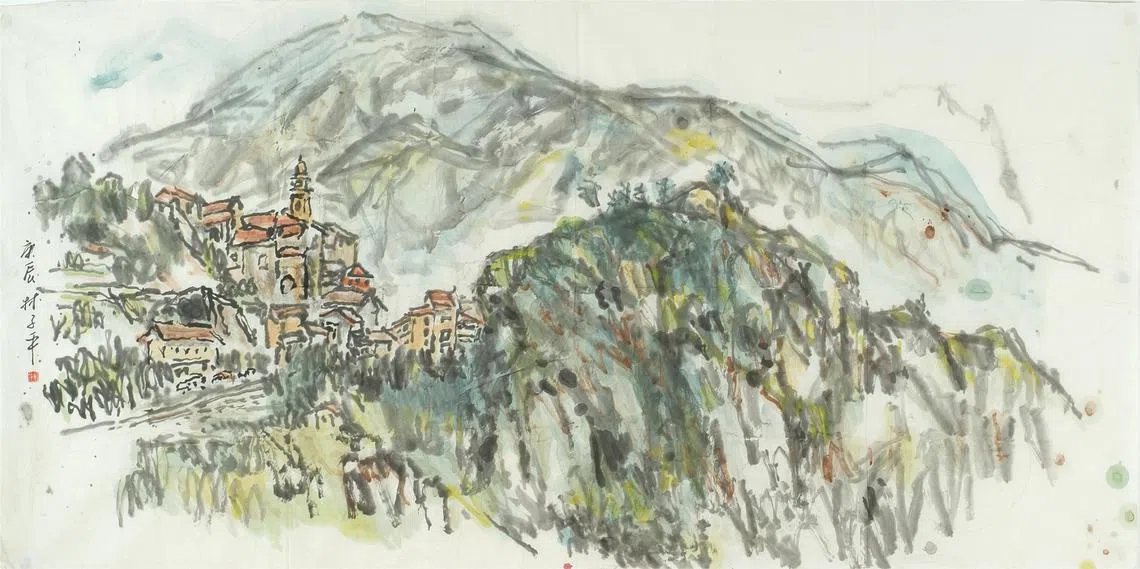
Admittedly, Lim is best when using ink and colour on rice paper, with sweeping and dynamic strokes that seem to dance across the surface. In contrast, his oil and canvas works often feel derivative of Western styles such as expressionism. They lack the emotive power and spontaneity found in his ink pieces, where the immediacy of his brushstrokes allows for a direct expression of his thoughts and feelings.
This distinction is especially evident in his post-2000 works, where he embraces a more abstract and experimental style, exploring the interplay of colour, shape and texture beyond traditional representation. They showcase forms and gestures that feel alive and deeply personal. They also signify a maturation in his artistic voice, where he moves beyond mere observation to an introspective exploration of his inner self.
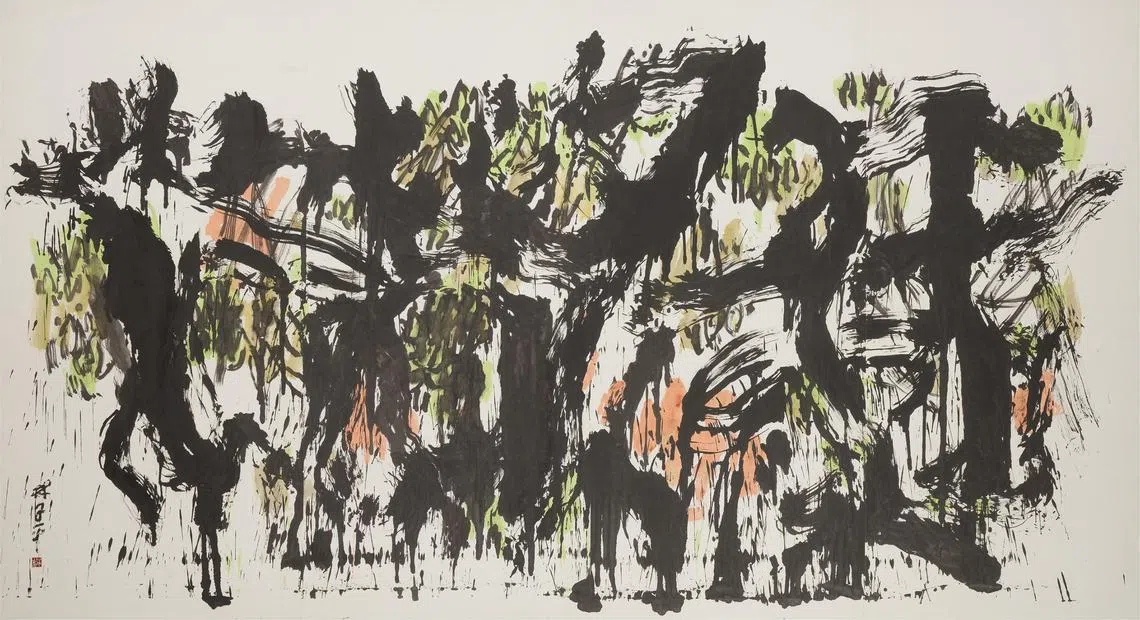
The biggest of these works is Inroads (No 1) (2006), which measures 263 cm by 485.5 cm. Across this large canvas blending calligraphy, abstraction and representation, nothing is explicitly defined, and everything is open to interpretation. Other works from the Inroads series similarly suggest a shifting sensibility that is no longer tethered to everyday narratives and subjects. They invite viewers into liminal spaces to dream and meditate.
Becoming Lim Tze Peng runs at National Gallery Singapore from Oct 25 till Mar 23, 2025
Decoding Asia newsletter: your guide to navigating Asia in a new global order. Sign up here to get Decoding Asia newsletter. Delivered to your inbox. Free.
Copyright SPH Media. All rights reserved.