

Long and wine-ing road: Alsace celebrates its ‘Route des vins’
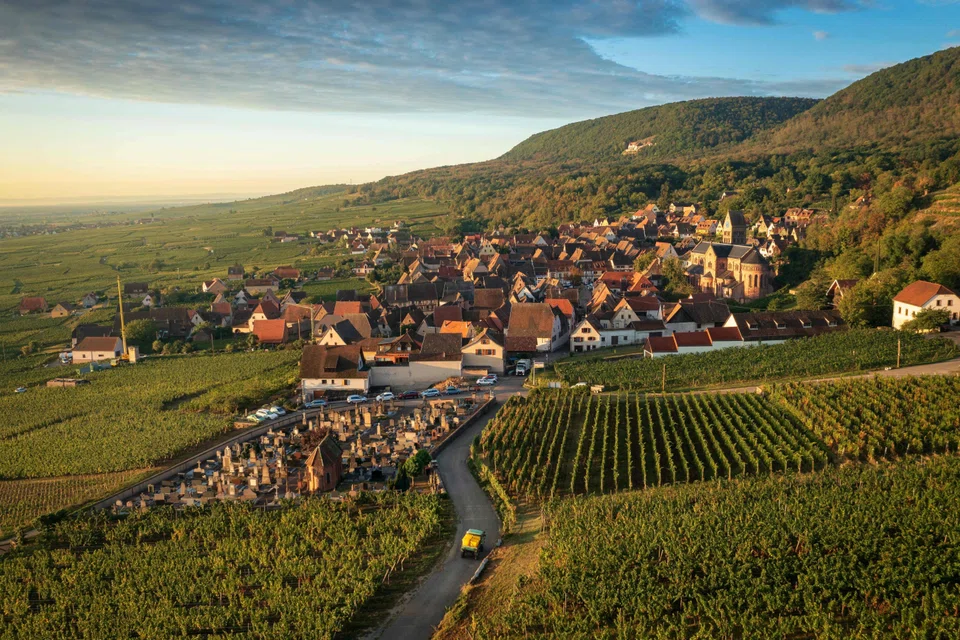
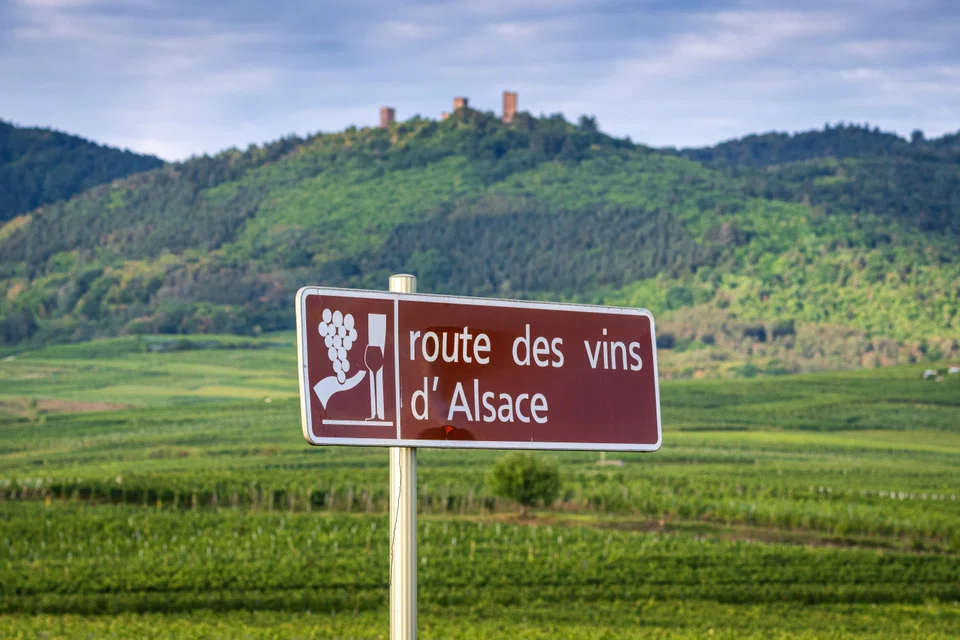
THE big problem with the famously picturesque Alsace Wine Route in eastern France, says Jean-Louis Meyer as he put down his glass of white wine, is that there are so many vineyards where you can stop for a tasting.
In any village along its 170-km length, “there’s at least 10 vineyards offering tastings”, says the Paris wine lover. With such head-spinning variety, “you have to choose”. “So we end up always going to the same places,” says the 69-year-old.
The route through quaint medieval villages and rolling vineyards close to the border with Germany drew 7.7 million tourists last year, nearly half of them from abroad.
It is the busiest in France after the storied wine trails that wind between the prestigious chateaux of Bordeaux and Champagne, but arguably the most scenic, particularly in autumn, when the vines turn a blaze of gold and bronze.
Giant wooden barrels
Seventy years old this year, the “Route des vins d’Alsace”, as it is known in French, sprouted a parallel bike route a decade ago; a walking trail is to follow next year.
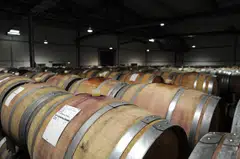
In the village of Goxwiller, Raymond Koenig, 84, proudly shows the giant wooden barrels, each of which can hold 10,000 litres of wine. His family has used these barrels since 1889. He was 14 when the main route was opened in 1953, and he remembers how it helped put the region on the tourist map.
After sampling the pale nectar – now produced by Koenig’s son Christophe – Meyer usually leaves with four or five cases.
Being able to sell directly to their customers is hugely important for the winemakers. “It cuts out the middleman,” says Philippe Bouvet of the Vins d’Alsace – Civa for short – which promotes Alsatian wine. Around a quarter of the winemakers’ income comes from these direct sales, he adds, “much, much more” than in the rest of France.
‘Not just buying wine’
But the flip side of the route’s success is that it has led to a tendency for winemakers to “wait for the customer to come to them”.
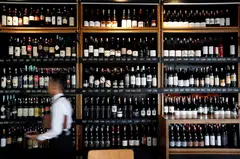
That cannot be said of Celine and Yvan Zeyssolff, who have transformed their vineyard in Gertwiller into an immersive museum, which has become a hit with tourists, particularly from the other side of the Atlantic.
“When we started in wine tourism 25 years ago, people thought we were mad,” says Yvan Zeyssolff.
Coachloads of American tourists turn up there after a cruise on the Rhine. Wine glass in hand, they visit the cellars to watch a film about the history of the vineyard, projected onto the wine barrels.
“They are not just buying a bottle of wine, but also a story. We share our life with them every day,” says the winemaker, whose sales have “exploded”.
Visitor numbers have too, with 20,000 people a year paying the 16 euros (S$23.39) for the tour and tasting. The family has also added a restaurant, tearoom and 28-bed hostel, which is now being expanded.
Celine Zeyssolff puts their success down to the “visibility (that) Internet algorithms” have given them, with websites in both French and English where visitors can make bookings. “People don’t just drop in by accident as they did 20 years ago,” she says.
At Goxwiller, the Koenig family is also looking to a digital future, with 18-year-old Mateo, Raymond’s tech-savvy grandson, studying viticulture. “I have winemakers’ blood, and I am ready to take over,” he says.
Decoding Asia newsletter: your guide to navigating Asia in a new global order. Sign up here to get Decoding Asia newsletter. Delivered to your inbox. Free.
Share with us your feedback on BT's products and services






