
Luxury leather bags could be your next cash cow
Prices won’t stop rising anytime soon, so the time to buy is now, experts say
Russell Marino Soh
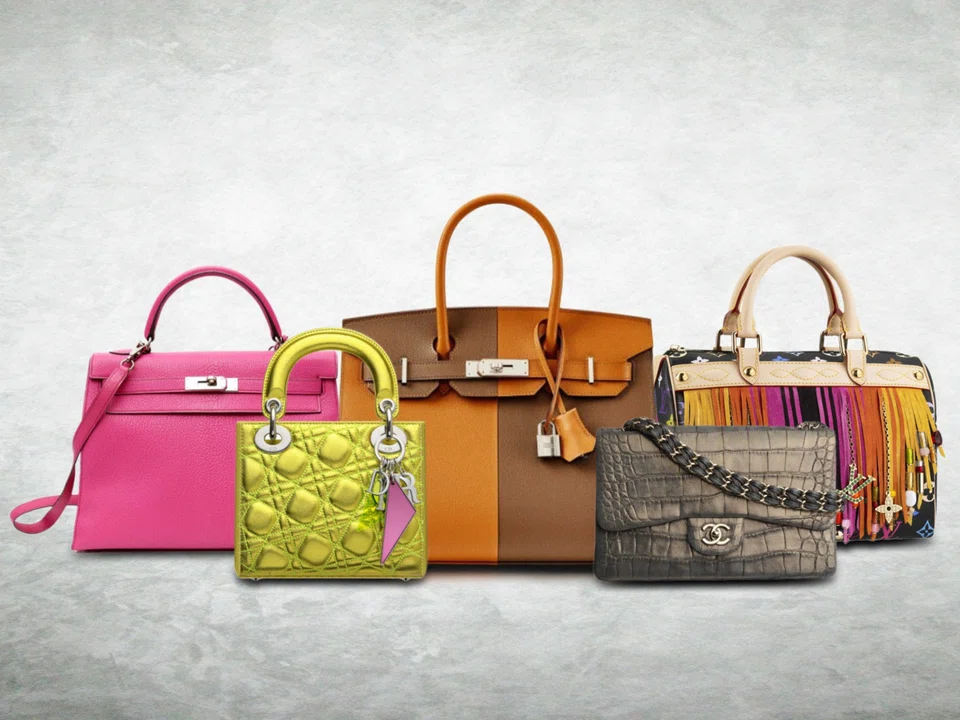
FINANCIAL ruin seems to be hitting all around us. The recent spate of stock crashes, bank runs and crypto collapses might make it seem like there’s no safe haven left for those looking to invest their money. But one option might stay resilient in the face of economic uncertainty – luxury bags.
“Luxury bags can be considered to be a good investment choice,” says Baptiste Le Gal, chief revenue officer for the Asia-Pacific region at luxury resale website Vestiaire Collective. He adds that heritage designs from brands such as Hermes and Dior have become increasingly popular over the last year.
Particular styles – such as Hermes’ Birkin and Chanel’s Classic Flap – have long been known to fetch high prices on the secondary market. Known as investment pieces, the resale values of these bags have consistently risen in the past five years, with dips being few and far between.
But how do bags stack up against other passion investments, and what are their advantages over other items? For one, investing in bags is relatively low-cost, at least when viewed against passion investments such as diamonds and jewellery.
Of course, given the lower entry point by dollar value, the returns on bags are likely to be lower than those of other more expensive items.
Knight Frank’s luxury investment index for 2022 shows that prices for bags rose by 15 per cent on average over a year, and 74 per cent over a decade.
On a 12-month basis, while bags come in below returns for art, cars and watches, those numbers definitely aren’t something to gloss over. After all, on Knight Frank’s index, bags still rank above wine, jewellery and furniture, all of which fall at or below the 10 per cent gain mark.
Certainly, there is money to be made from flipping bags on the secondary market. There is also the fact that bags are a consumer product, and have practical use on a day-to-day basis. This means your pieces can be an investment not only for your wallet, but for your wardrobe, as well. (Of course, you’ll need to maintain them well if you want to fetch a good price for them down the line.)
A foot – or shoulder – in the door
But investing in luxury bags is not as easy as walking into a store and snapping up its inventory. A significant portion of their value lies in their rarity.
Brands typically limit the supply of specific pieces by keeping production numbers low, or by limiting who can buy them through enforcing specific criteria, such as a minimum-spend quota. Most recently, Chanel implemented a purchase limit on its Classic Flap bags, allowing customers to buy just one piece at a time, followed by a two-month wait-out period before the next purchase.
This lack of accessibility, in combination with brand equity – the value derived from a brand’s name itself – are two factors that contribute to the price of a bag, says Sonja Prokopec, professor and associate dean at Essec Business School’s Asia-Pacific campus.
Unless one has access to particularly rare styles from specific brands, luxury bags aren’t quite worth investing in purely for monetary gain, she adds.
“The secondary market is always considered to be a market that is not worth the same as the primary market… There are very few pieces that are actually able to have an increased value on the secondary market, which is basically the point of any investment.”
Prof Prokopec also notes that “ultra-high-net-worth individuals who are already on brands’ VIC (very important customer) lists” would be the best candidates to start investing in bags, since they would likely have the highest access to rare pieces.
Still, even without the promise of gains, buying less-rare luxury bags for personal use with an eye for reselling can help remove a bit of the guilt from dropping those dollars in the first place. While such pieces may not rise in value on the secondary market, they are likely to at least retain a substantial proportion of their original price.
“Through some strategic brand management, brands are able to preserve some of the value (of their bags) on the secondary market,” notes Prof Prokopec, who is also an associate council member at the Singapore Fashion Council (SFC).
Ultimately, though, if your intention is to actually make money off of your cross-bodies and satchels, you’ll need access to exclusive launches and sales, a rosy relationship with your sales associate at each boutique, or better yet, both.
Alternatively, you could start your investment journey by buying from a reseller. But prices for second-hand investment pieces are often already elevated from retail levels, so you’re likely to earn a smaller sum by purely trading on the secondary market.
What to look out for
So which pieces are most likely to get you a profit? Keep an eye out for the classics, says Tresor Tan, chief operating officer at local resale company HuntStreet. The company operates online, as well as through private shopping appointments at its showroom.
“Heritage brands and classic styles like Hermes’ Birkin, Kelly, and Constance, as well as Chanel’s Classic Flap in quilted caviar leather will always remain the most investment-worthy styles in the bag resale market,” she tells The Business Times.
Generally, smaller is better when buying investment pieces. Models in the 20 cm to 25 cm range tend to fetch higher prices than their larger counterparts. And, as mentioned earlier, rarer leathers and limited editions are more likely to fetch a pretty penny, given their scarcity.
Beyond these four styles, it can be difficult to tell if a bag might be investment-worthy, especially when looking at new releases. Citing the final collection of Virgil Abloh for Louis Vuitton before his death in 2021, Essec’s Prof Prokopec says: “There was a piece which… was really coveted on the secondary market, but this kind of thing is hard to predict.”
In general, though, she doesn’t expect many more styles to join the realm of Birkins and Classic Flaps.
Other popular pieces on the secondary market include Louis Vuitton’s Speedy and Neverfull, which were two of the hottest bags sold on Vestiaire Collective in 2022, says Le Gal, who is also a member of the sustainability steering committee on the SFC. “It’s worth noting that Louis Vuitton is really having a comeback at the moment,” he adds.
Concurring, Tan says she has also seen a “resurgence” in demand for Louis Vuitton on HuntStreet, as well as for Celine and Prada. In particular, she highlights a “strong demand” for older Celine designs.
However, it’s important to recall Prof Prokopec’s words here and note that most of these bags rarely turn a profit on the secondary market, as they’re much more accessible than the four main investment pieces. For instance, a Speedy 25, one of Louis Vuitton’s most popular models, can be found for less than or close to its retail price on many resale platforms.
A waiting game
Once you have your foot in the door and decided what pieces to invest in, it’s a matter of figuring out when to buy and sell.
When it comes to buying, now – or maybe yesterday – seems to be the answer. “It’s a good time to buy,” says Vestiaire Collective’s Le Gal, “as prices are likely to keep increasing as (elevated) inflation continues, and we see people still rightfully concerned about investing in the stock market”.
Regular price hikes have been par for the course for years among luxury brands. Since the start of the Covid-19 pandemic, however, these have become more frequent.
In January, Hermes raised its prices by 5 per cent to 10 per cent. Reuters reported the following month that Louis Vuitton was set to implement a price hike of up to 20 per cent in China, on the back of growing demand amid the country’s reopening. And earlier this month, Chanel announced its first price hike of 2023, to take immediate effect.
In Europe, a Birkin 25 in Togo leather and plain hardware from Hermes now retails for somewhere around 7,400 euros (S$10,665), up from around 6,600 euros pre-pandemic.
A scan of listings on Vestiaire Collective reveals many such pieces – mostly used – going for over S$20,000, with some listed for more than S$30,000. Those figures represent returns of almost 100 per cent or more, purely compared against today’s estimated retail price.
So is now the best time to ditch your investment pieces, then?
Not quite. HuntStreet’s Tan notes that there has been a “slight dip in resale pricing for most styles” as a result of economic headwinds. “So we expect resale pricing to come down slightly in the immediate months to come,” she adds.
Yet despite the downturn, there are more people on HuntStreet consigning investment pieces that they bought five to 10 years ago. Tan highlights that it is “almost certain” that such bags will fetch “almost double what (consignors) paid”.
She also says that brands’ price increases affect demand on the secondary market as well. “Whenever a brand announces an impending price hike, we notice that demand for that particular brand or style would almost certainly spike right before the price hike comes into effect,” she says.
Tan adds that this increased demand comes “as consumers seek to obtain their desired item at a lower price than they would have needed to pay if buying directly from the brand after the price increase”.
While resale prices may have dipped, Le Gal notes that the demand for luxury goods on the secondary market has remained resilient in the region, especially with the loosening of pandemic restrictions in Hong Kong and China.
“So we do see them buying more from Singapore customers,” he says.
Still, given the current economic conditions, holding out for the long run is likely to prove profitable.
“As long as one buys the right item in the right condition and right price, it can always be deemed a good investment-worthy piece to hold onto for the next uptick cycle,” says Tan.
“Ultimately, it’s about timing and watching the market.”
Decoding Asia newsletter: your guide to navigating Asia in a new global order. Sign up here to get Decoding Asia newsletter. Delivered to your inbox. Free.
Copyright SPH Media. All rights reserved.
TRENDING NOW
Fed hike throws Singapore banks a margin lifeline; UOB most likely to feel impact
He built the Vingroup empire. Now South-east Asia’s richest man is handing some key roles to his sons
Real-estate veteran Desmond Sim quits from CEO roles at Realion, ETC
Chagee, Mixue and Luckin won the market. Sustaining their edge is the harder part



