

Max Verstappen says a lot by saying so little after a profanity punishment
The frustrated Red Bull Racing driver could end up leaving the sport at the relatively young age of 26
 Add BT as a preferred source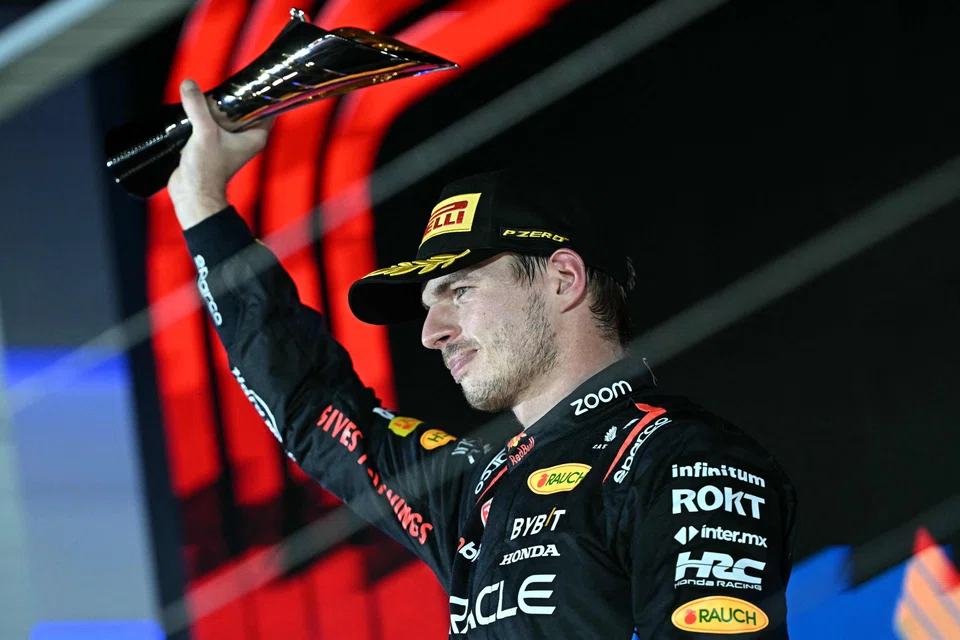
DeeperDive is a beta AI feature. Refer to full articles for the facts.
MAX Verstappen has always made clear that he won’t be on the grid forever, no matter how much he loves racing and winning in Formula One.
Given that he’s the youngest starter and race winner in the sport’s history and one of its most prolific victors, a long career would surely put the win and championship tallies of Lewis Hamilton and Michael Schumacher well within Verstappen’s grasp.
But the 26-year-old Dutchman has never cared for records. Nor has he cared for the at times all-encompassing nature of F1, with an ever-growing calendar.
As he made clear at Zandvoort in August, where he made his 200th F1 start, he is closer to the end of his F1 career than the start – even at such a young age. The thought of what post-F1 life may look like, even with one of the most lucrative contracts in F1 that runs through to 2028, is very present in Verstappen’s world outlook.
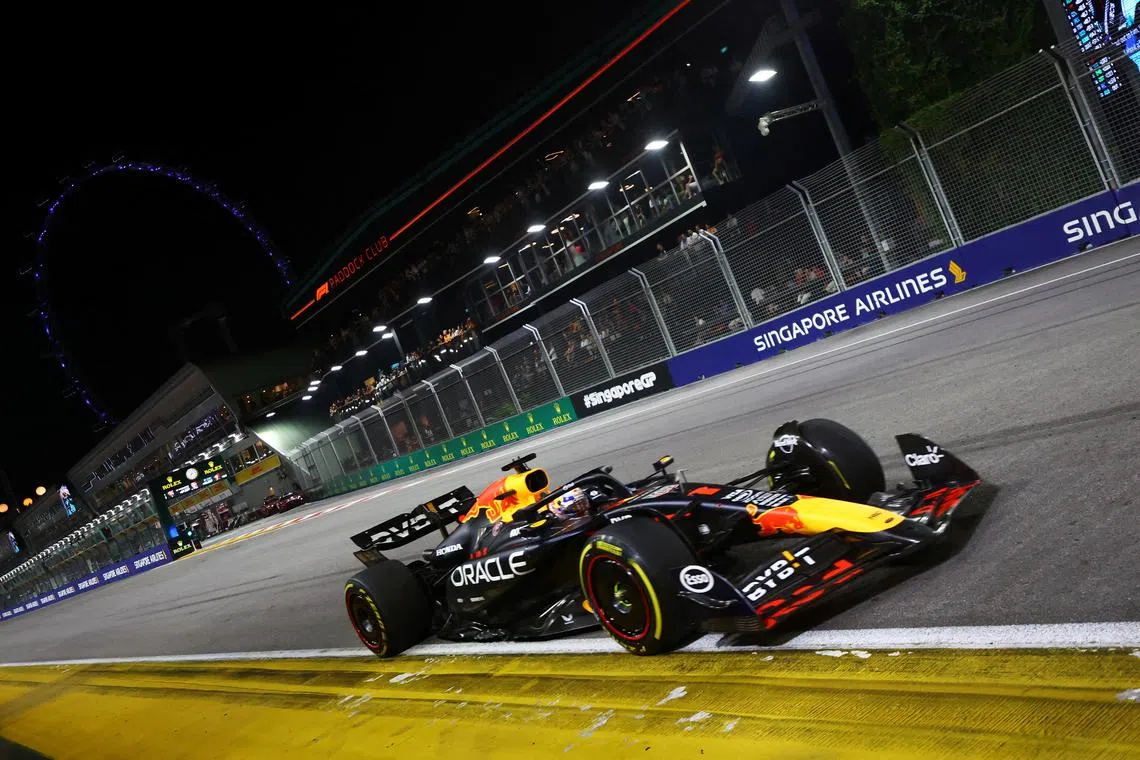
The events of the Singapore Grand Prix last weekend may have only accelerated that thinking for Verstappen. On the track, it was his best race in nearly a month. Second place to his title rival Lando Norris was a strong result, considering how bleak the outlook was at one stage of the race weekend.
But off the track, it was the response of F1’s governing body – the International Automobile Federation (FIA) – to Verstappen’s language that sparked frustration from the three-time world champion.
Navigate Asia in
a new global order
Get the insights delivered to your inbox.
His use of one curse word in a news conference while talking about his car – an inanimate object without feelings – was deemed “misconduct” by the FIA. It was a move that seemed borne out of making an example of Verstappen, who is now required to complete community service.
He responded with a protest in the FIA news conference after the qualifying round, deliberately giving brief answers because he feared he might get fined or have another day added to his sanction. He instead spoke to journalists outside the room, slamming the decision as “ridiculous”.
The protest softened ever so slightly on Sunday (Sep 22). His answers were longer, if still brief. When asked Verstappen if he would still rather speak outside the news conference, he replied: “It’s been a long day. Yeah.”
By then, Red Bull had already scheduled Verstappen for a separate media briefing in the team’s hospitality unit straight after the news conference. There, his demeanor changed, returning to his usual effusive and opinionated self.
“For me personally, there is absolutely no desire to then give long answers when you get treated like that,” he said.
He posted about the ruling in the Grand Prix Drivers’ Association’s WhatsApp group with all the other F1 drivers and said: “Everyone was almost laughing, you know, like, ‘What the hell is that?’ Basically. So, yes. It is very, very silly.”
But Verstappen also considered the bigger picture. If F1 continues to follow this path, where drivers cannot be their authentic selves, it will affect how much longer he wants to stay on the grid.
“For sure, these kinds of things definitely decide my future as well,” he said. “You know when you can’t be yourself, or you have to deal with these kinds of silly things. I think now I’m at the stage of my career that you don’t want to be dealing with this all the time. It’s really tiring.”
He knows what it’s like to win races and championships. And he wants to enjoy his time racing. “But if you have to deal with all these kinds of silly things, for me, that is not a way of continuing in the sport, that’s for sure,” he said.
He also criticised the sanction given to Carlos Sainz for crossing the track on foot under a red flag to return to the pit lane after his qualifying crash on Sep 21.
“I mean, what are we talking about? It’s a red flag,” Verstappen said. “Cars are coming in. I think it’s quite safe, and he knows what he’s doing. We’re not stupid. These kinds of things, like when I saw it getting noted, I was like, ‘my God.’”
These punishments sap away Verstappen’s love for F1. No, swearing isn’t necessary. But everyone in the paddock is a grown-up, and for many of those involved in the sport, English is not their first language.
Mercedes F1 boss Toto Wolff also pointed out that a news conference is not intended to be widely broadcast, given that its purpose is primarily for the media. To come down so hard on the world champion as a result of one careless word there seemed harsh.
The hubbub led to any swearing in the paddock over the weekend becoming a source of humour. When a journalist used a curse word when framing a question to Verstappen, the world champion pulled a shocked face and joked that they should be careful.
Verstappen was unsure how the matter would be resolved. He said he didn’t mind holding separate media sessions aside from the news conference and that any conversation needed to include the FIA and its president, Mohammed Ben Sulayem, as well as Formula One’s management.
But should the existing approach remain steadfast, it could play a part in costing the grid not only one of its greatest talents but also one of its most honest characters. At a time when F1 is continuing to grow and wants to hype up its drivers as gladiators, it seems like a backward step.
“If you can’t really be yourself to the fullest, then it’s better not to speak,” Verstappen said. “That’s what no one wants because then you become a robot, and it is not how you should be going about it in the sport.” NYTIMES
Decoding Asia newsletter: your guide to navigating Asia in a new global order. Sign up here to get Decoding Asia newsletter. Delivered to your inbox. Free.
Copyright SPH Media. All rights reserved.
TRENDING NOW

Vietnam formalises new state leadership, redefining ‘four pillars’ power balance

‘Largest Singapore commercial S-Reit proxy’: analysts say buy CICT shares after Paragon acquisition
From 1MDB to ‘corporate mafia’: Is Malaysia facing a new governance test?
Why where you park your joint venture matters: Lessons from a US$689 million shareholder dispute

