

Miele sets out to future-proof daily living with AI
Executive director Axel Kniehl talks about crafting sustainable home appliances that outlive fads
IMAGINE a scenario where you come home from work and the kids are on their way home from school. It’s almost dinner time, but the kitchen is already preparing your meal – by itself.
Dinner is being cooked in the oven and on the hob. Both appliances are in conversation with your fridge, discussing what to restock and creating next week’s meal plans. Meanwhile, your humanoid housekeeper greets you effusively, giving you an update on the state of the household – as well as when to expect dinner to be served.
This scenario might have seemed far-fetched just a few years ago, but recent advances in artificial intelligence (AI), robotics and consumer electronics make it seem like the future is just around the corner.
And one brand working diligently to make that happen is Miele.
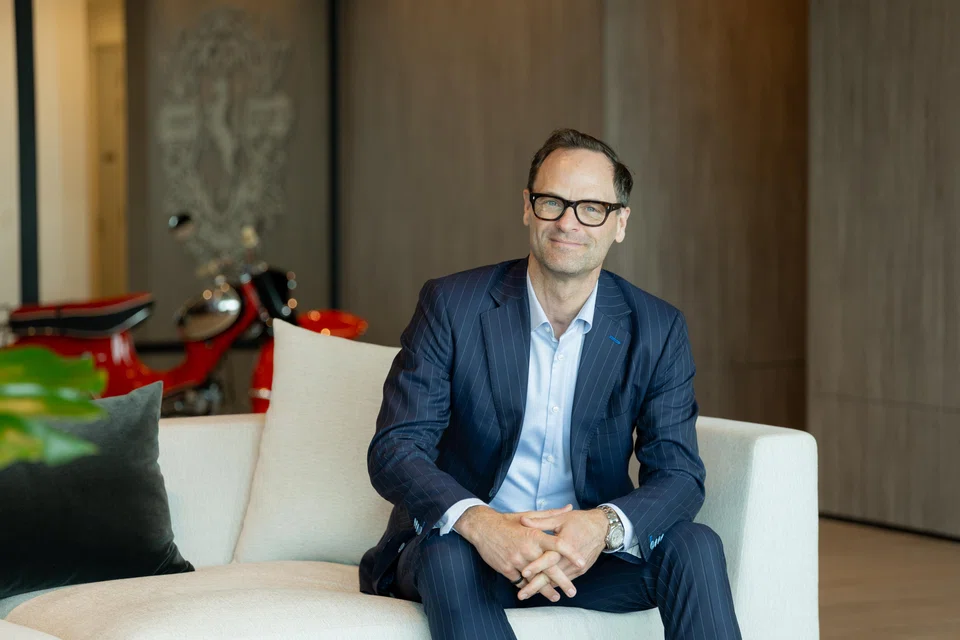
“Personally, I believe that the convergence of robotics – especially humanoid robotics – and AI will profoundly transform people’s homes,” says Axel Kniehl, executive director of marketing and sales, as well as board member of Miele.
“I don’t think we’re far from seeing humanoid robots performing everyday household tasks. The real question for us is: What must our appliances do to interact seamlessly with them?” Of course, Miele is not in the robotics business, but, as Kniehl says: “We are actively exploring what this evolution means for our products. Will interaction be purely electronic – a connectivity layer between the robot and our appliance? Or will we need to rethink user interfaces entirely so that humanoid robots can operate appliances as intuitively as humans do? These are exactly the questions we’re working on.”
A world-first
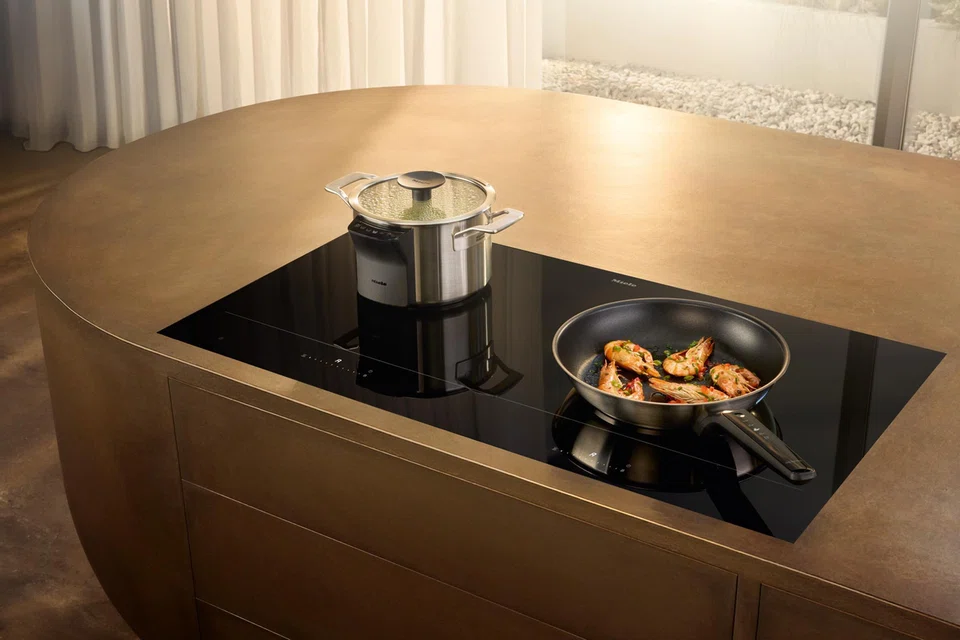
Already, its latest innovations are going in that direction. The brand is proudly showcasing the KM 8000 induction hob and the M Sense smart cookware, both of which were launched in mid-2025. It’s the first cookware in the world that embeds intelligence directly into the pot or pan, allowing full communication and control through the cookware itself.
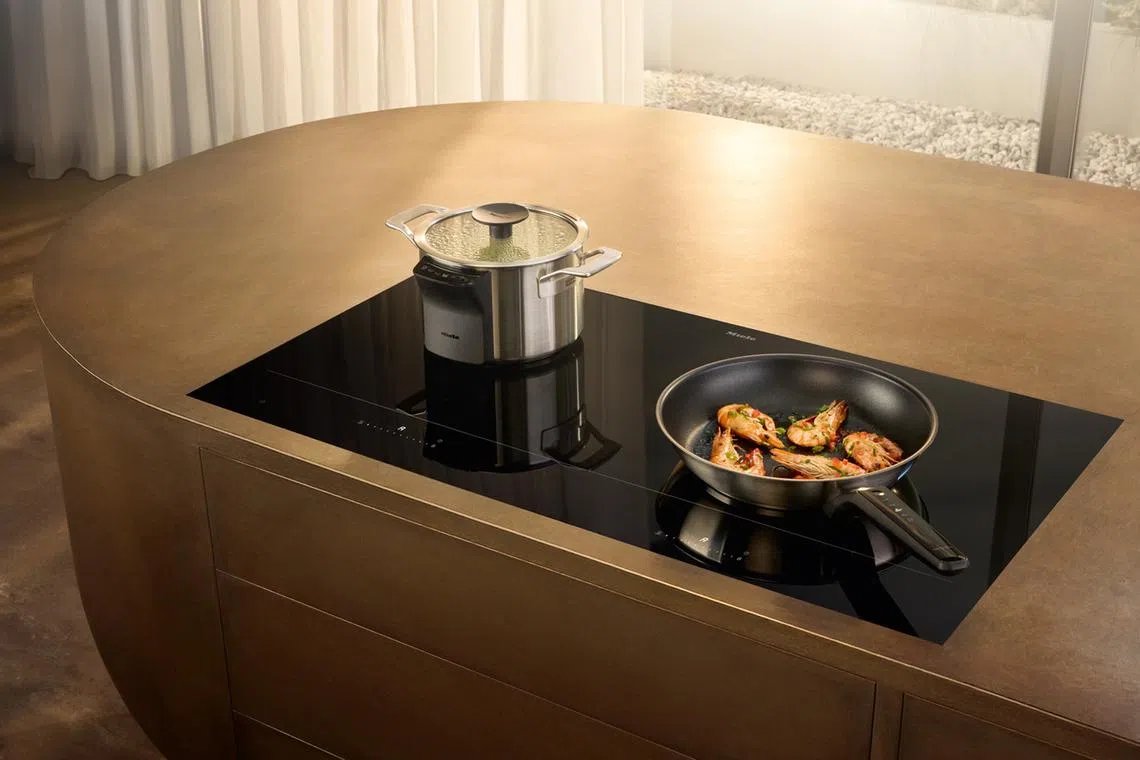
What does this mean? Nothing will ever burn or boil over. If you’re cooking noodles in a pot and the lid is on, the system automatically regulates the heat to prevent the water from overflowing. If you’re distracted and forget your egg frying on the hob, it will not burn. “One of the biggest pain points for consumers in their daily lives is dealing with the aftermath of cooking: the cleaning, the smells, the smoke, even the fire alarm going off,” says Kniehl. “Our new technology essentially eliminates all of that.”
That’s why the company is investing heavily in AI to make its appliances even more intuitive and capable.

What goes around, comes around
In Europe, Miele is also actively refurbishing its appliances – such as washing machines – and reselling them to consumers at reduced prices (reports suggest a discount of 30 per cent or more). It’s all part of the company’s commitment to a circular economy.
“We’re actively testing this across multiple markets to understand consumer responses and to determine how to scale it sustainably and economically,” explains Kniehl.
“I can’t yet say exactly when each market will receive these offerings, but this is increasingly important for companies today.
“Expanding the reuse and refurbishment of both parts and full appliances is essential. And the good news is that because our products are built to last 20 years, even a refurbished appliance that is 10 years old still has a long lifespan ahead.” Sustainability has been encoded in Miele’s DNA since the earliest days of its 127-year history, long before “eco-conscious” became a buzzword. Because every product is engineered to last, customers naturally replace their appliances far less often – reducing waste without even trying. “In Europe, we’ve already been refurbishing electronics for several years,” says Kniehl. “We take components back, test them, dismantle old units, and restore parts to ‘as new’ condition. The advantage of doing this internally is that we can guarantee the same quality and provide the same warranty – but at a much lower cost to the consumer.” This programme has been expanding steadily every year, and Kniehl is confident that it will be introduced into more markets in 2026.
A strong foundation in Singapore
“Singapore has historically been one of our earliest and most important footholds in Asia,” says Kniehl.
“If you ask what truly differentiates Miele in the region – especially where we are positioned as a premium-to-luxury brand – it always begins with being the benchmark for ultra-high-end homes, apartments, and developments.”
Much of that foundation, he adds, was “built in Singapore many years ago, and it remains a strong base for us today”. “In recent years, including last year, Singapore has continued to perform well. Retail is doing fine – a bit more challenged over the past one to two years, but still stable. Overall, it remains a very good, albeit small, market for us.” One key factor for the subdued demand is that many homeowners invested heavily in renovations during the pandemic years, so now there is a slightly lower appetite for renovation.
“That’s a normal cycle,” Kniehl reasons.
Miele typically announces its annual financial results in late February or early March. In 2024, the company recorded around five billion euros (S$7.5 billion) in revenue, up about 1.7 per cent over the previous year.
“What I can say is that we recorded modest growth last year, which is encouraging given the challenging global environment and the geopolitical uncertainties,” Kniehl shares.
Decoding Asia newsletter: your guide to navigating Asia in a new global order. Sign up here to get Decoding Asia newsletter. Delivered to your inbox. Free.
Share with us your feedback on BT's products and services
TRENDING NOW

Malaysian king buys stake in Singapore-listed mining firm expanding into rare earths

Grab CEO’s wife Chloe Tong on life with Anthony Tan and finding her purpose

Once staunchly pro-China, Malaysian Chinese businesses are now distancing themselves from Beijing
Longer wait times expected as S’pore healthcare institutions report system disruptions

