

MINDS clinic fills healthcare gaps for the intellectually disabled
While it does not prescribe medication or acute treatment, it provides health screenings, medical consultations, and makes referrals to medical practitioners.
 Add BT as a preferred source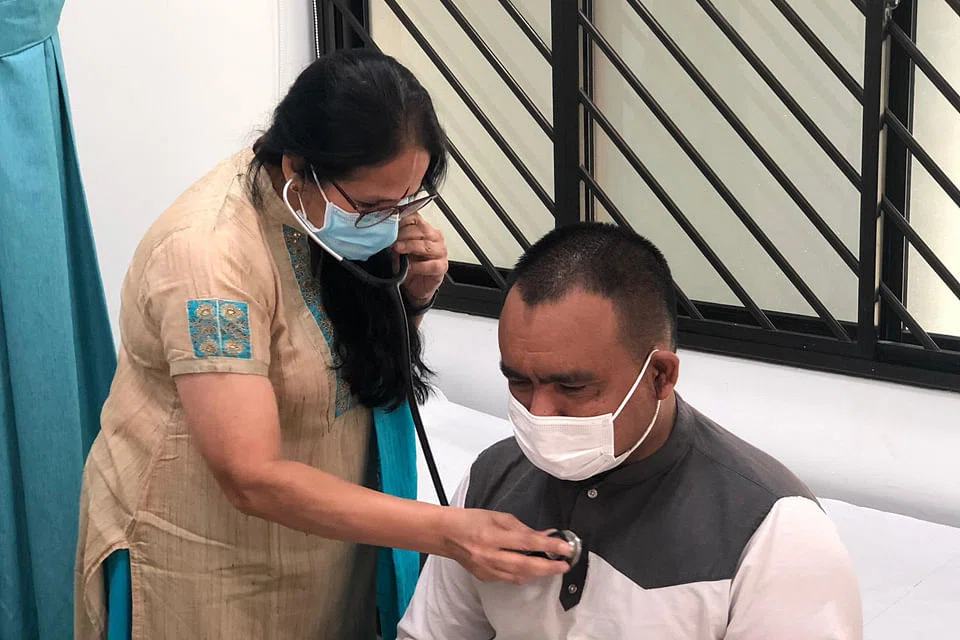
DeeperDive is a beta AI feature. Refer to full articles for the facts.
Singapore
GETTING sick and visiting the hospital on a regular day is already a challenge for some. For Simon Lim (not his real name), who has cerebral palsy, going to a hospital, especially during the ongoing Covid-19 pandemic, can be a nightmare.
For caregiver Amy Lim (not her real name), bringing her middle-aged brother to see a doctor can be challenging. He is entirely non-verbal, so it is difficult for him to express himself, she said. Doctors may struggle to make comprehensive diagnoses.
Madam Lim recalls a time during the pandemic when Mr Lim was vomiting and hospitalised for a week, but was unable to articulate his problems.
She guessed that the disruption of his routines caused by Covid-19 could have been a stressor. However, doctors faced difficulty identifying the reasons for his symptoms of pain and were unable to give advice, she said. Fortunately, tests later established that there were no serious issues.
But this experience reinforced the importance of understanding the behaviour and medical needs of persons with intellectual disabilities (PWIDs) for Madam Lim.
Navigate Asia in
a new global order
Get the insights delivered to your inbox.
In situations like these, the Movement for the Intellectually Disabled of Singapore (MINDS) Developmental Disabilities Medical Clinic can help.
Funded by OCBC Bank through its #OCBC Cares Programme, MINDS set up the clinic in 2017, where paediatrician Bhavani Sriram is a resident medical practitioner. She realised that specialist healthcare for PWIDs was lacking.
"Transitioning to adult healthcare for persons with intellectual disabilities is a bit of a challenge," she said. "We wanted to set a trend of coordinating care in a more seamless manner."
While the MINDS Clinic, the first of its kind in Singapore, does not prescribe medication or acute treatment, it provides services such as health screenings, medical consultations, and makes referrals to medical practitioners. To date, 750 beneficiaries have undergone health screenings at the clinic, according to OCBC Bank.
Some health issues identified may not be obvious to caregivers, Dr Bhavani said. Structured routines around the house may mask vision impairment caused by cataract, for example. Other health problems may be asymptomatic. Regular assessments can help detect and combat problems such as hypertension and diabetes.
The MINDS Clinic also created a health passport, funded by OCBC Bank, which details beneficiaries' communication skills, mobility needs and behavioural concerns, alongside their medical history, to help doctors understand beneficiaries' requirements.
To compile the health passport and create an action plan, Dr Bhavani carries out a medical assessment and interviews. In one such meeting with the siblings last year, the doctor noticed a problem with Mr Lim's knee.
He had taken a fall and visited a polyclinic, and he was sent home with painkillers, said Madam Lim. However, Dr Bhavani thought that the problem might not be that simple. She advised them to return to the polyclinic for a referral to a hospital. True enough, an x-ray revealed a fracture, which took about a year to heal. The MINDS Clinic provides access to a second opinion with specialist knowledge, said Madam Lim.
The health passport has been especially helpful at first appointments, she said, as it captures details that she may miss.
MINDS' health passports for PWIDs are not a new concept, and they are modelled on those of other countries, said Dr Bhavani. They are becoming common for whenever healthcare professionals believe there may be cognitive decline or multiple specialities required for follow-ups, she said.
"Principally, over time, we want persons with intellectual disabilities to own their own health," she added.
Currently the only doctor on the staff, she hopes that the clinic can carry out annual health checks for everyone in the future.
MINDS chief executive Kelvin Koh said: "The MINDS Clinic has helped to triage the possible health concerns for PWIDs, helped clients to navigate through our national healthcare system to receive the necessary services and help as expeditiously as possible, and provided PWIDs with person-centred integrated health care management and future care planning."
OCBC Bank supported the set-up of the clinic after learning that people with special needs often have difficulty verbalising symptoms when unwell, and face higher risk of being misdiagnosed.
"Supporting this clinic has enabled us to provide targeted help for people with special needs. Early identification (of medical issues) helps aid speedy treatment before they become life-threatening," the bank said.
- This article is part of a series on sustainability initiatives, supported by OCBC Bank
Decoding Asia newsletter: your guide to navigating Asia in a new global order. Sign up here to get Decoding Asia newsletter. Delivered to your inbox. Free.
Copyright SPH Media. All rights reserved.
TRENDING NOW

‘Boring’ is the new black: The stars are aligning for a Singapore stock market revival

Near sell-out launches in March boost developer sales to 1,300 units after four slow months

China pips the US if Asean is forced to choose, but analysts warn against reading it like a sports result

Genting Singapore’s Lim Kok Thay receives S$7.5 million pay package for FY2025

