Mining the past for artistic inspiration
From the 1851 novel Moby Dick to classic Surrealist paintings, past artistic legacies provide fertile ground for three solo shows

Helmi Yusof
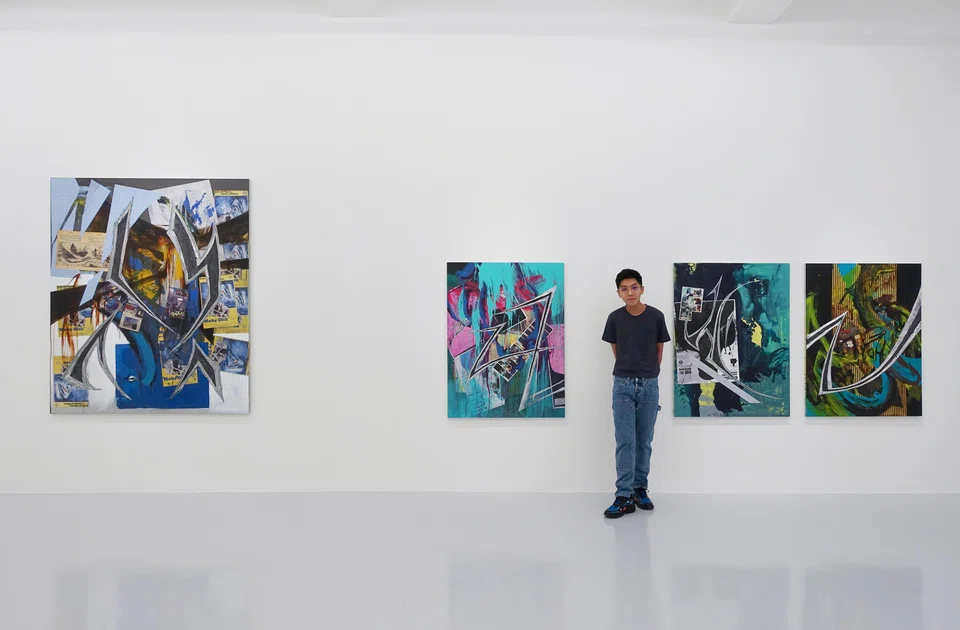
Ian Tee at Yavuz Gallery
Moby Dick (I Am The Devil In Your Heart)
Have you ever wanted something so much, it consumes your entire life? The talented young painter Ian Tee attempts to capture the roiling seas of desire and ambition in a buoyant new series of paintings now showing at Yavuz Gallery in Gillman Barracks. Nearly every painting feels like an intense showdown between competing elements, with clashing forms and battling colours, finding no rest or reconciliation.
The central metaphor of these works is Herman Melville’s classic novel, Moby Dick, in which Ahab, the captain of a ship, goes in pursuit of a white sperm whale that had bitten off one of his legs years ago. The hunt for the whale becomes so maniacal and delusional, he puts the lives of his crew in grave danger.
Tee has collected various Moby Dick comic books and movie posters, and pasted them among lush swaths and skeins of paint, which have been variously poured, splattered and flicked onto aluminium composite panels. He has also plastered target paper and reflective tape onto some of the works, creating a strong undercurrent of foreboding and danger.
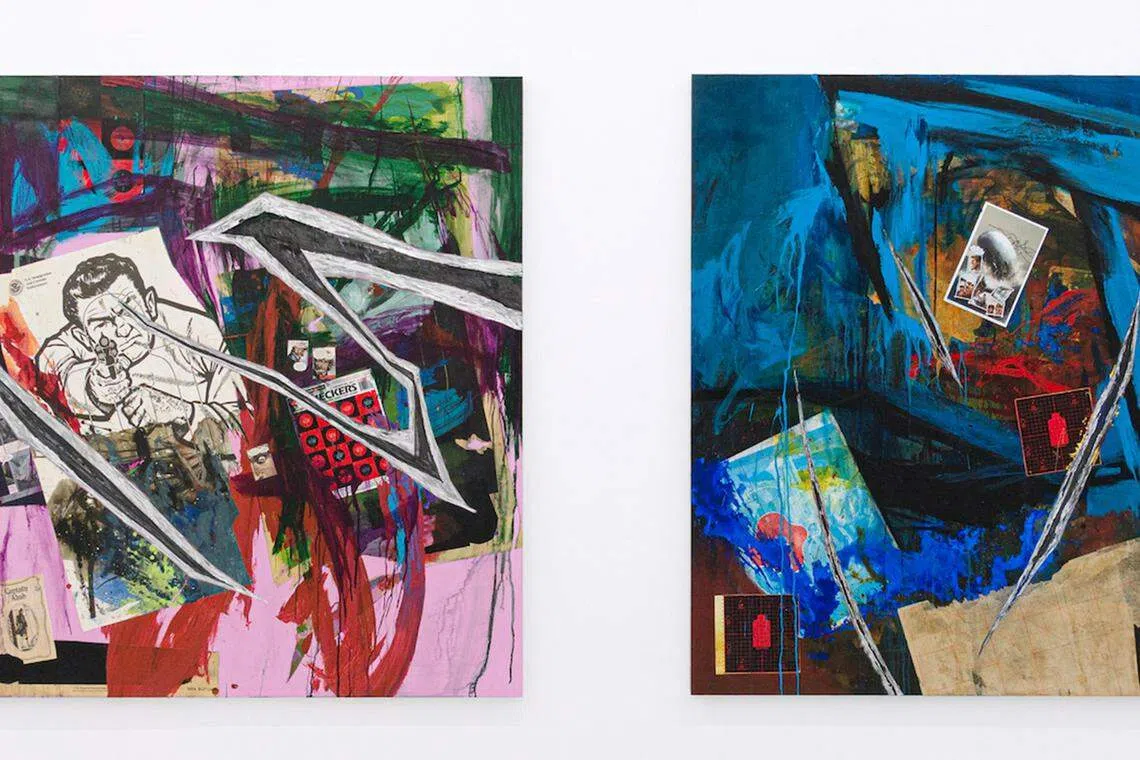
Tee says: “Moby Dick has such a strong cultural imprint. In common parlance, when you say someone has a ‘white whale’, it refers to an objective that they have which they pursue obsessively. There’s a certain madness in that pursuit. Great ambition is often, after all, irrational. And that is what I’m trying to capture in these paintings.
“In a sense, it’s a reflection of my own obsession with the activity of painting. When I’m working on a painting, I’m completely consumed by every aspect of it, so much so that I’m still thinking about it even when I’m out of the studio. I’m chasing a particular high that can only truly be resolved after I’ve managed to put speculation or imagination into material and form. It’s a fleeting high, but one that I chase again and again… These paintings mine the psychology of this chase.”

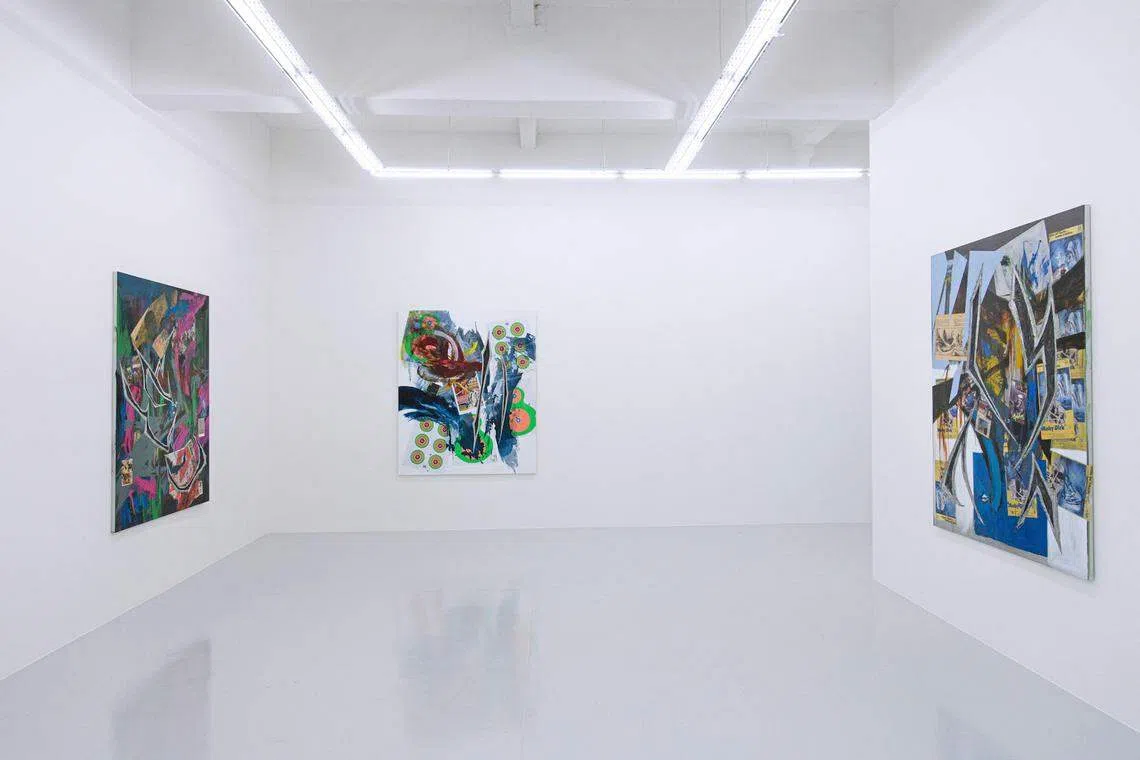
The riot of strokes also evoke the energetic action taking place on the high seas. A torn comic book page showing a battle between the men and the whale might be plastered alongside swirling pools of blues, greens and purples – reminiscent of raging seas, the force and ferocity of the whale, and the wild-eyed hysteria of Ahab. There is no central focus in these constructions, no hierarchy of colours and material – in some paintings, nearly every part of them reveals a fresh skirmish.
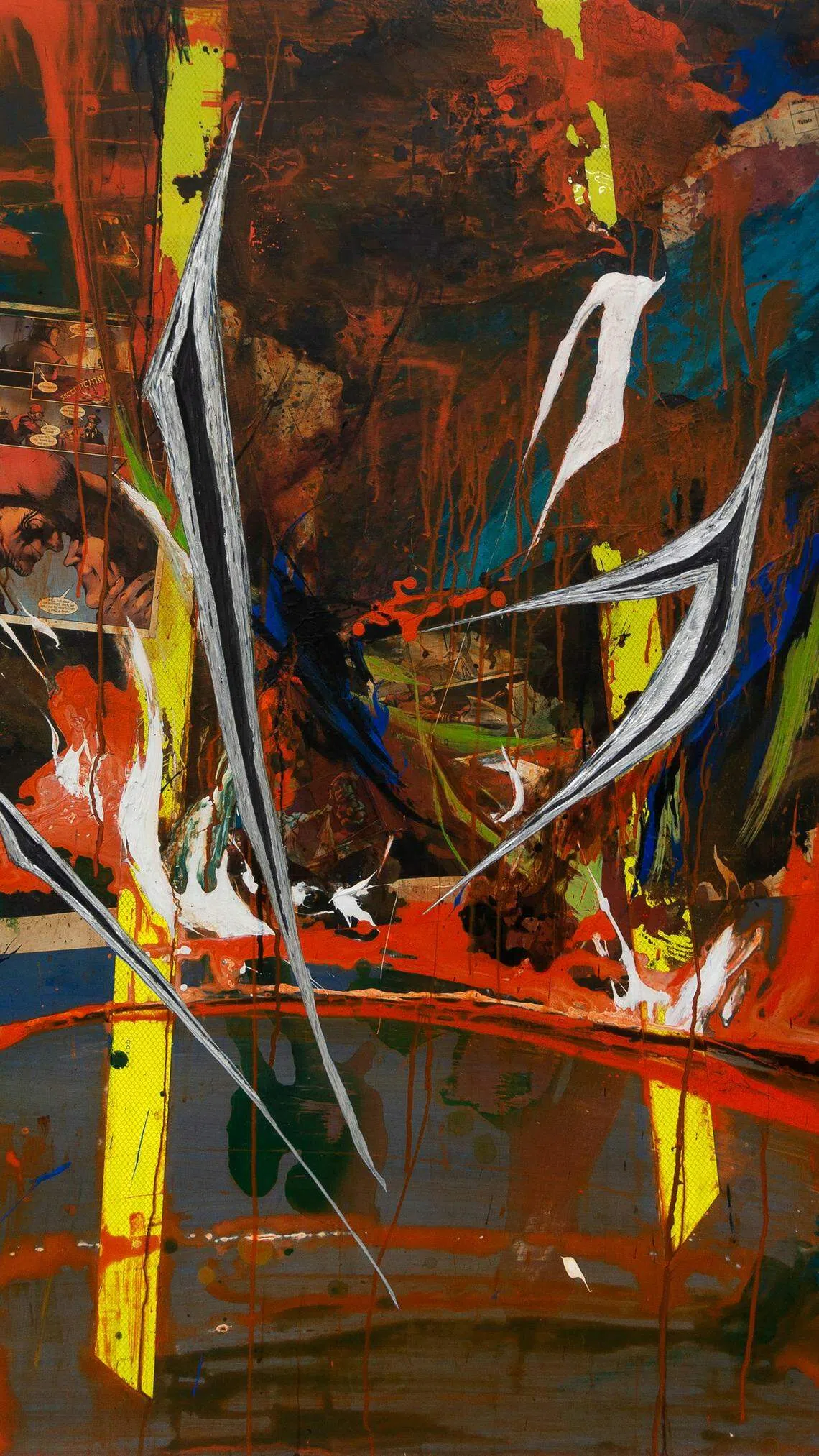
Tee says: “When people look at the work, I want them to be swept away in the sensational drama, purely on the basis of the colours and textures, and the way the lines and shapes interact with each other in the composition… I’m trying to match the euphoria and intensity they feel when they’re engrossed in a good piece of music or anime or movie – but through a painting.”
Ari Bayuaji at Mizuma Gallery
The Water The Body The Spirit
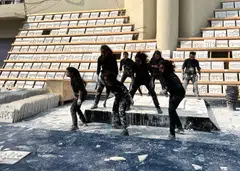
In late 2017, Bali declared a “garbage emergency” on a 6 km stretch of coast that included the island’s popular beaches Kuta, Seminyak and Jimbaran. The arrival of millions of tourists a year, coupled with the island’s inefficient waste-management system, had turned a once-trendy section of Bali into a garbage dump.
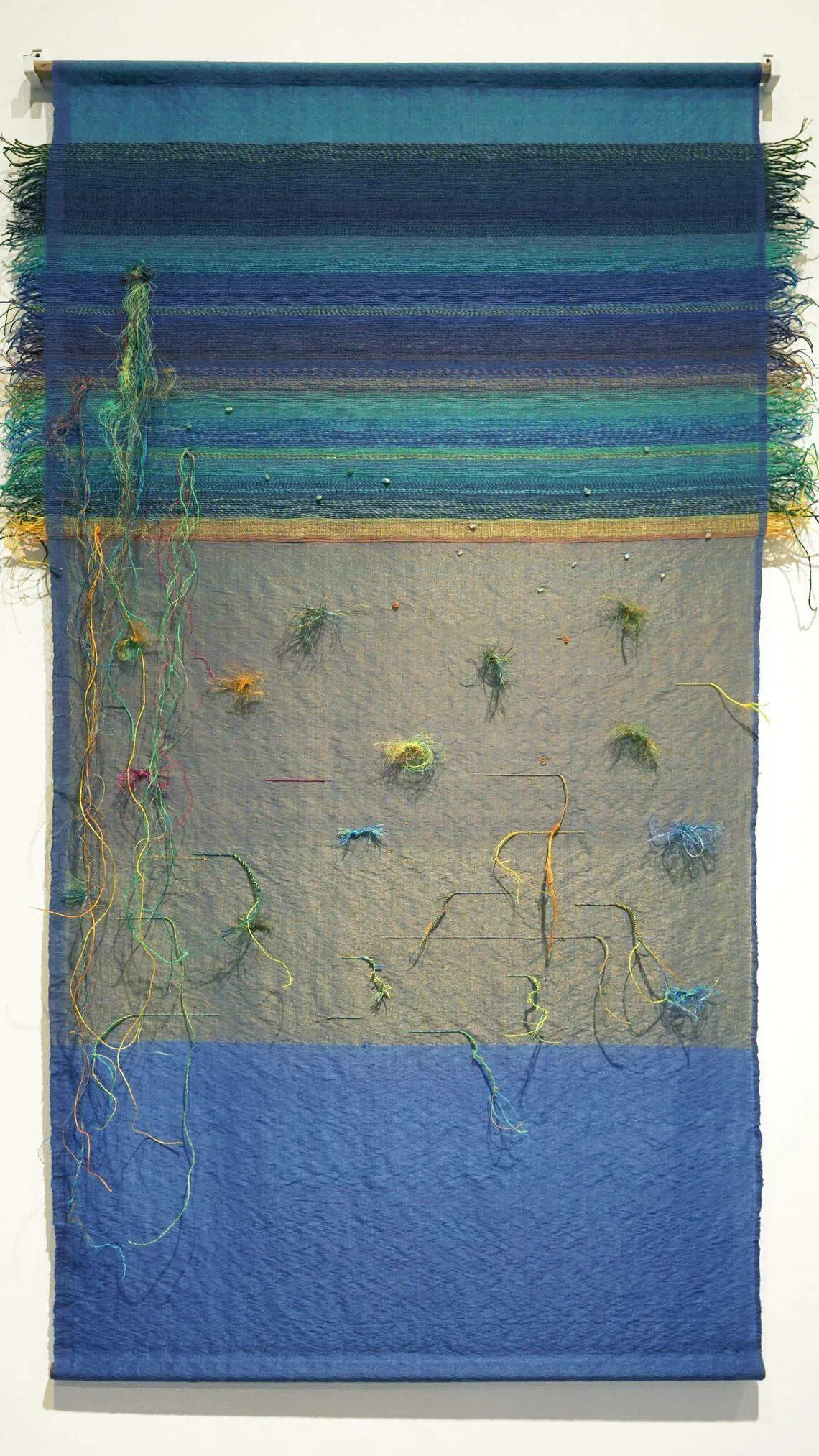
Indonesian artist Ari Bayuaji, who splits his time between Bali and Canada, was staying in Bali during the worst years of the pandemic (2020 – 2021). He witnessed how the loss of tourism plunged the island into economic turmoil, with tens of thousands of tourism workers forced to eke out a subsistence in agriculture instead.
Feeling sympathy for his compatriots as well as profound concern for the pollution problem, Ari began to collect the plastic rope and fishing nets that had washed up ashore. He cleaned them and experimented with unbraiding them down to their constituent threads. He then worked with traditional weavers in Sanur (in the south-east corner of the island) to turn the plastic threads into beautiful, shimmering, artistic tapestries that belie their humble roots.
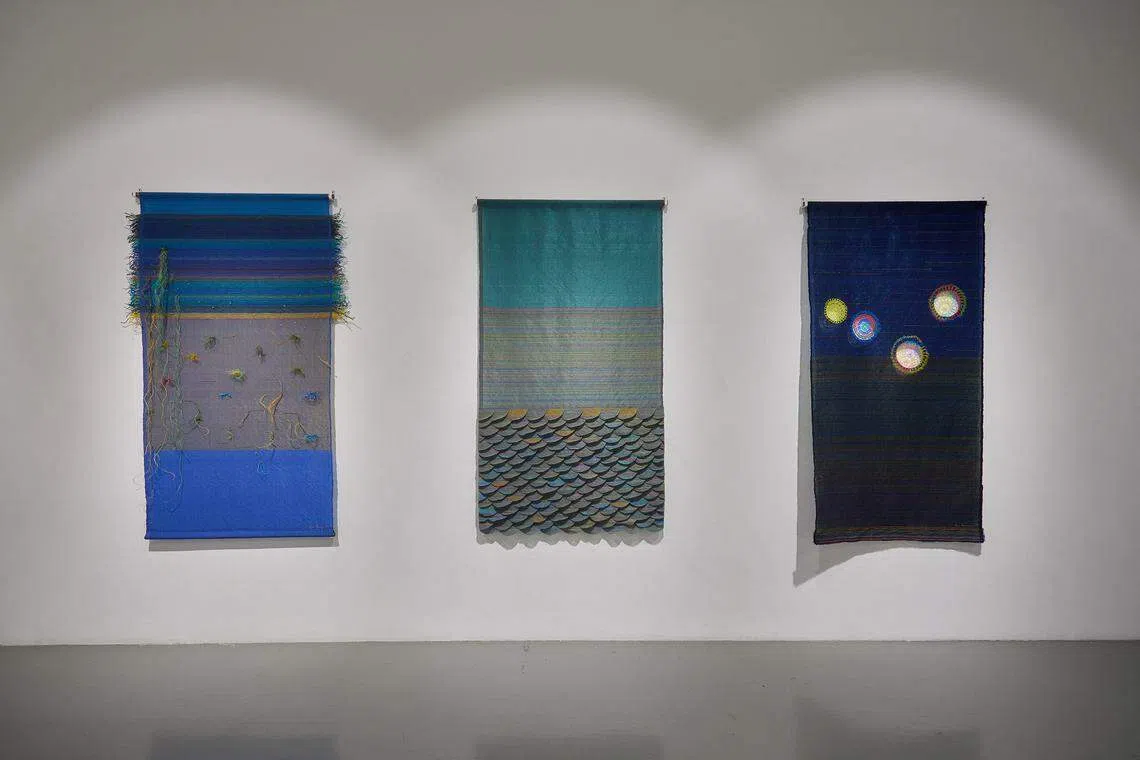
Subsequently, he employed several people impacted by the tourism slump to help collect and unravel more rope and nets, which were then handed over to the traditional weavers to transform into textiles.
He also collected other unwanted objects such as driftwood, plastic bottles and shards of broken ceramic, making assemblage and sculptural art out of them.
Since 2021, the works have been shown in various galleries and art fairs, much to the delight of eco-conscious collectors. His latest show at Mizuma Gallery in Gillman Barracks is a kind of summation of his upcycling journey so far. Several tapestries combine various innovative techniques previously found in single works, as well as assemblage pieces that gently push the limits of the medium.
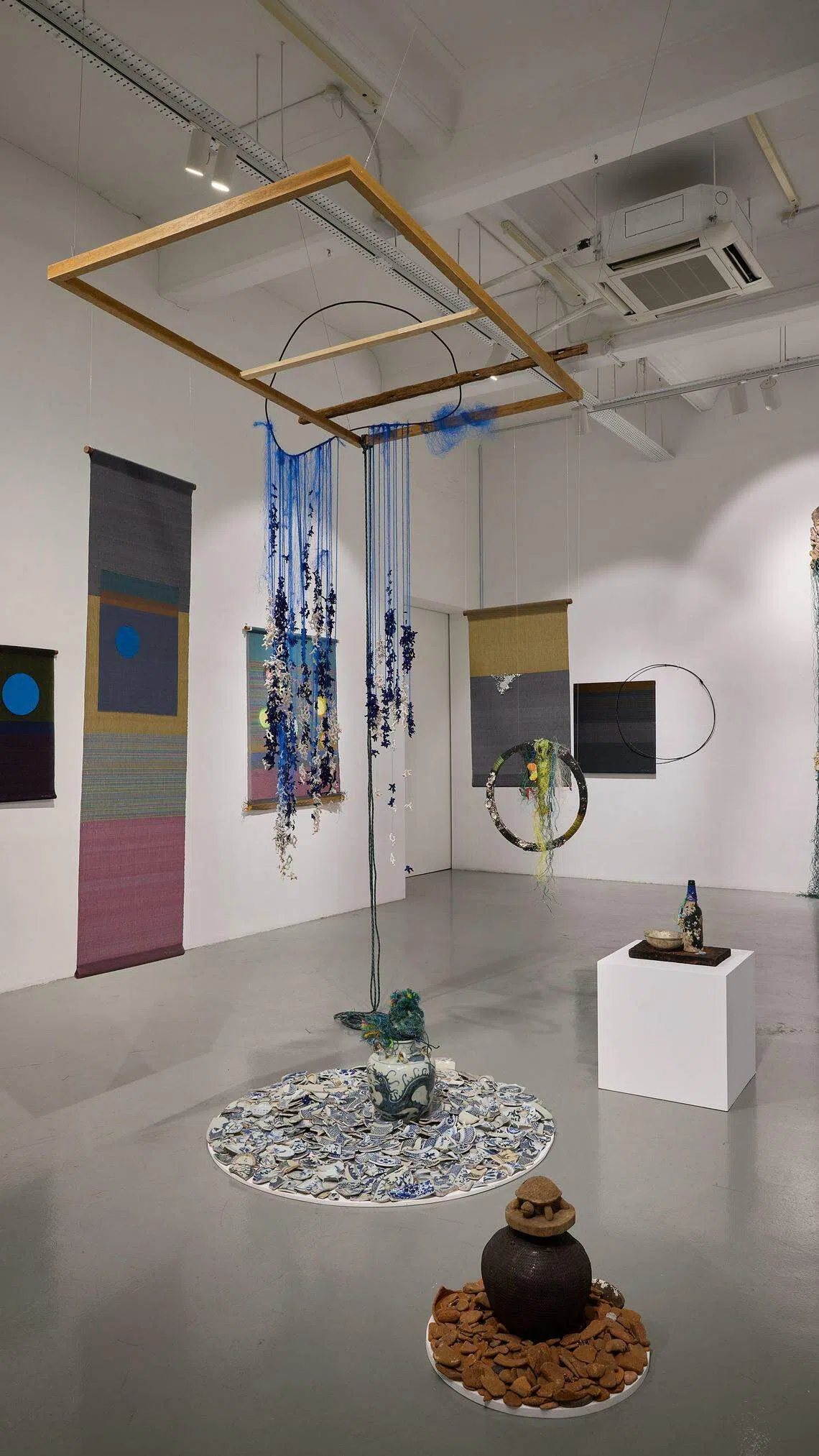
More than half the works have already been sold – but the exhibition itself is something of a marvel and worth seeing in the flesh.
Jacopo Pagin at 39+ Art Space
Strategies Against Time
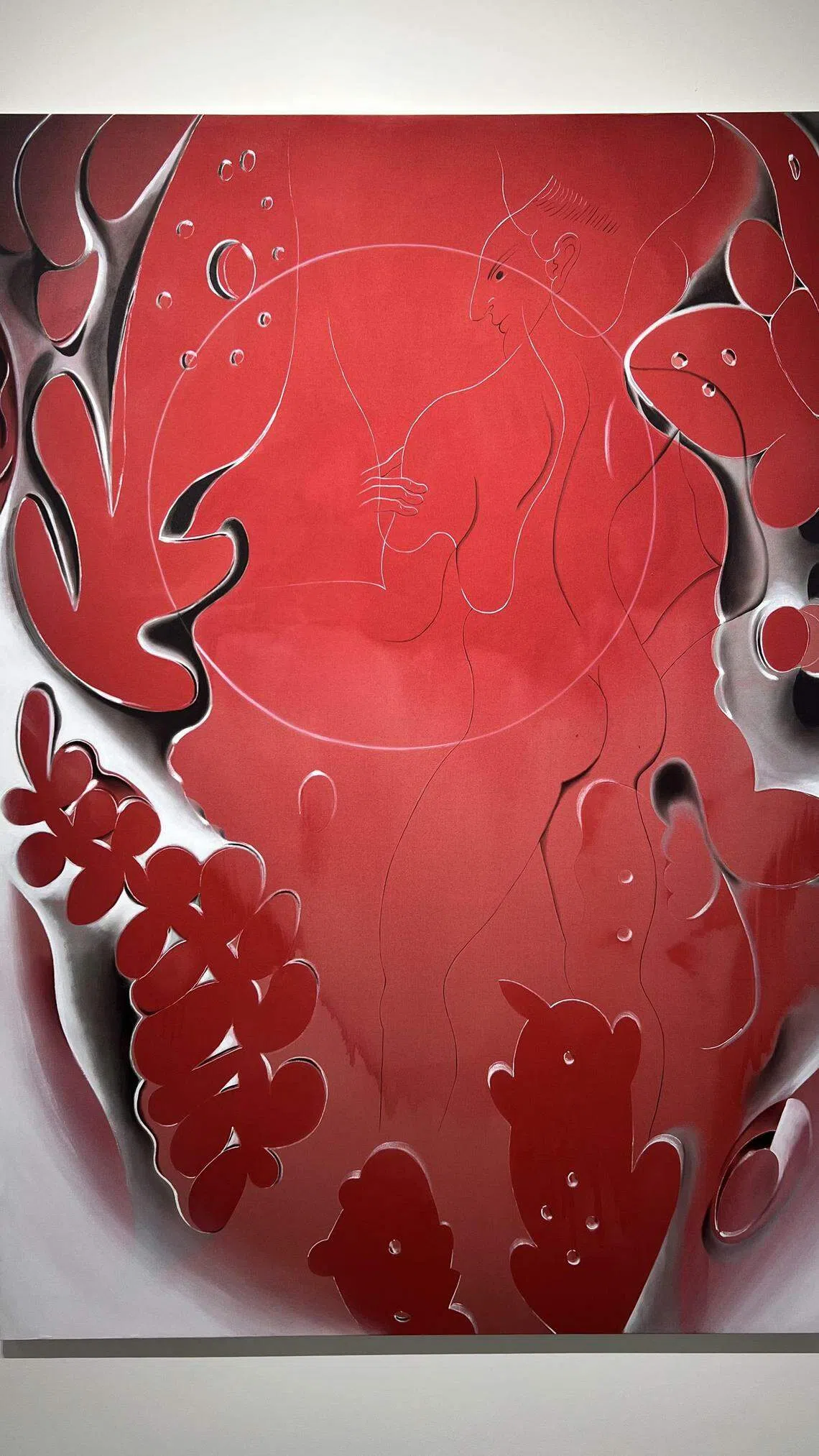
Barely a year old, the gallery 39+ Art Space founded by Liu Ying Mei has just had one of its first commercial hits, with the solo showcase of Jacopo Pagin, an Italian artist who trades in the language of abstraction and surrealism.
Several of the paintings and drawings have already been acquired, with some of the collectors being notably young.
Although the surrealist and abstract movements were born over 100 years ago, Pagin’s images clearly resonate with the collectors of today.
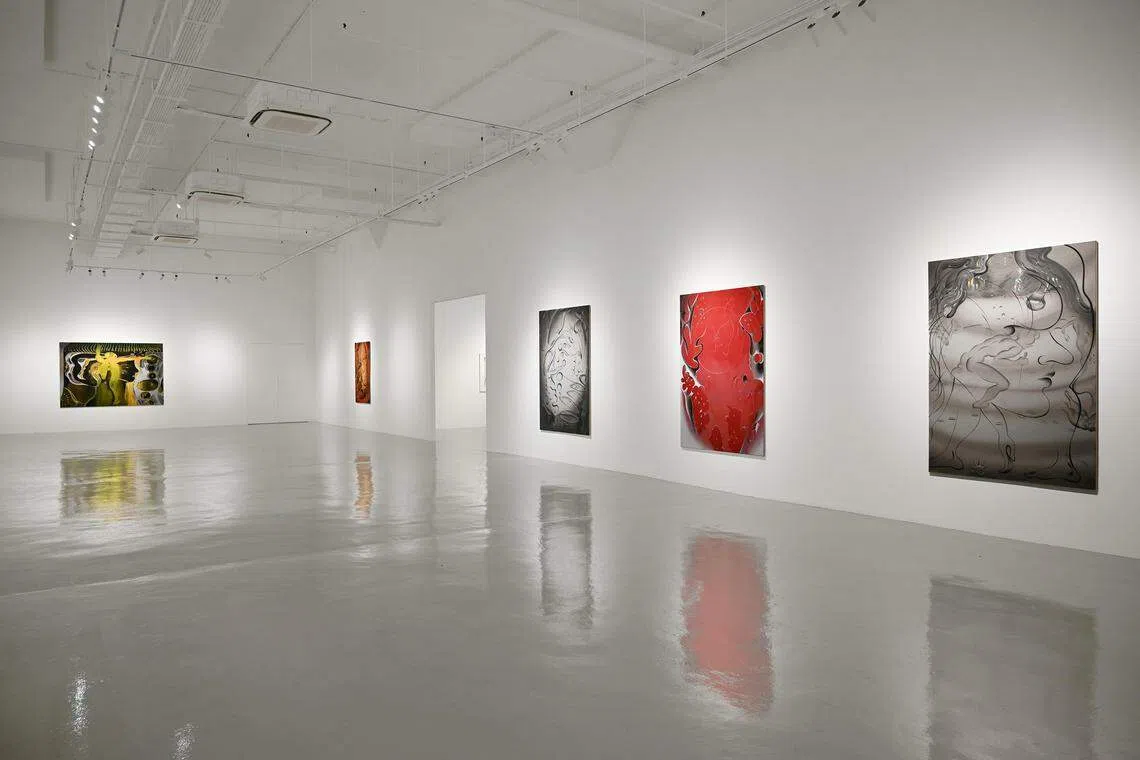
The Belgian-based artist draws heavily from surrealist masters like Salvador Dali, Man Ray, Max Ernst and Marc Chagall in the construction of his images. But there is a lightness of touch, a formal simplicity and a self-imposed palette restriction that make his works easy to digest and not overly-tethered to the legacy of his predecessors.
There are human faces appearing in champagne glasses or as the dial of a melting clock, and human figures blending with vegetal-like objects and liquid backdrops. A giant ant is juxtaposed with blossoming flowers and human ears, as if communicating with them all.
Pagin’s works require viewers to tap into their subconscious so they might revel in the strangeness beneath the surface of the everyday.
Decoding Asia newsletter: your guide to navigating Asia in a new global order. Sign up here to get Decoding Asia newsletter. Delivered to your inbox. Free.
Copyright SPH Media. All rights reserved.