A modern kampung home
Natural ventilation and connected spaces evoke a homeowner’s childhood memories of kampung life
 Add BT as a preferred source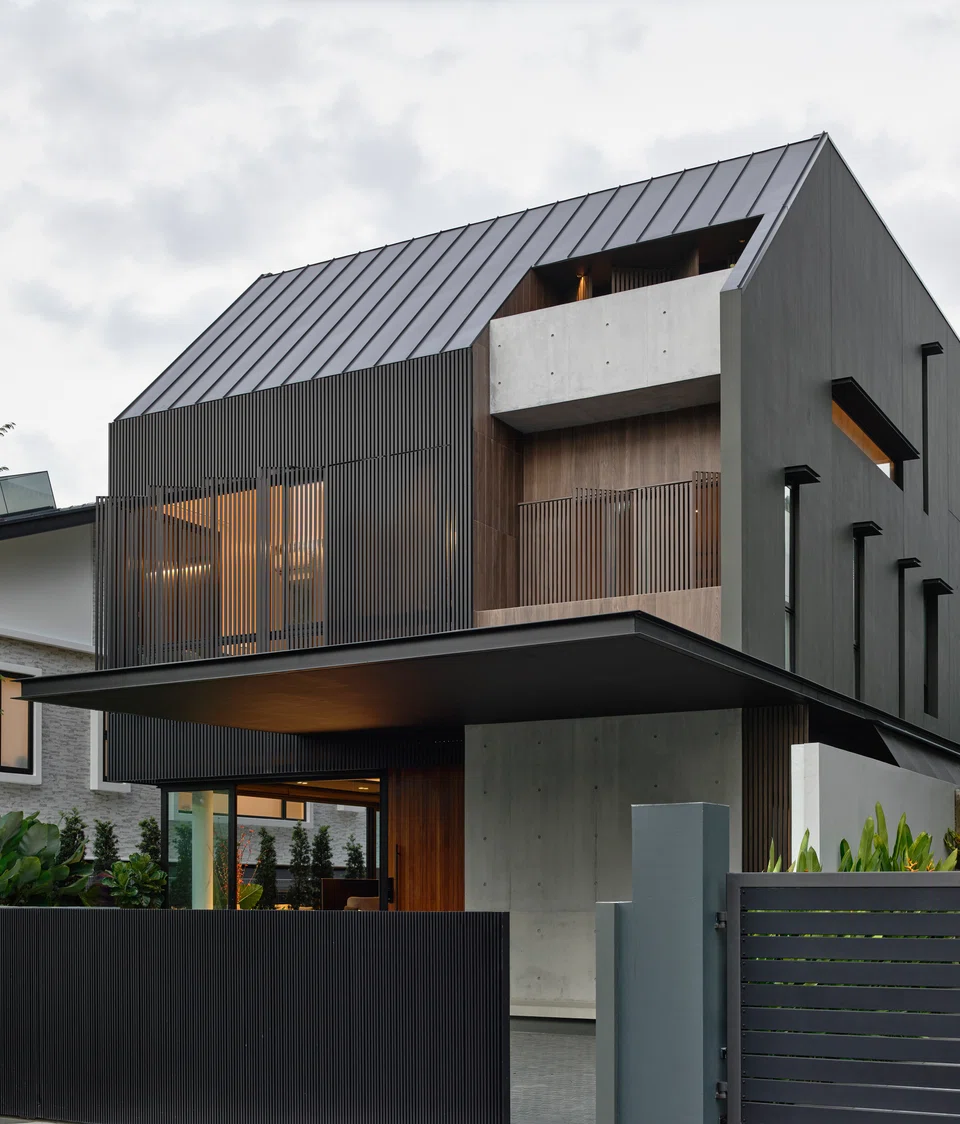
DeeperDive is a beta AI feature. Refer to full articles for the facts.
HAVING grown up in a kampung, a homeowner has fond memories of breezy interiors, thanks to a front door that was kept open throughout the day. So when it was time to design his new, semi-detached house, this became an important element that Kelvin Lim, design director of Hier Architects, had to incorporate.
But it was not only the thermal comforts of a kampung dwelling that the homeowner wanted. He also hoped to be able to interact with his two children even when they were in different parts of the house. Thus, Lim came up with an architectural arrangement that also became the dwelling’s name – Quadrant House.
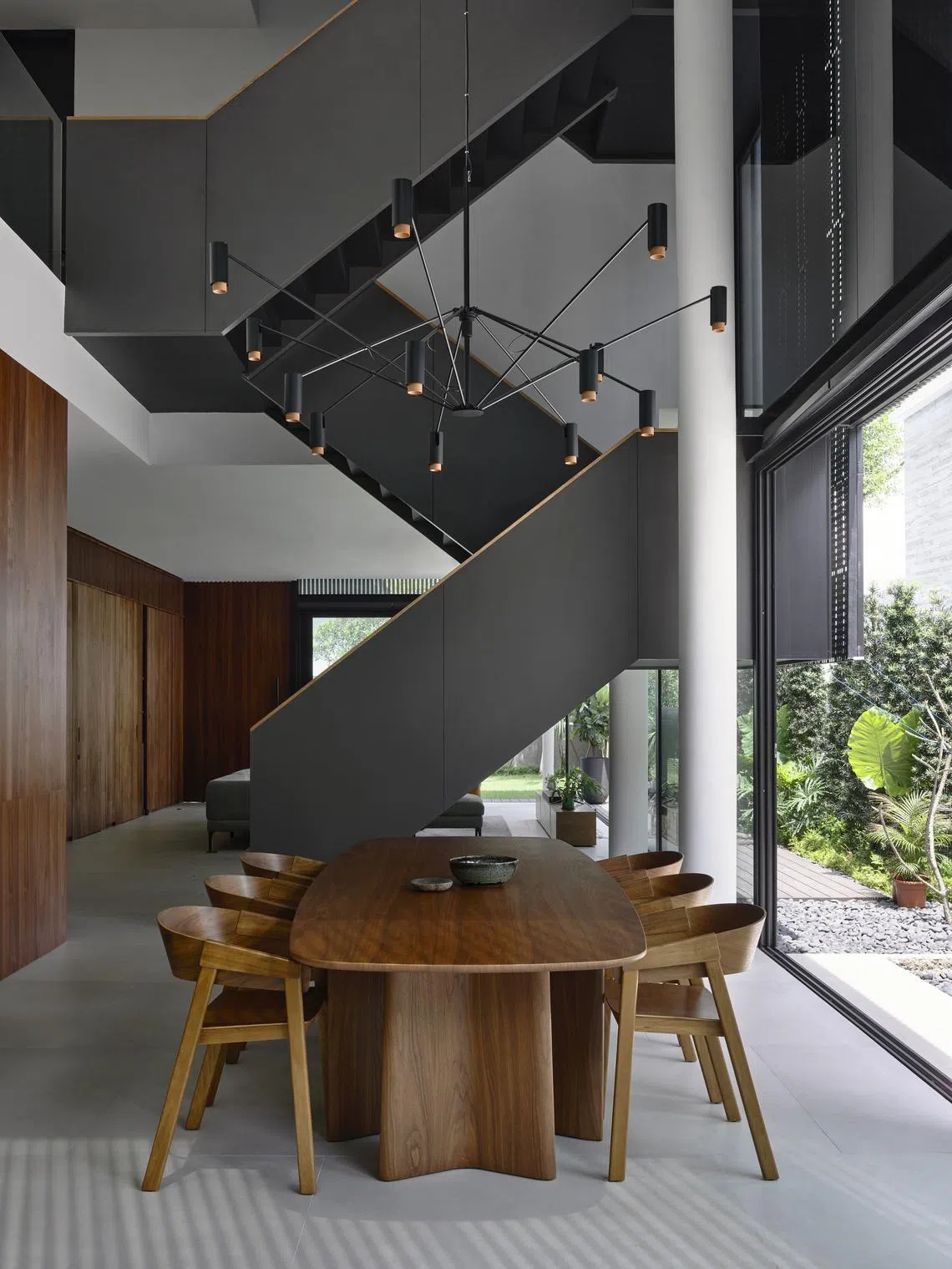
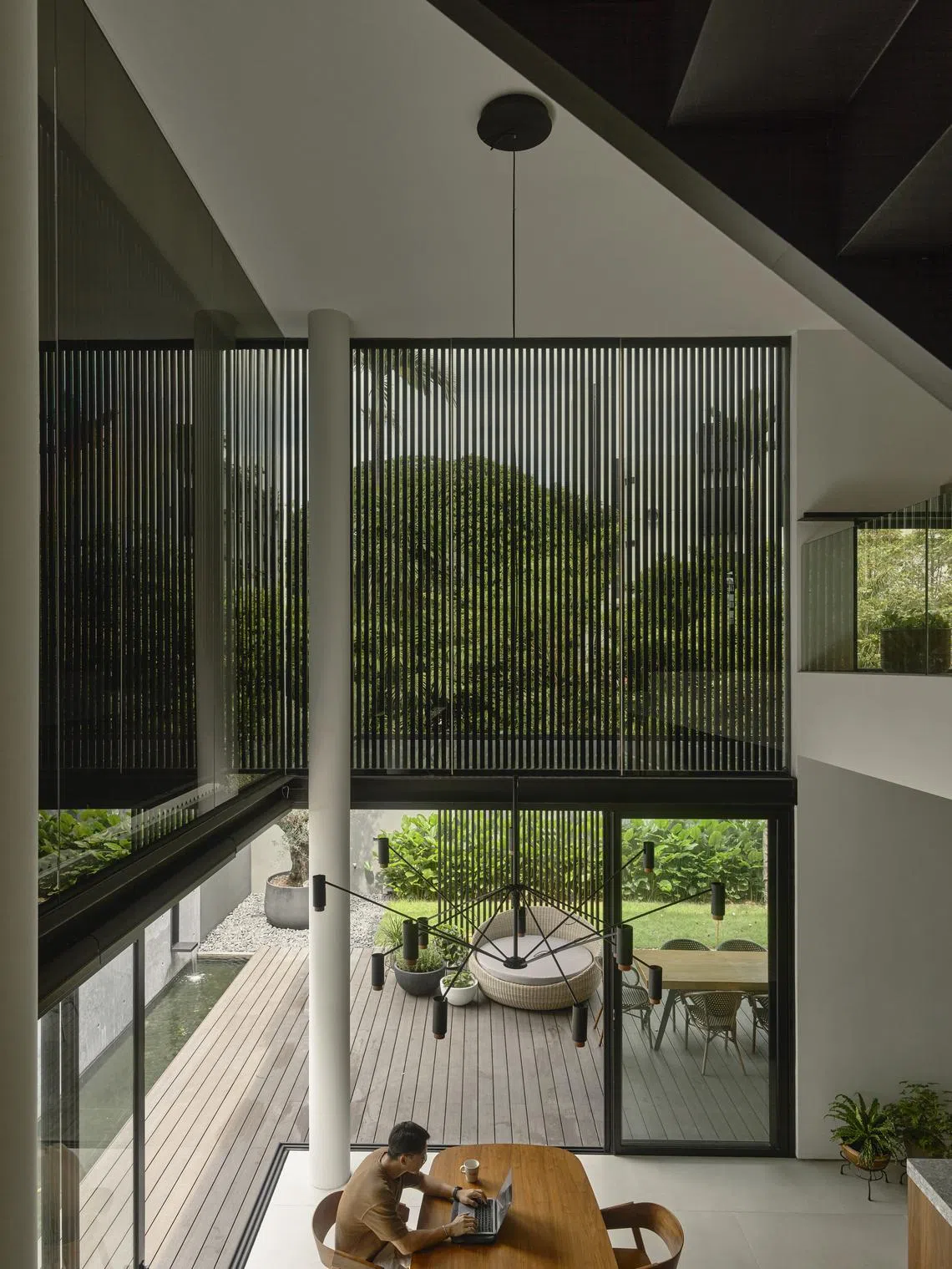
He sectioned the house’s interior into four almost-equal parts and linked them three-dimensionally through double-volume voids, interior openings and a central staircase. One enters a spacious living area that leads into a double-volume dining room, which is overlooked by the family room on the second storey through an opening. The latter is also double-volume and overlooked by another space – the library in the attic.
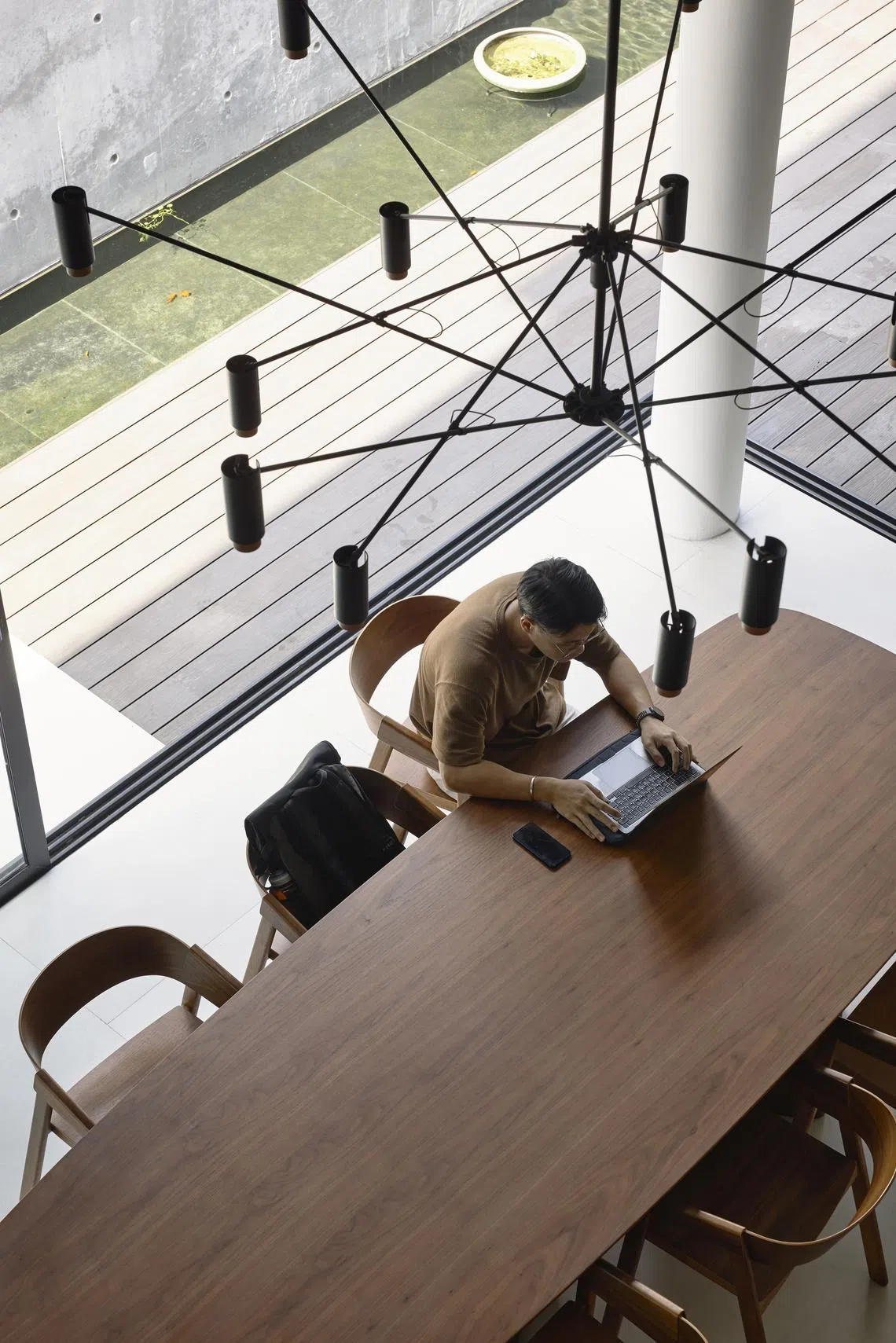
“The lofty family room provides daylight and ventilation for the spaces, which is ideal as the family spends most of their time here,” notes Lim. In similar fashion, the dining room is filled with natural light in the day due to its enlarged volume and windows on the upper part of the space.
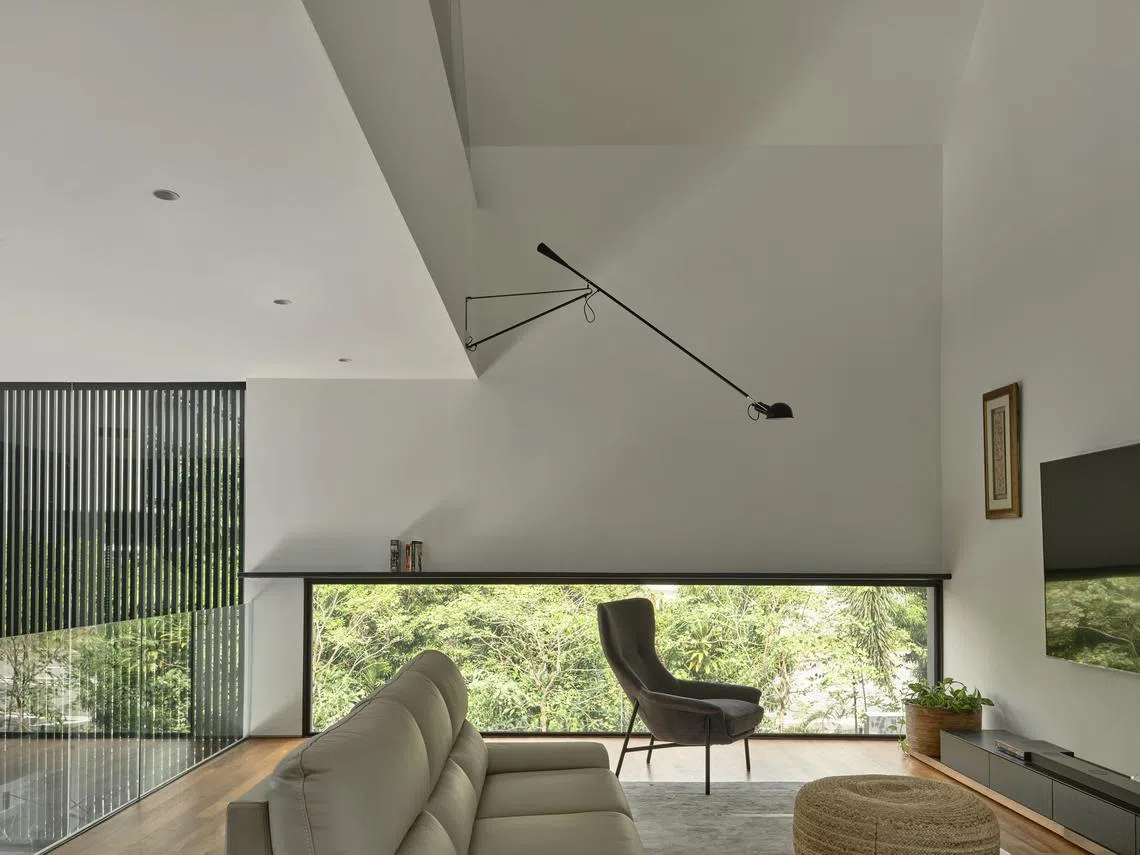
The strategically placed apertures also open the interiors up to the surrounding landscaping. “The homeowner enjoys greenery, so the house’s design needed to provide a very strong connection to the gardens,” says Lim. “Hence, the living and dining spaces were positioned such that they have proximity to the front, side and rear gardens.”
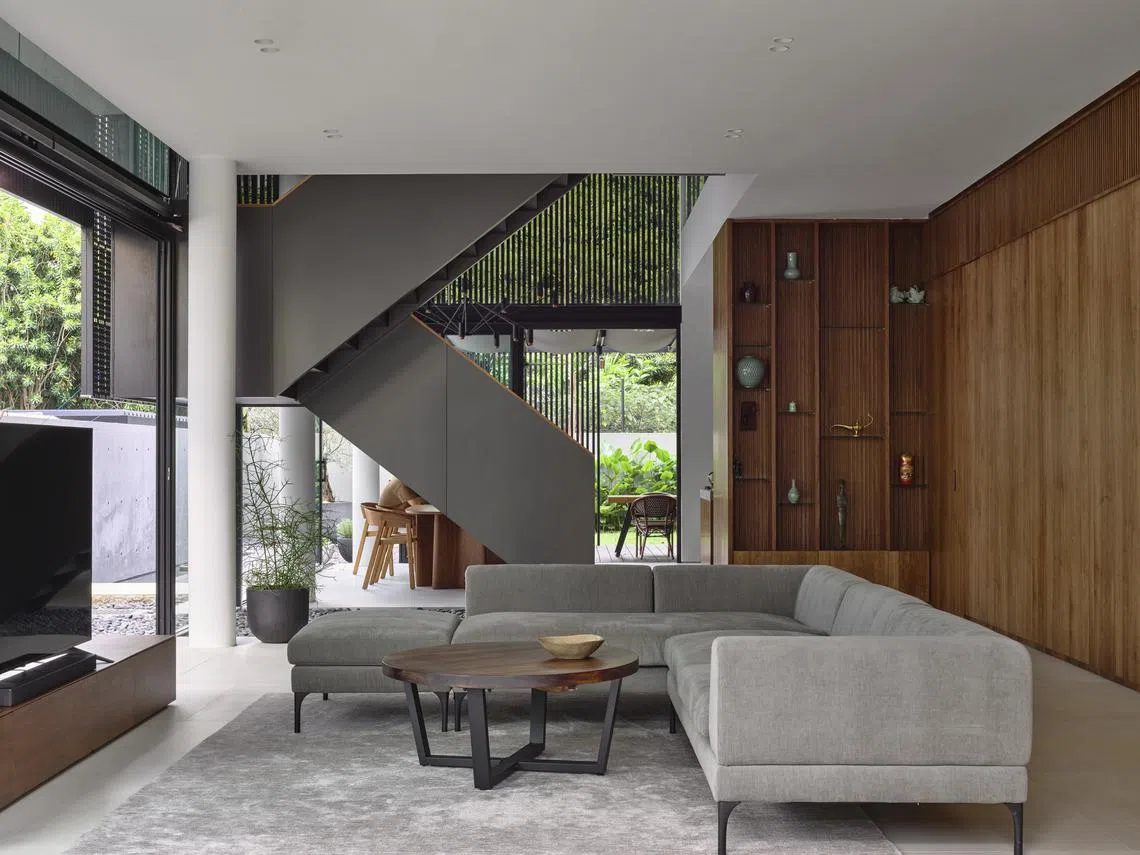
The staircase is a prime feature, winding up like a grey, angular sculpture. Its placement next to the dining room provides a good vantage point to see different parts of the house when one is traversing up or down the steps. Its colour corresponds with the external architecture, which has a grey metal roof and a skin of grey aluminium screens shielding the upper half of the dining room.
Navigate Asia in
a new global order
Get the insights delivered to your inbox.
These screens not only filter sunlight, but also provide privacy from the street. “Privacy is a recurring theme in our studio’s work, and, for this house, we wanted to create a series of connected spaces that weaves through the public and private parts of the house,” Lim explains. The private spaces are wrapped in grey-coloured “volumes”, while the more public spaces enjoy transparency through the use of glass, such as the glass sliding doors throughout the common areas in the first storey.
“The grey skin of the upper volume incorporates aluminium trellises, perforated aluminium and the metal roof,” explains Lim. “Each offers varying amounts of porosity for letting daylight in. Indents are carved out to create terraces that break the monolithic grey massing. The use of off-form concrete and timber tones adds a layer of rusticity to these ‘indents’.”
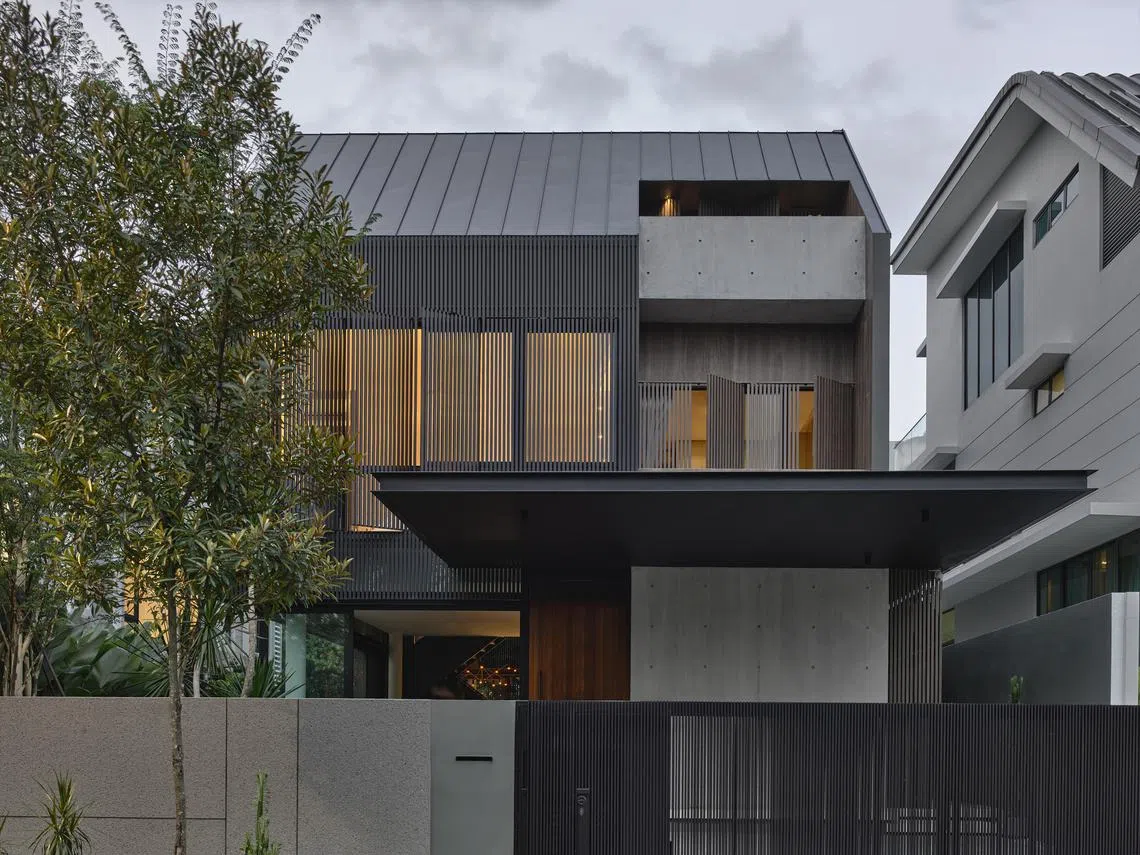
The house’s “quadrant” concept is defined on the facade as four parts – the aforementioned metal screen, the full-height glass sliding doors in the living room, an off-form concrete wall at the car porch that folds outward into a seat for putting on shoes, and a beige stone-clad wall for one of the bedrooms that also comes with screens.
SEE ALSO
After living here for a time, the family is enjoying the house as Lim had intended. “We like that there is a nice flow of connected spaces from the living to dining areas, and then on to a garden pavilion in the rear for our guests to mingle and chill before meals are served,” says the homeowner, who works in a multinational company.
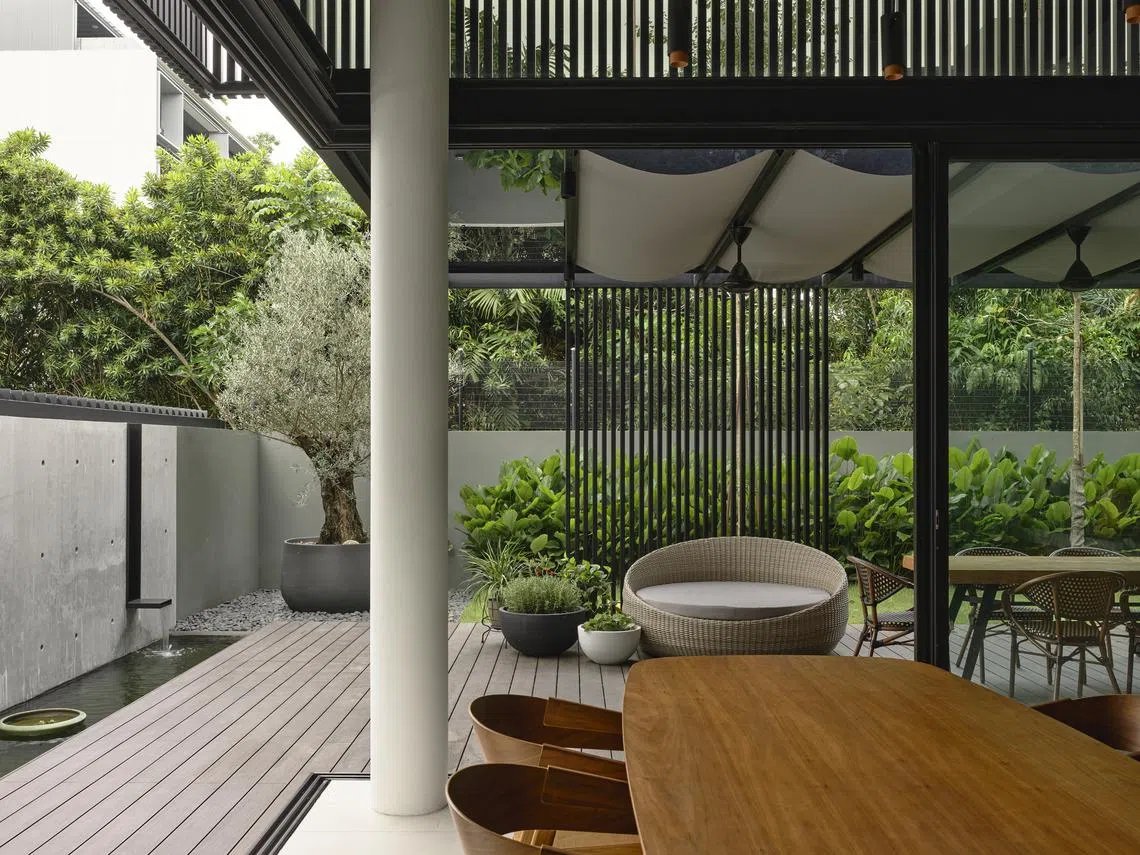
The pavilion is also a favourite place for him and his wife, a civil servant, to enjoy a cup of coffee in the morning after they return from their walks. Plus, it’s where their son relaxes in the breeze after completing his cycling regime. The ample greenery and a trellis overhead brings a resort feel to the sheltered outdoor space.
Meanwhile, Lim has designed a large kitchen with a huge island counter to cater to the family’s love of entertaining. It is particularly useful when the couple are prepping separate dishes for the guests. This is also a busy spot on Sunday evenings as home-cooked meals are prepared. Sliding doors in this space are perennially kept open, enhancing natural ventilation and fluid movement between the preparation, cooking and eating zones.
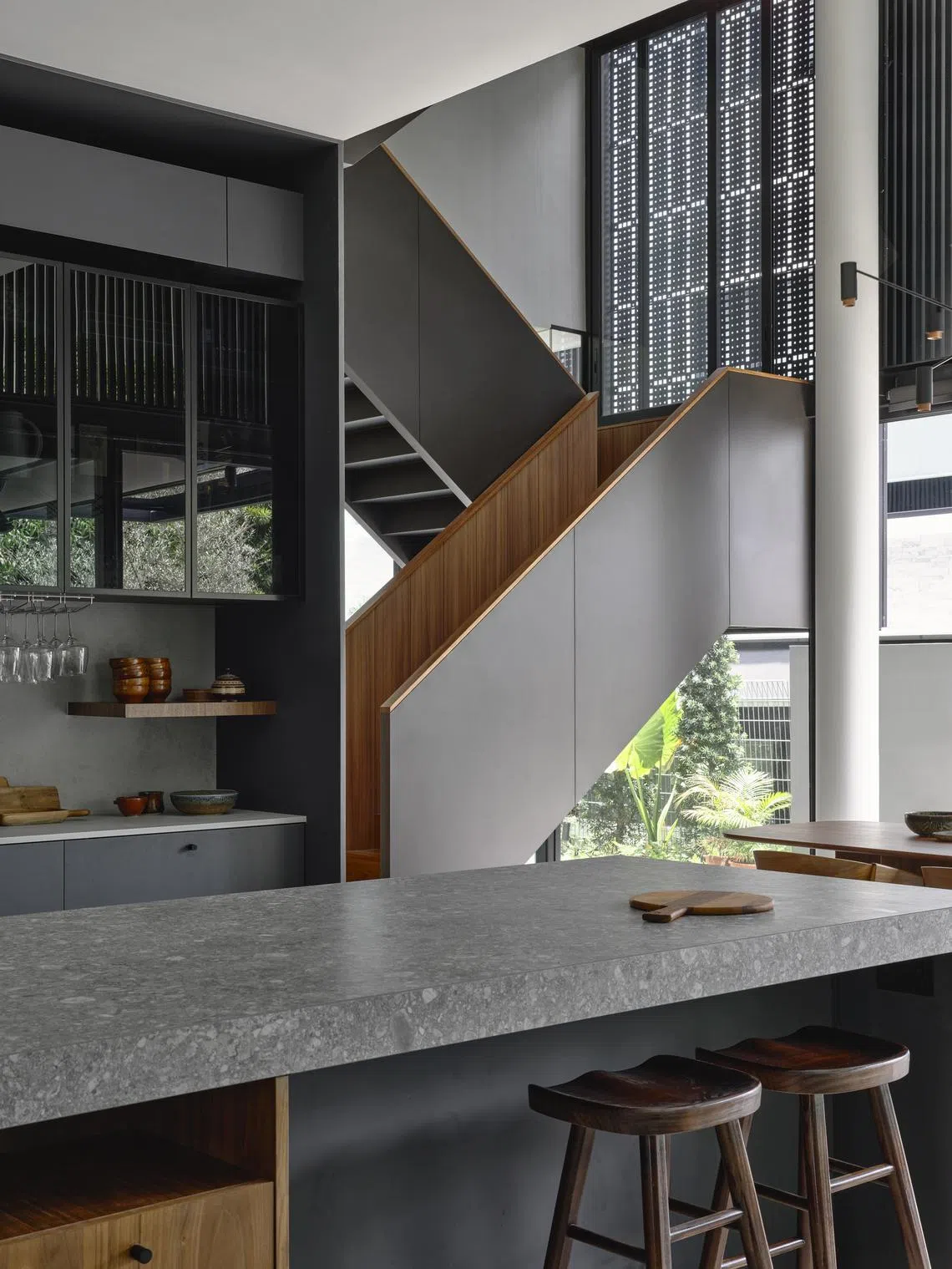
As for those breezy kampung days that the homeowner longed for, he usually leaves the main door and glass sliding doors on the ground floor open – so the interiors feel just as comfortable as he remembers his childhood home to have been.
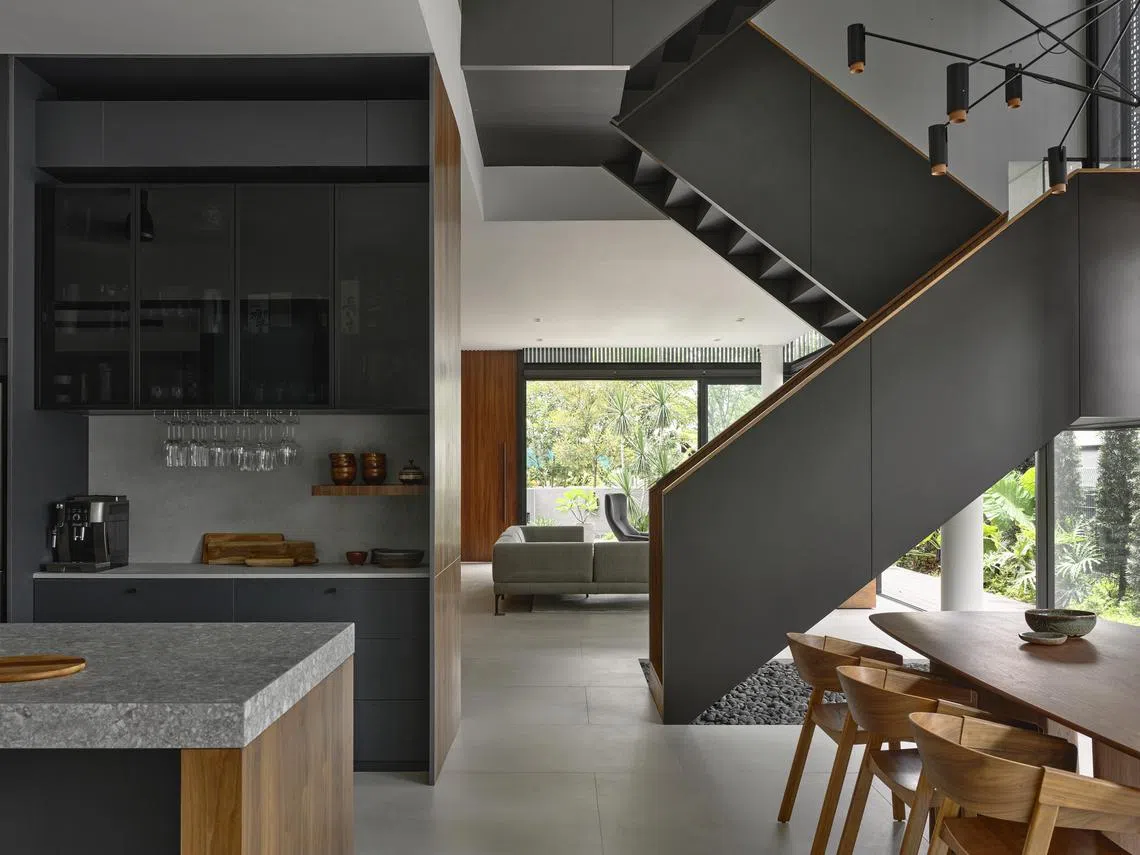
Nature, as he shares, is also part of this memory. “The tall trees in the front and back garden provide beautiful foliage and shade for the house.”
Decoding Asia newsletter: your guide to navigating Asia in a new global order. Sign up here to get Decoding Asia newsletter. Delivered to your inbox. Free.
Copyright SPH Media. All rights reserved.