

From Monaco to Miami: Formula 1 bids to crack America
The track is testing and the competition fierce, but it’s determined to try
NEXT weekend, France. Last weekend, Austria. The one before, Britain. Formula 1’s calendar for July has a familiar look, with Grands Prix in its old European haunts, on circuits with half-a-century of history — three-quarters, in the case of Silverstone in Northamptonshire.
Yet, the diary has some new entries, and some old ones may be scratched out, or at least secure fewer dates in future. For Formula 1 is in the midst of a geographical and commercial shift, away from the old money and exclusivity of Monaco, Monza and the rest, and towards younger, often brasher, markets in the Middle East, Asia and, above all, America.
A few weeks ago ESPN, a big sports broadcaster owned by Disney, shook hands with Formula 1 on a new rights deal for the American market. For the 2019-22 seasons, ESPN was paying an annual fee of US$5 million. For 2023-25, it will reportedly hand over more than US$75 million a year.
Granted, both figures look almost comically small for a sport that stages events on 5 continents, especially next to the sums paid for America’s biggest draws. (Nascar, the biggest name in American motorsports, pulls in US$820 million a year.) Still, a 15-fold rise suggests that Formula 1 is, as it were, on the right track.
For decades, Formula 1 was under the tight control of Bernie Ecclestone, a British businessman. His influence grew throughout the 1970s until he assumed control of broadcast negotiations in 1981 and, with that, what amounted to ownership of the sport. He drove up the fees that circuits paid for the privilege of hosting Grands Prix and sought more for TV rights, often signing deals with pay-TV channels, such as Sky, which had smaller audiences than terrestrial rivals but more cash to offer.
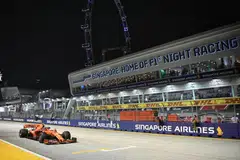
In 2006, Ecclestone sold a controlling stake to a private-equity firm, CVC. He continued as chief executive and maintained the sport’s push into new markets, staging Grands Prix for the first time in Singapore (in 2008), Abu Dhabi (2009) and Russia (2014). When CVC sold its share to America’s Liberty Media in 2016, its investment was hailed as a roaring financial success, even if the sport had lost one-third of its TV audience in 8 years.
Yet, Liberty may still have got a bargain. Since it shifted the then 87-year-old Ecclestone to an advisory role in 2017, it has continued his expansion of the calendar, adding races in Qatar in 2021 and Miami this year (the schedule already had a United States Grand Prix, staged in Texas). But it has also explored areas he had airily dismissed.
In 2014 Ecclestone described social media as “nonsense” and said there was “no point” in Formula 1’s attempting to reach a young audience. Liberty disagrees. It has loosened broadcasting-rights deals to allow more race footage to be reproduced on social media. It commissioned a hugely successful Netflix docudrama, Drive to Survive, which has introduced American motorsport fans, more familiar with Nascar and Indycar, to Formula 1.
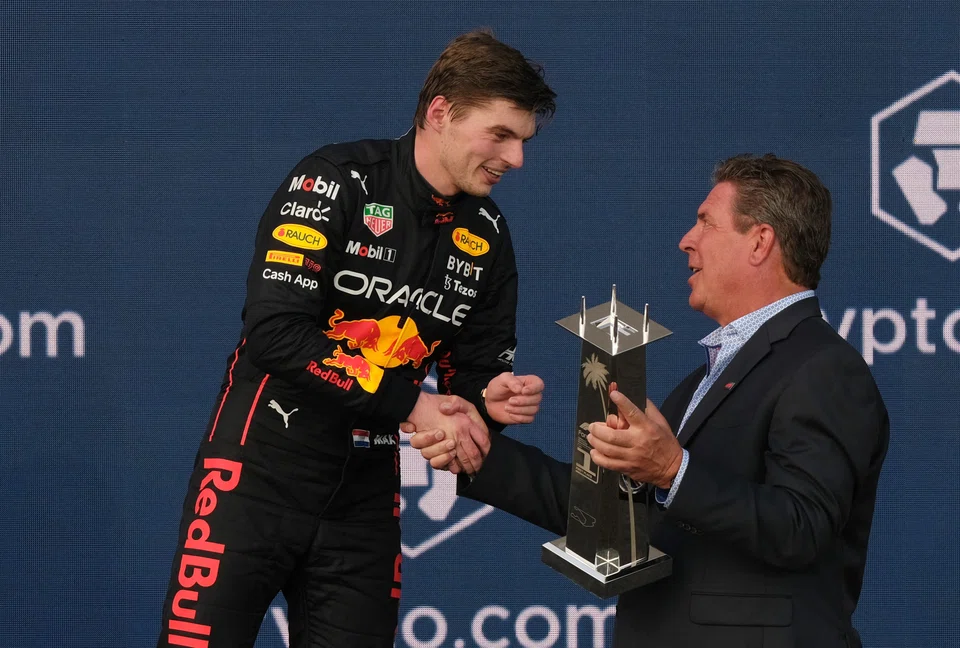
The Miami Grand Prix — to which Liberty is committed for 10 years — is the biggest symbol of the company’s determination to crack America. The first event, held in May, was loud, confident and just a little naff. Denied permission by City Hall to race downtown and on the waterfront, the organisers instead converted the car parks at the Hard Rock Stadium, home of the Miami Dolphins American football team, into a track and installed a fake marina, complete with dry-docked yachts and plastic painted to look like water.
There were celebrities everywhere, from Michael Jordan and Michelle Obama to Paris Hilton and Ashton Kutcher. There were parties, after parties and after-after parties. Admittedly, drivers were lukewarm about the quality of the track and — more seriously— reported concerns about unprotected concrete barriers. But the event was a success. The race roped in 2.6 million American viewers, the most for a Grand Prix in 20 years. And almost a quarter-of-a-million people bought tickets over the 3-day weekend.
More venues are planned. Under both CVC and Liberty, the calendar has grown from 17 races in 2000 to 22 this year. Next year, a night race in Las Vegas will add more American glitz (and, doubtless, more celebs). Ecclestone’s successor as chief executive, Stefano Domenicali, has held talks about staging South Africa’s first Grand Prix in 30 years, which would also add a sixth continent.
But the number of races cannot grow indefinitely. Current commercial agreements cap it at 25. A longer season requires the co-operation of the teams, whose off-season — a key time for technical development, recuperation and contract negotiations — would be squeezed. Several historic European circuits, such as Spa in Belgium and Paul-Ricard in France, may end up with races only every other year.
With three American races already in the diary for 2023, further growth in America will require a different tactic. The obvious one is adding an American team, which looks likely. Michael Andretti, son of Mario, winner of 12 Grands Prix in the 1970s and 1980s and champion in 1978, wants 2 spots on the grid from 2024. Most of the 10 existing teams are opposed, as their revenue would be diluted. New entrants must anyway compensate incumbents to the tune of US$200 million in total. Andretti is believed to be prepared to pay this, but he may have to find more. He seems determined. A deal looks inevitable. So does Formula 1’s push into America.
©2022 The Economist Newspaper Limited. All rights reserved
Decoding Asia newsletter: your guide to navigating Asia in a new global order. Sign up here to get Decoding Asia newsletter. Delivered to your inbox. Free.
Share with us your feedback on BT's products and services
TRENDING NOW
High Court rules against Julius Baer’s Singapore trust arm in US$50 million family trust dispute
MSCI proposes standalone status for Indonesia; Jakarta stocks plunge 8%

Once staunchly pro-China, Malaysian Chinese businesses are now distancing themselves from Beijing
No chicken feed: How Malayan Flour Mills built an empire from flour to fowl

