The Polestar 3 is an SUV for people who care
 Add BT as a preferred source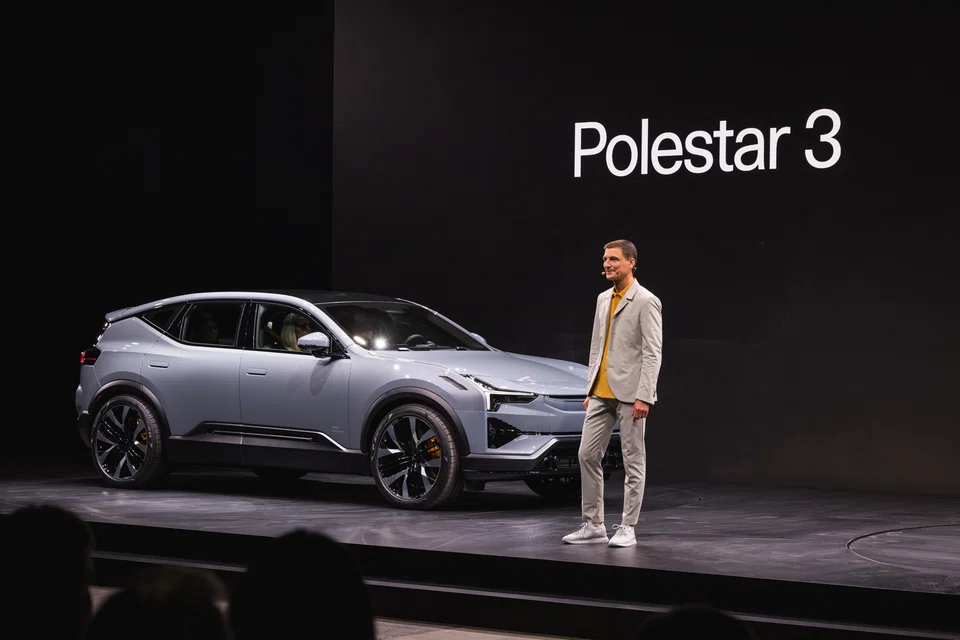
DeeperDive is a beta AI feature. Refer to full articles for the facts.

WHILE electric car maker Polestar focuses on making motoring sustainable, it is reinventing the Sport Utility Vehicle (SUV) in order to sustain its own sales growth.
The Nasdaq-listed company, a Volvo Cars spin-off, unveiled the Polestar 3 at a glitzy event in Denmark on Oct 12 as part of its plan to grow annual sales to 125,000 cars next year, two-and-a-half times this year’s target of 50,000. It aims to sell 290,000 vehicles a year by the end of 2025.
The new car joins an increasingly crowded field of pure electric SUVs from brands like Audi, BMW and Mercedes-Benz, whose premium ranks Polestar is hoping to join.
But launching a new SUV is a sound commercial move. The breed has gained global market share every year since 2010, the International Energy Agency (IEA) has noted. But SUVs’ popularity sits poorly with the sustainability-minded because they are heavier and more energy-hungry than the average car.
An IEA analysis claims that even though electric vehicle (EV) sales tripled in 2021, a parallel rise in SUV sales cancelled out the resulting emissions benefits.
The Polestar 3 is an attempt to give the breed a major makeover. “People love sport utility vehicles (SUVs). There is a passion for them, but there is also an ‘I don’t care’ element because of their inefficiency,” Polestar chief executive Thomas Ingenlath said at the car’s launch party. “(The SUV) needs to be sustainable.”
Navigate Asia in
a new global order
Get the insights delivered to your inbox.
Seen in the flesh, the Polestar 3 stands out from other SUVs by standing low. It sits closer to the ground than its competitors, but it doesn’t lack visual drama — its smoothly-designed front end features an aerodynamic appendage never before seen on an SUV, a wing that sits between the headlights to smoothen the flow of air over the car.
The front wing contributes to the car’s drag coefficient of 0.29Cd, a measurement of wind resistance. The Polestar 3’s relatively low figure means it slips efficiently through the air, which is one reason it has a relatively long-claimed range of 610 km from a single charge of its large 111 kilowatt-hour battery pack.
Polestar will start selling a dual-motor version of the new SUV with 360 kilowatts (489 horsepower), which is enough to give it sports-car acceleration, even though it weighs more than 2.5 tonnes. It will hit 100 kmh in five seconds flat and reach a maximum of 210 kmh. An optional Performance Pack brings power up to 380 kW and the same sprint time down to 4.7 seconds, with upgraded suspension and brakes to cope with the extra pace.
Polestar says a torque vectoring system that can divert power from the back motor independently to either rear wheel will give it razor-sharp cornering ability, while its low ride height improves its stability.
Some versions of the Polestar 3 will have more than 30 sensors including radar, lidar (a kind of long-range sensing device), camera and ultrasonic systems. Polestar says the sensors will feed artificial intelligence software with the data to give it advanced active safety and driver-assistance features, with the ability to drive itself eventually.
“We plan for (autonomous driving) to be available in certain markets, beginning with the west coast of the USA, in 2024,” said Dennis Nobelius, the company’s chief operating officer.
Inside, the car hews closely to Polestar’s Scandinavian roots, with subdued interior lighting. It has a 14.5-inch infotainment touchscreen powered by Google’s Android Automotive OS. In keeping with Polestar’s sustainability theme, the upholstery and cabin trim are made of materials such as wool and synthetic leather derived from pine oil. Where nappa leather is used, it comes from sources that prioritise animal welfare.
The Business Times estimates that it would cost around S$450,000 here at today’s Certificate Of Entitlement prices, and with all taxes, fees and rebates. At that price, the Polestar 3 needs to impress. But it also needs to keep the company going because Polestar could be devastated if it flops.
Like many carmakers, it has been affected by global supply-chain problems as well as Covid outbreaks that disrupted operations at its production base in China. But the company is especially vulnerable because it sells only one other model, the Polestar 2. Since going public in June this year, Polestar has lost nearly two-thirds of its market value.
Whether the Polestar 3 delivers, CEO Ingenlath says the company is on track to close 2022 with its 50,000-car target nailed, and move on from there.
“We’ve produced those cars, they are on the way to the markets. What’s left is to deliver these cars to the customers. With all the learning that we have (about the) supply chain, that’s how you prepare for the future,” he told BT. “You learn, you toughen up, and make sure you are prepared.”
With a new model whose front end has a wing, Polestar could also use a prayer.
Decoding Asia newsletter: your guide to navigating Asia in a new global order. Sign up here to get Decoding Asia newsletter. Delivered to your inbox. Free.
Copyright SPH Media. All rights reserved.