

MS Academy offers alternative employment pathways in music for persons with disabilities
Project InteGr8 combines their passion for music performance with vocational training
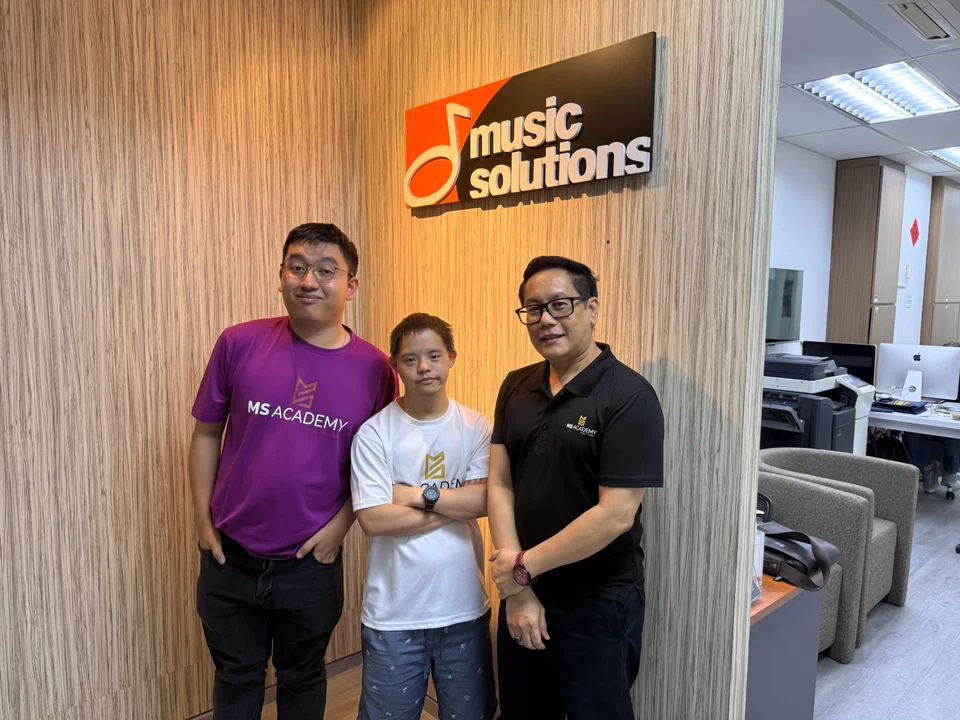
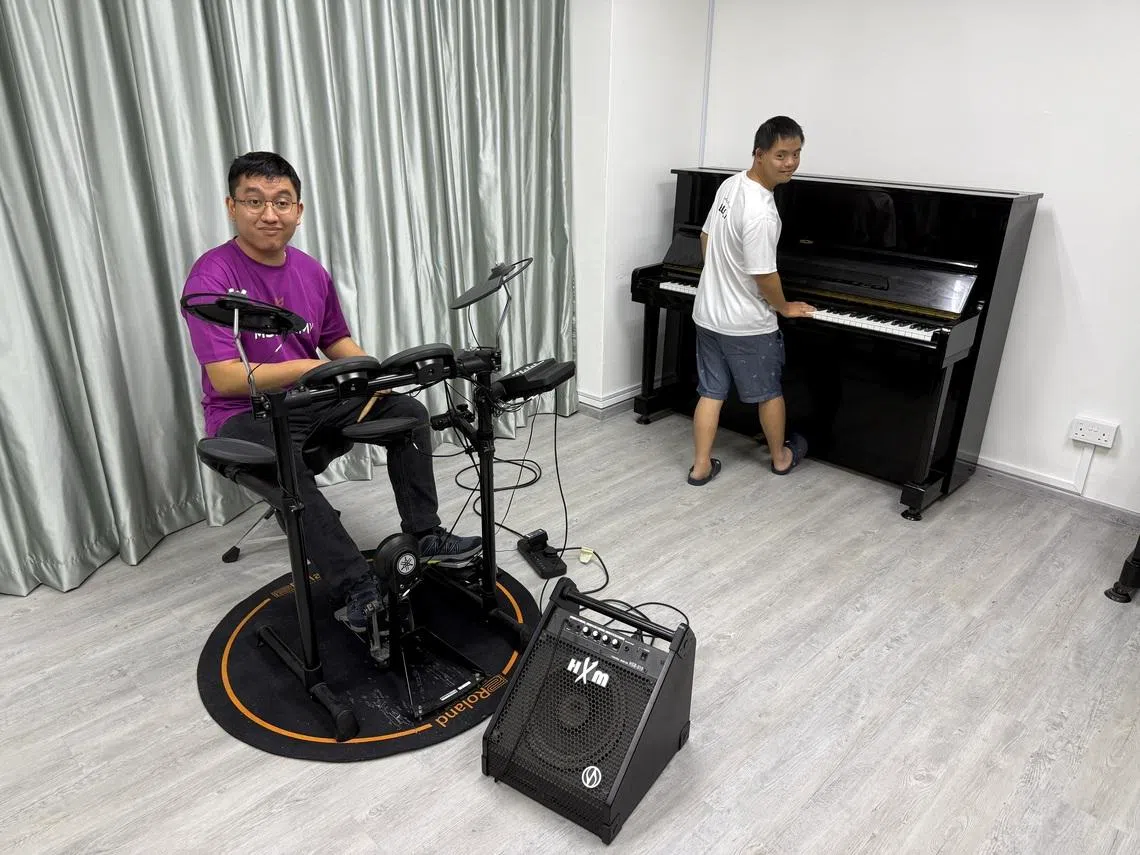
[SINGAPORE] John Chan, a 35-year-old with an intellectual disability, and Jonathan Tan, a 23-year-old person with autism spectrum disorder, both dream of performing on stages around the world.
So far, the musicians have had the chance to do so – not around the world, but in Singapore and Malaysia.
As students of MS Academy, an inclusive music school founded by the social enterprise Music Solutions, they have been invited and even compensated to perform at schools, events and public showcases.
Even though both students have full-time jobs in other sectors, they attend MS Academy on a weekly basis, depending on the flexibility of their work schedules.
Besides performance, students undergo vocational training and learn about the more technical aspects of music – such as instrument repair – as part of the Project InteGr8 initiative.
Lenny Mazlan, associate director of Music Solutions, said: “(It) addresses gaps in terms of training and promotes inclusive employment and gets community support. Project InteGr8 allows us to play a role in the ever-daunting questions from caregivers about the post-18 cliff effect.”
This refers to the sudden reduction of services and support available for persons with disabilities (PWDs) once they turn 18 and graduate from a special education school – and there is a need to address this gap, he said.
“Interest-driven” motivation
The MS Academy initiative offers PWDs alternative employment opportunities and pathways outside traditional sectors that they work in, such as F&B, hospitality and logistics.
Mazlan said: “For many PWDs, traditional job routes may not always reflect their strengths, interests or preferred ways of working.”

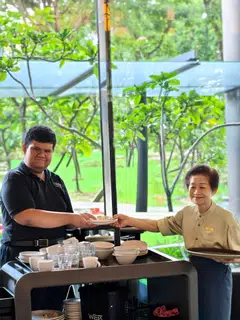
He said that parents of PWDs have approached Music Solutions saying that their children do not fully enjoy their full-time jobs and want to pursue music instead. Thus, the idea for Project InteGr8 came about – combining PWDs’ passion for music performance with vocational training so they can pursue alternative career pathways.
Music Solutions was awarded the Enabling Lives Initiative Grant in October 2024 by the Tote Board and SG Enable. It officially opened in September 2025.
Mazlan noted that traditionally, the music industry is not “widely seen” as a typical career pathway for them.
“It is often perceived as a niche field, largely because of barriers such as limited training opportunities, fewer inclusive workplaces, and assumptions that roles in music are either highly performance-based or technically demanding.”
Instead, pursuing music is interest-driven – where PWDs approach MS Academy, and they find opportunities for them to work and grow their skill sets.
Mazlan added: “These pathways create space for individuals to explore what they genuinely enjoy and are naturally inclined towards. When work aligns with personal interests... learning becomes more meaningful, and motivation grows organically.”
Different aspects of music
Project InteGr8 offers three tracks in terms of vocational training – technical, creative and performance. Students go through a foundational module, technical and performance module, creative and performance module, and workplace integration before they graduate.
While students often join MS Academy because they are interested in performing, the technical track is the most “logical approach” to obtain employment.
“Performance is one thing, but the real ‘iron rice bowl’ is the technical aspect,” said Mazlan.
“In terms of market demand, the technical track is the one that provides the most opportunities for PWDs to work in the music industry. As it is now, even neurotypical performers have difficulty in the industry.”
Under the technical track, students learn how to repair a variety of instruments – from pianos to drums to string instruments – as well as sound management, equipment set-up and studio techniques, such as sound editing.
He added that PWDs are especially suited for instrument repair, as they are “very focus-oriented” and follow structured instructions well. And while they may use tools to help tune or repair instruments, human intervention is still needed to do the job.
MS Academy has partnerships with City Music Singapore, Music Elements and Music Connoisseur Singapore to provide students with direct industry exposure. Schools also request instrument repair.
After completing up to 150 hours of training, MS Academy will speak to its partners and present suitable profiles as job candidates.
Mazlan added: “The importance of the performance track is for them to have a better understanding of instruments and how they are played. Then they can relate this to their training in school.”
The creative track is another opportunity and avenue for students to express themselves. They learn about content creation such as video or song production as well as building a portfolio, and receive opportunities to perform at public showcases.
Mazlan noted that students also learn critical soft skills that assist in independent living, such as communication, emotional regulation, self-confidence and recognising responsibility.
“As more families, partners, and organisations recognise the value of an interest-driven and inclusive training model, the demand for such programmes continues to grow. This signals a clear need to expand our capacity, both in terms of student intake and the range of opportunities we can offer.”
Decoding Asia newsletter: your guide to navigating Asia in a new global order. Sign up here to get Decoding Asia newsletter. Delivered to your inbox. Free.
Copyright SPH Media. All rights reserved.
TRENDING NOW
High Court rules against Julius Baer’s Singapore trust arm in US$50 million family trust dispute

MSCI proposes standalone status for Indonesia; Jakarta stocks plunge 8%

Once staunchly pro-China, Malaysian Chinese businesses are now distancing themselves from Beijing
No chicken feed: How Malayan Flour Mills built an empire from flour to fowl

