



Myanmar bets on ancient temples, Buddhist pilgrimage sites to boost tourism
The country has expanded its visa-on-arrival programme for travellers from China, India, Japan and South Korea
 Add BT as a preferred source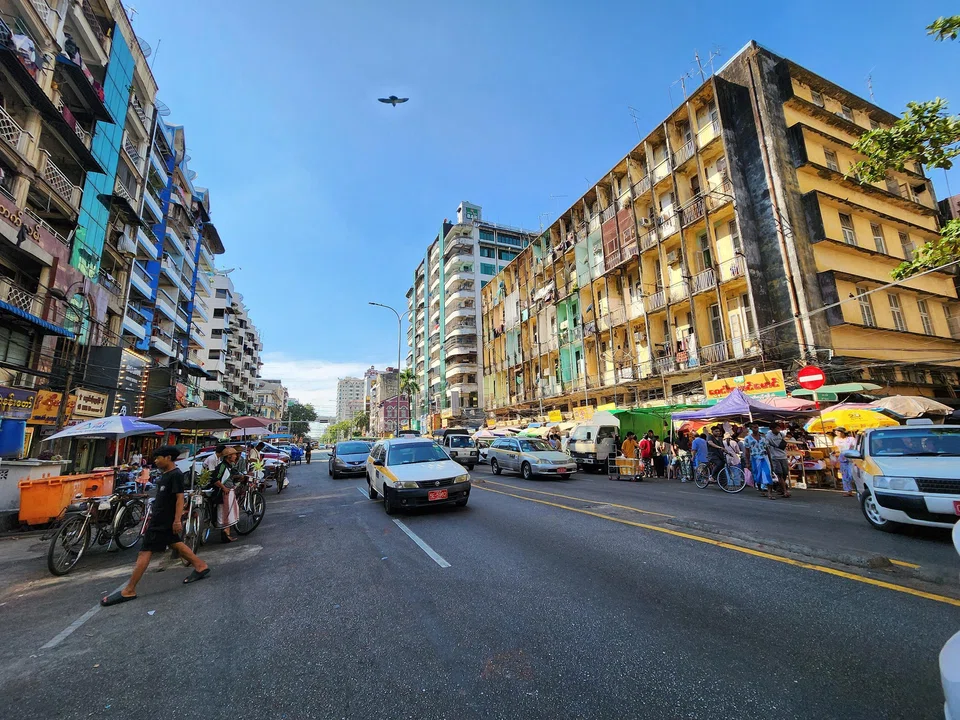
MYANMAR’S ancient temples, luxury hotels and Buddhist pilgrimage sites are stirring back to life as the country’s military-backed government bets tourism will become one of the first visible signs of an economic recovery after this year’s election.
Authorities want to almost double foreign visitor arrivals to 1.8 million this year by easing visa rules and targeting travellers from neighbouring China and Thailand, in a bid to revive an industry devastated since the 2021 coup plunged the country into civil war and international isolation.
The tourism push is an early test of whether Myanmar can persuade visitors and investors that parts of the country are once again open for business.
“We mainly expect to see a surge in Chinese and Thai visitors, so they will be a key driver of our tourism growth,” said Maung Maung Kyaw, permanent secretary at the Ministry of Hotels, Tourism and Culture.
Myanmar welcomed 973,263 international visitors in 2025, according to official figures obtained by Bloomberg News. Arrivals reached 448,205 to May this year, up about 5 per cent from a year earlier, meaning the government will need a much stronger second half to reach its target.
Even if Myanmar meets its goal of 1.8 million visitors this year, it would still fall well short of the roughly 4.7 million it welcomed in 2015 after opening up to the world, and pale beside neighbouring Thailand, which attracted about 33 million tourists last year and is targeting a similar number this year.
Chinese travellers remain Myanmar’s biggest source of visitors arriving by air, followed by Thais and South Koreans. Chinese arrivals rose 12 per cent in the first five months of the year, while Thai arrivals increased 7 per cent.
The official figures cover legal arrivals and do not include people trafficked into scam compounds, which have been the focus of regional crackdowns that led to the repatriation of thousands of Chinese nationals.
Myanmar has expanded its visa-on-arrival programme for travellers from China, India, Japan and South Korea, while citizens of Russia and most South-east Asian countries already enjoy visa-free entry. Officials say further easing of visa rules will depend on demand from individual markets.

The country “prioritises trust-building”, said Aung Aye Han, director general of the Directorate of Hotels and Tourism, adding that Yangon, Mandalay, Bagan, Inle Lake and the Golden Rock Pagoda remain the biggest draws.
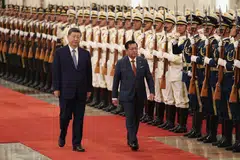
Since former military chief Min Aung Hlaing was sworn in as president in April, he has sought to rebuild regional ties with state visits to China and India and a push to normalise relations with South-east Asian neighbours.
Thailand, one of Myanmar’s closest economic partners, has also begun re-engaging. Thai Foreign Minister Sihasak Phuangketkeow visited Myanmar in April.
Popular Thai travel influencers, including Farose and Go Went Go’s Bas, have recently filmed in Yangon, showing the country’s biggest city to viewers after years in which it largely disappeared from regional travel itineraries.
Tourist frontier
Before the coup, Myanmar had been emerging as one of Asia’s most promising frontier destinations, prized for its colonial architecture, ancient temples and relatively untouched landscapes.
The interest is starting to return, according to tour operators. Inquiries from Europe, the US and India have picked up despite limited international flight options, suggesting interest in Myanmar extends beyond neighbouring countries, said Thet Lwin Toh, managing director of Myanmar Voyages International Tourism.
Hotels that once relied on international leisure travellers are also seeing signs of life again. Occupancy at luxury hotels in Yangon has risen about 10 per cent since the election, according to Chatrium Hotel Royal Lake general manager May Myat Mon Win, who is also an adviser to the Myanmar Tourism Federation. Most guests are now business travellers, religious pilgrimage groups and visitors exploring investment opportunities.
“We expect a resurgence in arrivals from Japan, primarily driven by business and investment rather than traditional tourism,” she said.
Western governments continue to warn against travel. The US State Department maintains a “Do Not Travel” advisory because of armed conflict and unrest. Even so, official figures show arrivals from the US rose 17 per cent to May.
Among them was Liam Martinez, a 34-year-old from Texas, who said YouTube videos persuaded him to visit despite the headlines.
“I feel completely safe here, even travelling all on my own,” he said while visiting Yangon. “You cannot always take the news at face value.” BLOOMBERG
Decoding Asia newsletter: your guide to navigating Asia in a new global order. Sign up here to get Decoding Asia newsletter. Delivered to your inbox. Free.
Share with us your feedback on BT's products and services
TRENDING NOW
Qatari LNG ship struck in Strait of Hormuz, testing US talks
DBS shares rise 1.9% to hit all-time intraday high as sentiment improves

‘Baptism of fire’: Andre Khor on leading Singapore refiner Aster through an energy crisis
Singapore retains top spot as most expensive city for HNWIs, with five Apac cities in global top 10

