Natee Utarit: Clash of civilisations
Thai artist blends Eastern and Western cultures for satirical effect

SINCE the early 2000s, Thai artist Natee Utarit has made a name for himself fusing Western historical art influences, such as Renaissance and Baroque styles, with incisive social and political commentary on South-east Asian identity and politics.
His latest exhibition at STPI begins with a thought experiment: What if Buddha had journeyed West and encountered Greco-Roman culture? Using this speculative lens, the artist delves into complex themes of decolonisation, identity and cultural hybridity, and explores the interplay between Eastern and Western traditions.
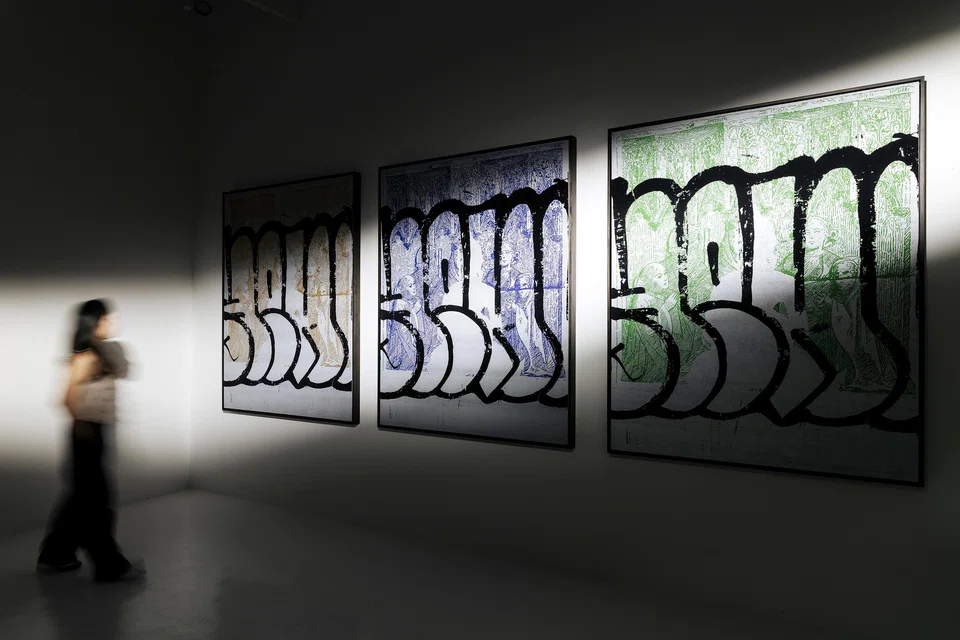
In a screen print series titled Buddha Napoli, Utarit overlays Buddha’s form onto a classical Western etching, and then adds a final layer of bold, stylised contemporary graffiti.
Exhibition curator John Tung says: “Graffiti is often seen as a modern visual language, but it actually traces back to ancient times, as far as Pompeii. The perceived juxtaposition of Buddha, graffiti and etching here is, in reality, a blending of visual cultures with deep historical roots.”
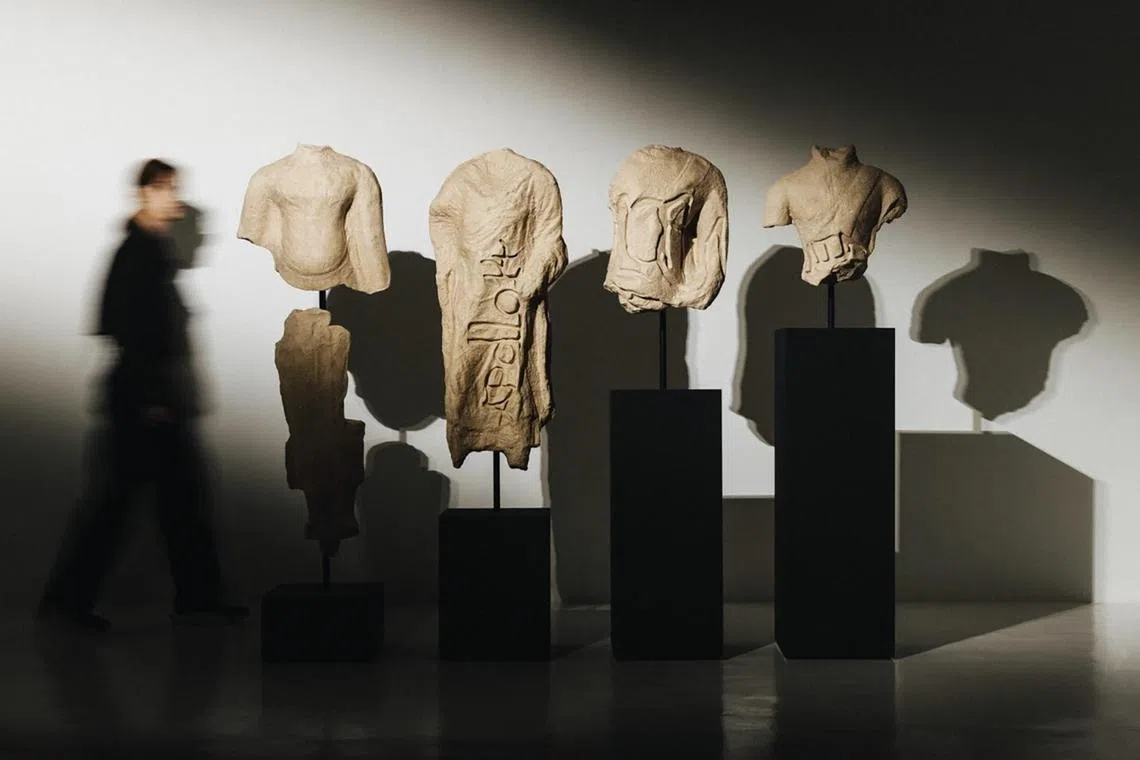
Elsewhere, Utarit ventures into sculpture, using STPI-cast paper to create a suite of Buddha statues with missing limbs and heads. He says drily: “I was working on a Gandhara Buddha when an accident caused the head to break off. Suddenly, it looked more Greco-Roman than Buddhist, and I realised: ‘This works’.”
The fragmented statues are integrated with graffiti to symbolise the erasure and alteration of cultural artefacts during colonial periods.
One of the largest works in the exhibition is the 6.5-metre-long painting Buddha Palazzo. Here, Utarit combines acrylics, screen printing, flocking and etching to create a work that juxtaposes Western architectural forms with Buddhist imagery, inviting viewers to reflect on Western hegemony and its impact on cultural identity through a post-colonial lens.
The show, titled Deja Vu: Buddha Is Hiding, runs at STPI from now till Dec 1.
Decoding Asia newsletter: your guide to navigating Asia in a new global order. Sign up here to get Decoding Asia newsletter. Delivered to your inbox. Free.
Copyright SPH Media. All rights reserved.