

New production gives Richard III a twist
Viewed in Brexit's context, the play makes one feel what's happening onstage is just politics as usual
London
YOU know these are scary times when Richard III starts to look like real life. Audiences for the Almeida Theater's popular revival of Shakespeare's study of a megalomaniac who plunges his country into civil war may find themselves thinking, "But I know this story, and it's happening right now."
This rush of too-close-for-comfort deja vu doesn't come from the usual inferences that theatregoers have been encouraged to draw in recent years from Richard III, with its amoral title tyrant bringing to mind past and present dictators of Eastern Europe, Asia and Africa.
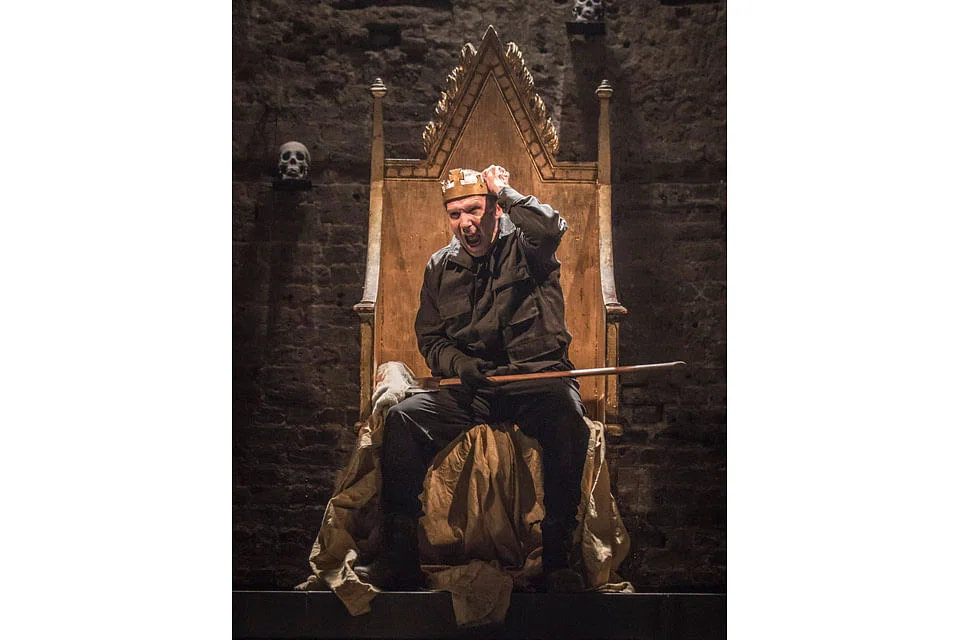
In Rupert Goold's tightly focused new production - which stars a blood-freezing Ralph Fiennes and a beautifully battered Vanessa Redgrave - it's not so much Richard who evokes shudders of amused and uneasy recognition but the world of fickle alliances and self-serving powermongers he inhabits. Richard and his rivals for the throne of England flatter, deceive, betray, woo and abandon one another at the speed of television sound bites.
Anyone familiar with the bruising governmental donnybrook occurring in the corridors of Parliament in London in the weeks preceding and following the Brexit referendum may be forgiven for thinking that what's happening onstage is just politics as usual. Even if high-echelon back-stabbing in London doesn't involve real daggers any more (at least not to my knowledge), it still racks up devastating collateral damage - including the faith of a reeling electorate in those who would control its future.
In an interview with The Guardian last month, Fiennes said of the Almeida production: "We went into this not knowing what the referendum result was going to be, so when it was as divisive as it was and we saw all these political figures making a play for leadership, Boris Johnson, Michael Gove . . . the audience suddenly, it changed. Not through our doing but just because of events happening around us."
Political relevance on the London stage - which, more than its New York counterpart, often finds itself in active and confrontational dialogue with its audiences - is assuming different but equally vital forms, sometimes as traditional as rethought classics, sometimes as immediate as social work. In recent weeks, theatre artists throughout Britain have created and imported works that deal specifically with the international immigration crisis and the potential effect of closed British borders.
Institutions including the West Yorkshire Playhouse in Leeds and, more recently, the Young Vic in London have pledged to become "theatres of sanctuary", with the goal of giving express voice to the stories of the politically displaced and the socially marginalised. Now We Are Here, which opened last month at the Young Vic under the direction of Ian Rickson, is a documentary piece that examines the fraught existences of gay, transgender and lesbian refugees from East Africa, Pakistan and Jamaica.
This week, the Southbank Center is presenting Encampment, a festival of performances and discussion groups that recreates the Good Chance Dome arts space set up for refugees in the camp in Calais, France, known as the Jungle. And at the Royal Court Theater last week, you could see Pigs and Dogs, an invigorating 15-minute, three-performer play by the great Caryl Churchill (Top Girls, Cloud Nine) that dissects the linguistic history and implications of sexual oppression in Africa (and, by extension, its former coloniser Britain).
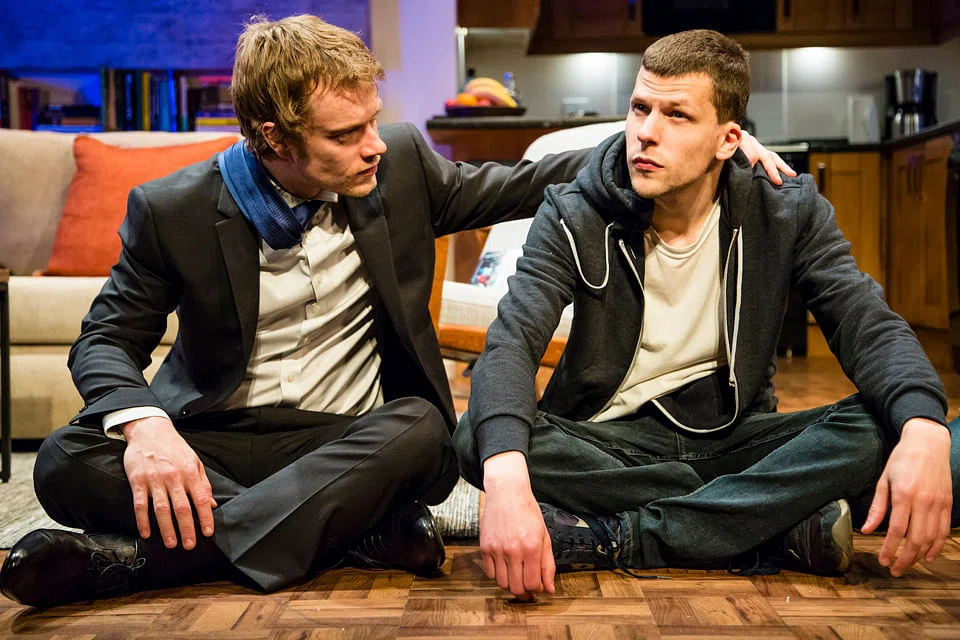
Other collisions of art and politics are more startling and fortuitous. That's when current events overtake and infuse a play written recently, or centuries earlier. That's true not only of the current Richard III but also of The Spoils, the 2015 US play, written by and starring Jesse Eisenberg, which opened this summer at Trafalgar Studios. Directed by Scott Elliott, this import from the New Group of Manhattan centres on the fraught friendship of a solipsistic, aimless and affluent young New Yorker and his ambitious Nepalese roommate, who's hoping to find work in the United States. (Eisenberg plays the American and Kunal Nayyar his roommate in the roles they created off-Broadway last year.)
"I knew Brexit was coming when we decided to do the play," Eisenberg told me in an interview last week. "But I had no idea it would be the kind of watercooler conversation it became. I thought it would be some kind of internal parliamentary discussion, and it turned out to bring some, I would say, pretty upsetting dormant feelings into the public sphere."
Eisenberg said that when he learnt about the June 16 murder of the anti-Brexit Parliament member Jo Cox by a gunman yelling "Britain first!", "My first feeling was, 'My goodness, can we do this show tonight?' and my second feeling was, 'This is the most important story to tell right now'."
I enjoyed The Spoils as a lacerating satire (and as an examination of the kind of self-sabotaging jerk in which Eisenberg specialises) when I saw it in New York last year. Watching it last week at Trafalgar Studios, where it has become a generation-crossing hit, I found myself surprised by tears. Comedy had somehow wandered into the realm of what felt like deeply personal tragedy.
Hope of any kind is missing in action by the end of the Almeida's Richard III, despite the destruction of its title character and the ascendance of a new king (the Earl of Richmond who, embodied by Tom Canton, himself glistens with the fever of ambition). What's most disturbing about this production - and its star performances - isn't the bloody horrors perpetrated for political self-advancement.
Most devastating is the hollowness that pervades its second half, the sense that the glittering prizes that have been won at such costs aren't worth it. As the dispossessed Queen Margaret, whose prophetic curses haunt the play, Redgrave is not the usual shrieking harridan but a bone-weary old woman, whose madness is steeped in a quiet, blisteringly bitter fatalism.
As for Fiennes' Richard - who wears his deformed back with menacing defiance, as if it were some form of lethally loaded artillery - once he achieves the throne, he's totally exhausted. Towards the play's end he notes that he lacks "that alacrity of spirit" that once propelled him endlessly forward. This scooped-out shell of a man registers as an all-too-familiar figure during a season of British history to which London journalists - in an inevitable nod to this play's opening line - are regularly calling "the summer of our discontent". NYT
Share with us your feedback on BT's products and services






